

Uncategorized
Retailer Playbook: Positioning Freeze‑Dried Raw and Starter Bundles
May
Retailer Playbook: Positioning Freeze‑Dried Raw and Starter Bundles
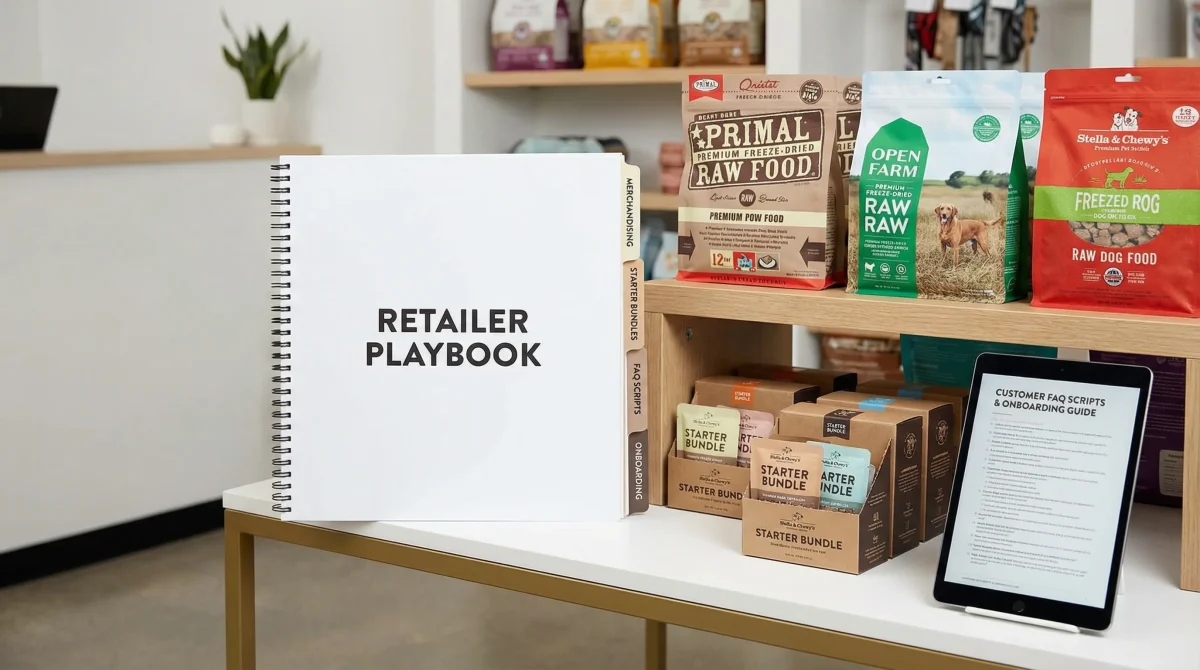
First‑time raw shoppers arrive curious, cautious, and ready to be guided. Your display and words can turn questions into confident first purchases.
This playbook helps you standardize freeze‑dried dog food merchandising for real‑world retail. Learn how to choose a positioning, build starter bundles, script staff replies, and monitor outcomes. You will also find safety boundaries and quick decisions any team member can use.
The one decision: how to position freeze‑dried raw for first‑time buyers
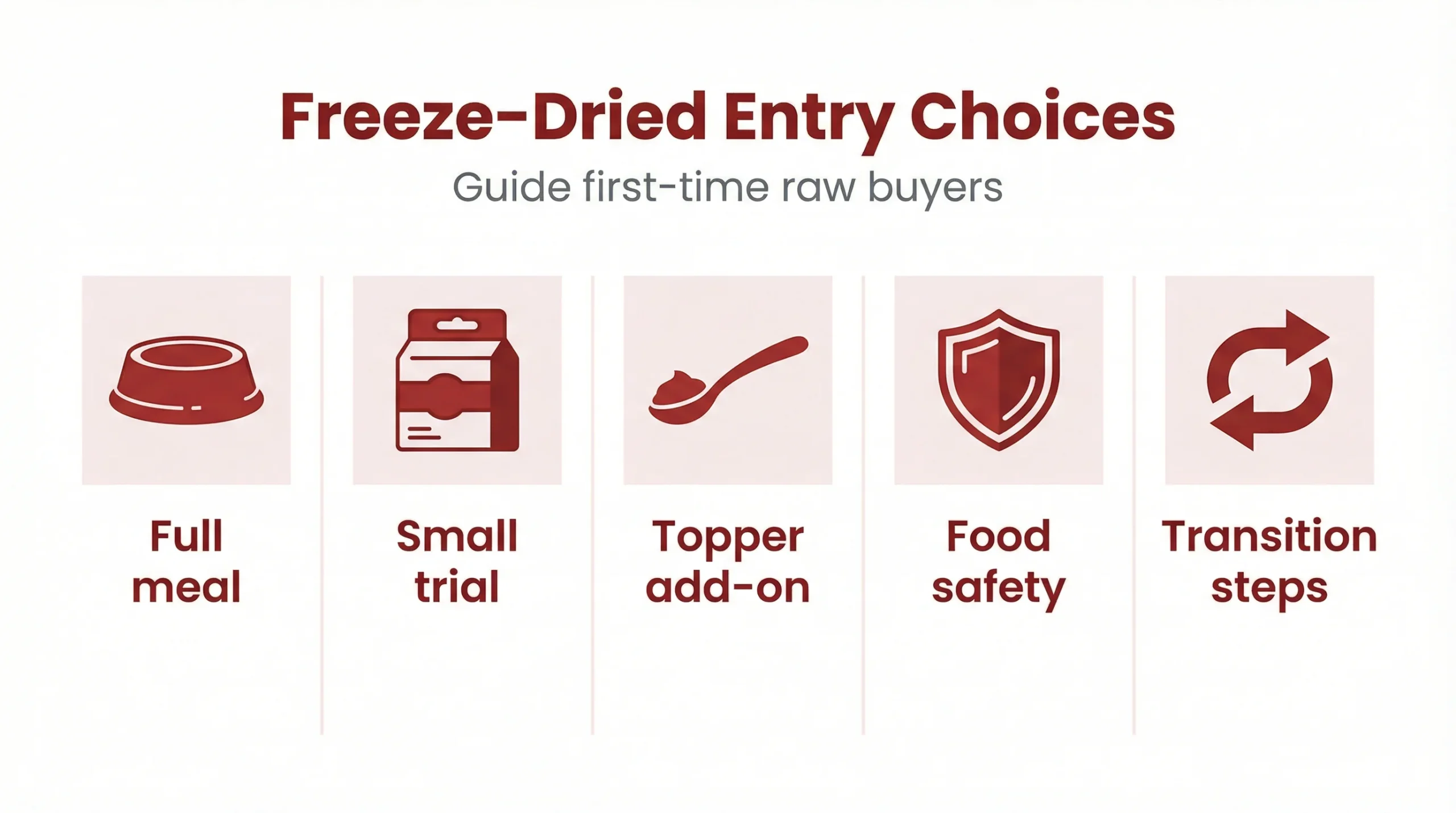
Define the entry point: meal vs. trial vs. topper
Decide whether your entry product is a full meal, a small trial, or a topper. Full meals help decisive buyers. Trials reduce risk. Toppers sit between both. Align with your customers’ budget and confidence level.
Map shopper anxieties: safety, cost per meal, transition steps
Most hesitations fall into three buckets: food safety, cost‑per‑meal, and transition details. Offer clear hygiene visuals, a rehydrated cost card, and a simple transition script. Evidence suggests freeze‑dried raw diets show high amino acid digestibility, supporting value conversations[1].
Merchandising blueprint for freeze‑dried raw and starter bundles
Shelf architecture: eye‑level education, hand‑level conversion
Place short educational panels at eye level and bundle options at hand level. Add a mini “raw diet retail guide” card and a QR to your raw diet hub for staff training. Use tactile elements: scoops, measuring cards, and a rehydration bowl prop.
Bundle logic: 7‑day starter, sensitivity trial, raw‑on‑the‑go kit
Standardize three starter packs for raw feeders. A 7‑day starter to minimize risk. A sensitivity trial for itchy or gassy dogs. A travel kit for convenience. This simplifies choices and accelerates staff recommendations.
Price ladders and signs: cost‑per‑meal and rehydration cues
Show price per rehydrated meal by weight, not per dry gram. Add a 1:1 water cue unless label differs. Energy density and metabolizable energy help explain why small amounts may feed efficiently[3].
Sample starter bundles (Good4Dogs examples)
7‑Day Raw Starter (Everfresh base + measuring card)
Bundle a 7‑day amount, a measuring card, and a one‑page “start here” insert. Many stores use a gentle Everfresh variant for easy acceptance. Some choose Everfresh Freez-Dried food – Beef 500g as a familiar, versatile base.
Sensitive Trial (single‑protein horse + simple treats)
Offer a single‑protein horse base plus single‑protein dog treats. Keep treats 100% meat to control variables. Position it as a “hypoallergenic dog food EU‑friendly” approach. For deeper guidance, see Itchy Dog? Run an Elimination Diet with Single‑Protein Horse Meat.
Raw‑on‑the‑Go (travel pack + functional add‑on)
Include a compact bag, collapsible bowl, and a dosing card. Add an optional functional add‑on for energy or focus. Make it carry‑on friendly. This kit answers the “how do I travel?” objection in seconds.
Customer FAQ scripts for staff at the shelf
Safety and handling: what to say and what to show
Say: “Freeze‑drying removes water, not nutrients. Use clean hands, dry scoops, and reseal well.” Show a hygiene mini‑poster and a sealed sample bag. Keep instructions short, confident, and repeatable for every team member.
Transition and portions: simple, cautious phrasing
Say: “Mix in gradually over 5–7 days. Rehydrate to fresh‑mince texture. Keep one protein for two weeks. Observe stool and appetite. Adjust portions by body weight and condition.” Offer a printed step‑by‑step.
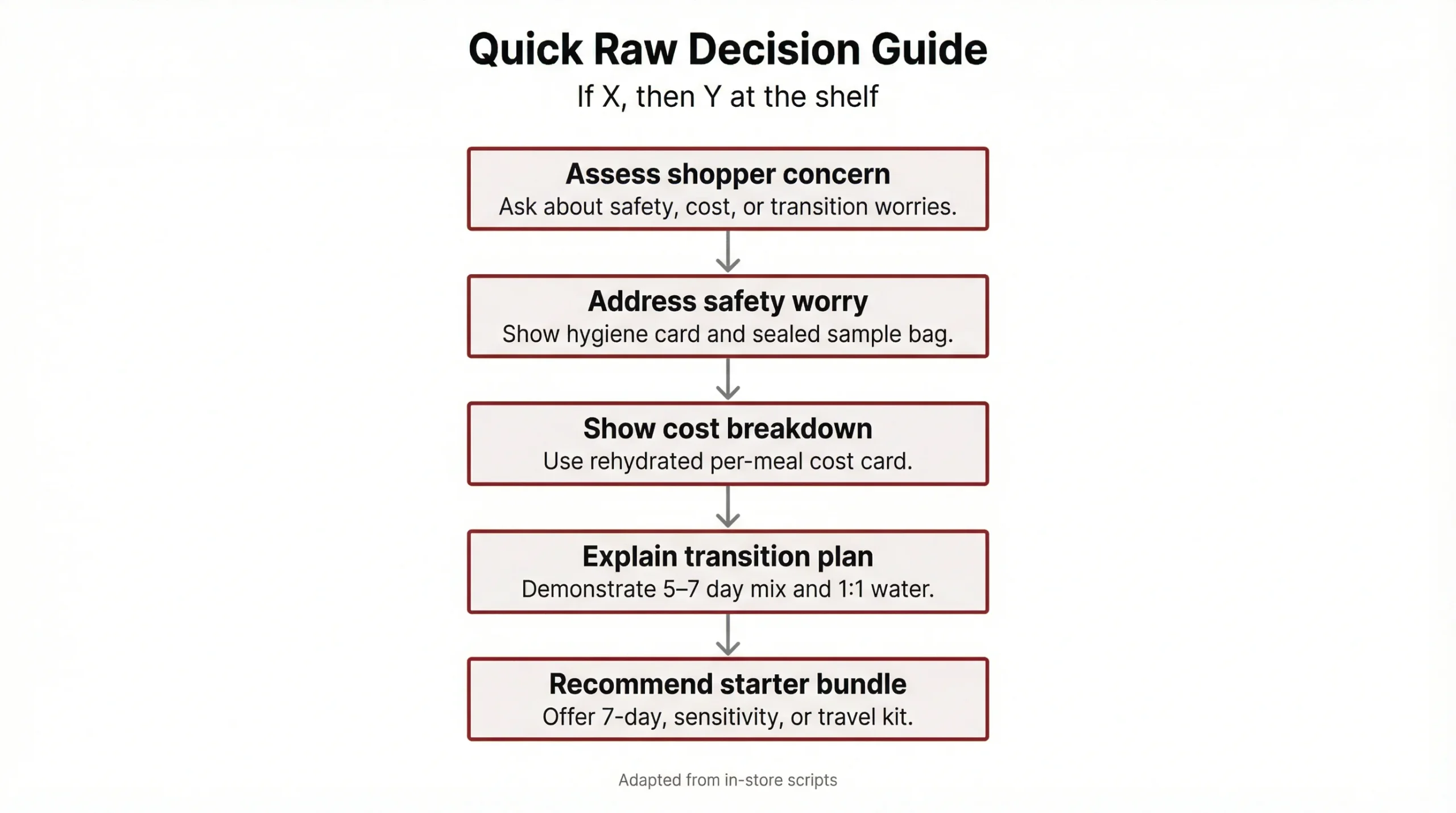
Quick Decision Guide (if X, then Y)
If the shopper worries about allergies, suggest single‑protein horse Everfresh and simple 100% treats
Keep protein consistent for 2–3 weeks. Use single‑protein dog treats to prevent confounders. Encourage a brief symptom diary and water rehydration notes.
If the shopper hesitates due to price, show cost per meal after rehydration and choose 7‑day starter
Break pricing into per‑meal numbers. Demonstrate water addition and bowl volume. The 7‑day format reduces commitment while proving value through visible outcomes.
If the shopper only wants a test, propose topper‑trial: 25–30% of the meal Everfresh for 3–4 days
Recommend maintaining the same kibble base. Ask them to monitor stool, coat shine, and enthusiasm. If positive, step up to a half‑and‑half mix the following week.
If they need a travel solution, choose Raw‑on‑the‑Go kit with measuring card
Highlight no refrigeration, light weight, and easy packing. Add a collapsible bowl and sealable bag. Emphasize portion predictability on the road.
If the dog switches proteins often, stay on one protein 2–3 weeks and observe response
Frequent protein changes can mask sensitivities. Recommend a single source and log outcomes. Then re‑evaluate with staff support.
If the shopper wants visible benefits for energy or coat, discreetly add Ever Shrooms as an option
Position functional mushrooms as optional support with emerging evidence. Keep the main change to food. For education, see When to Add Functional Mushrooms: Lion’s Mane and Cordyceps for Dogs.
If the shopper is new to raw, pick a bundle with clear water and storage instructions
Reduce overwhelm with one insert and a measuring tool. Emphasize sealing after opening and a simple 5–7 day transition schedule.
Monitoring after purchase: 7–14 days and 4–8 weeks
7–14 days: stool, skin/coat, appetite, portion adjustments by dog weight
Ask customers to watch stool consistency, coat sheen, and mealtime eagerness. Encourage small portion tweaks by weight and body condition. Provide a phone check‑in or in‑store review to build trust.
4–8 weeks: body condition, itchiness, energy, protein re‑assessment
Invite a second review for weight, itch patterns, and daily energy. If stable, consider rotating proteins. If symptoms persist, revisit single‑protein strategy or pause changes and consult a professional.
Practical safety boundaries (in‑store guidance)
Hygiene and storage after opening
Advise dry scoops, clean hands, and resealing tightly. Store cool and dry. Avoid steam‑prone areas. If shoppers want a checklist, share Safe Handling for Raw and Freeze‑Dried Dog Food: A Home Hygiene Checklist.
Water for rehydration and gradual introduction
Recommend adding water slowly to reach fresh‑mince texture. Many labels suggest around a 1:1 ratio by weight. Encourage cautious transitions, especially for sensitive stomachs or petite breeds.
When to direct shopper to a veterinarian
Persistent diarrhea, lethargy, skin flare‑ups, or weight loss warrant referral. For chronic diseases, pause dietary changes pending veterinary input. Record notes to support coordinated care.
What the evidence says: where claims are strong and where cautious
Nutrient density and palatability: evidence and limitations
Controlled studies report high indispensable amino acid digestibility for freeze‑dried raw diets, which may explain good palatability and portion efficiency[1]. Keep claims measured; palatability can vary by formula, processing, and each dog’s preference.
Allergies and single‑protein protocols: what practice suggests
Elimination approaches rely on single proteins and minimal extras. Clinical evidence in retail settings is observational. However, digestibility and stool outcomes with raw and freeze‑dried formats appear favorable in controlled comparisons[2].
Functional add‑ons (e.g., medicinal mushrooms): status of evidence
Interest in functional mushrooms is growing. Early data in companion animals is limited. Keep positioning as optional support. Focus claims on core diet quality and measured, observable changes over weeks.
Visual POS and micro‑education at shelf
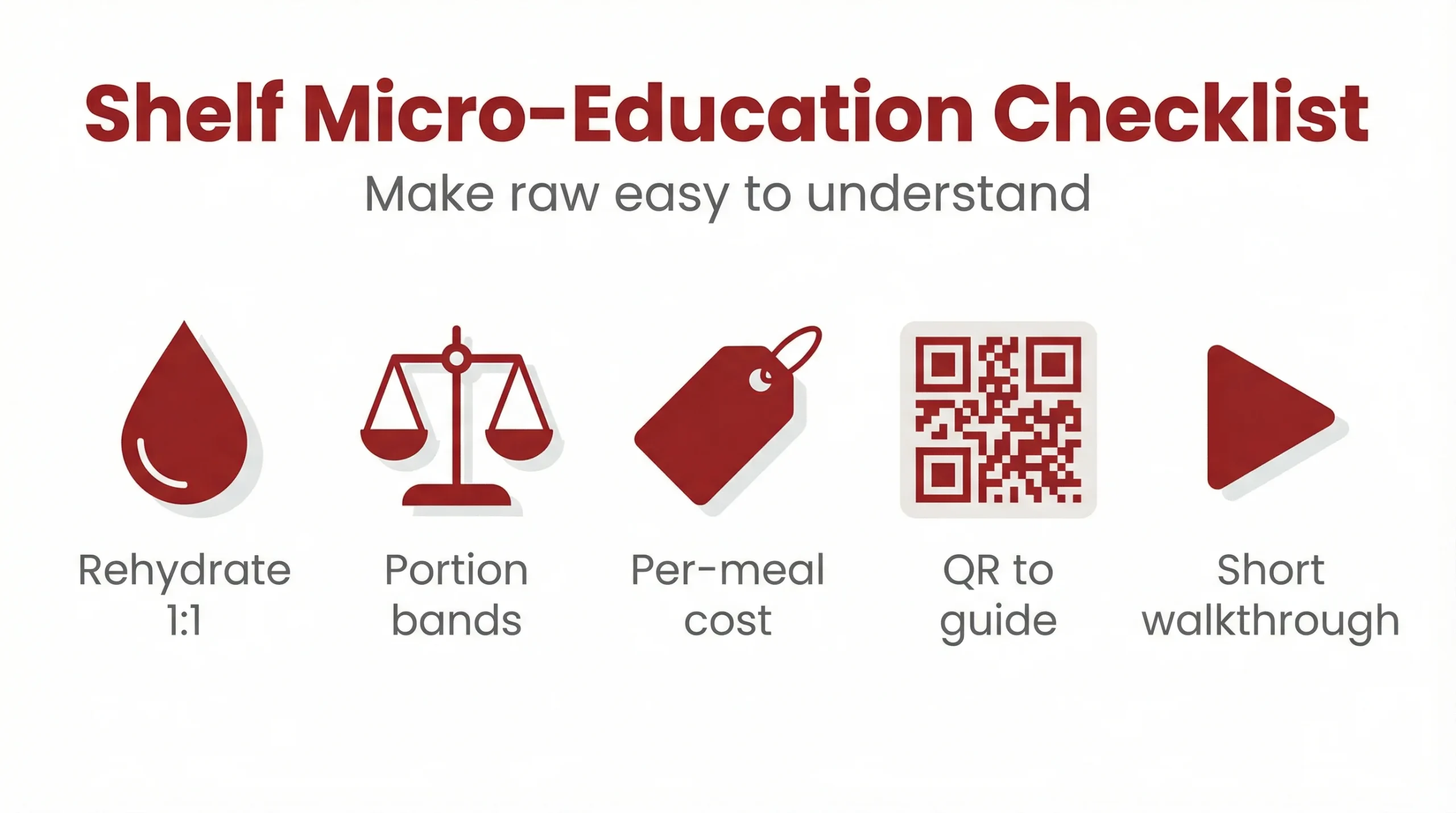
3‑step rehydration card
Create a quick card: Scoop dry, add equal water by weight, stir to fresh‑mince texture. Include portion bands by weight. Use icons to reduce language barriers.
Cost‑per‑meal card and QR to raw diet hub for staff training
Place a laminated cost card showing dry grams, added water, and real meal cost. Add a QR that opens your staff primer. Link a short rehydration walkthrough like Transitioning to Raw in 7 Days: Step‑by‑Step Plan with Rehydration Basics.
Before/after observation diary for the shopper
Offer a one‑page diary: stool score, coat notes, energy, and itch scale. Include space for week‑2 and week‑6 reflections. This encourages feedback loops and repeat visits.
Frequently Asked Questions
How should a first-time buyer transition to freeze-dried raw?
Advise a gradual mix over 5–7 days, increasing freeze‑dried while monitoring stool, appetite, and skin. Encourage consistent protein during the first two weeks. Suggest a simple log to track outcomes and portion tweaks.
What water ratio should be used to rehydrate freeze-dried meals?
Most products suggest roughly 1:1 by weight or per label guidance. Remind customers to add water slowly until the texture resembles fresh mince. Aim for moist, uniform hydration without pooling water.
Which starter bundle suits dogs with suspected sensitivities?
A single‑protein option, such as horse, may help with elimination trials. Keep treats single‑ingredient and maintain one protein for 2–3 weeks. Ask customers to note stool, itch, and gas changes.
How long can an opened freeze-dried bag be stored?
Store sealed, cool, and dry. Many bags remain stable for weeks; follow the label for best‑before and use‑after‑opening guidance to limit moisture exposure. Encourage airtight storage to maintain texture and aroma.
When should retailers suggest consulting a veterinarian?
If there is persistent diarrhea, lethargy, skin flare‑ups, weight loss, or a chronic condition. Advise pausing changes until a professional review. Document observations and bring packaging for ingredient reference.
Conclusion
Great freeze‑dried merchandising starts with a single clear entry point and builds confidence with simple bundles, precise scripts, and visible proof. Keep claims measured, focus on outcomes, and standardize your team’s playbook. Offer safety guardrails, cost clarity, and follow‑ups at two and six weeks. With a consistent approach, you turn curiosity into loyal repeat buyers—and make freeze‑dried raw a reliable, educational category leader in your store.
References
- EL Geary et al. (2023). Standardized amino acid digestibility and nitrogen-corrected true metabolizable energy of frozen raw, freeze-dried raw, fresh, and extruded dog foods using precision …. Journal of animal …. View article
- EL Geary et al. (2024). Apparent total tract nutrient digestibility of frozen raw, freeze-dried raw, fresh, and extruded dog foods and their effects on serum metabolites and fecal characteristics …. Translational Animal …. View article
- PM Oba et al. (2023). Standardized amino acid digestibility and nitrogen-corrected true metabolizable energy of frozen and freeze-dried raw dog foods using precision-fed cecectomized …. Journal of animal …. View article
- EL Geary et al. (2023). … Tract Nutrient Digestibility of Frozen Raw, Freeze-Dried Raw, Fresh, and Extruded Dog Foods and Their Effects on Fecal Characteristics and Metabolites of Adult Dogs. Journal of Animal …. View article