

Uncategorized
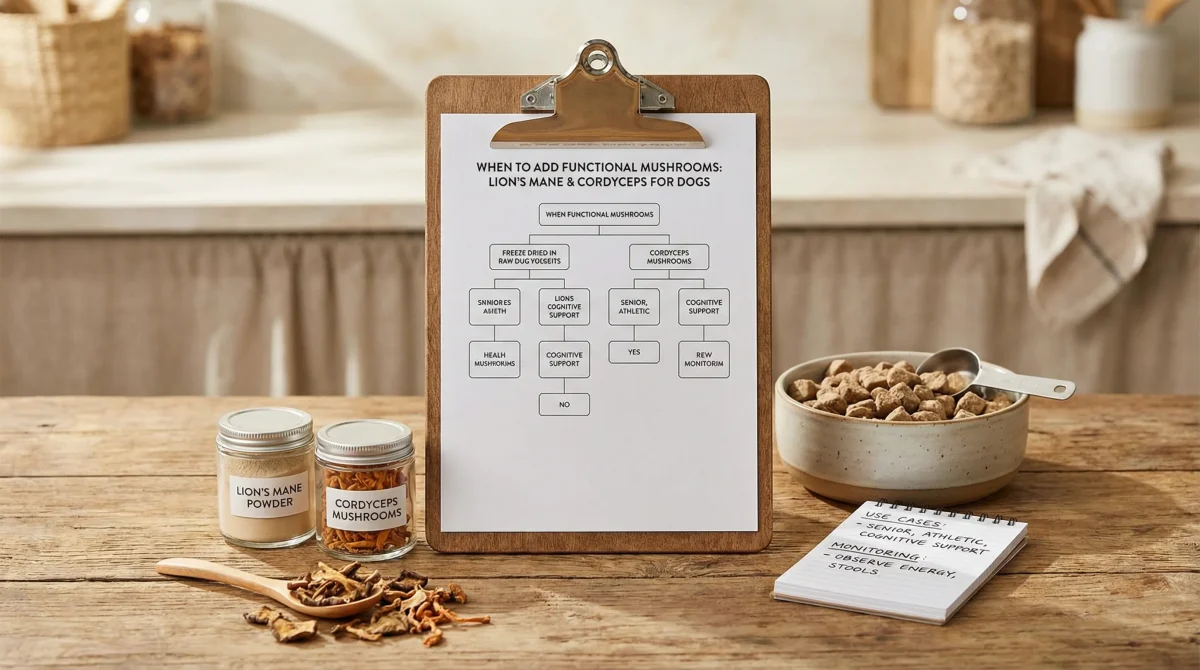
When to Add Functional Mushrooms: Lion’s Mane and Cordyceps for Dogs
May
When to Add Functional Mushrooms: Lion’s Mane and Cordyceps for Dogs
Curious about Lion’s Mane and Cordyceps for dogs, but unsure when to use them? You are not alone. Functional mushrooms are exciting. They are also easy to overuse without a plan.
Layering targeted add‑ons works best on a stable raw base. That protects digestion and clarifies results. In this guide, you will get a practical decision tree, simple dosing logic, and monitoring checkpoints to evaluate benefits confidently.
Why consider functional mushrooms on a raw base
Think of functional mushrooms for dogs as strategic tools, not staples. They can fine‑tune a well‑built raw plan.
How they may complement a balanced raw diet
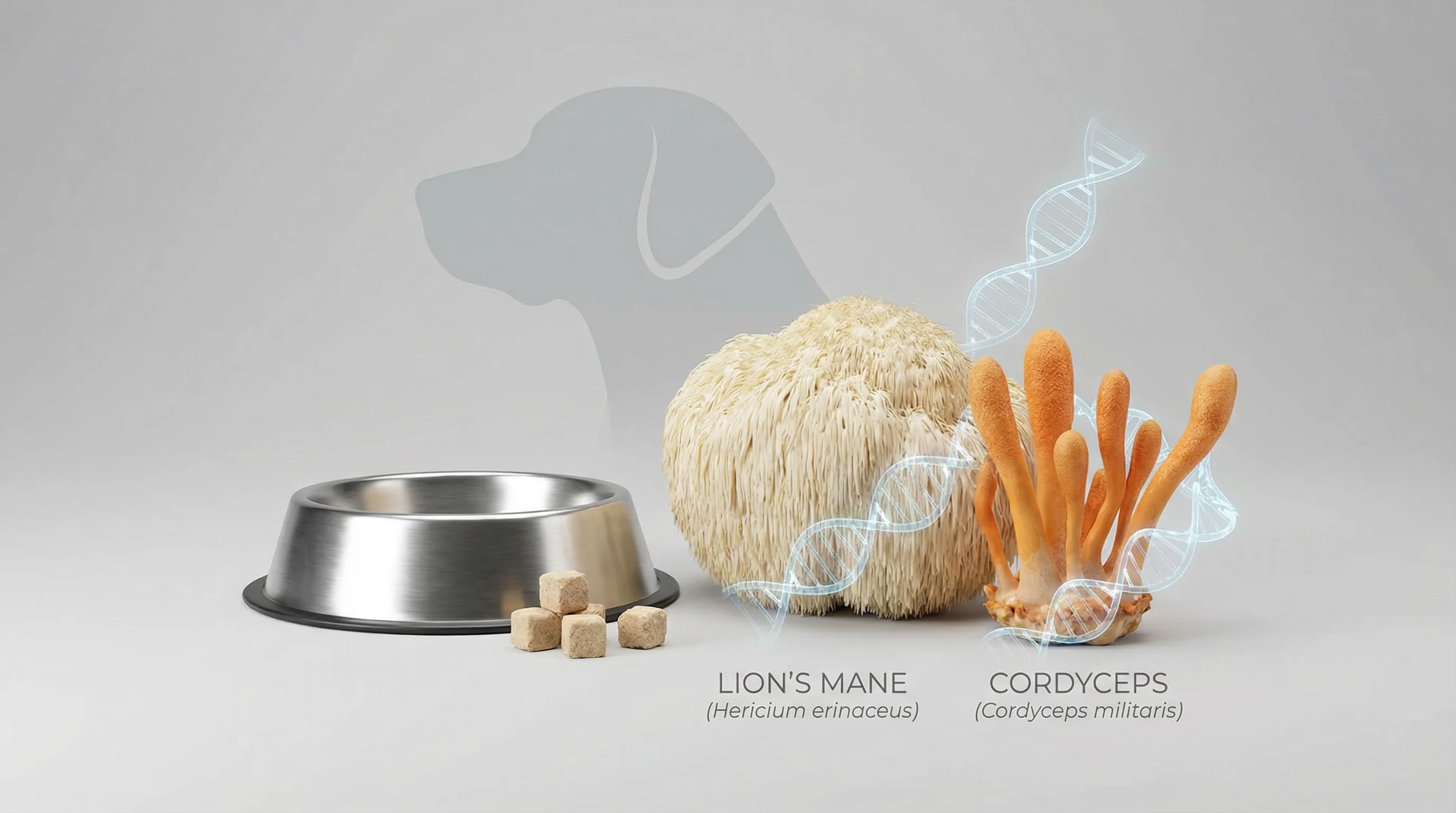
Balanced raw feeding covers macronutrients, essential fats, and micronutrients. Mushrooms like Lion’s Mane and Cordyceps contribute unique beta‑glucans and secondary metabolites that may support cognition, stamina, and resilience. Reviews of medicinal fungi highlight neurotrophic and adaptogenic properties, though effects depend on species and extract quality.[2]
Quick context: start with a solid base, then layer add‑ons
Confirm that calories, protein variety, and hydration are dialed in before adding raw diet dog supplements. If you are still building foundations, our core raw diet primer helps frame mushrooms as optional refinements, not fixes for basic gaps.
Quick decision guide: if X, then consider Y
Use this “if X, then Y” map to choose purposefully. Start with one goal at a time.
Cognitive focus or senior dogs: consider Lion’s Mane
For aging dogs showing mild forgetfulness or slower learning, Lion’s Mane may support neuroplasticity and attention. Early canine work with mushroom nutraceuticals suggests potential cognitive support in seniors, though formulations vary and evidence remains preliminary.[1]
Endurance or recovery for active dogs: consider Cordyceps
If your dog trains, hikes, or competes, Cordyceps may aid perceived stamina and post‑exercise recovery. Preclinical data in mammals show anti‑fatigue and aerobic capacity signals, warranting cautious trials in dogs under real‑world conditions.[3] For fueling tactics, see feeding active and working dogs.
Low appetite or mild fatigue: consider Cordyceps short‑term
Cordyceps is often used for short stints when appetite dips during travel or after tough sessions. It may encourage food interest and energy, within reason. Rule out illness first, and discontinue if restlessness appears.
Learning/training phases: micro‑dose Lion’s Mane
During intensive training blocks, micro‑dosing Lion’s Mane may help focus in distraction‑rich settings. Keep it light and consistent. You are looking for smoother engagement, not stimulation. Stop if gastrointestinal changes or over‑arousal appears.
Sensitive digestion: trial Lion’s Mane at low dose
If your dog’s stomach is easily upset, try Lion’s Mane at a very low dose first. It is generally gentle, yet any new bioactives can shift stool form. Pair with a stable menu and use our sensitive stomach starter plan principles.
Seasonal immune support: rotate Lion’s Mane and Cordyceps
When seasonal stress rises, rotate one mushroom at a time for several weeks. Lion’s Mane first, then Cordyceps, or vice versa. Rotations reduce supplement fatigue and make it easier to spot what truly helps.
How to start and dose alongside freeze‑dried meals
Go slow, keep meals predictable, and let the data guide adjustments.
Intro dosing and gradual ramp
Start with roughly 25–33% of the brand’s daily guidance for Lion’s Mane or Cordyceps for dogs dosage. Hold that for 3–4 days while observing stool and mood. Increase in small steps every 2–3 days until you reach a steady test dose. Keep that dose stable for 4–8 weeks.
Pairing with rehydrated meals for tolerance
Mix mushroom powder or capsules into fully rehydrated freeze‑dried meals to buffer the stomach. This helps tolerance and tracking. Many pet owners find Everfresh Freez-Dried food – Beef 500g helpful for this task. For rehydration basics that protect digestion, see transitioning to raw in 7 days.
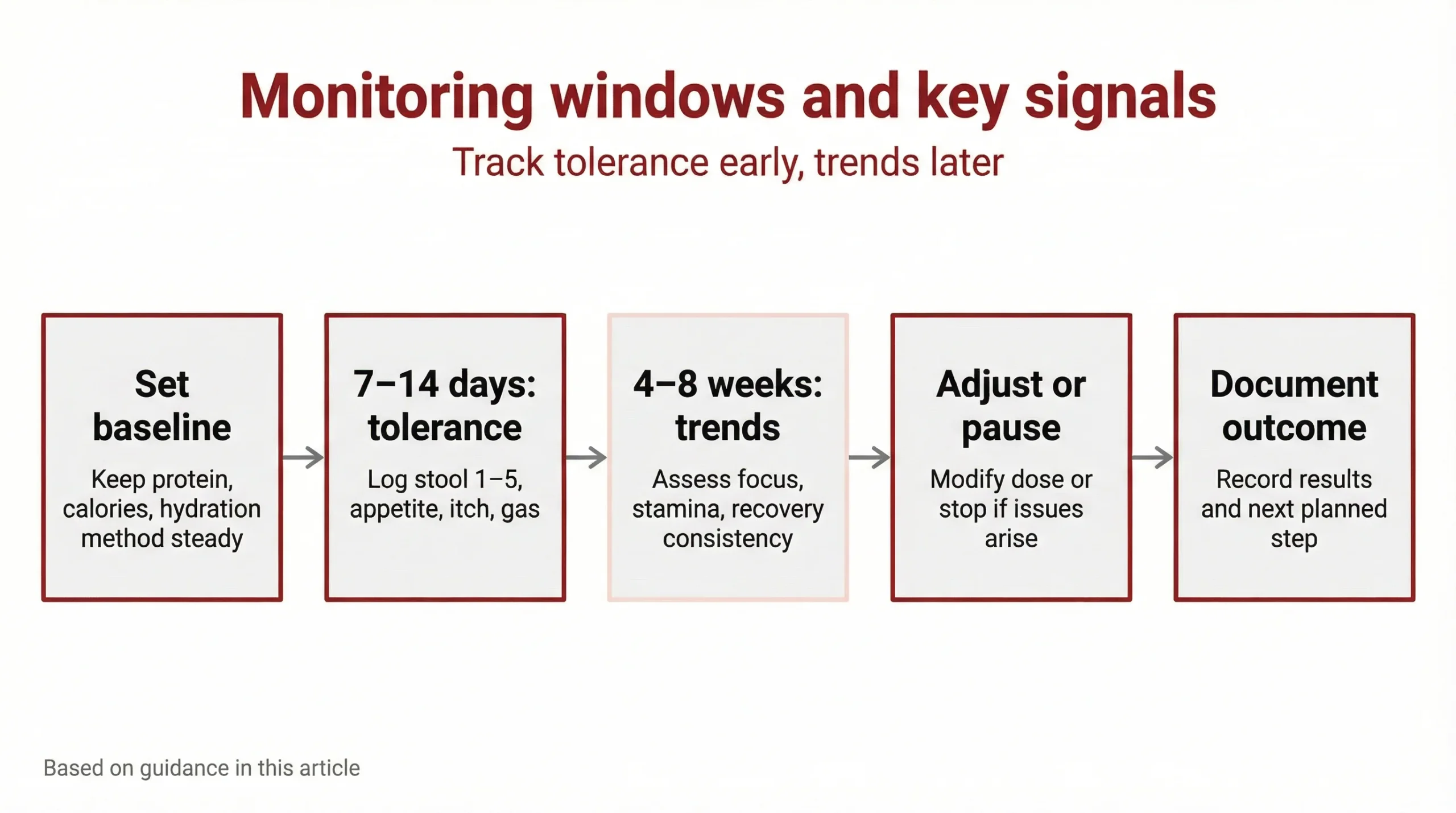
Monitoring guidance: 7–14 days and 4–8 weeks
Short windows check tolerance. Longer windows reveal trends that matter.
Short window (7–14 days): tolerance and early signals
Track stool form on a simple 1–5 scale, appetite consistency, and day‑to‑day energy. Note any itch, gas, or restlessness. Early cognitive or stamina changes are often subtle. Prioritize comfort, hydration, and unremarkable stools first.
Longer window (4–8 weeks): trend‑level outcomes to track
For Lion’s Mane, observe recall reliability, settle time after excitement, sleep continuity, and training retention. For Cordyceps, log perceived stamina, time to recovery, and willingness to start sessions. Compare weeks 1–2 versus weeks 6–8 patterns.
Practical safety boundaries
Set clear guardrails before you start. It keeps experiments safe and interpretable.
Who should not use or should pause
Skip or pause if your dog is pregnant, lactating, or has an unresolved medical condition. Do not introduce mushrooms during acute diarrhea, vomiting, or suspected allergies. For puppies or seniors with conditions, consult your veterinarian first.
Interactions and stop rules
Functional mushrooms can influence metabolism and immunity. If your dog takes medications, clear any add‑ons with your vet. Stop immediately for hives, facial swelling, vomiting, or bloody stools. Rechallenge only under professional guidance.
Storage and product form tips
Keep powders tightly sealed, cool, and dry. Avoid heat and moisture that degrade actives. Choose brands that disclose species, part used (fruiting body), and extraction method. Capsules ease precise dosing; powders mix better with food.
Evidence status: what we know and what is emerging
Evidence is promising yet incomplete. Here is a quick read on status by focus.
Lion’s Mane: neuro support mechanisms in preclinical research
Hericium compounds have been associated with nerve growth factor pathways and neuroprotective effects in preclinical models. This underpins cautious use for cognitive support in dogs, especially seniors, while acknowledging translation gaps.[2] Early canine cognition studies using mushroom blends add further, preliminary encouragement.[1]
Cordyceps: aerobic capacity and fatigue markers
Animal and human preclinical literature suggests Cordyceps may influence oxygen utilization and anti‑fatigue pathways, supporting its consideration for endurance and recovery trials in dogs, with careful monitoring and realistic expectations.[3]
Evidence gaps and how to set expectations
Dog‑specific trials remain limited and often use blends, not isolated species. That said, mushroom supplementation has shown measurable changes in canine biomarkers, such as lipids, in controlled studies using other species like Lentinula.[4] Expect incremental, not dramatic, shifts.
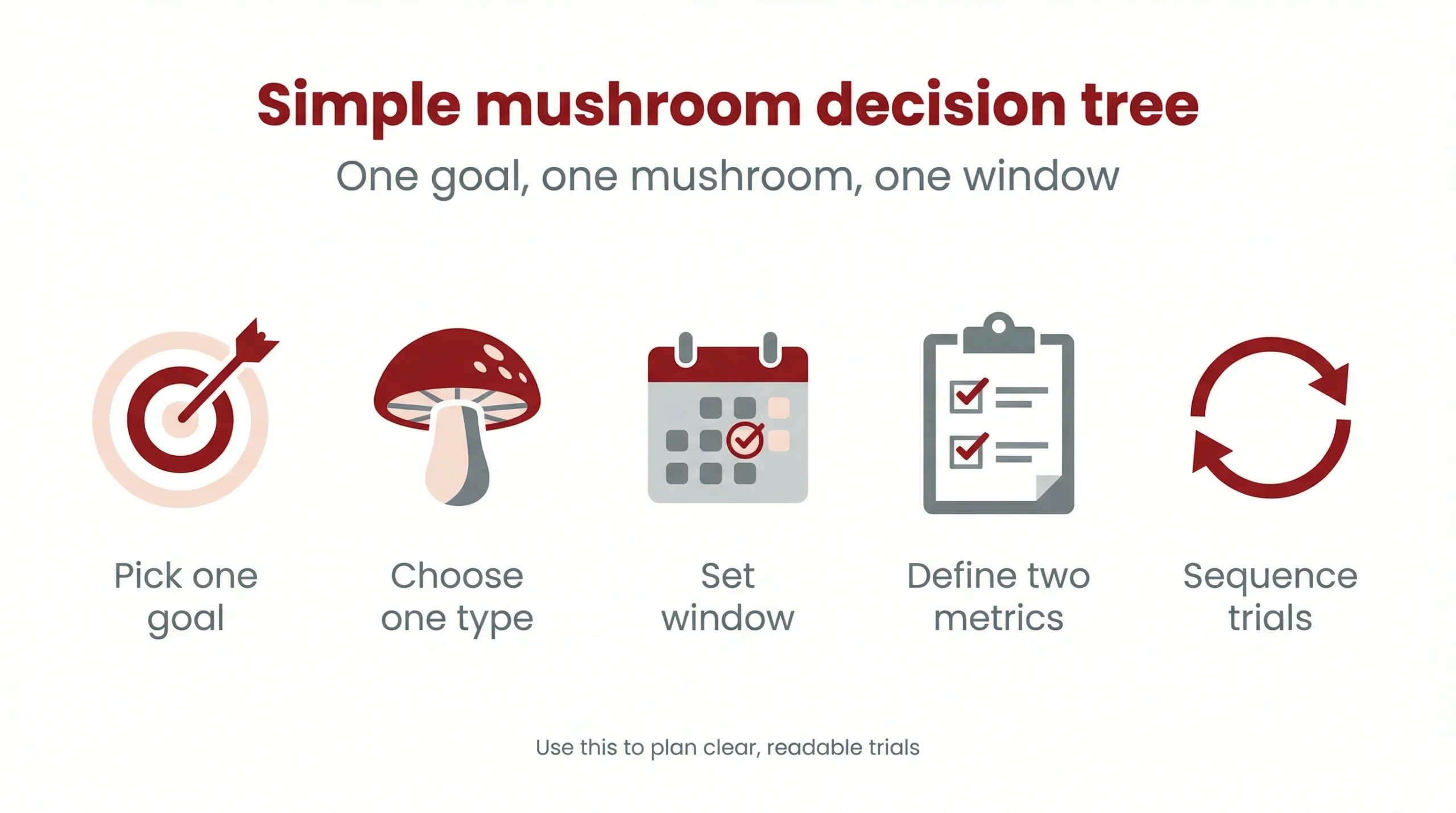
Simple decision tree to choose and sequence
Focus on one goal, one mushroom, and one clean measurement window.
Step 1: define the primary goal
Choose a single target: cognitive steadiness, learning focus, endurance, appetite, or seasonal resilience. Write it down in one sentence. Agree on two or three trackable signals that reflect success.
Step 2: pick one mushroom for 4–8 weeks
Select Lion’s Mane for cognitive or learning goals; select Cordyceps for stamina, recovery, or short‑term appetite support. Dose gradually up to a steady level and hold that dose consistently throughout the window.
Step 3: reassess and adjust or rotate
At week 4–8, review your logs. If benefits appear with good tolerance, you may continue. If results are neutral, pause two weeks, then rotate to the other mushroom with the same process.
References within your raw plan
Stable foundations turn your mushroom trial into readable data.
Keep the base diet consistent
Hold protein sources, calories, and rehydration method steady during trials. Avoid adding new oils, herbs, or treats that cloud interpretation. For travel or adventure days, see raw on the go to minimize variability.
Document changes one variable at a time
Use a simple journal: date, dose, stool score, appetite, energy, training notes. Make one change per week at most. This discipline helps you detect Lion’s Mane for dogs benefits more clearly.
Frequently Asked Questions
Can dogs take Lion’s Mane and Cordyceps together?
They can sometimes be combined, but evidence in dogs is limited. It is often more informative to use one for 4–8 weeks, evaluate response, then consider rotation.
How long until I notice effects from Lion’s Mane or Cordyceps?
Tolerance changes may appear within 7–14 days. Goal‑related trends (focus, stamina, recovery) are more realistically assessed over 4–8 weeks of consistent dosing.
Are functional mushrooms safe for puppies or senior dogs?
They may be suitable with careful dosing and monitoring. Puppies, pregnant or lactating dogs, and dogs on medication should be reviewed with a veterinarian first.
Do I need to adjust my dog’s raw meals when adding mushrooms?
Keep the core diet stable during the trial. Add the mushroom after rehydration of freeze‑dried meals to support digestion and make tracking responses easier.
What dose should I start with for Lion’s Mane or Cordyceps?
Begin low (about 25–33% of the brand’s daily guidance), increase gradually over 7–10 days, and hold a consistent dose for the 4–8 week assessment window.
Functional mushrooms are exciting, and a thoughtful plan makes them practical. Start with a steady raw base, then add Lion’s Mane or Cordyceps with intent and gentle pacing. Track tolerance first, then outcomes that truly matter. Rotate only after a full window. If you need help building foundations or sense something is off, involve your veterinarian early. With clarity, patience, and good notes, freeze‑dried dog supplements can work harmoniously with your dog’s routine—and you will know exactly why.
References
- J Ehrenzweig et al. (2025). Evaluation of a Mushroom-Derived Nutraceutical for Canine Cognitive Decline. 2025 – athenaeumpub.com. View article
- C Hobbs (2023). The health and clinical benefits of medicinal fungi. Biochemical engineering and biotechnology of …. View article
- A Fijałkowska et al. (2022). Edible mushrooms as a potential component of dietary interventions for major depressive disorder. Foods. View article
- EG Jung et al. (2025). Effects of Isulsongi mushroom (Lentinula edodes GNA01) supplementation on age-dependent blood lipid characteristics in dogs. Korean Journal of Agricultural Science. View article