

Uncategorized
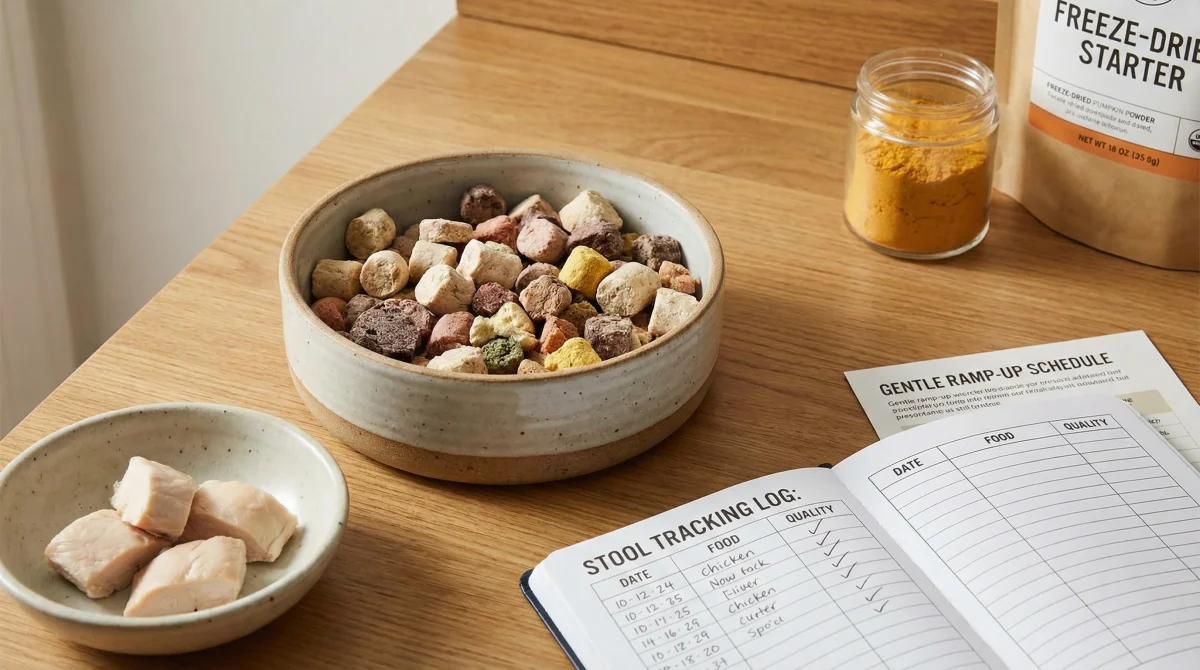
Sensitive Stomach Starter Plan: Gentle Raw Introduction and Stool Tracking
May
Sensitive Stomach Starter Plan: Gentle Raw Introduction and Stool Tracking
Soft stools and gas can make any guardian worry. A gentle approach helps calm the gut while building confidence day by day. Your dog deserves comfort and predictability.
This matters because the gut prefers small changes and clear signals. Overloading ingredients or portions can prolong tummy upsets. Here you will learn a gentle raw introduction for dogs, a simple elimination protein sequence, and a practical stool quality tracking log. You will also see a phased ramp‑up, monitoring cues, and safety boundaries that keep progress steady.
Who this gentle raw introduction is for
Common signs of a sensitive stomach in dogs
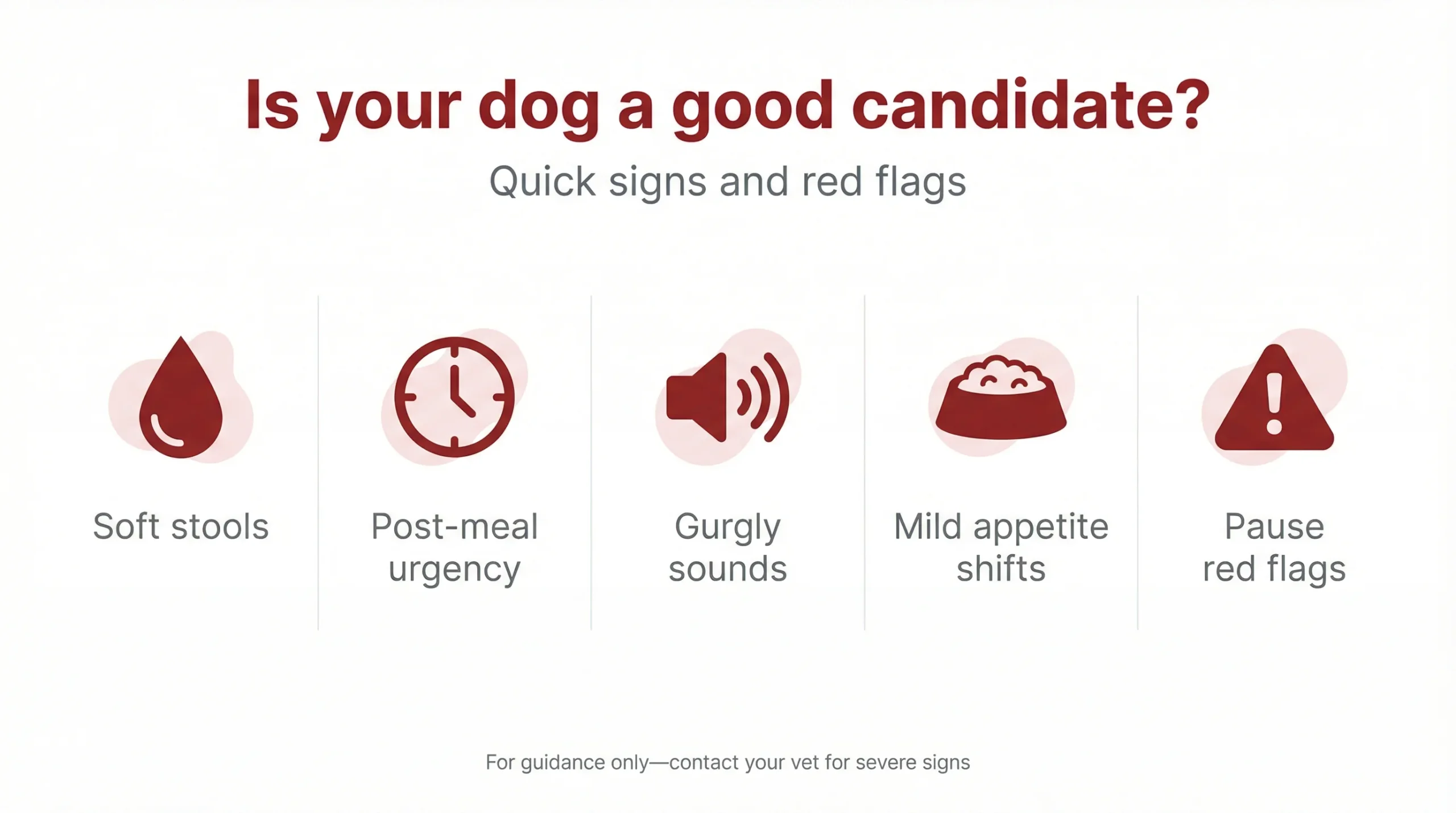
Look for frequent soft stools, loose segments, or urgency after meals. Notice gurgly sounds, occasional gas, mild nausea, or appetite shifts. Watch for mucus on stools or small amounts of bile early morning. Track repeated partial improvements followed by setbacks after treats or new foods. These patterns suggest your dog benefits from a slower, low‑variable change.
When to postpone diet changes and seek veterinary input
Pause any transition if your dog shows watery diarrhea, vomiting, blood in stool, fever, or marked lethargy. Delay changes if there is weight loss, pain, or known pancreatitis without guidance. Puppies, seniors, or dogs on medication may need tailored oversight. A vet check can rule out parasites, infections, or endocrine issues before beginning any dog soft stool protocol.
How the Sensitive Stomach Starter Plan works
Simple ingredient sequencing (one protein at a time)
Start with one complete, single‑protein raw formula and keep extras off the menu. This elimination protein sequence limits variables and helps you pinpoint triggers. Avoid rotating proteins, toppers, or treats during early stabilization. If your dog has known sensitivities, consider a novel protein or one not fed recently. You can learn more about single‑protein logic in Itchy Dog? Run an Elimination Diet with Single‑Protein Horse Meat.
Phased ramp-up schedule with rehydration targets
Use a freeze-dried raw transition that increases slowly while matching hydration needs. Rehydrate to a moist, porridge-like texture. Many guardians aim for 1:1 to 1:1.5 water-to-food by weight. Adjust water if stools look dry or too soft. Feed two to three small meals to reduce digestive load. Evidence suggests freeze-dried raw may have favorable digestibility profiles compared with some extruded diets, which can help sensitive dogs when variables are controlled[1][3].
Example day-by-day progression (7–14 days)
Days 1–2: 25% raw, 75% current diet; rehydrate 1:1–1.25:1; feed in two to three meals.
Days 3–4: 40% raw; maintain water ratio and mealtime spacing.
Days 5–6: 60% raw; confirm stools are forming logs without excess shine.
Days 7–8: 80% raw; keep ingredients unchanged.
Days 9–14: 100% raw; hold steady for a week before considering any new additions. Slow further if softness appears.
Quick decision guide: if X, then Y
Fast reference actions for common transition scenarios
- If stools soften for 24–48 hours, hold at the current step and add 10–20% more water.
- If stools are too dry or crumbly, increase rehydration and reduce bone-dense chews.
- If gas increases, split meals into smaller portions and extend that phase by 2–3 days.
- If mucus appears once, observe and maintain the plan; if recurring, revert one step.
- If appetite dips mildly, warm rehydrated meals and offer calm, quiet feeding.
- If watery diarrhea occurs, pause raw, rehydrate lightly bland food if advised, and contact a vet.
- If energy drops notably, reassess portion size and hydration, then consult your clinic if unresolved.
Stool quality tracking log
What to record daily (with sample scoring scale)
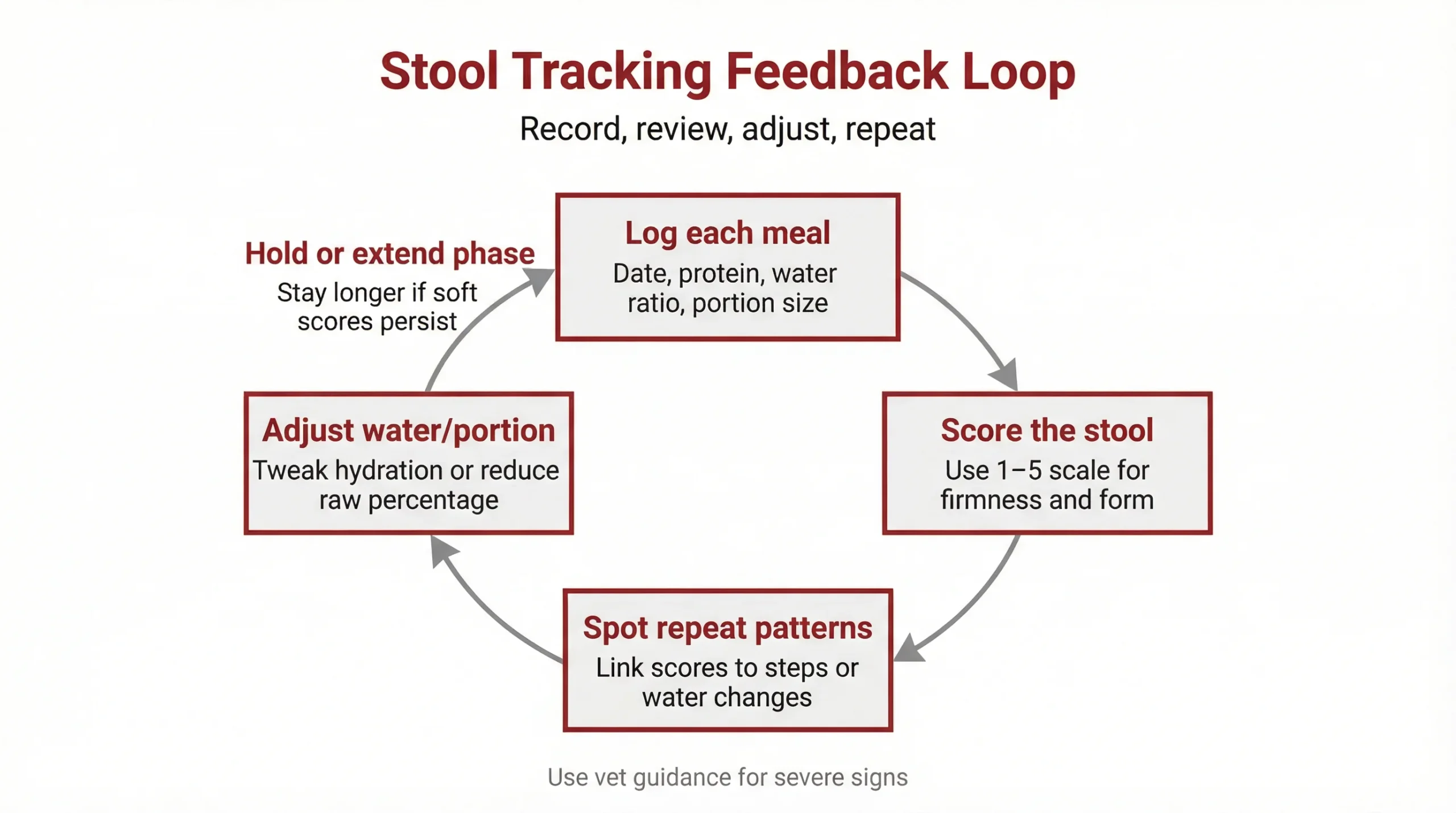
Use a simple stool quality tracking log to guide choices. Record date, meal composition, rehydration ratio, portion size, energy, gas, and stool score. Sample scale: 1 watery; 2 very loose; 3 soft serve; 4 soft log; 5 formed log; 6 firm; 7 dry crumbly. Note mucus, sheen, straining, or urgency. Keep treats and extras out. Fiber sources like psyllium-flax may support stool form after stabilization, when added cautiously and tested one at a time[4].
Pattern recognition and when to adjust the plan
Look for repeat patterns tied to a specific step, water ratio, or portion size. If soft scores persist at 3–4, extend that phase or reduce the raw percentage by 10–20% for three days. If scores hover at 6–7 with straining, increase hydration. If gas correlates with late meals, feed earlier or split portions. Adjust only one variable at a time to keep feedback meaningful.
Monitoring: what to expect at 7–14 days and 4–8 weeks
Short-term checkpoints (energy, gas, stool form)
By 7–14 days, many dogs show steadier energy and reduced gas on a consistent formula. Stools may become smaller and better formed when digestibility improves and ingredients are predictable[1][2]. Temporary color shifts are common. Persistent watery output, repeated mucus, or marked lethargy are not typical. In those cases, pause and consult your veterinarian.
Medium-term checkpoints (skin, coat, weight stability)
Over 4–8 weeks, you may notice coat gloss, stable weight, and calm digestion. Gradual microbiome adaptation can accompany consistent, digestible diets and appropriate fiber choices, though responses vary between dogs[4]. Stay with a single protein until stools remain reliably in the 4–5 range. Add any new items one at a time with log entries.
Practical safety boundaries
Hydration, handling, and portion safeguards
Rehydrate freeze-dried meals to a moist texture and adjust water based on stool trends. Measure portions by weight to avoid “just a bit too much.” Wash hands, bowls, and surfaces thoroughly after prep. For a step-by-step hygiene routine, see Safe Handling for Raw and Freeze‑Dried Dog Food: A Home Hygiene Checklist. Store food in a cool, dry place. Discard leftovers after a safe window as directed by the manufacturer.
Red flags that warrant pausing or veterinary review
Stop the transition and call your clinic if you see watery diarrhea, blood, repeated vomiting, marked lethargy, fever, or abdominal pain. Puppies, pregnant dogs, or dogs with chronic disease need tailored guidance. Resume only after professional input and a reviewed plan.
Evidence status and what it means for your dog
Where evidence is stronger
Research indicates processing can influence amino acid digestibility and metabolizable energy, with freeze-dried raw often showing favorable digestibility metrics compared to some extruded diets[3]. Studies also report differences in fecal characteristics and output among formats, reflecting digestibility and ingredient profiles[1].
Where evidence is emerging or mixed
Microbiome shifts, stool quality, and immune markers respond to diet and fibers, but individual results vary and study designs differ[4]. Evidence for specific sequencing strategies is still developing. That is why our plan emphasizes small changes, single variables, and consistent observation.
How freeze-dried formats help sensitive dogs
Consistency, convenience, and rehydration control
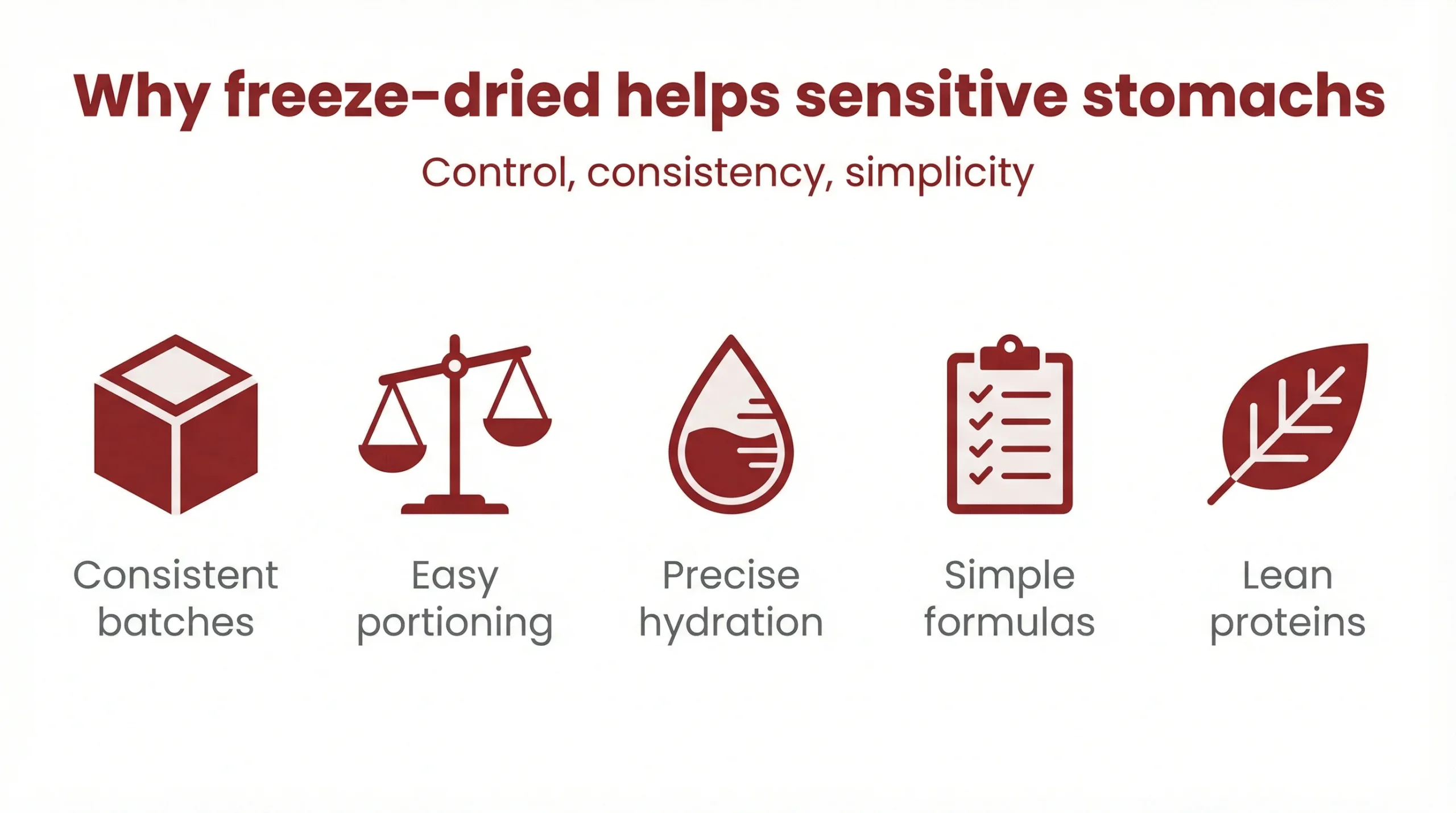
Freeze-dried meals offer batch-to-batch consistency and easy portioning, which helps a sensitive stomach. You control water addition precisely, keeping stool form predictable. Digestibility advantages reported for some freeze-dried formulas may support calmer stools when paired with a steady routine[1].
Single-protein options and minimal ingredient lists
Simple formulas reduce variables and support clear interpretations. Many guardians choose a novel, lean protein to start, then hold steady before testing anything new. For some dogs, products like Everfresh Freez-Dried food – Horse 500g fit an elimination-style beginning because of the straightforward composition. If your dog tolerates it well, keep the formula unchanged while stools stabilize.
Next steps and related resources
Link back to raw diets overview for format selection
Ready to choose formats and feeding methods confidently? Visit our raw diets overview for safety basics and selection tips. If your dog does not need a slow plan, see our stepwise guide in Transitioning to Raw in 7 Days: Step‑by‑Step Plan with Rehydration Basics. Keep notes, move patiently, and celebrate steady wins.
Frequently Asked Questions
How long should a gentle raw transition take for a sensitive stomach?
Many dogs adjust within 7–14 days when using a phased approach and one protein at a time. If stools stay soft beyond two weeks, extend each phase or revert to the last well-tolerated step before progressing.
Which protein should I start with for a dog with soft stools?
Evidence and practice often favor simple, single-protein options with minimal extras. Many guardians start with a lean, novel or less-reactive protein their dog has not eaten recently.
How much water should I add to freeze-dried raw during transition?
A common target is rehydrating to a moist, porridge-like texture, often around 1:1 to 1:1.5 water-to-food by weight. Adjust based on stool quality and your dog’s hydration needs.
What stool changes are normal in the first week?
Mild variation in color and firmness can occur as the microbiome adapts. Persistent watery diarrhea, visible blood, vomiting, or lethargy are not typical and warrant pausing and consulting a veterinarian.
Can I use supplements during the starter plan?
Minimize variables early. After stools stabilize, you may add one supplement at a time and monitor for 5–7 days. Fiber sources like psyllium may support stool form in some dogs.
Bringing it together: A careful freeze-dried raw transition can be gentle, data-driven, and reassuring. Choose one complete single-protein formula. Rehydrate consistently. Log meals and stools daily. Make only one change at a time. Extend phases whenever softness reappears. If red flags show up, pause and contact your veterinarian. With patience and steady monitoring, many sensitive dogs find a calmer rhythm and more predictable stools. We are cheering you on—one measured step at a time.
References
- EL Geary et al. (2024). Apparent total tract nutrient digestibility of frozen raw, freeze-dried raw, fresh, and extruded dog foods and their effects on serum metabolites and fecal characteristics …. Translational Animal …. View article
- EL Geary et al. (2023). … Tract Nutrient Digestibility of Frozen Raw, Freeze-Dried Raw, Fresh, and Extruded Dog Foods and Their Effects on Fecal Characteristics and Metabolites of Adult Dogs. Journal of Animal …. View article
- EL Geary et al. (2023). … Acid Digestibility and Nitrogen-Corrected True Metabolizable Energy of Frozen Raw, Freeze-Dried Raw, Fresh, and Extruded Dog Foods Using Cecectomized and …. Journal of Animal …. View article
- AH Lee (2022). Effects of probiotics, prebiotics and dietary fibers on the gastrointestinal health and immune indices of adult dogs and cats. 2022 – ideals.illinois.edu. View article