

Uncategorized
Puppies on Raw: Growth‑Stage Feeding Logic and Monitoring

May
Puppies on Raw: Growth‑Stage Feeding Logic and Monitoring
Feeding puppies on raw or freeze‑dried raw feels exciting and a little intimidating. Growth is fast, appetites change, and labels can look complex. You are not alone.
This guide keeps decisions simple. It matters because portioning early may shape steady growth and comfortable digestion. You will learn growth‑stage portions by weight, a puppy raw feeding schedule, freeze‑dried conversions, and practical puppy growth monitoring signals to adjust confidently.
Context and the one decision this guide solves
When to adjust raw or freeze‑dried portions as your puppy grows
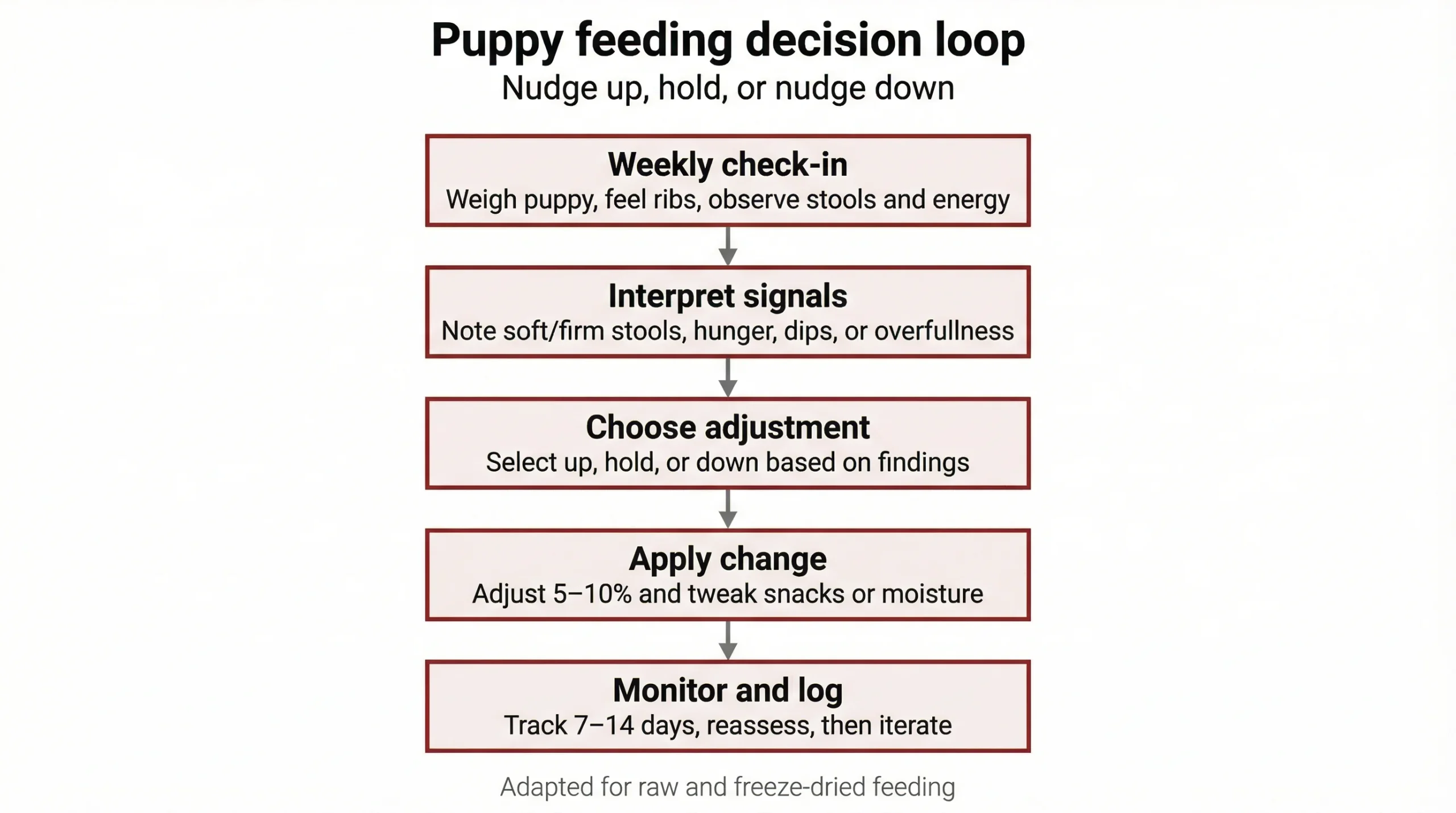
Puppies gain weight weekly. Portions that were perfect two weeks ago may now be light or heavy. The single decision is “nudge up, hold, or nudge down.” You will make that decision with measurable signals and simple math.
Anchor to the broader framework: start with the raw diet hub
This scenario guide zooms into puppies on raw and freeze‑dried raw. For wider context, including pantry setups and protein variety logic, please start with the raw diet hub to see how all pieces fit together.
Quick decision guide: if X, then Y (growth‑stage logic)
0–12 weeks: rapid growth, 4 meals/day
If weight is climbing fast with soft stools, reduce portions slightly and hold. If ribs feel sharp between meals, increase daily total 5–10%. Keep four meals to smooth energy and digestion during this period.
3–6 months: steady growth, 3 meals/day
If midday energy dips or hunger cues intensify, keep portions steady but add a top‑up snack. If stools firm excessively, increase moisture or slightly reduce bone content while maintaining three meals.
6–12+ months: tapering growth, 2 meals/day
If weight gain slows and body condition trends fluffier, nudge portions down 5%. If activity expands with training, add 5–10% around workouts without overshooting daily totals over the week.
Toy vs. giant breeds: adjusting by expected adult weight
If your breed is toy, bias toward the higher end of feeding ranges and retain extra meals longer. If giant, bias lower and monitor joints, growth pace, and mineral intake carefully to avoid excessive growth.
Activity, stool, and rib feel: the three daily signals
If activity is strong, stools are formed, and ribs feel smooth with a slight covering, hold. If two of three drift off target, adjust portions 5% and reassess in a week for stability.
Portion math made practical (raw and freeze‑dried)
Base ranges by life stage (% of current body weight)
Use raw diet portions by weight as a starting map. 0–12 weeks: 6–10% of current weight. 3–6 months: 5–8%. 6–12 months: 3–6%. Select low or high ends based on size, metabolism, and stool feedback.
Converting freeze‑dried to rehydrated weight
Freeze‑dried raw for puppies is concentrated. Check label rehydration ratios. If a label suggests one part food to two parts water by weight, multiply dry grams accordingly. Track stool and energy, then fine‑tune the dry portion amount.
Example calculations for toy, medium, and giant breeds
Toy, 2 kg at 10%: 200 g rehydrated per day; split into four meals. Medium, 10 kg at 6%: 600 g rehydrated daily; three meals. Giant, 25 kg at 3.5%: 875 g rehydrated; two or three meals with close monitoring.
For transitioning or training convenience, many pet owners find Everfresh Freez-Dried food – Beef 500g helpful for this task.
Monitoring: what to check at 7–14 days and 4–8 weeks
Short‑term (7–14 days): stools, energy, hydration
Look for formed, easy‑to‑pass stools, bright energy, and steady hydration. If stools loosen, reduce total intake 5% or adjust bone and moisture. Keep mealtimes consistent and watch for post‑meal comfort.
Medium‑term (4–8 weeks): growth curve, BCS, coat and skin
Plot weekly weights and Body Condition Score. You want visible waist and palpable ribs with a slight fat cover. Coat should stay glossy, and skin calm. Nudge feeding bands only when trends persist.
Record‑keeping checklist and when to nudge portions
Track weight, meals, grams fed, stools, thirst, and training volume. Nudge portions by 5% when two consecutive check‑ins show drift. Maintain changes for one week before reassessing to avoid oscillation.
Practical safety boundaries
Calcium‑phosphorus balance and bone guidelines
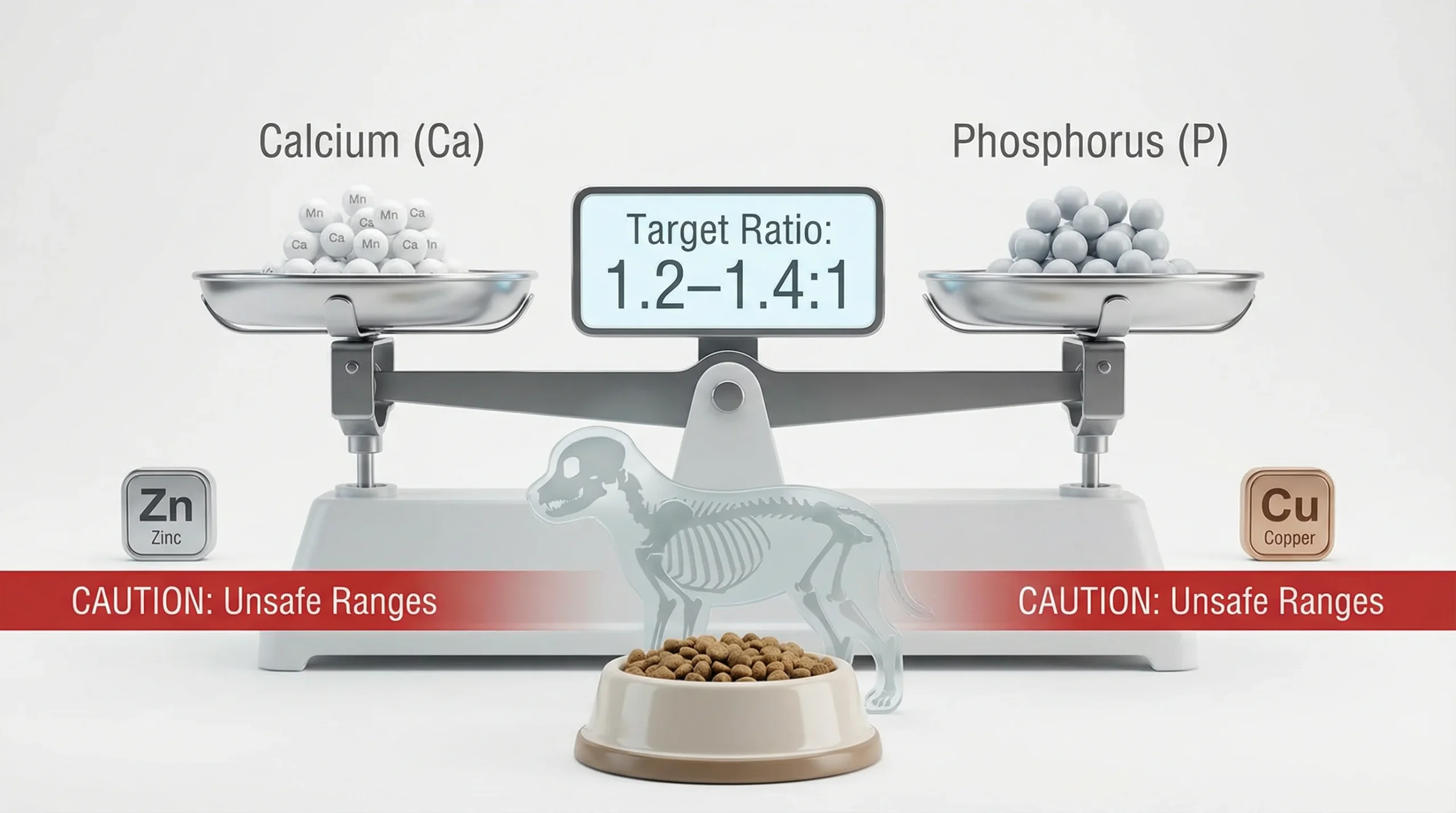
Evidence shows improper mineral ratios in homemade raw may contribute to abnormal bone mineralization and growth disorders, especially in growing dogs[1][3]. Large‑breed guidelines often cap calcium on a dry‑matter basis to limit excessive growth spurts[2].
Safe handling, rehydration, and storage basics
Follow clean‑surface prep, separate utensils, and label rehydration instructions. Store rehydrated portions chilled and use promptly. For a clear routine, bookmark our home hygiene and safe handling checklist for raw and freeze‑dried feeding.
Red flags that warrant veterinary input
Seek vet advice if growth stalls, lameness appears, ribs vanish or protrude suddenly, persistent vomiting occurs, or chronic diarrhea emerges. Professional support helps protect long‑term skeletal health during growth.
Evidence status and where claims are stronger vs. emerging
Areas with more consensus (energy needs, growth monitoring)
There is stronger agreement on tailoring energy to growth pace, tracking Body Condition Score, and avoiding mineral excesses in puppies. Multiple reports highlight risks from unbalanced homemade raw during growth[4][3].
Areas with emerging evidence (microbiome, functional add‑ons)
Research into raw‑fed microbiomes and functional additions is expanding. Benefits and risks may depend on formulation quality and handling practices, so a cautious, evidence‑aware approach is wise[2][4].
How to read labels for complete and balanced puppy formulas
Look for “complete and balanced” for growth or all life stages, plus clear mineral disclosures. Cross‑check calcium and phosphorus, and confirm feeding guides fit your weight trend and puppy raw feeding schedule.
Breed‑size nuances without overcomplicating
Small breeds: hypoglycemia risk and meal frequency
Small breeds may benefit from more frequent, smaller meals longer. Slightly higher percentage ranges often work. Keep snacks lean, and ensure energy delivery is evenly spaced to support stable blood sugar.
Large/giant breeds: controlled growth and mineral limits
Use conservative feeding bands and scrutinize mineral content closely. Controlled growth protects joints and long‑term structure. Avoid adding extra calcium or excessive bone while your large puppy is developing.
Troubleshooting by signal
Loose stools, firm stools, or constipation
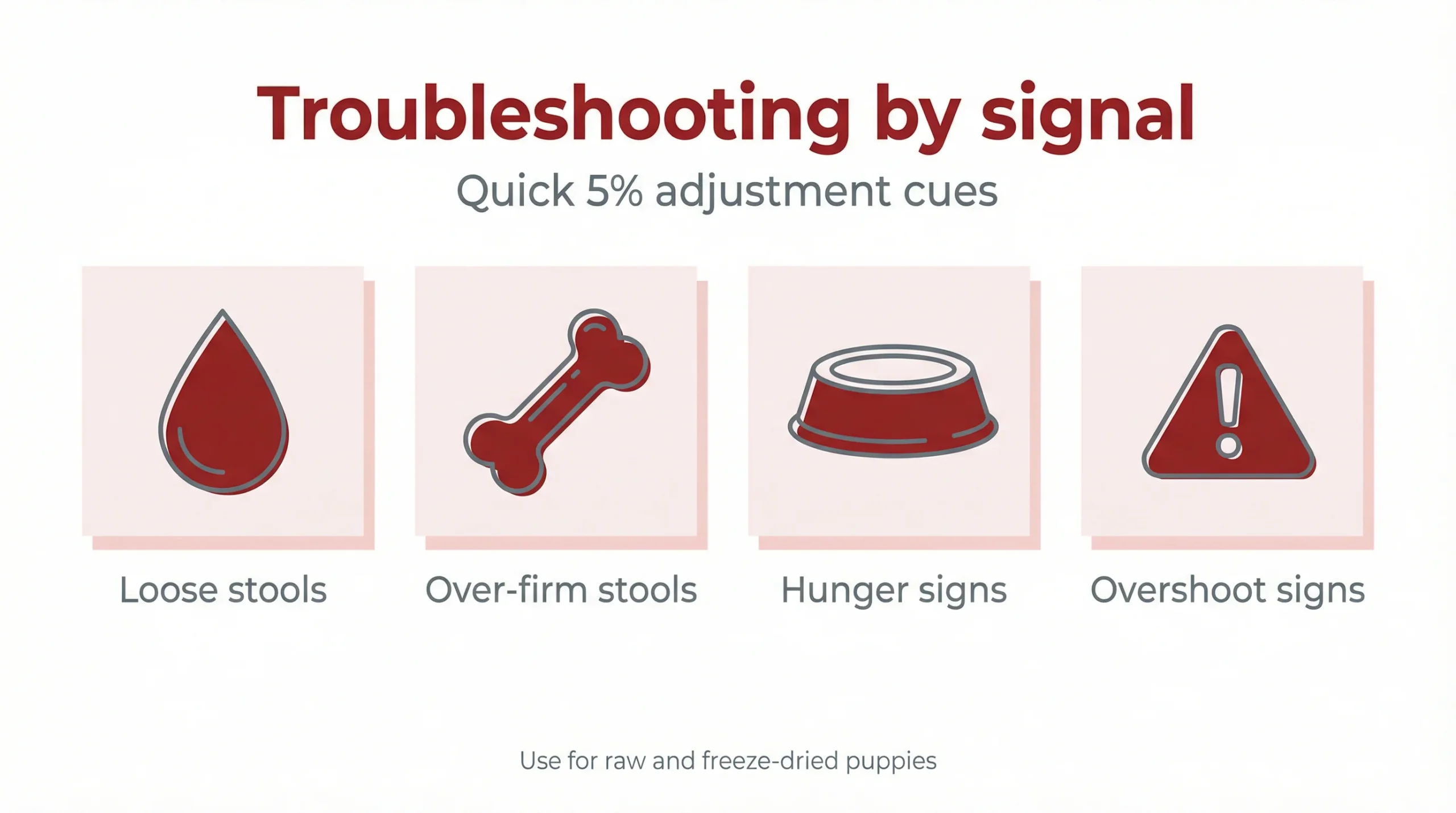
Loose stools: reduce total 5%, increase bone‑in proportion modestly, and reassess. Over‑firm: add moisture and reduce bone. For sensitive transitions, see our gentle introduction and stool tracking plan for stepwise adjustments.
Hunger cues vs. overfeeding signs
Hunger: quick bowl finishes, rib sharpness, food seeking. Overshoot: sluggishness, regurgitation, or rounded silhouette. Adjust by 5% and observe two days before deciding on another nudge.
Activity spikes or dips after meal changes
Post‑change dips may signal underfeeding or dehydration; add moisture first, then 5% more food if needed. Spikes with restlessness may reflect overshooting energy; trim portions slightly and stabilize.
Glossary and measurement references
Body Condition Score (BCS) for puppies
BCS estimates fat coverage. Ideal puppies show an hourglass waist from above, an abdominal tuck from the side, and palpable ribs with a thin fat layer. Track photos monthly for consistency.
Expected adult weight and growth curves
Use breed standards or vet estimates to project adult weight. Plot weekly weights and compare to expected curves. Aim for steady increases without rapid spikes, especially in large or giant breeds.
Frequently Asked Questions
How much raw or freeze‑dried raw should a puppy eat per day?
Many puppies start between 4–8% of current body weight split into 3–4 meals. Adjust weekly based on stool quality, body condition, and weight trends. Freeze‑dried amounts should be converted to rehydrated weight per label guidance.
How often should I feed a puppy on raw?
Typically 4 meals/day up to 12 weeks, 3 meals/day from 3–6 months, and 2 meals/day from about 6–12 months. Small breeds may benefit from more frequent, smaller meals longer.
What should I monitor when switching a puppy to raw?
Track stool consistency, appetite, energy, hydration, weekly weight, and body condition. Reassess portions after 7–14 days and again at 4–8 weeks, adjusting by small increments.
Is calcium balance important for puppies on raw?
Yes. Puppies need appropriate calcium‑to‑phosphorus ratios. Use complete and balanced puppy formulas or consult a professional before adding bones or supplements.
Can freeze‑dried raw support travel or training for puppies?
Freeze‑dried formats may support convenience. Rehydrate per instructions, store safely, and keep portions aligned with growth‑stage needs to maintain consistent energy and digestion.
Conclusion
Raising puppies on raw or freeze‑dried raw gets easier with a repeatable process. Use stage‑based percentages, convert freeze‑dried carefully, and monitor stools, ribs, and weight trends. Adjust portions in small steps and prioritize balanced formulations. If signals drift, troubleshoot calmly, document changes, and revisit your goals. A steady, thoughtful routine may support healthy growth, bright energy, and happy mealtimes—without guesswork. And when in doubt, partner with your veterinarian to keep growth on track while you enjoy each milestone with confidence and care.
References
- S Dodd et al. (2021). Abnormal bone mineralization in a puppy fed an imbalanced raw meat homemade diet diagnosed and monitored using dual‐energy X‐ray absorptiometry. Journal of animal …. View article
- D Głowny et al. (2024). Raw diets for dogs and cats: Potential health benefits and threats. Polish journal of …. View article
- G Hall et al. (2020). Severe nutritional deficiencies and osteopenia in a dog fed a homemade raw diet. … Record Case Reports. View article
- Y Lyu et al. (2025). Current evidence on raw meat diets in pets: a natural symbol, but a nutritional controversy. Animals. View article