

Uncategorized
Safe Handling for Raw and Freeze‑Dried Dog Food: A Home Hygiene Checklist
May
Safe Handling for Raw and Freeze‑Dried Dog Food: A Home Hygiene Checklist
Raw and freeze‑dried meals can be vibrant, nutritious options for dogs. They also ask for smart hygiene at home. Small routine tweaks help everyone stay confident and safe.
This checklist makes day‑to‑day handling easier. It prioritizes storage, thaw‑less serving, cross‑contamination prevention, and family safety. You will learn what to do before, during, and after feeding. You will also get practical boundaries that keep households protected.
Why hygiene matters with raw and freeze‑dried diets
Key differences: raw vs. freeze‑dried handling
Raw diets are perishable and moisture‑rich, so they demand strict cold‑chain handling and rapid cleanup. Freeze‑dried may store safely at room temperature when sealed and dry. Yet, it benefits from clean tools, dry scoops, and handwashing.
Rehydrated freeze‑dried behaves like raw. Once water is added, treat it as perishable. Serve promptly, manage leftovers conservatively, and sanitize bowls. These distinctions reduce risk without complicating your routine.
Linking safety to nutrition: start with raw feeding fundamentals
Good hygiene supports great nutrition by preserving food quality and limiting avoidable exposure. If you are new to raw, review the essentials in our raw feeding fundamentals. Aligning safety and nutrition helps every family member feel comfortable.
Step‑by‑step home hygiene checklist
Before feeding: set up and storage
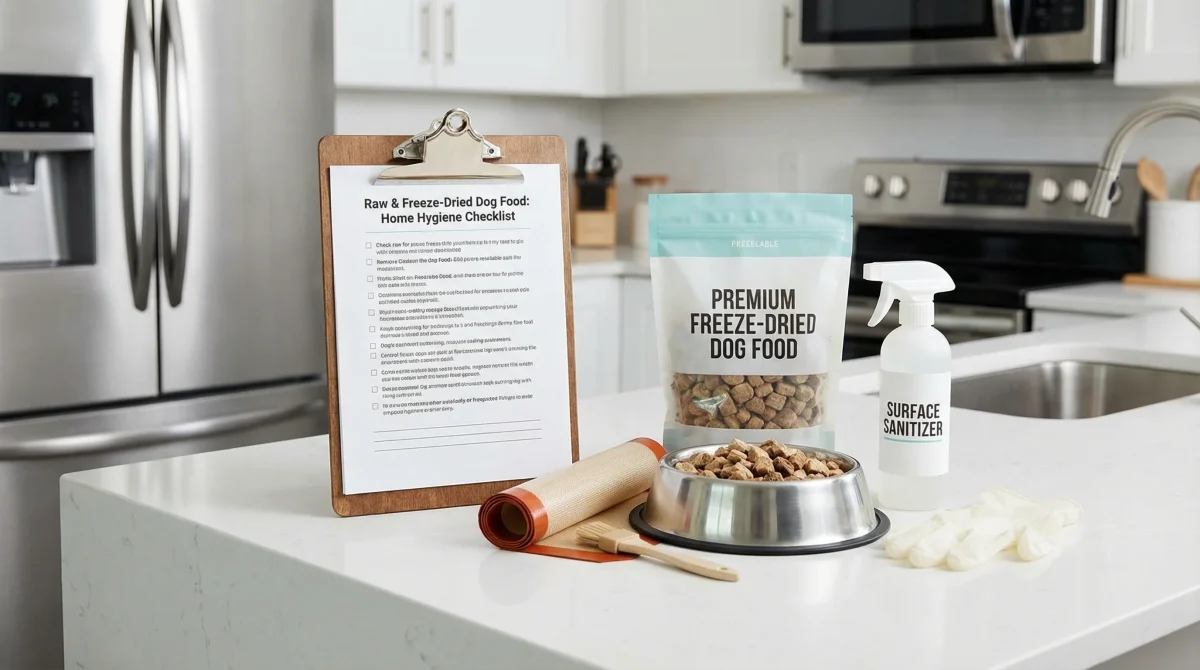
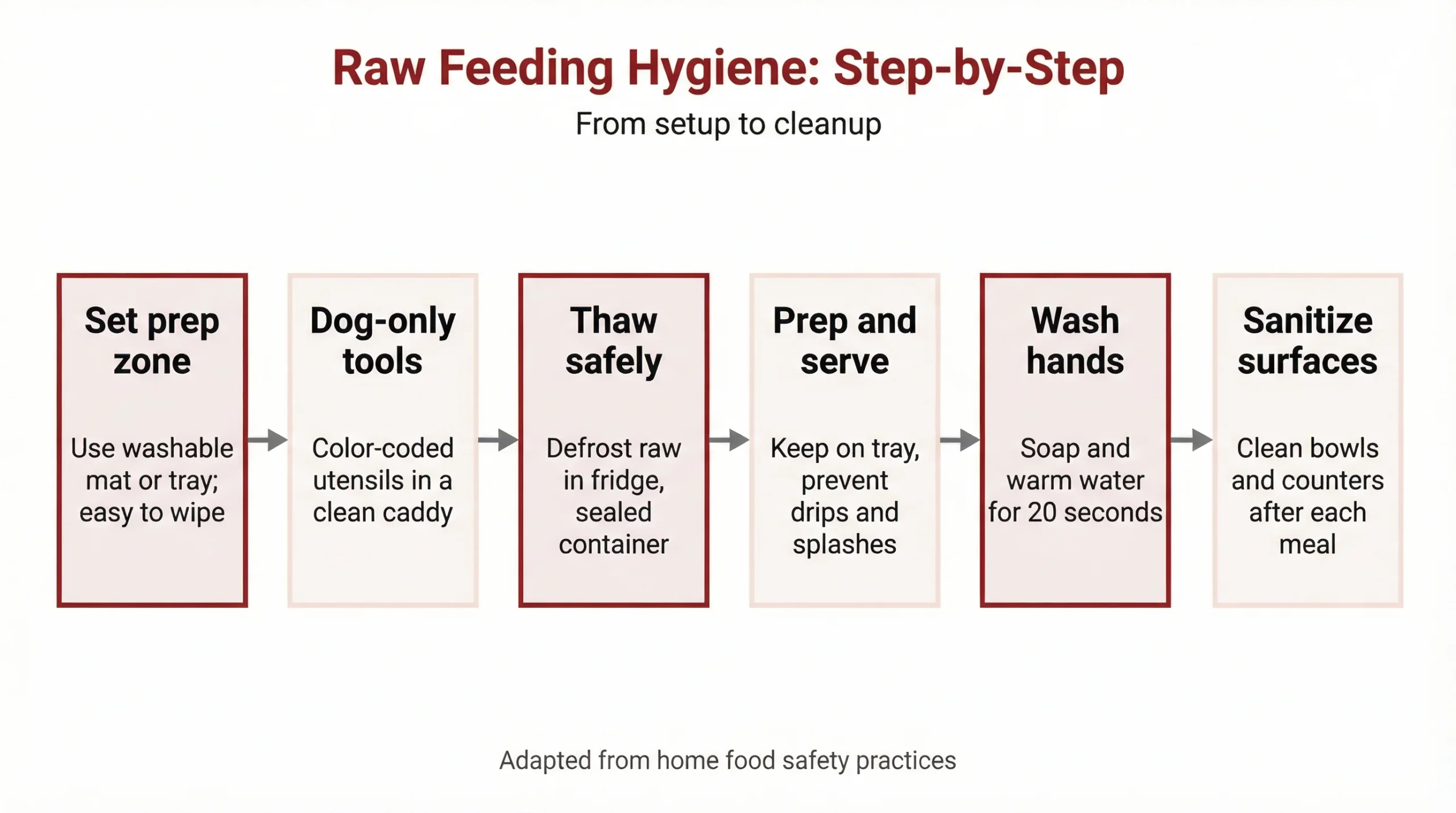
Designate a prep area that is easy to wipe, with a washable mat or tray. Keep dog‑only utensils in a clean caddy, and use color‑coding for clarity. Store freeze‑dried foods in their original, sealed packaging. Keep them dry, cool, and away from sunlight.
For raw frozen, defrost in the refrigerator, inside a sealed container. Place it on a dedicated shelf to prevent drips. Wash hands with soap and warm water for at least 20 seconds before handling any pet food, including freeze‑dried portions.
During feeding: handling and serving
Use a clean scoop each time. If serving freeze‑dried dry, keep scoops and bowls clean and dry. If rehydrating, use potable water around room temperature, and mix in a clean bowl. Avoid preparing human foods simultaneously on the same surface.
Prevent pet saliva from contacting human dishes. Avoid touching your face while preparing meals. If using a feeding mat, ensure it is non‑porous and easy to wash. Keep toddlers and curious hands away during prep and feeding.
After feeding: cleaning and sanitizing
Wash bowls, scoops, and surfaces with hot, soapy water. Rinse thoroughly. For periodic disinfection, use diluted bleach at about one tablespoon per four liters. Rinse well and air‑dry fully to prevent residues.
Wipe down prep areas, taps, and handles. Launder cloths at high temperatures, or switch to disposable towels for raw cleanup. Evidence suggests that consistent sanitation practices reduce environmental contamination risk in households with pets[3].
Quick decision guide: if X, then Y
Common household scenarios and the safest next step
- If freeze‑dried kiblets spill on the counter, wipe up immediately and clean the surface with hot, soapy water. Dry completely.
- If raw juice drips in the fridge, discard exposed items, then clean the shelf with detergent. Disinfect, rinse, and dry before restocking.
- If a child touches the dog’s bowl, guide handwashing right away with soap and water. Wipe nearby surfaces for added reassurance.
- If rehydrated food sits out for an hour, discard it. Wash the bowl and utensils, then review portion sizes to reduce leftovers.
- If the dog drags food onto the floor, clean the area promptly. Mop with detergent, then rinse. Launder or replace any fabric mats.
- If your pet has soft stools after diet changes, reduce portion size slightly and add water gradually. Track changes for 48 hours.
- If you feel rushed or distracted, pause feeding prep. Return when you can follow your full hygiene routine without shortcuts.
Practical safety boundaries
Non‑negotiables for households with kids, seniors, or immunocompromised members
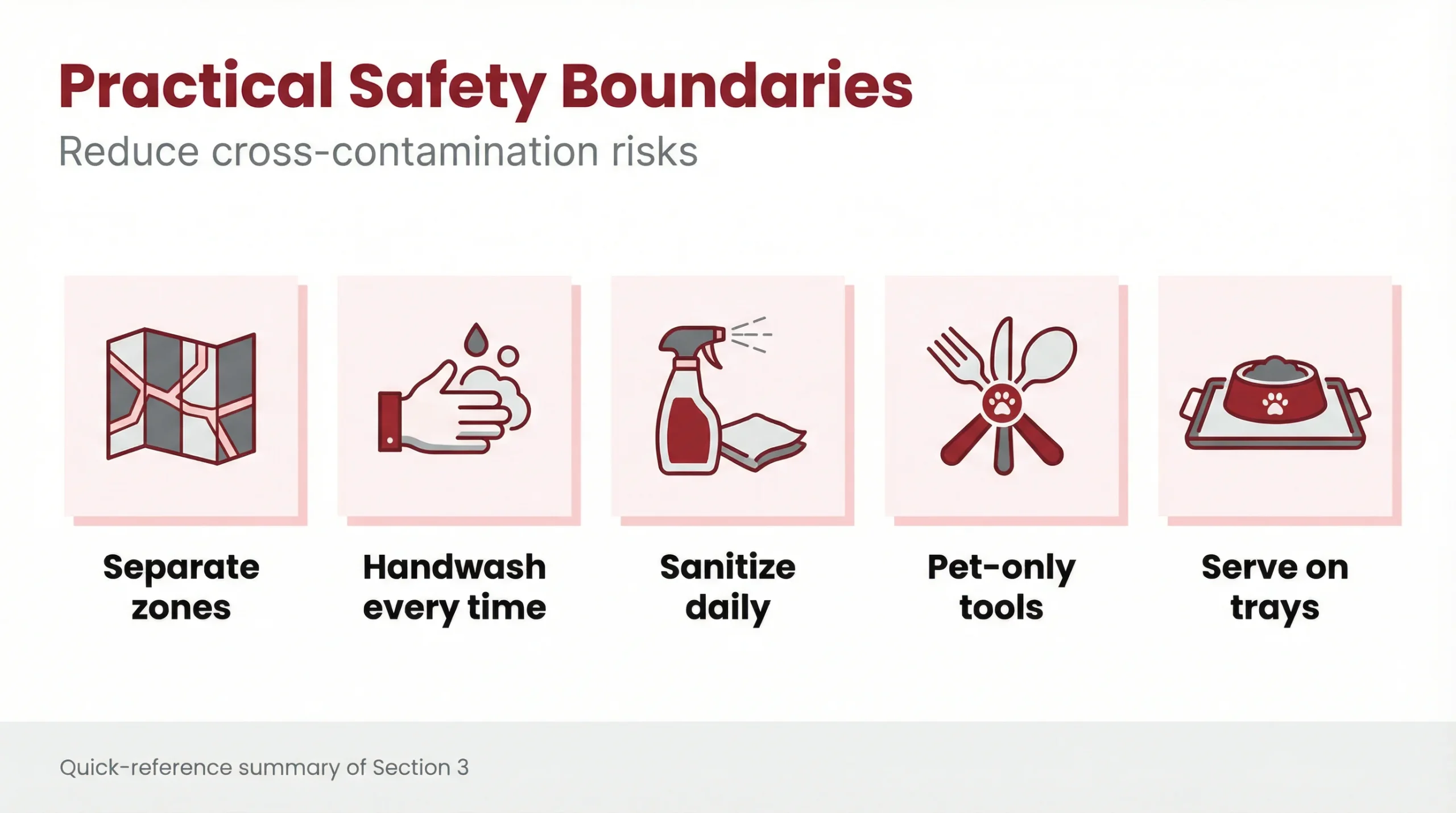
Keep feeding zones separate from human meal prep areas. Wash hands after every contact with pet food, bowls, or saliva. Sanitize bowls and surfaces daily. Supervise children closely during feeding, and store products out of reach.
Consider serving on washable trays. Use color‑coded, pet‑only tools. Evidence indicates raw diets can carry bacterial hazards; careful hygiene may reduce risks to vulnerable family members[2][3].
When to avoid raw and use freeze‑dried instead
If refrigerator space is limited, or if cross‑contamination worries are high, freeze‑dried may be a simpler option. Lower water activity can limit bacterial growth during storage, though hygiene still matters[1].
For households with multiple caregivers, standardize a routine with scoop‑and‑serve steps. When rehydrating, treat it like raw and follow stricter cleanup.
Monitoring: what to observe over 7–14 days and 4–8 weeks
Kitchen hygiene indicators
Within 7–14 days, check whether bowls and surfaces are consistently cleaned after each meal. Note whether dishcloths and sponges are replaced or sanitized regularly. Confirm that tools and storage containers are dry before closing.
By 4–8 weeks, review near‑misses. Did spills get cleaned immediately? Are bleach solutions mixed safely when used? Assess whether the setup encourages easy, repeatable hygiene habits.
Pet health and digestion signals
Over 7–14 days, observe appetite, stool consistency, and energy. Minor transitions may cause brief changes. Adjust water addition and portion sizes gradually with a portion and hydration guide.
At 4–8 weeks, stools should be predictable, and breath and coat may normalize. If persistent issues arise, pause changes and seek veterinary guidance. Revisit handling steps to rule out preparation errors.
Household compliance and routine fit
In 7–14 days, ask each caregiver to describe the routine. Gaps often reveal where labeling or color‑coding helps. Confirm everyone knows sanitizer dilution and safe contact times.
At 4–8 weeks, evaluate whether the workflow feels natural. If not, simplify: reduce tools, designate a single prep zone, or switch to freeze‑dried dry serving when appropriate.
Evidence status: what we know and what is emerging
Pathogen risk and mitigation: what evidence suggests
Research indicates raw diets can harbor pathogens relevant to animal and human health. Risks include Salmonella and other bacteria that warrant practical hygiene controls at home[2][3].
Contamination levels vary by product and handling. Studies analyzing commercial raw foods highlight variability and underscore the value of consistent cleanup to reduce household exposure[4].
Sanitizing methods: soap, hot water, and diluted bleach vs. alternatives
Routine dishwashing with hot, soapy water followed by thorough rinsing may be sufficient for daily use. Periodic disinfection using diluted bleach can add an extra safety margin when used correctly and rinsed well.
Vinegar alone is not a registered disinfectant. Alcohol and peroxide can be effective on small surfaces but may require specific concentrations and contact times. Choose methods that fit your household and remain consistent.
Mixed‑diet households: preventing cross‑contact
Zoning the kitchen and color‑coding tools
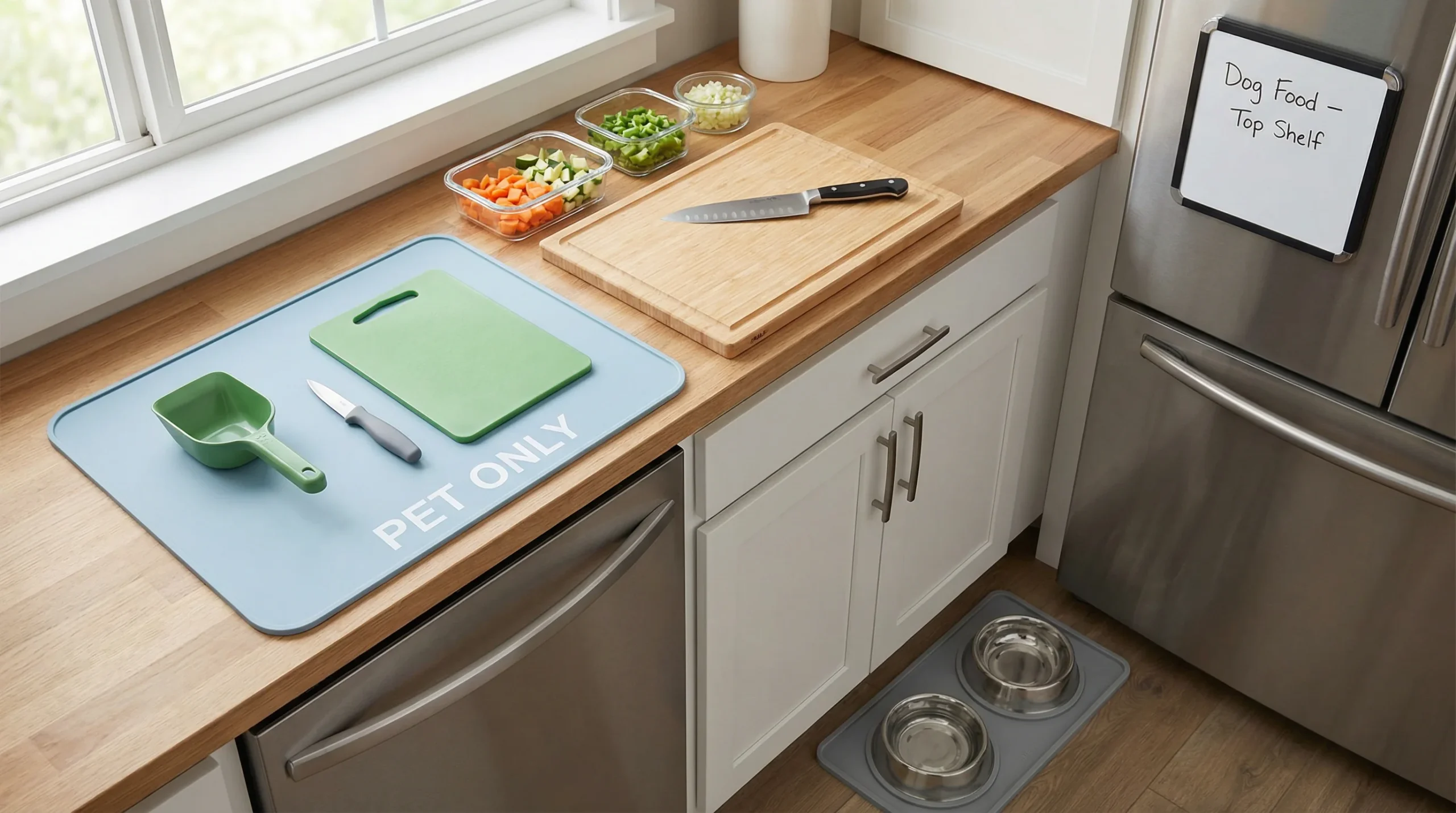
Set distinct zones for pet food prep, human meal prep, and dish drying. Use a color‑coded system for scoops, knives, and cutting boards. Label shelves and containers for quick identification and fewer mistakes.
If you manage sensitivities, consider hypoallergenic single‑protein meals to reduce complexity. Keep treats and meals separated by protein type. Wipe shared surfaces immediately after use to minimize cross‑contact.
Dishwasher, drying racks, and laundry best practices
Dishwashers on hot cycles may help sanitize bowls and utensils. Space items to allow full spray coverage and drying. If handwashing, air‑dry on a clean rack to avoid re‑contamination.
Launder cloths, aprons, and pet towels at high temperatures. Replace sponges frequently. For heavy raw prep days, consider disposable paper towels to simplify cleanup.
Product‑specific notes for freeze‑dried meals and treats
Storage, rehydration water ratios, and timing
Store freeze‑dried products sealed, cool, and dry. After opening, re‑seal tightly and use a clip or airtight container. Avoid humidity. For rehydration, a starting ratio of one part food to one to two parts water often works.
Mix with potable water, wait a few minutes for full absorption, and serve promptly. For a practical example during transitions, many pet owners find Everfresh Freez-Dried food – Beef 500g helpful for this task.
Travel and outdoor handling without refrigeration
Freeze‑dried is ideal for travel because it is lightweight and shelf‑stable when dry. Pack pre‑measured portions in sealed bags. Carry a collapsible bowl and clean water for safe rehydration on the go.
Keep hand sanitizer available, and wash hands when possible. For itinerary planning and kit checklists, see tips for Raw on the Go: Travel, Hiking, and Boarding with Freeze‑Dried Meals. Maintain the same cleanup routine outdoors.
Frequently Asked Questions
Do I need to disinfect after feeding freeze‑dried dog food if it is served dry?
Basic cleaning is still recommended. Wipe surfaces, wash bowls and utensils with hot soapy water, and dry thoroughly. Evidence suggests this reduces cross‑contamination risk.
How long can rehydrated freeze‑dried dog food sit out safely?
Aim to serve immediately and discard leftovers after 30–60 minutes at room temperature. In warmer rooms, err on the shorter side to limit bacterial growth.
What sanitizer is safe for dog bowls?
Hot soapy water followed by thorough rinsing may be sufficient for routine cleaning. For periodic disinfection, a diluted bleach solution (about 1 tablespoon per 4 liters) can be used, then rinse well and air‑dry.
Is freeze‑dried dog food safer than raw from a hygiene perspective?
Freeze‑drying lowers water activity, which may limit bacterial growth during storage, but good hygiene still matters. Evidence suggests standard food‑safe practices reduce risk further.
Can children handle the dog’s bowls or treats?
It is prudent to keep children away during prep and feeding, wash hands after any contact, and store products out of reach. This boundary may reduce household exposure.
Conclusion
Safe handling does not need to be complicated. A few consistent habits protect your family while letting your dog enjoy raw and freeze‑dried meals. Set clear zones, clean tools promptly, and stay mindful with rehydration.
Adopt the decision guide, refine your workflow over a few weeks, and keep monitoring simple signals. With thoughtful hygiene, you can feed confidently and enjoy mealtimes with peace of mind.
References
- CG Vecchiato et al. (2022). From nutritional adequacy to hygiene quality: a detailed assessment of commercial raw pet-food for dogs and cats. Animals. View article
- RH Davies et al. (2019). Raw diets for dogs and cats: a review, with particular reference to microbiological hazards. Journal of small animal …. View article
- P Antunes et al. (2024). Pet food safety: emerging bacterial hazards and implications for public health. Current Opinion in Food …. View article
- S Kananub et al. (2020). Contamination factors associated with surviving bacteria in Thai commercial raw pet foods. Veterinary …. View article