

Uncategorized
Elimination diet for suspected food allergy: a 6–8 week step-by-step plan

May
Elimination diet for suspected food allergy: a 6–8 week step-by-step plan
Food reactions can look like everything and nothing at once. Itchy skin, ear issues, gas, or loose stools can blur together with seasonal triggers. That’s frustrating.
A strict elimination diet can bring clarity. It creates a clean slate and tests one question with discipline. In this guide, you’ll learn a practical, clinician-style protocol, monitoring tips, and the pitfalls to avoid.
What this 6–8 week elimination diet aims to answer
One problem: is your dog’s itching or GI upset food-related?
This protocol isolates a single, well-defined protein and keeps everything else constant. If signs ease notably, food may be a key driver. If not, other causes become more likely. An elimination diet remains the primary diagnostic approach for adverse food reactions in dogs.[4]
When an elimination diet makes sense vs. when it doesn’t
It makes sense for chronic itching, recurrent ear infections, or GI signs without a clear cause. It does not replace parasite checks, infection control, or managing severe flares. Most protocols recommend 6–8 weeks of strict feeding for meaningful results.[2]
Quick decision guide: if X, then Y
Choose the right starting point in 30 seconds
- If itching is severe, ask your vet about a short anti-itch bridge while starting the diet; this may not prevent interpretation later.[2]
- If GI signs dominate, prioritize easily digestible, single-protein meals with steady hydration.
- If you tried a “limited ingredient” diet without strict control, restart with verified single-protein and zero extras.
- If your dog has eaten many proteins, consider a true novel protein or a hydrolyzed option.
- If weight is low, calculate calories carefully and monitor body condition weekly.
- If travel is upcoming, batch and pre-portion now to keep variables identical.
Step-by-step protocol (weeks 0–8)
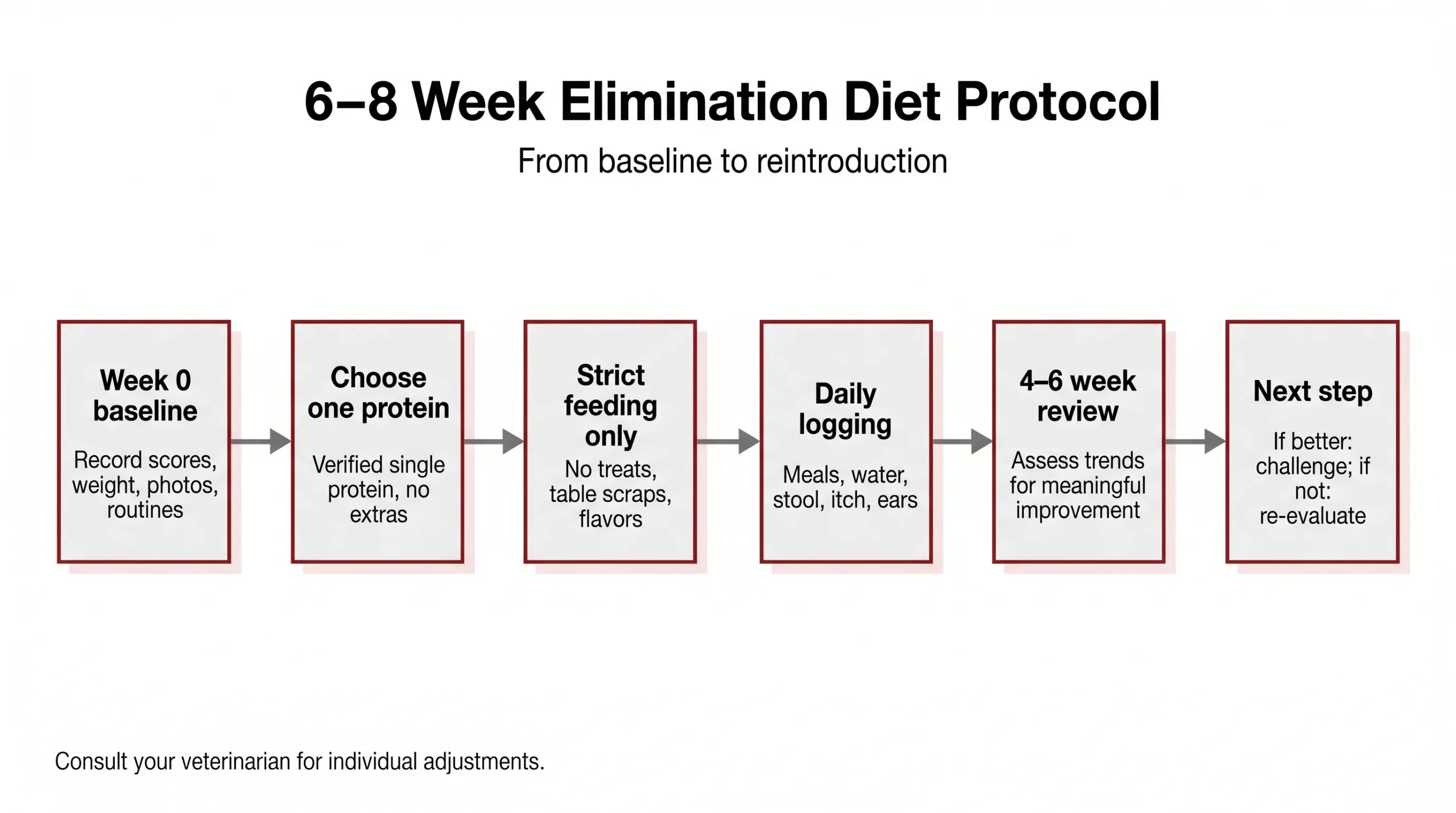
Week 0: preparation, baseline scoring, and protein selection
Record baseline itch (0–10), stool consistency, frequency, vomiting, and ear/skin status. Photograph problem areas. Choose a single protein your dog has not eaten. Weigh and portion meals for seven days to prevent slip-ups.
Weeks 1–2: strict feeding and early stabilization
Feed only the chosen single protein diet. No treats, table scraps, flavored meds, or chews. Maintain consistent portions and water. Some vets use short prednisolone early to control itch while the diet begins.[2]
Weeks 3–4: maintain, document, and troubleshoot
Re-score weekly. Look for steady itch reductions or improved stools. If no gains appear, double-check for hidden exposures. A shortened trial may miss some cases, so stay the course unless safety is at risk.[1]
Weeks 5–6: confirm trend and tighten variables
If improvement is partial, tighten compliance further. Replace flavored preventives with non-flavored options temporarily. Remove dental chews. Confirm that household members follow the same rules daily.
Weeks 7–8: decision point and optional challenge
If signs improved meaningfully, plan a controlled reintroduction challenge. If there is no change, consider a different novel or hydrolyzed protein next. Revisit parasites, infections, and medications that may confound results.
How to choose the elimination food
Single-protein, minimally processed options
Choose a verified single protein diet with clear labeling and minimal extras. Freeze-dried, single-protein options may support consistency and a dog food allergy elimination diet by limiting variables and improving palatability.
Many pet owners find Everfresh Freez-Dried food – Horse 500g helpful for this task.
Novel vs. hydrolyzed proteins and practical trade-offs
Novel protein dog food uses meats your dog has never eaten, aiming to avoid sensitized proteins. Hydrolyzed diets break proteins into smaller fragments that may be less reactive. Evidence supports both approaches for food trials.[4]
Why freeze-dried may support consistency and compliance
Freeze-dried meals are convenient, batch-consistent, and easy to portion. That can reduce handling errors and maintain a reliable single protein diet for dogs. For protein ideas, see how to choose first proteins like horse, beef, or fish: which single protein to try first.
Monitoring guidance: what to expect and when
After 7–14 days: early signs of improvement
GI signs may soften first. Look for reduced gas, fewer accidents, better stool form, and less urgency. Skin improvement may be slower. Maintain hydration and consistent rehydration ratios for freeze-dried meals to protect stools.
For practical portioning and travel routines, see tips within safe meal planning using freeze-dried options.
After 4–8 weeks: response thresholds and next steps
Many dogs with food-triggered signs show skin or ear relief by 4–8 weeks. If the trend is unclear, extend slightly or audit compliance. Reassess infections and medications before deciding the trial failed.[4]
Symptom scoring templates you can use
Track daily itch (0–10), stool score (1–7), vomit episodes, ear debris/odor, and sleep quality. Add notes on environment, bathing, and medications. Weekly photos help visualize skin and paw progress.
Practical safety boundaries
Minimum calories, hydration, and stool safety checks
Calculate calories based on ideal body weight and activity. Check body condition weekly. Ensure steady water intake, especially with freeze-dried meals. If stools are persistently watery or bloody, pause and contact your veterinarian.
When to pause and contact a veterinarian
Stop and seek veterinary help for lethargy, repeated vomiting, blood in stool, rapid weight loss, or severe itch causing trauma. Safety outranks strictness. Your vet can adapt the hypoallergenic dog diet plan.
Medication, parasites, and skin infections that can mask results
Flavored meds, fleas, mites, and skin or ear infections may blur diet effects. Treat these appropriately, ideally before or early in the trial, to avoid misleading outcomes.[4]
Common pitfalls that derail results
Hidden proteins, treats, and cross-contact
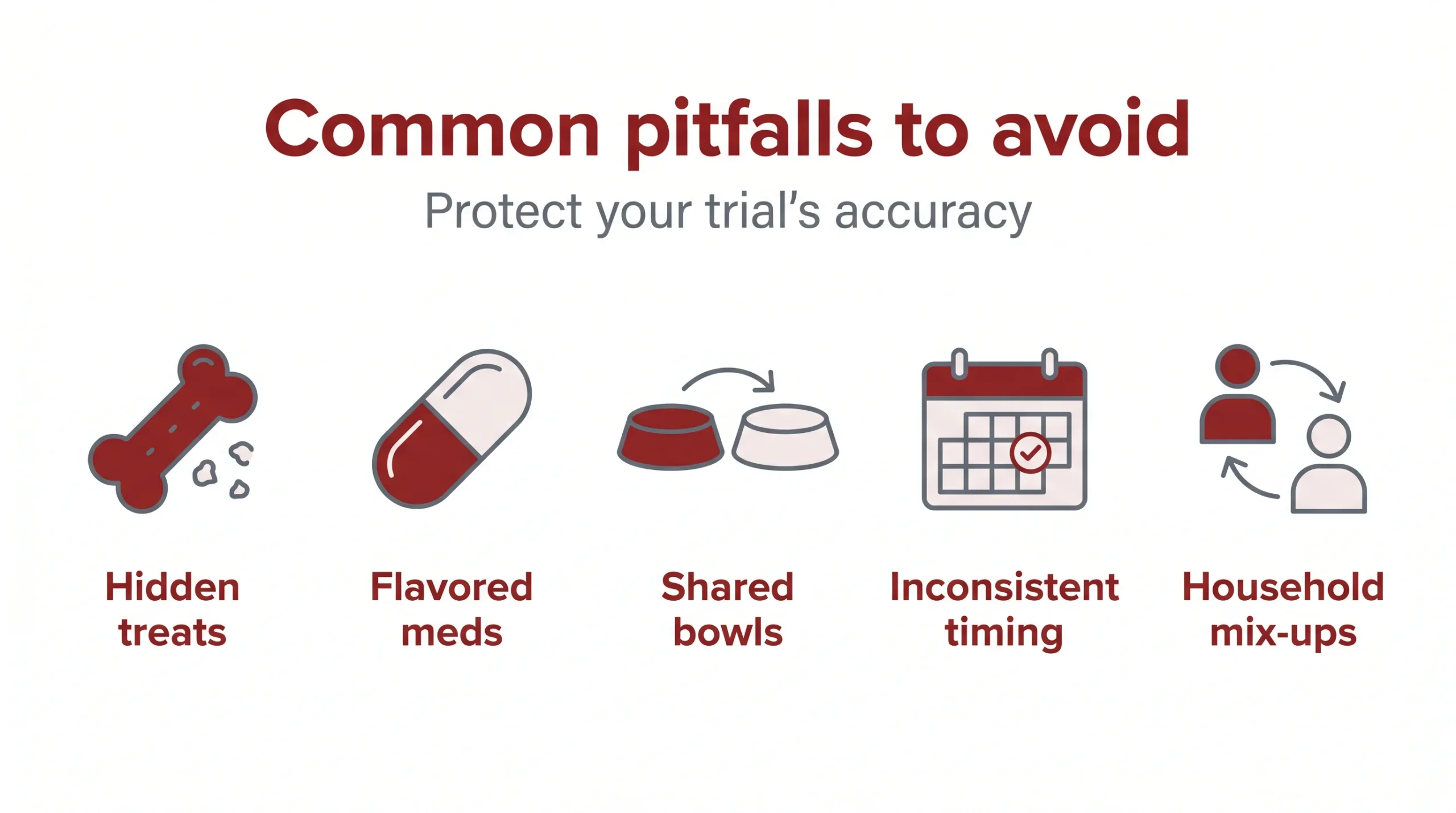
Shared bowls, training treats, or family snacks can introduce allergens. Prepare dedicated utensils and surfaces. Pre-portion daily meals. Consistency is the backbone of a successful food trial for canine allergies.
Supplements, flavored meds, and dental chews
Many contain chicken, beef, fish oil blends, or flavorings. Ask your vet for unflavored options. Postpone extras unless medically necessary. Document every ingested item in your daily log.
Changing too many variables at once
New shampoo, supplements, or environmental changes complicate interpretation. Change one thing: the diet. If you must add treatments, record exact dates and doses to preserve clarity.
Reintroduction and controlled challenges
How to design a single-ingredient challenge
If your dog improves, reintroduce one old ingredient at a time for 3–7 days. Use small, measured amounts. Watch for itch, GI upset, or ear changes. Return to the elimination diet if flares occur.
Interpreting flares and washout periods
Reactions may appear within hours to days. If signs flare, stop the test ingredient and allow a 1–2 week washout on the baseline diet before challenging another component.
Building a tolerated diet after the trial
Gradually add safe ingredients to create variety without losing control. Keep your log current. For structured schedules and what counts as a reaction, see food reintroduction after elimination.
Evidence status: what research suggests
Expected timelines and response rates in canine trials
Elimination diets remain the reference method for diagnosing adverse food reactions. Many dogs need 6–8 weeks for reliable interpretation, especially with dermatologic signs, though timelines can vary by case.[4]
Novel and hydrolyzed protein evidence summary
Both novel protein and hydrolyzed diets have supporting data. Some studies explored shorter protocols but noted trade-offs in sensitivity and specificity, reinforcing the value of adequate duration and strict control.[1]
Processing methods and contamination risk: what to know
Hydrolyzed and elemental approaches may reduce antigen exposure, though head-to-head superiority remains uncertain. Open-label research on elemental diets suggests potential utility but limitations in design caution firm conclusions.[3]
Tools: shopping list, daily log, and troubleshooting tree
Minimal kit for high compliance
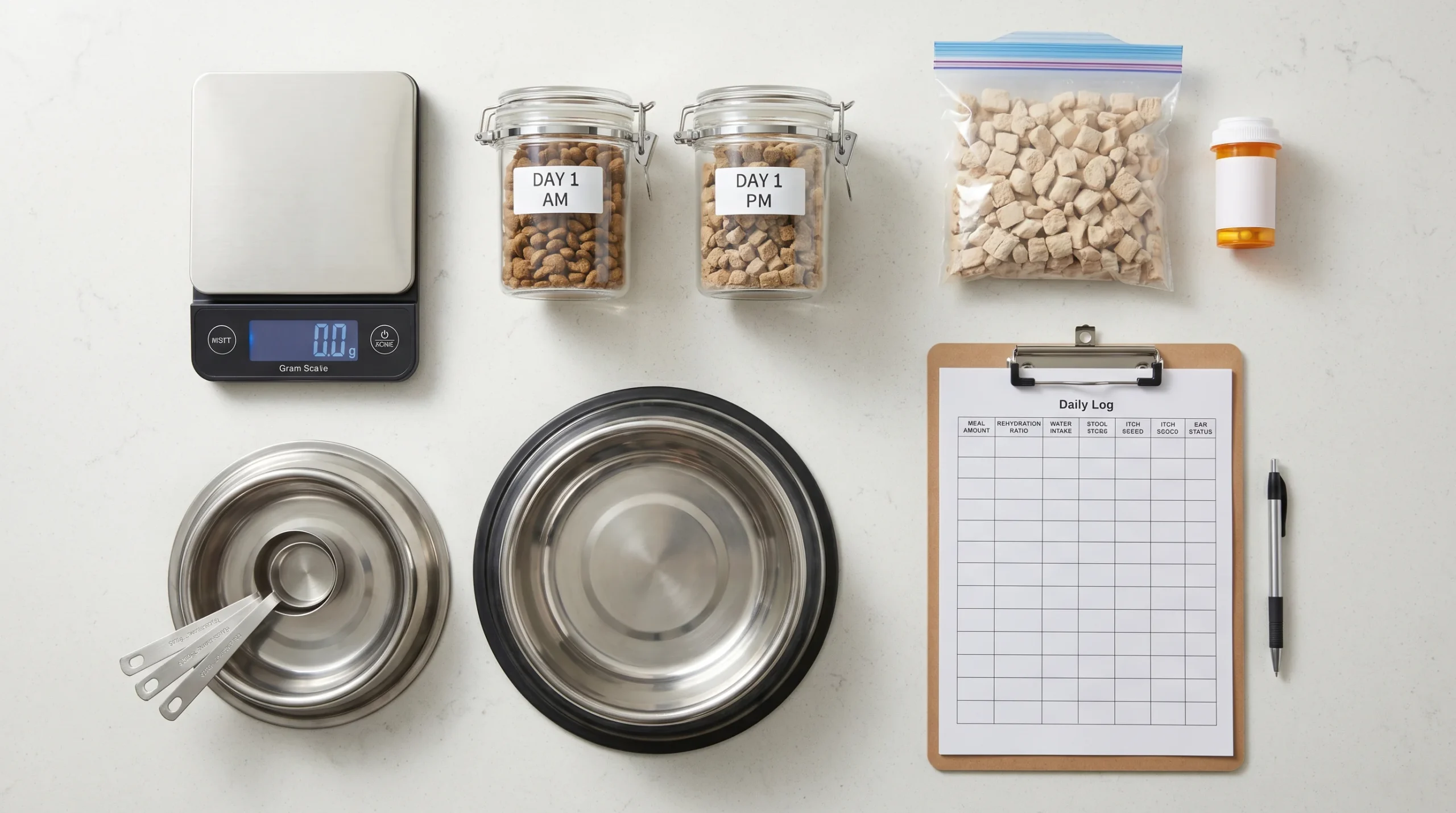
Gather a gram scale, measuring cups, airtight containers, pre-portioned meals, unflavored meds, dedicated bowls, and cleaning tools. Make a household feeding agreement. Post clear “no extras” notes near treat jars.
Daily log template (food, water, stool, itch, meds)
Record each meal amount, rehydration ratio, water intake, stool score, itch score, ear status, meds given, and any extras. Add sleep quality and behavior notes. Review weekly for trends and outliers.
Decision tree for no-improvement scenarios
Step 1: audit compliance. Step 2: check parasites and infections. Step 3: review meds and flavors. Step 4: extend two weeks or switch to a different novel or hydrolyzed protein with veterinary guidance.
If you’re unsure where to start
Prefer a wider context before committing to a trial? Begin with our food allergies in dogs orientation hub for red flags, prioritization tips, and choosing a safe path forward.
Frequently Asked Questions
How long should a canine elimination diet last?
Most dogs need 6–8 weeks of a strict, single-protein diet. Some dermatology cases may require up to 10–12 weeks. Shorter trials risk false negatives.
Can I use treats during an elimination diet?
Only if they are the exact same single protein and contain no other ingredients. Many treats contain mixed proteins or flavors that can confound results.
When should I see improvement in my dog’s symptoms?
Gastrointestinal signs may ease within 7–14 days, while skin and ear issues often take 4–8 weeks. Secondary infections can delay improvement.
Is freeze-dried food suitable for an elimination diet?
It can be suitable if it is a genuine single-protein formula with clear labeling and minimal processing. Consistent batches may support compliance.
What if my dog doesn’t improve after 8 weeks?
Re-check strictness, rule out parasites and infections, review meds for flavors, and consider a different novel or hydrolyzed protein under veterinary guidance.
Conclusion
A strict elimination diet is a disciplined experiment, not a forever plan. Keep one protein, track carefully, and remove every variable you can. Evidence suggests 6–8 weeks often provides the clearest signal, especially for skin issues.[4]
When you’re methodical, the answer becomes visible. With a well-chosen single protein, reliable portioning, and calm consistency, your dog’s comfort can guide your next confident step.
References
- N Fischer et al. (2021). Sensitivity and specificity of a shortened elimination diet protocol for the diagnosis of food‐induced atopic dermatitis (FIAD). Veterinary …. View article
- C Favrot et al. (2019). The usefulness of short‐course prednisolone during the initial phase of an elimination diet trial in dogs with food‐induced atopic dermatitis. Veterinary …. View article
- J Tinsley et al. (2024). An open‐label clinical trial to evaluate the efficacy of an elemental diet for the diagnosis of adverse food reactions in dogs. Veterinary …. View article
- RS Mueller et al. (2018). Adverse food reactions: Pathogenesis, clinical signs, diagnosis and alternatives to elimination diets. The veterinary journal. View article