

Uncategorized
Food allergies in dogs: recognize signs and choose a safe path forward
May
Food allergies in dogs: recognize signs and choose a safe path forward
Is your dog itchy, gassy, or suddenly refusing meals? Food can be a silent culprit. Sorting allergy from intolerance quickly saves time, stress, and unnecessary guesswork.
This guide helps you recognize key signs and avoid common pitfalls. You will learn how to prioritize safety, understand decision paths, and choose simple, single-protein options with confidence.
What canine food allergies are (and what they aren’t)
Allergy vs. intolerance: simple distinctions
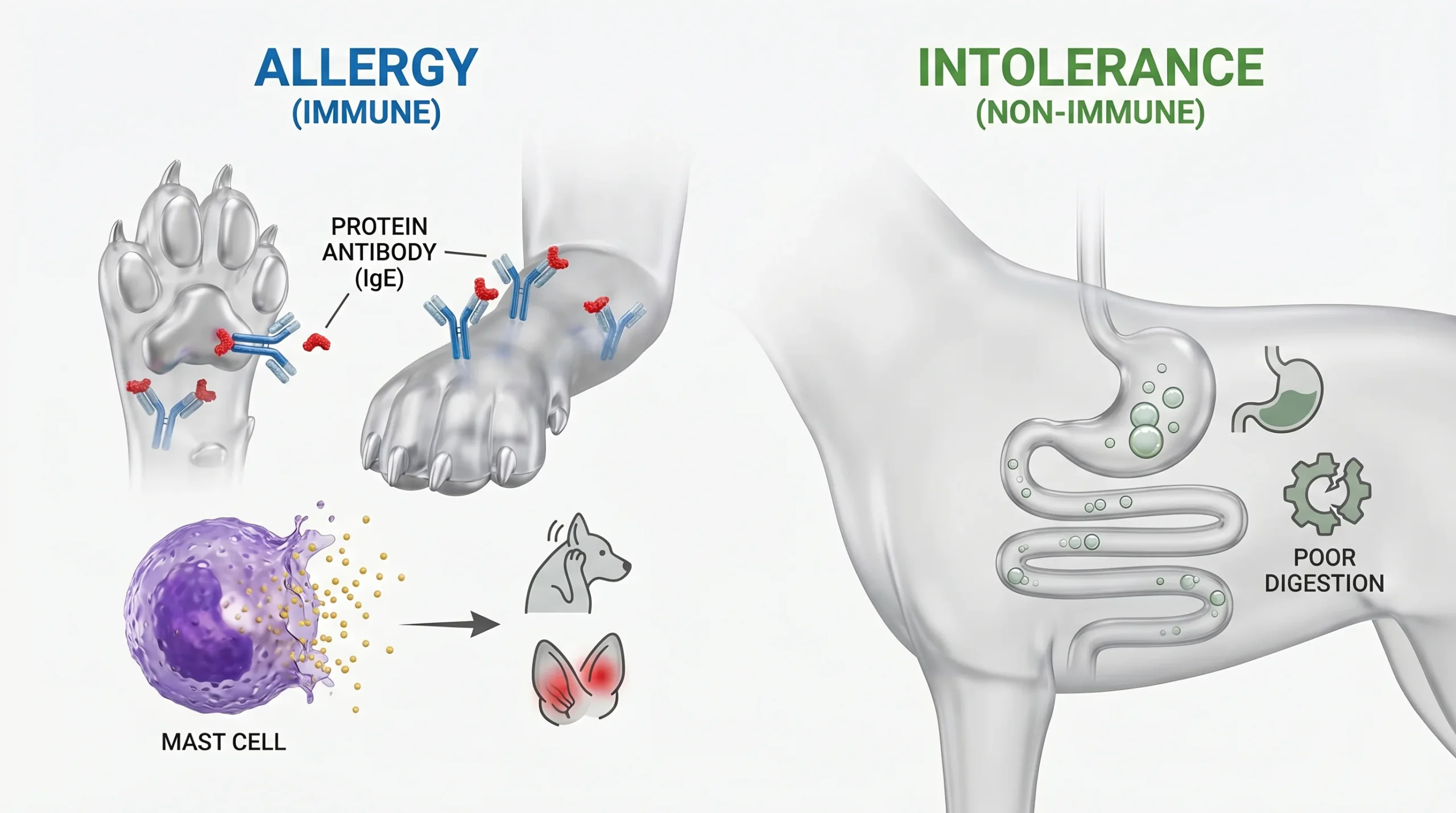
Food allergies involve the immune system. They often show as skin problems, ear issues, or recurring hotspots. Food intolerance is non-immune. It is more likely to cause digestive upset or erratic stools.
Think of an allergy as “immune confusion” toward a protein. Think of intolerance as “poor processing” of certain foods or formats. Both benefit from controlled, simple diets.
Common triggers and why single-protein matters
Common allergens include frequently fed proteins like chicken, beef, and dairy. Novel or less common proteins may reduce risk of triggering a response. Single-protein dog food keeps variables low and patterns visible.
Evidence shows that alternative proteins, including insect-based diets, can be viable for dogs with cutaneous adverse food reactions, supporting the principle of changing the protein source when allergies are suspected.[1] Studies on black soldier fly protein also show good digestibility, making it a potential option for dog food intolerance scenarios where protein choice matters.[3]
Routing: see Itchy skin and hotspots: ruling in or out a food trigger
For pattern clues and decision prompts, read Itchy skin, paw licking, and hotspots: could it be a food trigger?.
What to prioritize first (signals, safety, and a plan)
Recognize red flags that need a vet first
Some signs demand medical evaluation before diet trials. These include severe or escalating itch, ear pain, lethargy, weight loss, vomiting, or persistent diarrhea. Know the red flags that need a vet to protect your dog’s safety.
Stabilize basics: management, forage, and core nutrition
Control variables. Feed a consistent, balanced base. Pause new treats and chews. Keep access to table scraps, bins, or garden forage blocked. Minimize environmental confounders like new shampoos or supplements.
Freeze-dried formats can help with clarity because they are portionable and often list fewer ingredients. Many owners choosing diets for suspected allergies report using freeze-dried options to manage ingredients more tightly.[2]
Routing: see When to see the vet: red flags and testing options
If you are unsure whether to start a diet trial, read When to see the vet for suspected food allergies: red flags, testing, and referrals.
- Protect safety first: rule out medical red flags with your vet.
- Simplify the bowl: choose a balanced, single-protein base and pause extras.
- Start a written log: note foods, timing, itch scale, stools, and ear changes.
Common signs and differential clues
Dermatologic patterns (itch, hotspots, ears)
Itch that persists despite flea control, paw licking, face rubbing, and recurrent ear inflammation are classic for an itchy dog food allergy. Symmetry and body areas exposed to saliva can be telling.
Seasonality can blur the picture. Environmental allergies may flare during certain months. Food reactions tend to persist year-round. For practical pattern checks, see itch, hotspots, ears.
GI patterns (stools, gas, timing vs. meals)
Food intolerance more often shows as soft stools, gas, or urgency. Timing relative to meals, and response to a simpler diet, offer valuable clues. Intermittent issues can reflect transitions rather than true allergy.
For clarity on digestive signs, read about soft stools and gas and how to separate allergy from intolerance or transition effects.
Routing: see Soft stools and gas: are they allergy, intolerance, or just transition?
Explore gut-focused clues in Soft stools, gas, and intermittent diarrhea: allergy, intolerance, or transition issue?.
How to confirm a food allergy (concepts, not steps)
Why an elimination approach is the gold standard
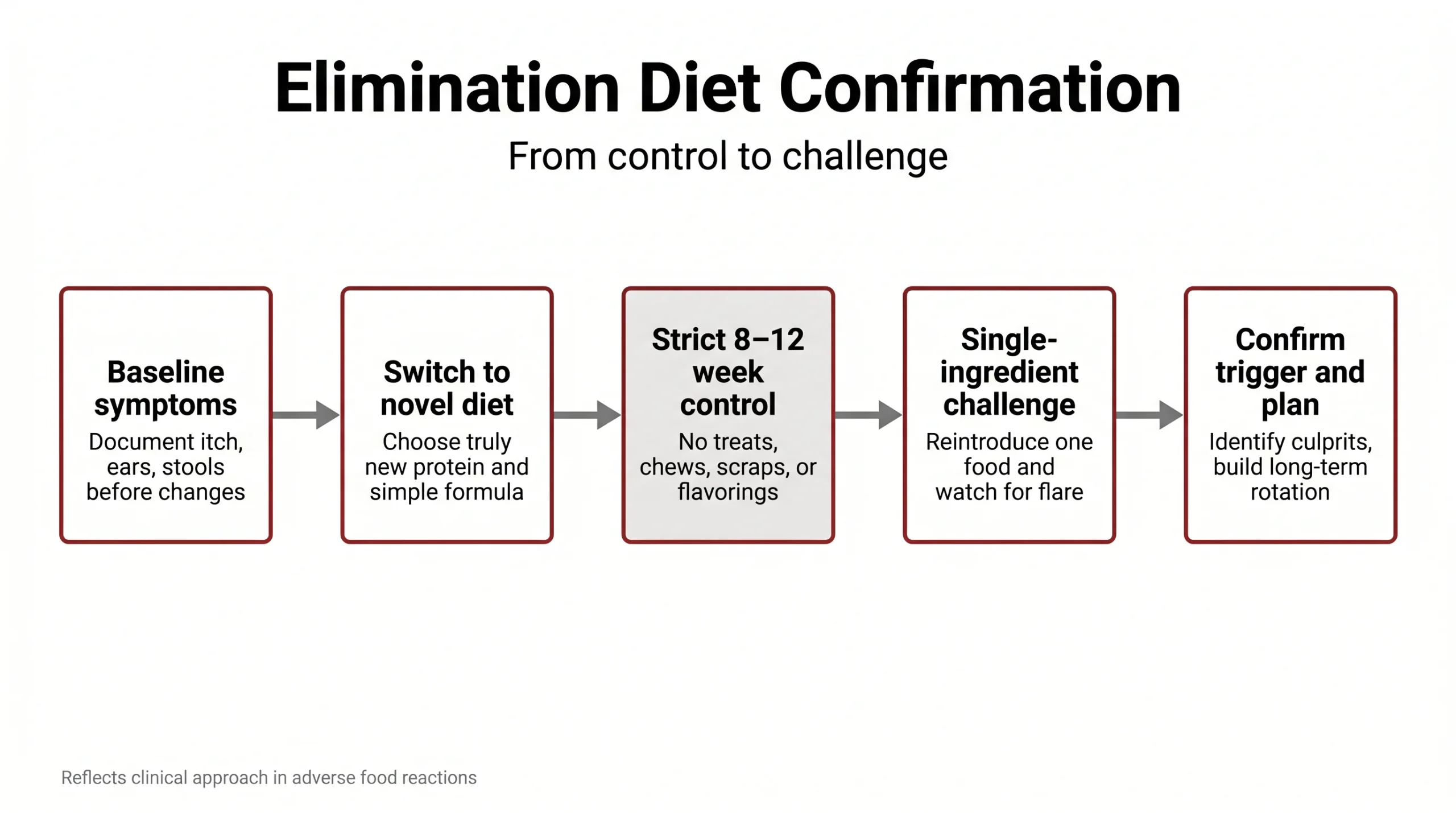
Blood or saliva tests cannot reliably diagnose food allergy in dogs. An elimination approach that controls ingredients and then challenges them is the accepted method to confirm a culprit protein.
Clinical reports in allergic dogs support the principle that changing to a controlled, alternative protein and then re-challenging provides the most informative results for cutaneous adverse food reactions.[1]
Keep variables low: single protein, simple composition
Choose simple foods with one clearly named protein and short ingredient lists. Avoid flavor blends, broths, and mixed fats. This keeps the signal clean and interpretable.
Freeze-dried raw foods are a recognized category and can aid consistency by preserving nutrients while remaining convenient to portion and store, which supports clean diet trials when appropriately selected.[4]
Routing: see Step-by-step elimination diet plan for suspected food allergy
When ready to operationalize, use the framework in Elimination diet for suspected food allergy: a 6–8 week step-by-step plan.
Which proteins to start with (decision logic)
Using diet history to narrow first choices
Map what your dog has eaten over time. Prior exposure reduces the chance a protein is “novel.” Exclude frequent offenders like chicken and beef if they dominate the history.
Shortlist options that are truly new or rarely fed. Consider your region’s availability and your dog’s past tolerance of related species.
Novel vs. familiar proteins and practical availability
Novel proteins such as horse, venison, fish, or insects may lower the risk of an immune response. Insects have shown promising digestibility and are being explored for sensitive dogs.[3]
When horse is novel in your dog’s history, a single-protein option can be a practical starting point. Many owners find Everfresh Freez-Dried food – Horse 500g helpful for this task.
If torn between two candidates, prioritize the one with cleaner sourcing and simpler formulation. For more on single-protein selection, see the guide below.
Routing: see Choosing a single-protein diet: when to try horse, beef, or fish
Compare pros and cons in Which single protein to try first? Horse vs beef vs fish for allergic dogs.
How to shop and what to avoid
Label literacy: single-source proteins and short lists
Scan for clearly named single-source proteins, simple fat sources, and minimal additives. Beware umbrella terms like “animal fat” or “meat meal.” Short lists support a hypoallergenic dog diet approach.
Reading labels carefully helps you avoid hidden binders, flavorings, and stock mixes that can sabotage trials.
Common mistakes and misconceptions: Assuming “hypoallergenic” equals safe for all dogs, mixing treats during a trial, switching foods too quickly, or overlooking cross-contact risks from shared manufacturing lines.
Cross-contact and hidden ingredients to watch
Cross-contact happens when equipment also processes other proteins. Look for brands that disclose manufacturing practices. Avoid broths, palatants, and mixed-oil blends that may include unlabeled animal sources.
Owner choices often reflect allergy concerns, and formats like freeze-dried can make ingredient control easier when labels are transparent and sourcing is consistent.[2]
Routing: see Reading labels to avoid hidden allergens and cross‑contact
Shop smarter with Label reading for allergic dogs: spotting hidden proteins, binders, and cross‑contact risks.
After the elimination phase (what comes next)
Why structured reintroduction matters
A controlled reintroduction confirms whether a specific food triggers symptoms. Without a plan, you lose the clear signal you worked to create. Map a simple schedule for structured reintroduction.
Challenge-based confirmation mirrors clinical practice in adverse food reactions and is essential to distinguish true triggers from coincidences.[1]
Tracking simple outcomes for long-term clarity
Keep a short log. Record the food added, timing, itch level, stool form, ear status, and any hotspots. A few consistent measures beat a long, inconsistent list.
Routing: see Reintroducing foods after an elimination: challenge protocol and tracking
Maintain clarity with Food reintroduction after elimination: challenge schedule, tracking, and what counts as a reaction.
Special populations and everyday logistics
Puppies and sensitive life stages: keep it simple
Growth needs come first. Choose complete diets that meet life-stage requirements while keeping ingredients simple. Avoid stacking variables with treats or toppers. Learn more about Puppies and safe trials in sensitive stages.
Travel and convenience with freeze-dried formats
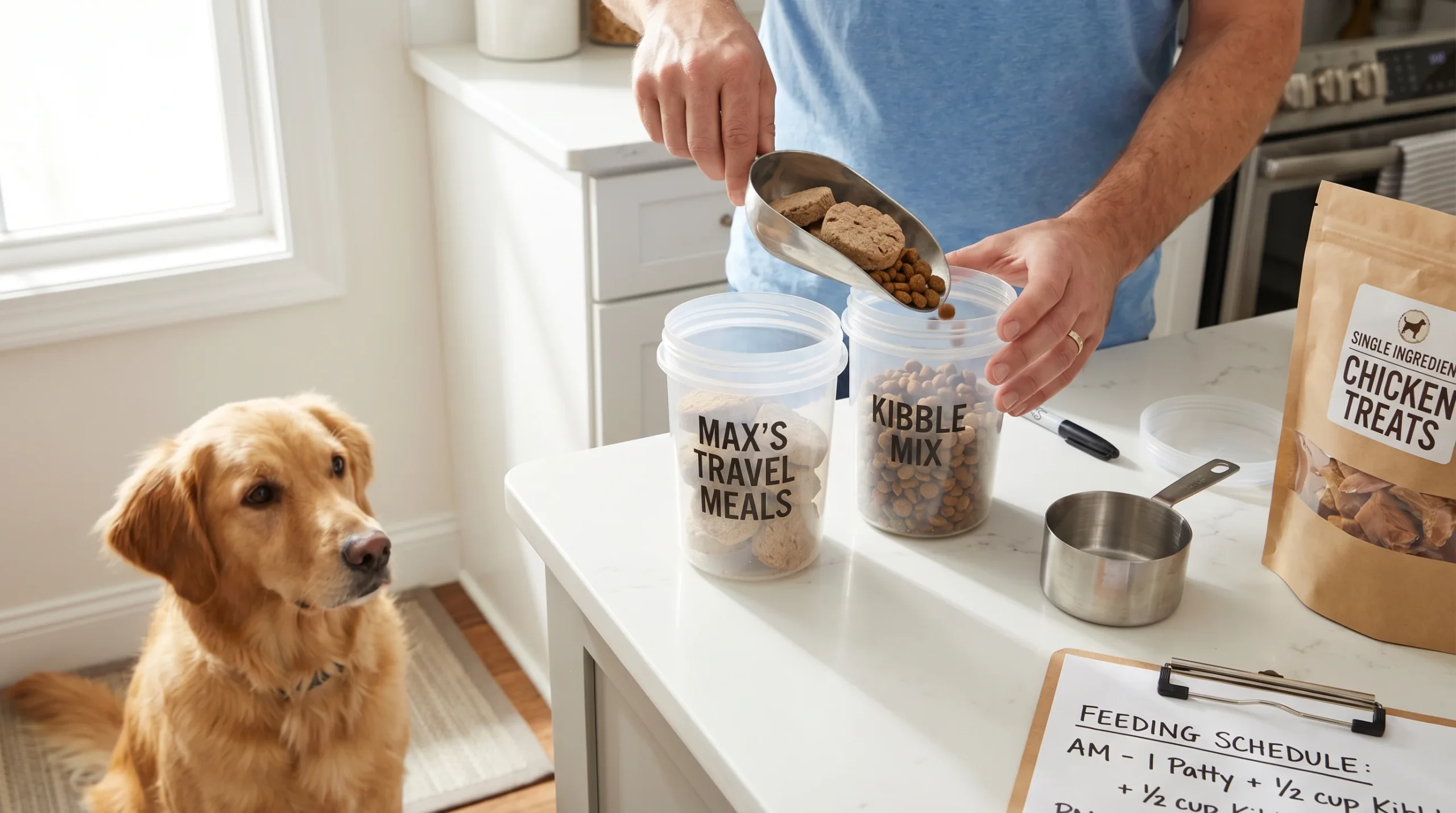
Freeze-dried foods are lightweight, shelf-stable, and easy to portion, which helps maintain consistency on the road while preserving nutrients typical of raw formats.[4] Plan ahead to avoid emergency food switches.
For packing lists and portion planning, see Traveling with a food‑allergic dog: safe meal planning using freeze‑dried options.
Routing: see Puppies with possible allergies: safe elimination basics and Traveling with an allergic dog: safe meal planning with freeze‑dried
Get practical tips in Puppies with suspected food allergies: how to trial safely without compromising growth and Traveling with a food‑allergic dog: safe meal planning using freeze‑dried options.
Frequently Asked Questions
What is the difference between a food allergy and a food intolerance in dogs?
Allergies involve the immune system and often show up as skin or ear issues. Intolerances are non-immune and usually cause digestive upset. The approach to testing and diet control differs.
What are the most common signs of food allergies in dogs?
Frequent itch, ear problems, recurrent hotspots, and sometimes soft stools or gas. Timing with meals and response to simplified diets can offer clues.
Do I need to see a vet before trying an elimination diet?
Yes if there are red flags like severe itch, ear pain, weight loss, or persistent vomiting/diarrhea. A vet can rule out other conditions and support a safe plan.
Are single-protein or ‘hypoallergenic’ diets always safe choices?
Not always. Ingredient lists and manufacturing practices vary. Choose clearly labeled single-protein products and avoid treats that add new variables.
Can freeze-dried dog food help with managing suspected allergies?
It can help keep variables controlled due to clear single-protein options and easy portioning. Suitability depends on the specific protein and your dog’s history.
References
- KI Lee et al. (2021). Clinical application of insect-based diet in canine allergic dermatitis. Korean Journal of …. View article
- JS O’Brien et al. (2024). Dog and owner demographics impact dietary choices in Dog Aging Project cohort. Journal of the American …. View article
- L Penazzi et al. (2021). In vivo and in vitro Digestibility of an Extruded Complete Dog Food Containing Black Soldier Fly (Hermetia illucens) Larvae Meal as Protein Source. Frontiers in Veterinary …. View article
- AC Beynen (2026). Trade foods for both dogs and cats. researchgate.net. View article