

Uncategorized
Raw on the go: travel, hiking and boarding with freeze‑dried dog food
May
Raw on the go: travel, hiking and boarding with freeze‑dried dog food
Traveling with raw‑fed dogs can feel complicated. Melting packs, hotel fridges, and messy prep add pressure to happy plans. Freeze‑dried raw for dogs lightens the load without dropping nutrition.
This guide helps you replace frozen BARF on the go with tidy logic. You will learn packing checklists, simple rehydration math, and caregiver‑proof menus. Keep your routine consistent, whether you are hiking, road tripping, or boarding.
Scenario: replacing frozen BARF on trips with freeze‑dried meals
When freeze‑dried solves travel pain points
Freeze‑dried meals are shelf‑stable, compact, and quick to rehydrate. They reduce cooler space, dripping thaw, and hotel kitchen dependency. That makes BARF on the go much smoother during flights, hut stays, and multi‑day treks.
How this guide is structured (one clear decision path)
First, choose a packing plan by trip length. Next, use the rehydration ratio dog food math to portion water. Then follow sample day menus for each scenario. Finally, apply the quick decisions and monitoring tips.
Packing checklist for 24–72 hours, weekend hikes and longer stays
Essentials by duration (food, water, gear)
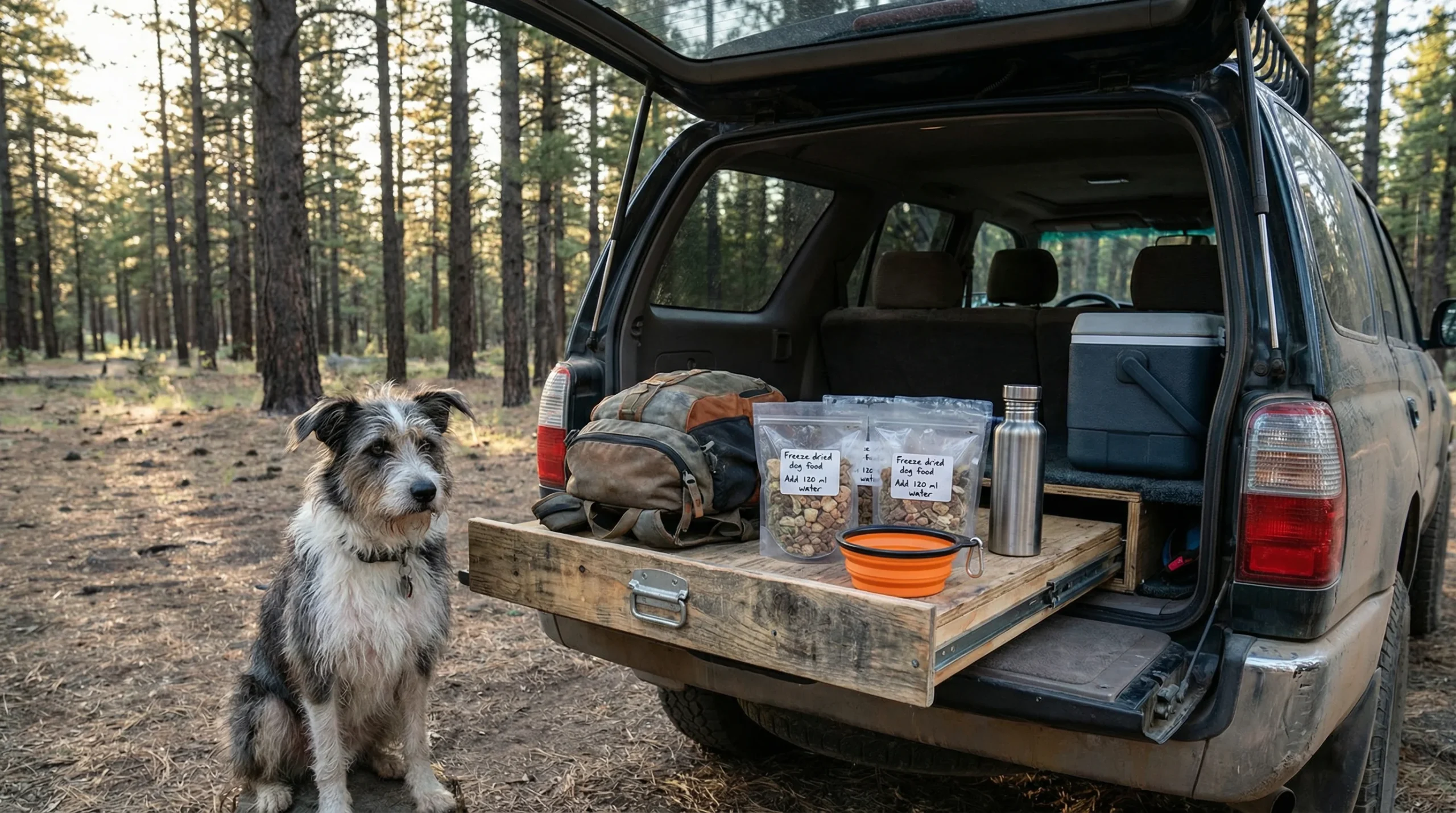
- 24–72 hours: Pre‑weighed dry meals, collapsible bowl, 1–2 liters extra potable water, sealable waste bags, hand gel, lightweight treats.
- Weekend hikes: Extra meals, backup scoop, water filter, electrolyte mix for humans, dog towel, small clip‑on scale, spare zip pouches.
- Longer stays: Bulk bag, measuring cup, printed feeding sheet, airtight bin, probiotics, basic first‑aid kit, spare leash.
Portioning and labeling for boarding or dog sitters
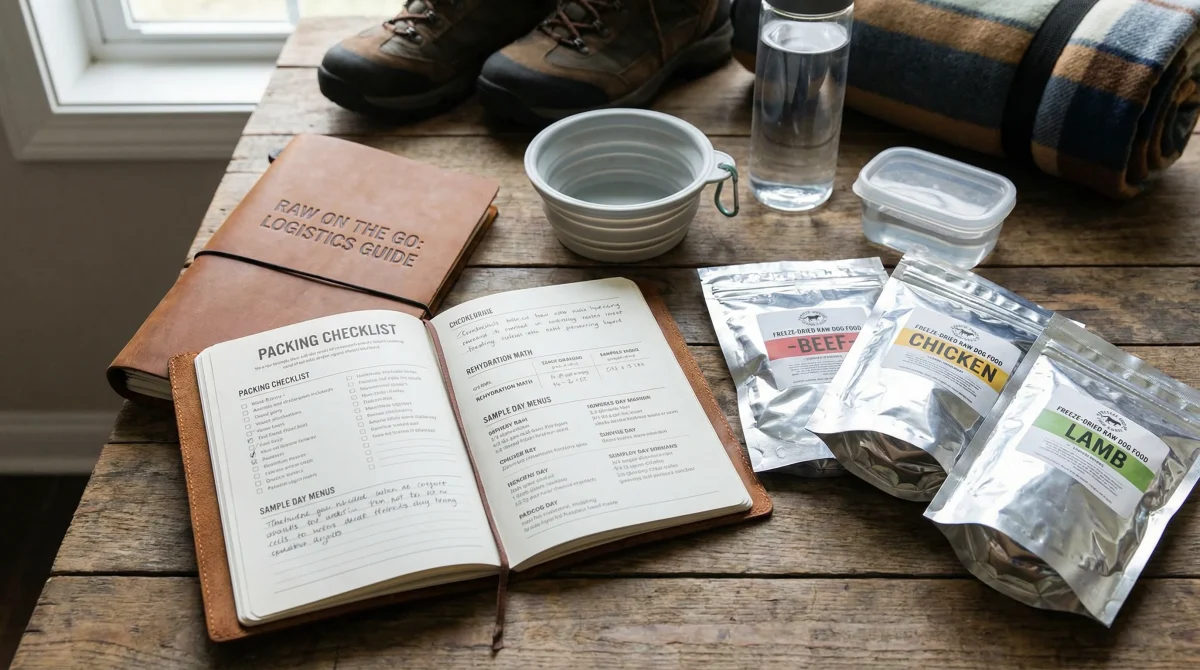
Pre‑weigh dry portions into dated pouches. Write “Add 90–150 ml water” or the exact ratio per pouch. Include feeding times, any supplements, and stool notes. This helps with boarding with raw diet consistency and reduces caregiver guesswork.
Rehydration math made easy
Standard ratios (by weight) and quick conversions
Most freeze‑dried meals rehydrate at 1:1 to 1:1.5 water‑to‑food by weight. If a fresh meal is 300 g, a typical dry equivalent is ~100 g plus 100–150 g water. Research suggests freeze‑dried raw diets maintain high amino acid digestibility, supporting consistent portions[2].
| Dry food (g) | Water at 1:1 (g/ml) | Water at 1:1.5 (g/ml) |
|---|---|---|
| 50 | 50 | 75 |
| 75 | 75 | 113 |
| 100 | 100 | 150 |
| 150 | 150 | 225 |
Altitude, temperature and water quality considerations
Cold slows rehydration; use warm potable water to speed it up. High altitude and very dry air may need slightly more water. Avoid untreated sources; filter or carry bottled for mixing and dog hiking meals.
Sample day menus (adult maintenance) using freeze‑dried raw
Day hike: light pack, 2 meals + trail treats
Plan a fresh‑equivalent daily intake around 2–3% of body weight, adjusted for activity. Split into morning and evening meals from your dry equivalents. Carry 20–30% extra for strenuous climbs. Pre‑mix trail treats to reward recalls and rests. See fueling ideas in calorie‑dense raw fuel for active dogs.
Road trip: car-friendly prep and storage
Pack a small airtight tub for daily rations and a scoop. Rehydrate in a lidded bowl during rest stops. In hot cars, keep dry food shaded. Add 25–50 ml extra water per meal in heat to support hydration.
Boarding: caregiver-proof instructions
Prepare labeled pouches, plus a one‑page sheet: feeding times, rehydration ratio, and stool color guide. For simplicity, many caretakers appreciate complete single‑protein options like Everfresh Freez-Dried food – Horse 500g, which are easy to portion and note.
Quick decision guide
If X situation, then Y action (5–7 common scenarios)
- If stool softens after a long hike, reduce water in meals by ~10% and add a small fiber topper.
- If appetite dips from heat, offer smaller, more frequent portions and rehydrate with cool water.
- If you forgot the scoop, weigh with a travel scale or use tablespoons (approx. 7–9 g each; verify once).
- If water is limited, feed dry with a side bowl of water and wait 10 minutes before activity.
- If boarding confusion arises, pre‑portion pouches and send a printed rehydration chart with photos.
- If activity spikes, increase daily dry amount by 10–20% and reassess in 48 hours.
- If stools are too firm, add 10–20 ml more water per meal and a teaspoon of omega‑rich oil.
Monitoring guidance after switching on the road
What to observe after 7–14 days
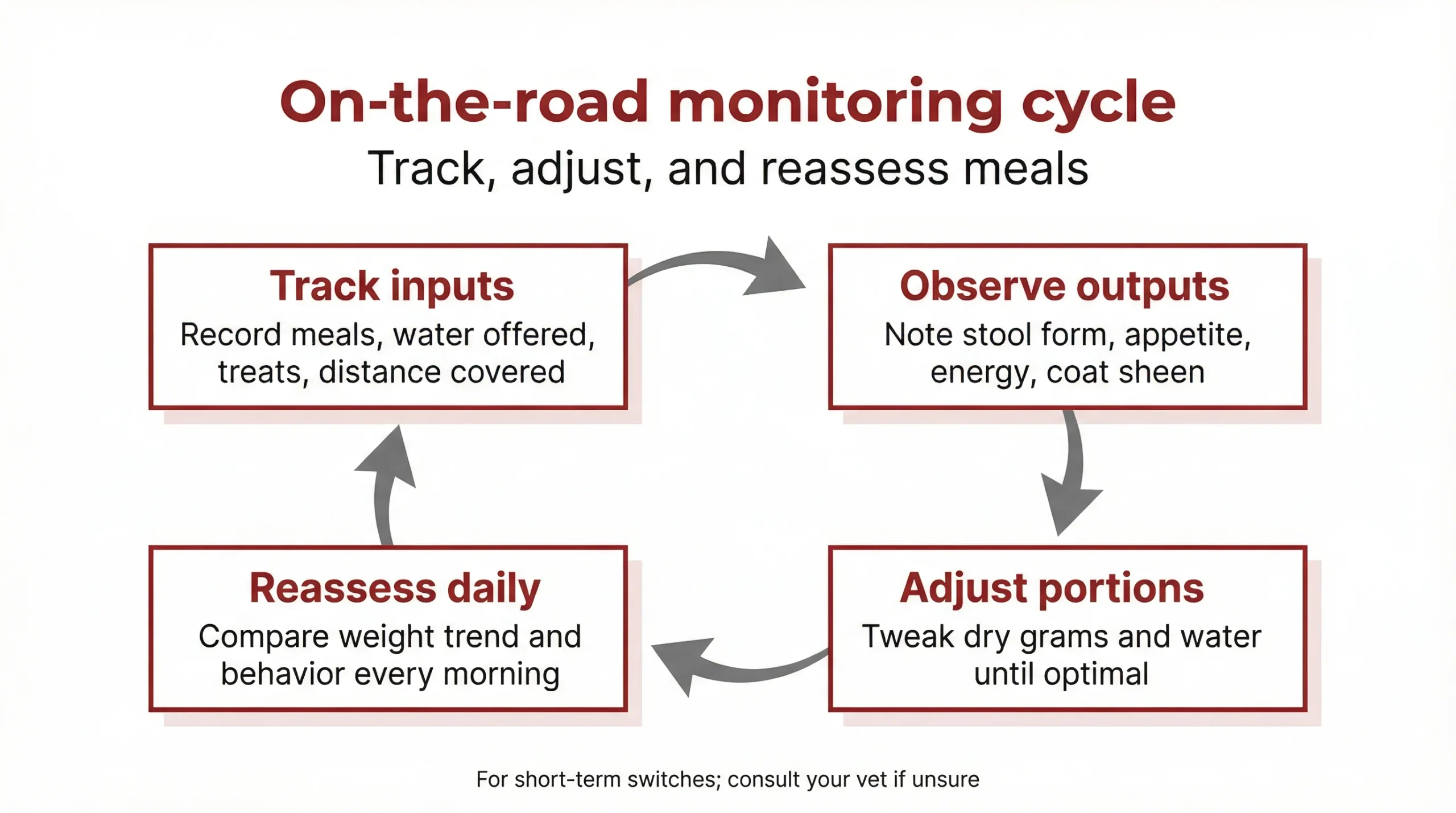
Track appetite, stool consistency, and energy. Most dogs adapt smoothly to freeze‑dried raw for dogs. If stools vary, check water sources, treats, and rehydration accuracy. For stepwise support, see a seven‑day raw transition with rehydration basics.
What to observe after 4–8 weeks
Evaluate weight stability, coat feel, and stool frequency. If weight trends down with higher mileage, increase portions slightly. Studies note freeze‑dried and raw diets can influence fecal characteristics compared with extruded foods[1], so adjust gradually and keep notes.
Practical safety boundaries for raw on the go
Food safety, water, and storage limits
Keep unopened bags cool and dry. After rehydration, serve within 30–60 minutes or refrigerate promptly. Do not leave rehydrated food in warm cars or sun. For hygiene steps, use our safe handling checklist.
Activity adjustments and special populations
Increase meal frequency rather than meal size before intense exertion. Senior dogs may prefer slightly warmer water and slower transitions. Puppies, pregnant dogs, and dogs with conditions need individualized plans; consult your vet and adapt pacing with care.
What the evidence says (and what it doesn’t)
Nutrient retention and digestibility: what studies suggest
Trials report high indispensable amino acid digestibility for freeze‑dried raw diets, often above 90%, indicating efficient utilization[2]. Energy availability may be comparable to frozen raw options, aiding consistent feeding during travel[3]. Learn more about what is freeze‑dried food and how nutrients are preserved.
Areas with limited or emerging evidence
Formulations vary, and responses can differ among dogs. Some data suggest lower levels of heat‑generated Maillard compounds in non‑extruded formats compared with kibble, though ranges overlap and outcomes are complex[4]. Always assess your dog’s condition rather than relying on broad averages.
Cost and weight comparison: freeze‑dried vs. frozen BARF
Per‑meal weight, volume and total trip load
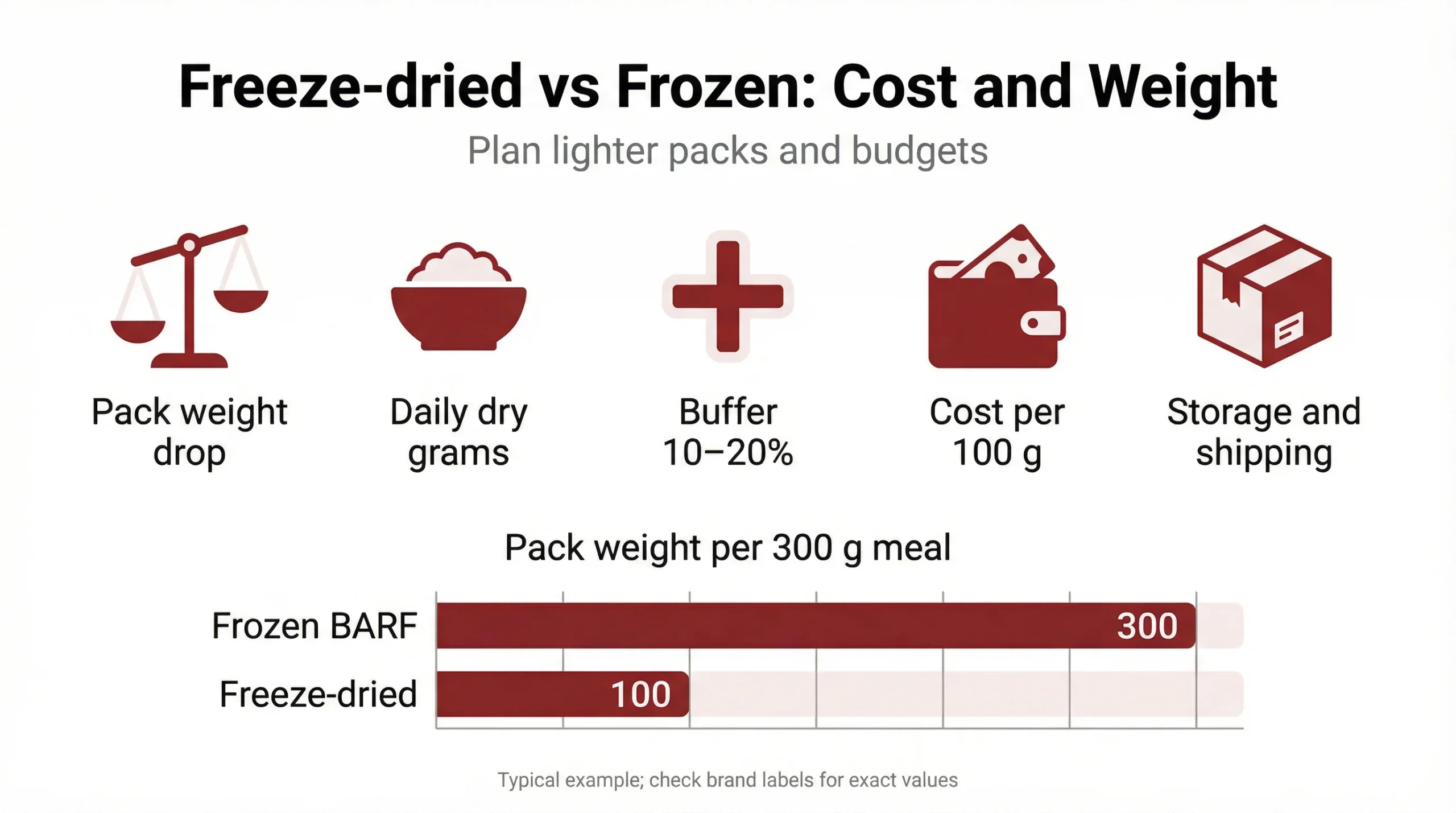
Freeze‑dried removes most water, so your pack weight drops significantly. A 300 g fresh‑equivalent meal often weighs near 100 g dry, then rehydrates with 100–150 ml water. That space savings benefits long routes and minimalist kits.
Budgeting for multi‑day travel
Estimate daily dry grams from your at‑home fresh weight, then multiply by trip days plus 10–20% buffer. Compare cost per 100 g dry between brands. Factor water needs and treat usage to avoid surprise refills or unplanned purchases.
Troubleshooting on the trail or in boarding
Palatability tweaks and stool adjustments
If meals seem bland outdoors, rehydrate with slightly warmer water, crumble a few high‑value treats on top, or add a teaspoon of safe oil. If stools loosen, reduce water a little and pause new add‑ins. Evidence shows fecal traits can shift across formats[1].
Hydration hacks without over‑watering meals
Offer a side bowl 10–15 minutes before activity, not inside the food. Use ice cubes during heat. On alpine days, schedule short sip breaks each hour. Separate hydration from calories to keep stools predictable.
References and further reading
Standards, safe handling, and travel resources
Before international trips, review airline and customs rules for pet foods. Check park guidelines for wildlife‑safe feeding and water use. Keep a printed feeding sheet, emergency contacts, and a basic first‑aid list inside your food bag.
Frequently Asked Questions
How much water should I add to freeze‑dried dog food when traveling?
Many brands use roughly 1:1 to 1:1.5 water-to-food by weight. Start with the label ratio and adjust until the meal is moist but not soupy; activity and climate may require minor tweaks.
Can I switch from frozen BARF to freeze‑dried raw just for a trip?
Yes, most dogs tolerate a temporary switch if proteins and fat levels are similar. Transition over 2–3 meals before departure and monitor stool and appetite.
Is freeze‑dried dog food safe to carry without refrigeration?
Unopened bags are shelf-stable if kept cool and dry. After rehydration, use within 30–60 minutes or refrigerate; discard leftovers that sat warm.
How do I portion freeze‑dried meals for boarding?
Pre-weigh dry portions into labeled pouches, note water to add, feeding times, and any supplements. Include a printed rehydration chart for caregivers.
What if my dog drinks from streams during hikes?
Carry tested potable water for rehydration. If your dog drinks from natural sources, consider filtration; monitor stool for changes over the next 48 hours.
Wrapping up: Freeze‑dried dog food for travel can make your adventures smoother. With smart packing, clear rehydration, and simple menus, you can mirror your frozen routine on the road. Start conservatively, watch stools and energy, and adjust water or portions thoughtfully. Safe trails and happy meals!
References
- EL Geary et al. (2024). Apparent total tract nutrient digestibility of frozen raw, freeze-dried raw, fresh, and extruded dog foods and their effects on serum metabolites and fecal characteristics …. Translational Animal …. View article
- EL Geary et al. (2023). Standardized amino acid digestibility and nitrogen-corrected true metabolizable energy of frozen raw, freeze-dried raw, fresh, and extruded dog foods using precision …. Journal of animal …. View article
- PM Oba et al. (2023). Standardized amino acid digestibility and nitrogen-corrected true metabolizable energy of frozen and freeze-dried raw dog foods using precision-fed cecectomized …. Journal of animal …. View article
- T Kocadağlı et al. (2026). A Comparative Analysis of Maillard‐Derived α‐Dicarbonyl Compounds and Advanced Glycation End Products in Fresh, Wet, Kibble, and Freeze‐Dried Dog Foods. … and Animal Nutrition. View article