

Uncategorized
EU Pet Food Labeling, Safety, and Sourcing: A Buyer’s Checklist
Mar
EU Pet Food Labeling, Safety, and Sourcing: A Buyer’s Checklist
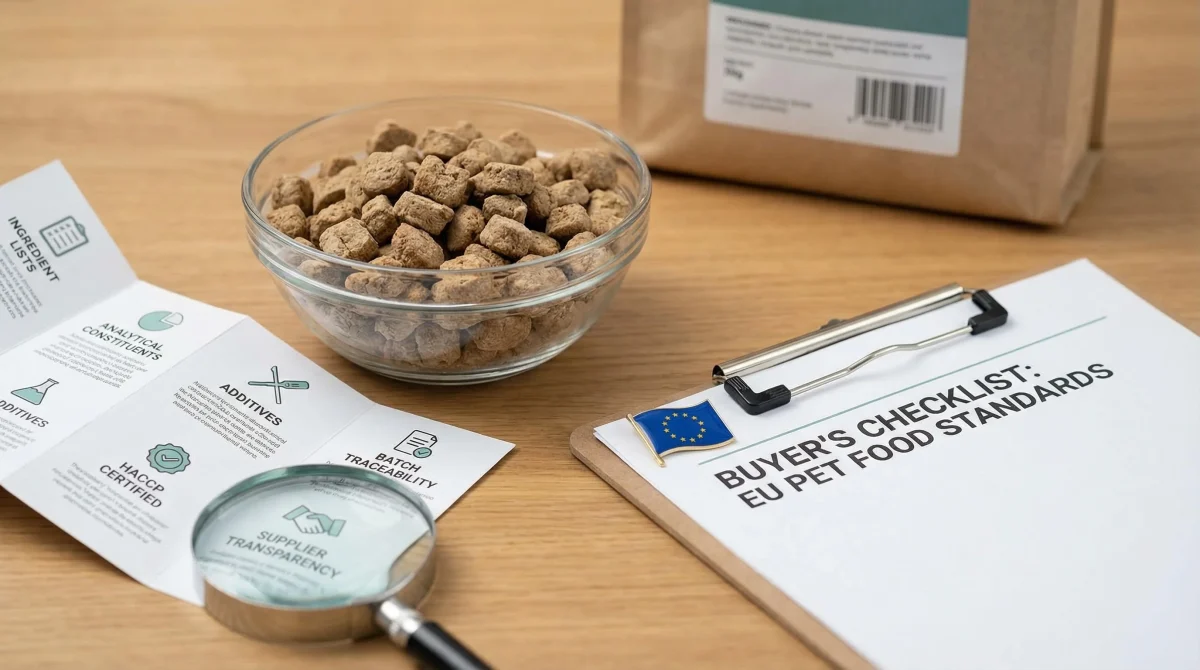
Labels can feel like a maze—but they don’t have to. If you’re choosing animal‑based, freeze‑dried, or raw‑leaning dog foods, a few label lines reveal a lot about quality, safety, and sourcing. Let’s decode them together, clearly and calmly.
Today we’ll focus tightly on the label elements that matter most for animal‑based foods: ingredient lists, analytical constituents, additives, traceability, HACCP, and supplier transparency. By the end, you’ll be able to read a bag with confidence and ask smart, friendly questions when it counts.
How EU Pet Food Labeling Works
EU pet food regulations require consistent, comparable information so buyers can make informed decisions across brands and formats. For animal‑based and freeze‑dried diets, that consistency helps you verify protein sources, safety systems, and nutritional intent clearly.
Mandatory label elements under EU rules
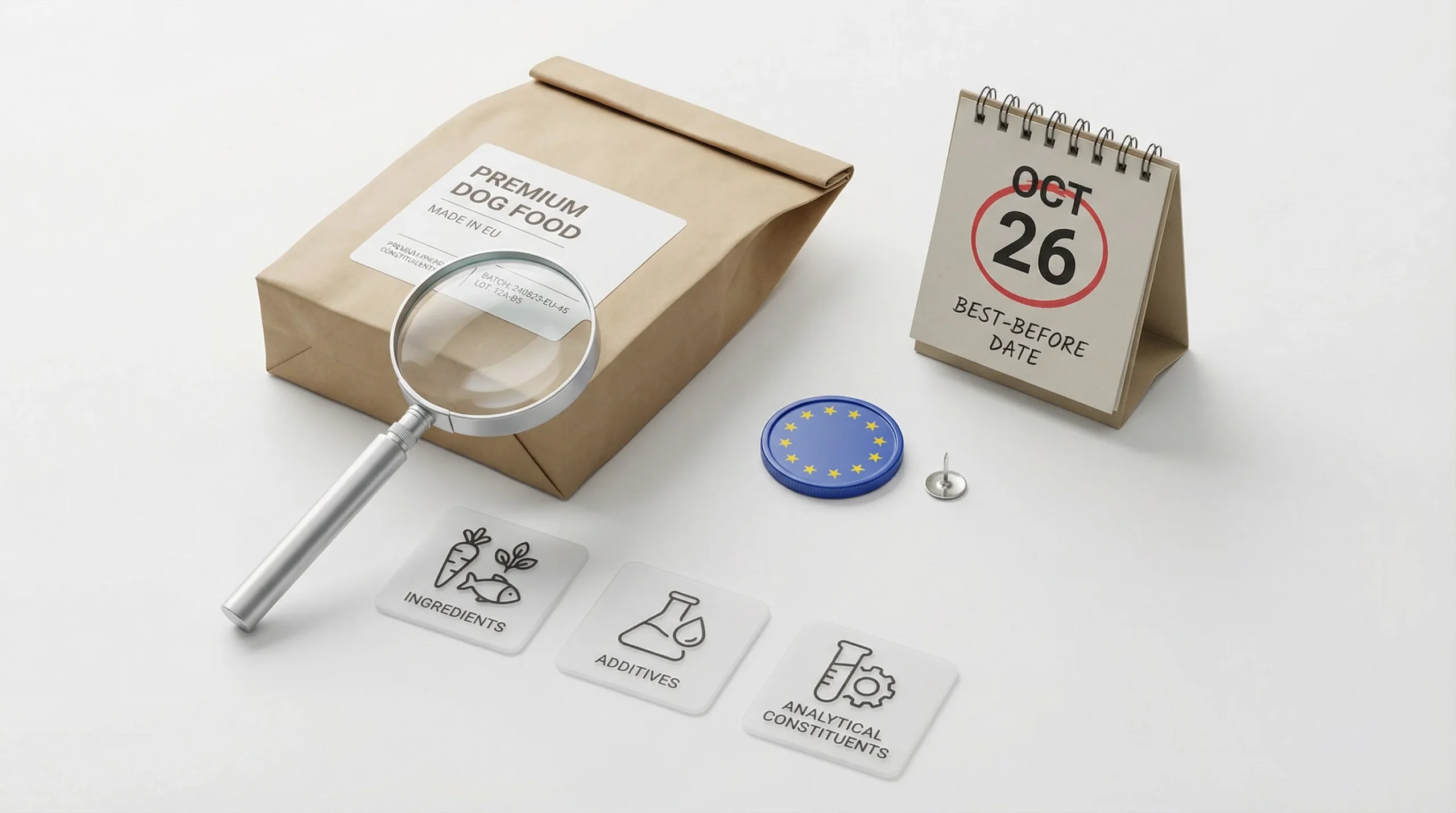
Expect species, product name, complete/complementary status, ingredient list, analytical constituents, additives, net weight, best‑before, batch/lot code, business operator details, and feeding instructions. These basics enable like‑for‑like comparisons and make recalls or queries traceable and straightforward.
Ingredient list order, animal by‑products, and naming conventions
Ingredients appear in descending order by weight as formulated. Terms like “meat and animal derivatives” may be used, but species‑specific naming (e.g., “beef”) adds clarity. If a flavor or named protein is highlighted, expect a minimum percentage declaration.
Understanding complementary vs. complete feeds
“Complete” feeds cover daily nutrition when fed as directed; “complementary” products require mixing. Freeze‑dried ranges often include both. See the quality and sourcing chapter in the main guide for how these designations shape formulation choices.
Decoding Analytical Constituents
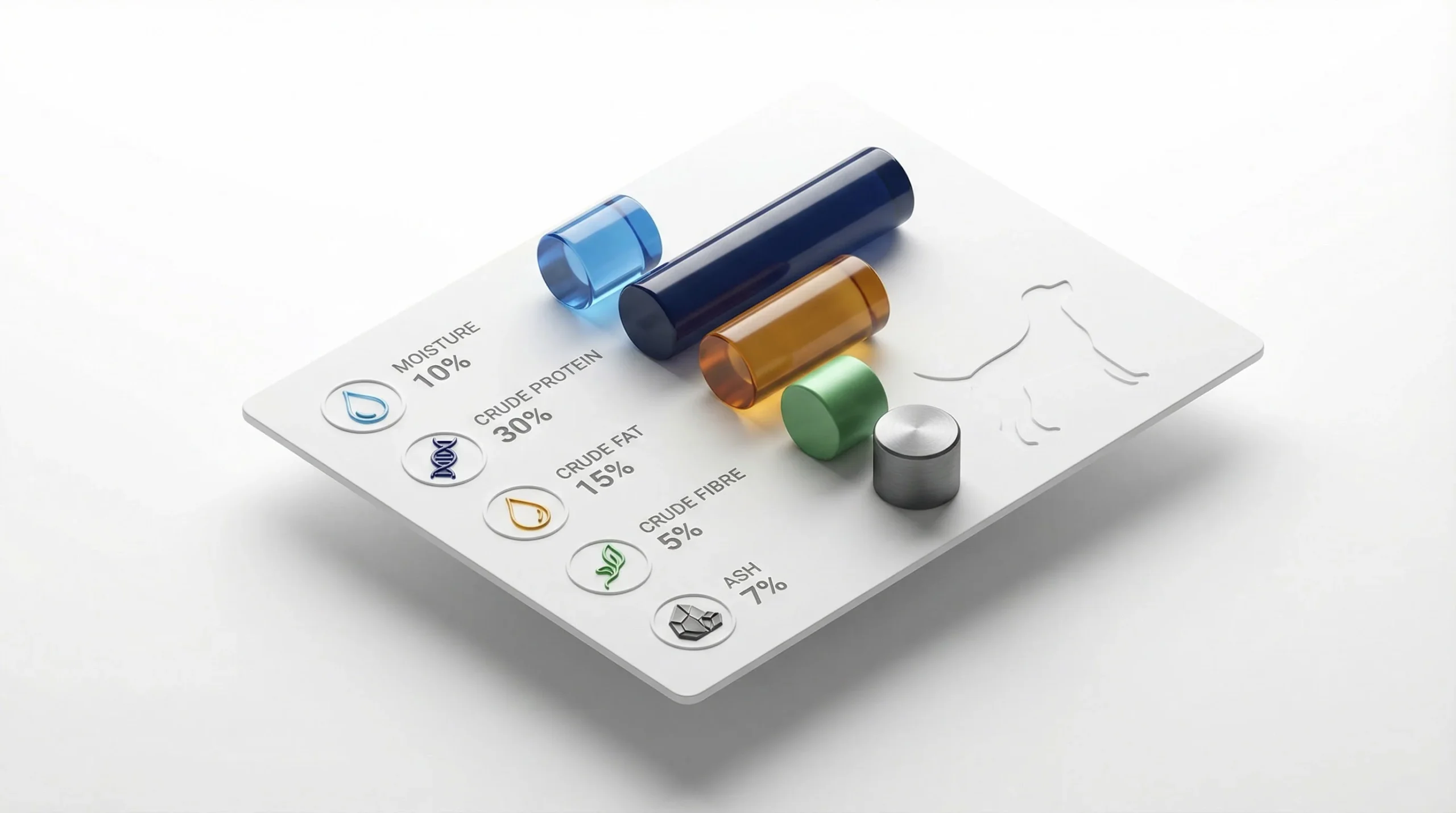
Analytical constituents dog food labels list moisture, crude protein, fat, crude fiber, and ash. Read these together to gauge nutrient density and compare formats fairly, especially when moisture varies widely between freeze‑dried and extruded products.
Moisture, crude protein, fat, fibre, ash: what they mean
Moisture shows water content; crude protein and fat signal key macronutrients from animal tissues; fiber relates to digestion; ash reflects total mineral content. Together, they sketch energy, digestibility, and ingredient balance at a glance.
Dry‑matter basis vs. as‑fed: how to compare foods fairly
To compare different formats, convert to dry‑matter (DM): DM% = 100 − moisture. Then DM nutrient% = (as‑fed nutrient% ÷ DM%) × 100. This neutralizes moisture, revealing true nutrient density across freeze‑dried, raw, and kibble.
How processing affects reported nutrients (see processing methods and nutrient retention)
Extrusion, air‑drying, and freeze‑drying each impact vitamins and fats differently. Freeze‑drying helps preserve heat‑sensitive compounds, but labels still reflect analytical lab results. Explore processing methods and nutrient retention for deeper comparisons and formulation implications.
| Label (As‑Fed) | Value | Converted to Dry‑Matter (Example) |
|---|---|---|
| Moisture | 7% | Dry matter = 93% |
| Crude Protein | 40% | 40 ÷ 93 × 100 = 43.0% DM |
| Crude Fat | 28% | 28 ÷ 93 × 100 = 30.1% DM |
Low moisture and water activity improve shelf stability in freeze‑dried foods, but pathogens can persist without proper controls, reinforcing why hygiene metrics and validated processes matter in parallel to nutrition data.[1]
Additives: Technological, Nutritional, Sensory, Zootechnical
Additives appear by category on EU labels. Understanding categories and E‑numbers helps you see why a substance is present—whether preserving fats, balancing nutrients, or improving palatability. It’s the difference between marketing and meaningful formulation.
How to read additive categories and E‑numbers
Categories include technological (e.g., antioxidants), nutritional (vitamins/minerals), sensory (flavors/colors), and zootechnical (digestive aids). Labels must disclose approved names or E‑numbers where required, letting you confirm legal use and purpose quickly.
Declared vs. carry‑over additives and tolerances
“Declared” additives are intentionally included; “carry‑over” may trace from ingredients (e.g., premixed organs). EU tolerances allow minor variation, but levels must remain safe and compliant. Responsible brands verify premix potency and stability across shelf life.
Interpreting vitamin/mineral premixes in freeze‑dried diets
Freeze‑drying preserves many nutrients, yet complete diets may still include nutritional additives for precision. Check named vitamins/minerals and levels. As an example resource, many shoppers compare labels like Everfresh Freez-Dried food – Beef 500g to understand premix choices and transparency.
Origin and Sourcing Transparency
Sourcing clarity builds trust. For animal‑based foods, ask how species are verified, whether suppliers are audited, and what documentation supports single‑protein or origin claims—especially if your dog is ingredient‑sensitive.
Country of origin vs. place of manufacture
“Place of manufacture” names where the product is made; “country of origin” refers to ingredients’ sources. Brands may source across EU regions for quality and availability. Clear distinctions reduce confusion and set honest expectations.
Animal species declaration and single‑protein claims (see verifying single‑protein hypoallergenic claims)
Species naming prevents guesswork: “beef” indicates bovine, not mixed animal derivatives. For single‑protein claims, confirm no other animal fats or broths appear. Sensitivity‑focused buyers should request cross‑contamination controls and supplier attestations.
Sourcing red flags and supplier disclosure best practices
Vague species terms, absent supplier specs, and no third‑party audits are caution flags. Studies document contamination risks in raw pet foods, highlighting the value of verified suppliers and handling standards from farm to plant.[4]
Safety Systems: HACCP, GMP, and Microbiological Controls
HACCP pet food programs identify hazards and put preventive controls in place. For freeze‑dried and raw‑leaning products, these systems are essential companions to nutrition labels, confirming a brand manages microbial and physical risks responsibly.
What HACCP covers in pet food production
HACCP maps hazards, critical limits, monitoring, corrective actions, verification, and documentation. Raw and minimally processed foods require special attention to supplier approval, sanitation, and environmental monitoring to limit pathogens and ensure consistency.[1]
Batch testing, environmental monitoring, and kill‑step alternatives
Brands may use targeted kill‑steps (e.g., HPP) or alternatives. Innovations like cold plasma show promise for low‑moisture foods; still, validation and routine testing matter more than one‑off trials.[2]
Cold‑chain and low‑moisture risks in freeze‑dried foods
Freeze‑drying reduces water activity, limiting growth, yet some pathogens can persist. Good practice includes hygienic raw intake, rapid freezing, controlled drying, and post‑dry handling discipline to prevent recontamination and maintain safety.[3]
Takeaway: A strong HACCP plan plus vigilant environmental monitoring and supplier control is more predictive of safety than any single “technology” on the label.

Traceability and Batch Codes
Traceability turns a label into a safety tool. Robust batch traceability lets brands answer questions fast, limit recalls effectively, and share testing documentation when needed—especially important for sensitive dogs or institutional buyers.
How to read lot codes, dates, and establishment numbers
Lot (batch) codes tie each bag to production records; best‑before dates reflect stability; establishment numbers identify facilities. If unclear, ask customer support to decode them—good teams will explain formats and what each segment means.
Recall readiness: documentation a brand should provide
Expect quick access to production date, ingredient lots, supplier approvals, and test results tied to your batch. Many brands also issue proactive alerts to retailers. Clear batch traceability shrinks recall scope and speeds resolution.
Record‑keeping for retailers and multi‑pet households
Keep purchase receipts, lot codes, and feeding logs. For multi‑pet households, note who ate what and when. Simple records improve troubleshooting with vets and brands and help quantify any reactions or dietary shifts.
Claims, Standards, and What Requires Proof
Words like “hypoallergenic,” “grain‑free,” and “species‑appropriate” should align with label disclosures and available evidence. Nutritional adequacy statements and feeding guidelines must also reflect the product’s intended use and proven nutrient profile.
Hypoallergenic, grain‑free, and species‑appropriate: allowed phrasing
These are marketing terms, not nutritional adequacy statements. Sensible phrasing avoids disease claims and aligns with formula design. Scrutinize protein sources, cross‑contact controls, and fiber or carb choices supporting digestibility and tolerance.
Nutritional adequacy statements and feeding guidelines
Look for “complete feed” statements and age/size suitability. Feeding guidelines should specify energy density and portion advice. For freeze‑dried, check rehydration notes and caloric context alongside analytical constituents.
When brands must hold dossiers or lab evidence
Evidence underpins additive use levels, safety, and nutrition claims. Reputable teams maintain lab reports, supplier specs, stability data, and HACCP verification—available on request to professionals or regulators when needed.
The Buyer’s Checklist (Printable Summary)
Use this concise checklist whenever you evaluate an animal‑based dog food, particularly freeze‑dried formats. A few smart checks turn complex labels into confident decisions.
Label essentials to verify every time
- Species, complete/complementary status, and clear ingredient order by weight.
- Analytical constituents converted to dry matter for fair comparisons.
- Additives listed by category; confirm nutritional additives match intent.
- Net quantity, best‑before, and readable batch/lot code.
Safety and quality questions to ask suppliers
- Do you operate a validated HACCP and GMP program with environmental monitoring?
- What microbiological criteria and test frequencies apply to my batch?
- Who are your approved animal‑protein suppliers, and how are they audited?
- What controls support verifying single‑protein hypoallergenic claims and preventing cross‑contact?
Documentation to request for sensitive dogs and puppies
- Certificate of analysis (COA) for analytical constituents and micro testing, by batch.
- Supplier specifications for key animal ingredients (species, country, certification).
- Stability/shelf‑life data supporting best‑before and vitamin retention.
Frequently Asked Questions
What must be on an EU pet food label?
Brand, product name, species, complete/complementary status, ingredient list, analytical constituents, additives, net quantity, best‑before/batch code, business operator contact, and feeding instructions are required. These elements enable traceability and consistent, comparable information for buyers.
How do I compare analytical constituents between brands?
Convert values to a dry‑matter basis to neutralize moisture differences, then compare protein, fat, fibre, ash, and key micronutrients. This is essential when evaluating freeze‑dried vs. extruded foods and ensures fair, evidence‑based assessments.
What does HACCP mean on pet food?
HACCP is a preventive safety system that identifies and controls hazards during production. It includes documented critical control points, verification, and corrective actions to reduce microbial and physical risks across sourcing and manufacturing steps.
Are additives in EU pet food safe?
Approved additives must meet EU safety assessments and be used within legal limits. Labels should specify additive categories and, where required, exact names or E‑numbers for transparency. Responsible brands validate dosage, stability, and interactions.
How can I verify a single‑protein hypoallergenic claim?
Check the full ingredient list for other animal sources and ask for supplier specifications or batch documentation. For sensitive dogs, request cross‑contamination controls and supporting test data to confirm species purity and process discipline.
Conclusion
Great labels tell a story: where the animal ingredients came from, what nutrients are present, which additives serve a purpose, and how batches are kept safe and traceable. By reading analytical constituents on a dry‑matter basis, checking additive categories, confirming HACCP and microbiological controls, and requesting batch documentation when needed, you’ll navigate EU pet food labeling with ease. And if you ever feel unsure, reach out—thoughtful brands will gladly walk you through their supplier standards, test results, and traceability. That friendly transparency is the real mark of quality in animal‑based nutrition.
References
- CG Vecchiato et al. (2022). From nutritional adequacy to hygiene quality: a detailed assessment of commercial raw pet-food for dogs and cats. Animals. View article
- B Yadav et al. (2020). In-package atmospheric cold plasma inactivation of Salmonella in freeze-dried pet foods: Effect of inoculum population, water activity, and storage. Innovative Food Science & Emerging …. View article
- KM Ma et al. (2024). A Study on Control of Dog Food Quality, Safety and Health. 2024 – preprints.org. View article
- S Kananub et al. (2020). Contamination factors associated with surviving bacteria in Thai commercial raw pet foods. Veterinary …. View article