

Uncategorized
Freeze‑Dried vs. Air‑Dried vs. Kibble: Which Preserves Animal Nutrients Best?
Mar
Freeze‑Dried vs. Air‑Dried vs. Kibble: Which Preserves Animal Nutrients Best?
When you care about animal‑based nutrition, how food is processed matters as much as what’s on the ingredient list. The right method can protect fragile amino acids, fats, and vitamins; the wrong one can dull flavor and value.
In this deep‑dive, we compare freeze‑dried, air‑dried, and kibble specifically through an animal‑nutrition lens: protein quality, amino acids, fats, micronutrients, digestibility, palatability, and practical feeding math. Consider this your focused companion to our broader animal‑based discussions.
Why Processing Method Matters for Animal‑Based Nutrition
Processing can preserve meat‑derived nutrients or degrade them. That’s why the same ingredient list can perform very differently across formats. Below, we explain the key drivers of change and how moisture removal shifts portions and calories.
Heat, oxygen and time: the three drivers of nutrient loss
High heat can denature proteins and reduce heat‑labile vitamins; oxygen speeds fat oxidation; and longer time magnifies both. Freeze‑drying minimizes these stressors; air‑drying moderates them; extrusion for kibble concentrates heat and exposure.
How moisture removal changes serving size and calories (include link to rehydration ratios and calorie density)
Drying concentrates calories per gram. A small freeze‑dried portion often equals a much bigger fresh meal. Rehydrating restores weight and volume but not calories—so always feed by dry‑matter energy, guided by rehydration ratios and calorie density.
How Each Method Works: Freeze‑Dried, Air‑Dried and Kibble
Understanding the mechanics helps decode nutrient outcomes. Each method removes water differently—and that difference shows up in protein quality, fat integrity, and flavor.
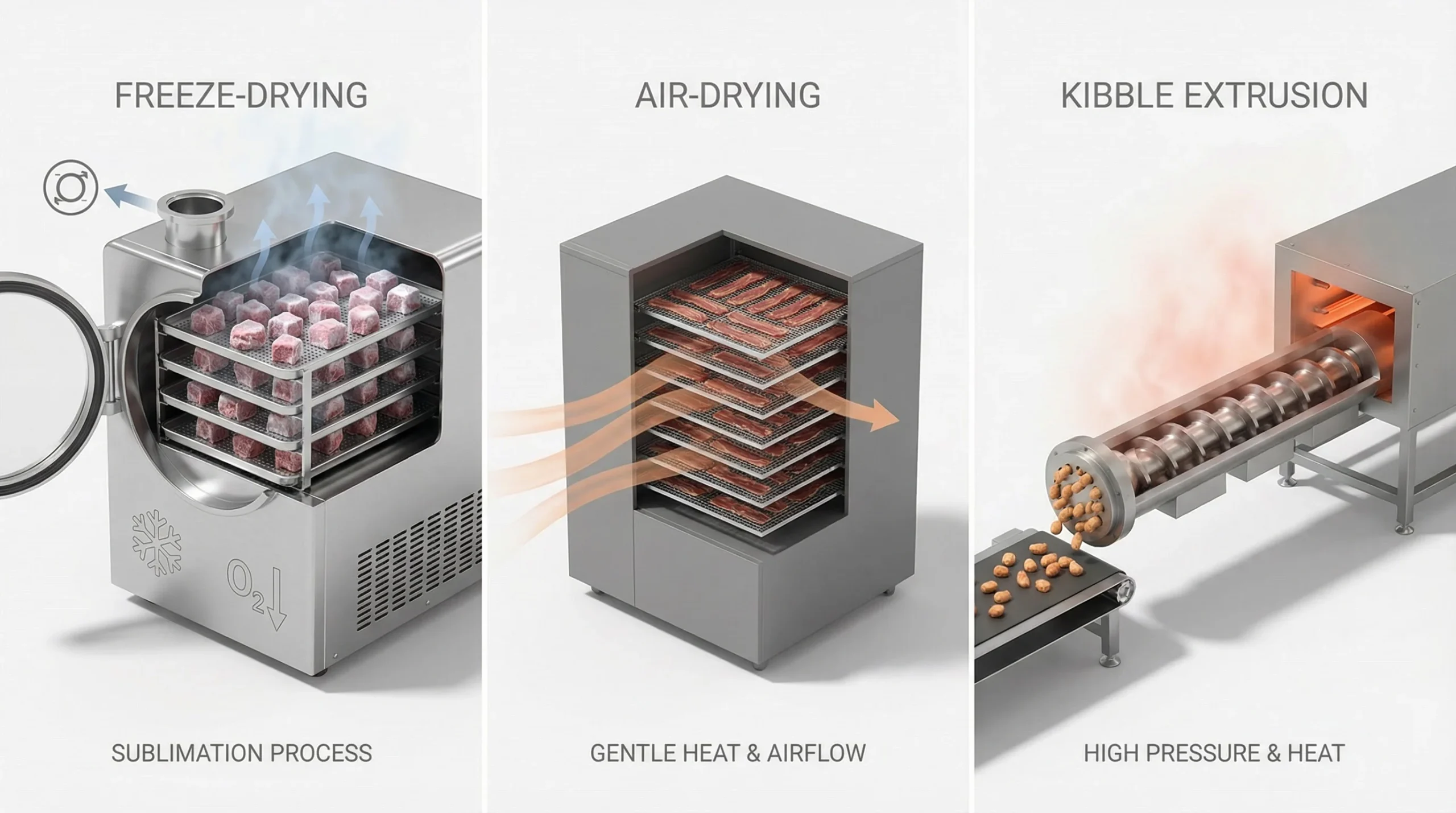
Freeze‑drying (sublimation at low temperature and vacuum)
Raw ingredients are frozen, then placed under vacuum so ice sublimates directly to vapor. Low temperatures and oxygen control help retain structure, aroma, and meat‑native compounds with minimal nutrient loss.
Air‑drying (warm dehydration and gentle convection)
Moderate heat and airflow slowly reduce moisture. Temperatures are lower than extrusion, so more native nutrients remain. Still, time and oxygen can cause some vitamin loss and gradual fat oxidation.
Kibble (extrusion, high heat/pressure and drying)
Slurries of ingredients are mixed and extruded with high pressure, steam, and shear, then dried and coated. This intensive thermal process can reduce heat‑sensitive nutrients and alter protein functionality[1].
Nutrient Retention: Proteins, Amino Acids and Fats
For animal‑based diets, we care about true protein quality, essential amino acids, and fat integrity—especially long‑chain PUFAs. Processing determines how much of these your dog actually gets.
Protein structure and true digestibility (DIAAS/PDCAAS context for dogs)
While DIAAS/PDCAAS are human metrics, the idea translates: protein quality in pet food depends on amino acid profile and digestibility. Lower heat (freeze‑drying) tends to better preserve digestible, native protein structures[3].
Essential amino acids: lysine, methionine and taurine sensitivity
Lysine can bind to sugars under heat (Maillard reactions), reducing availability; methionine and taurine may degrade with aggressive thermal steps. Cooler methods generally retain more essential amino acids than extrusion[3].
Fats: oxidation, PUFA stability and omega balance by method
PUFAs are fragile. Lower oxygen and temperature slow oxidation, protecting omega‑3s. Kibble’s higher heat and time require antioxidants and careful storage; freeze‑dried typically maintains fresher fat profiles[1].
Micronutrients and Functional Compounds
Beyond macros, dogs benefit from meat‑native vitamins, minerals, enzymes, and bioactives found in organs and connective tissues. Processing alters their availability and potency.
Heat‑labile vitamins (A, B‑complex, E) and minerals
Vitamins A, B‑complex, and E are sensitive to heat and oxygen; minerals are more stable. Extruded diets often add premixes to compensate for processing losses, whereas gentler methods may retain more native vitamins[2].
Enzymes, bioactives and natural antioxidants in meat and organs
Meat enzymes and compounds like carnosine and coenzyme Q10 can be diminished by heat. Lower‑temperature dehydration and freeze‑drying better preserve such bioactives and inherent antioxidants that support overall food freshness[4].
Digestibility, Stool Quality and Palatability
What dogs absorb—and how they feel—matters more than any panel claim. Here’s how format influences digestion, stools, and appetite appeal.
In‑vitro vs in‑vivo digestibility across formats
Extrusion alters proteins and starches, affecting digestibility indices. Research in dogs shows processing level influences nutrient availability and palatability, with thermal intensity linked to changes in digestibility outcomes[2].
Stool volume, frequency and fecal score expectations
Higher animal inclusion and reduced fillers generally yield smaller, less frequent stools. Freeze‑dried and well‑made air‑dried foods often produce tighter fecal scores versus some extruded diets with higher carbohydrate loads.
Aroma, texture and acceptance: why many dogs prefer freeze‑dried
Freeze‑dried keeps raw‑like aroma and texture once rehydrated, enhancing palatability. Air‑dried offers chewy, meaty pieces. Kibble relies on palatant coatings post‑extrusion to restore aroma compromised by heat[1].
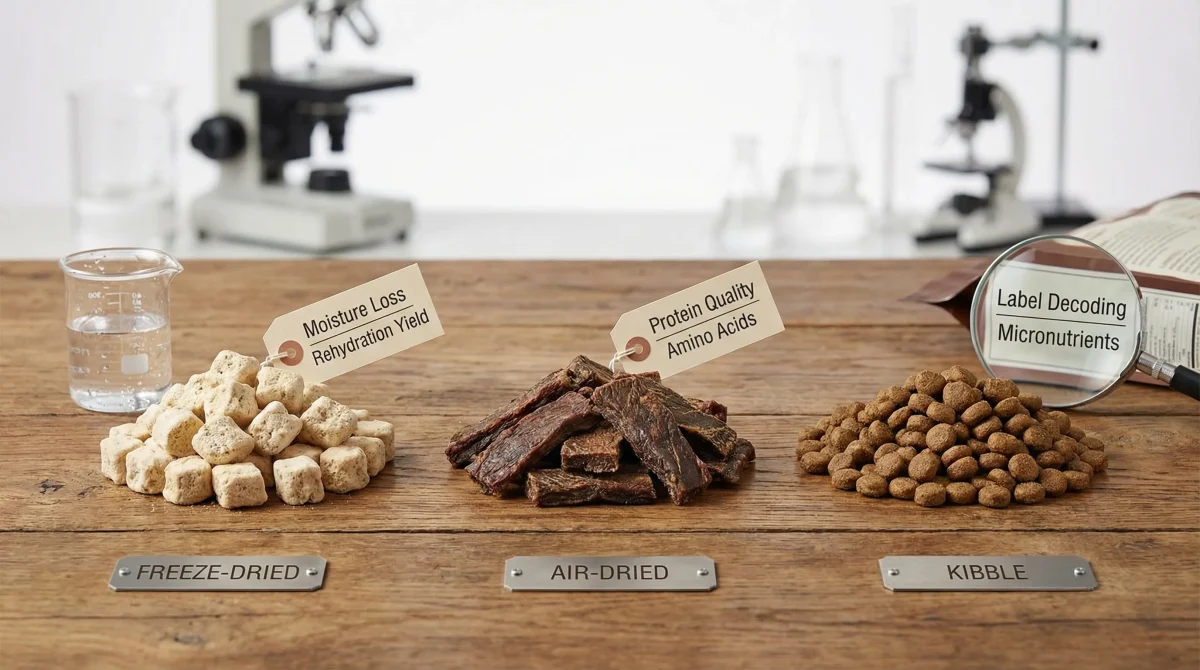
Moisture Loss, Rehydration Yield and Serving Math
Water drives weight, not calories. Learn the typical yields so portions reflect actual energy—crucial for precise feeding and fair freeze‑dried vs. air‑dried vs. kibble comparisons.
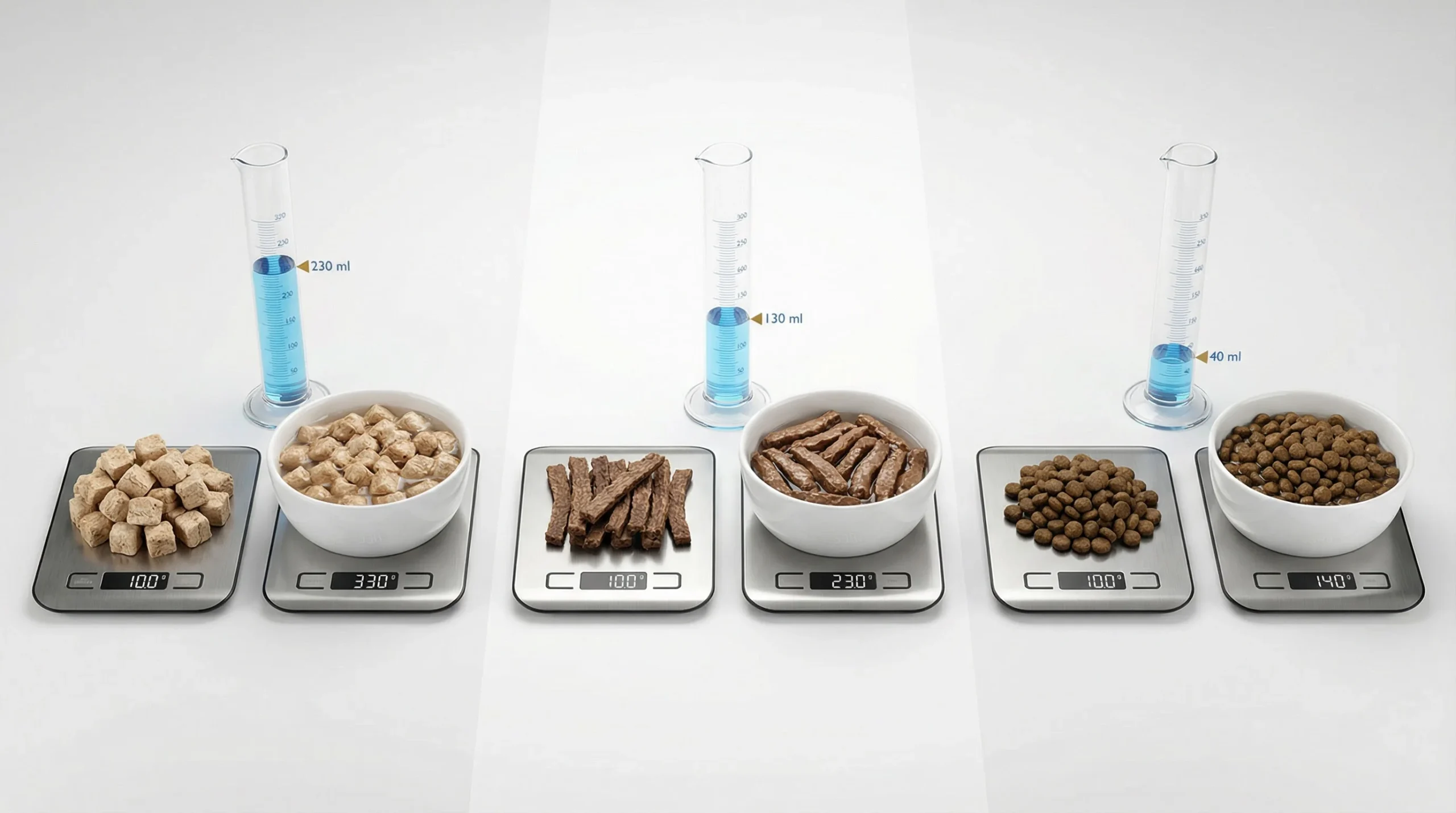
Typical moisture and yield: what 100 g dry equals when rehydrated (include link to rehydration ratios and calorie density)
As a guide, 100 g freeze‑dried can rehydrate to ~300–350 g; air‑dried to ~200–250 g. Kibble absorbs less, often ~120–150 g. See our rehydration ratios and calorie density calculator for precise targets.
Energy density and feeding calculators: avoiding over‑ or under‑feeding
Freeze‑dried and air‑dried concentrate calories; measure by dry weight, then add water to your dog’s preference. During transitions, many owners use Everfresh Freez-Dried food – Beef 500g to practice rehydration and dial portions accurately.
Label Decoding: Protein Sources, Additives and Processing Clues
Labels hint at quality, but you need to read like a pro. Here’s how to spot animal‑based integrity and signs of heavy processing.
Reading ingredient order and animal‑based inclusions
Look for named meats and organs high on the list and clear dry‑matter percentages. “Single‑protein” claims should be supported by straightforward, species‑specific ingredients without hidden mixed meals.
Additives, binders and antioxidants: what signals heavy processing
Long additive lists—palatants, colorants, texturizers—often reflect nutrient and aroma losses from heat. Natural mixed tocopherols can stabilize fats, but heavy use of flavor enhancers may signal aggressive processing.
Country of origin, single‑protein claims and batch transparency
Choose brands that disclose sourcing, lot tracking, and processing details. For a deeper checklist on EU requirements and best practices, see our EU pet food labeling, safety, and sourcing guide for buyers.
Price, Value and Waste: What You Really Pay For
Cost per kilo can be deceptive because moisture and digestibility vary. Value lives in “edible calories delivered,” storage life, and how much ends up as uneaten leftovers.
Cost per edible calorie vs cost per kilogram (include link to cost per meal comparison across formats)
Compare foods by metabolizable energy, not bag weight. Our cost per meal comparison across formats shows how freeze‑dried often competes on value when you normalize for calories and rehydration yield.
Shrinkage, leftovers and storage life trade‑offs
Freeze‑dried minimizes fridge waste and keeps well in a sealed pouch. Air‑dried resists spoilage but can stale if exposed. Kibble stores easily, though fats may oxidize over longer openings without airtight handling.
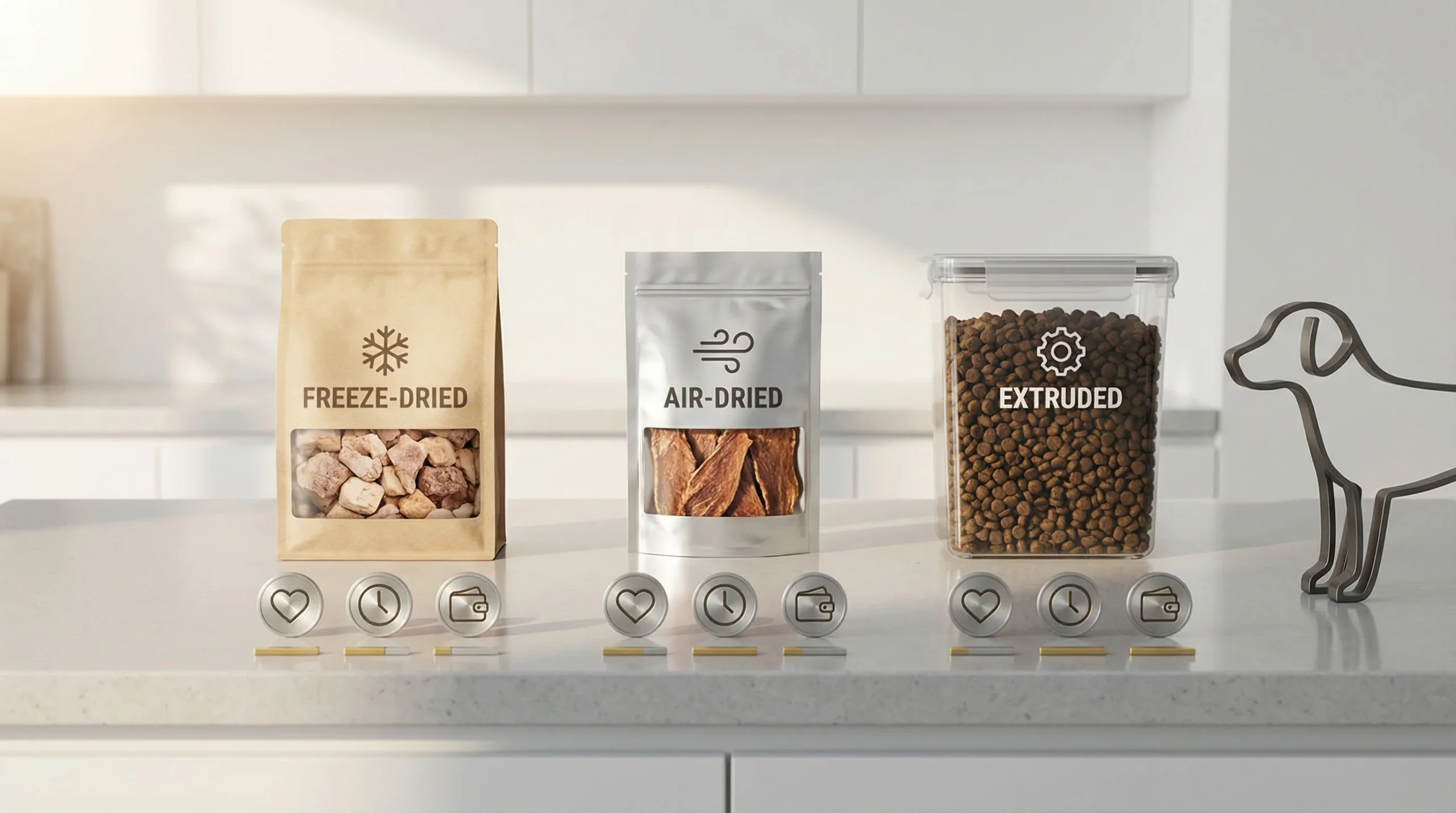
When to Choose Each Format
There’s no one‑size‑fits‑all. Your choice should reflect nutrient goals, dog preferences, storage, and budget—plus how much convenience you need day to day.
Freeze‑dried: nutrient preservation with convenience
Best when you want raw‑leaning protein quality and palatability with pantry stability. Rehydrate to your dog’s favorite texture, and rotate organ‑rich recipes for amino acid and micronutrient diversity.
Air‑dried: balanced compromise for travel and shelf life
Solid when you want meaty inclusions and lower heat than extrusion. Handy for training pieces and travel; watch fat exposure to air and seal bags promptly after each meal.
Kibble: consistency and budget with known trade‑offs
Useful for predictable dosing and storage. Recognize that extrusion can reduce some heat‑sensitive nutrients; quality varies widely, so seek clear animal‑first labels and supportive nutrient testing.
Visual Aids to Include
Here are simple visuals you can use to compare nutrient retention and serving math, and to decode labels at a glance.
Chart: nutrient retention ranges by method (protein, fat oxidation, vitamins)
| Nutrient Aspect | Freeze‑Dried | Air‑Dried | Kibble (Extruded) |
|---|---|---|---|
| Protein integrity | High | Moderate–High | Moderate |
| Fat oxidation risk | Low | Moderate | Higher |
| Heat‑labile vitamins | High retention | Moderate retention | Lower retention |
Diagram: moisture loss and rehydration yield
Imagine three sponges: freeze‑dried (most porous), air‑dried (moderately porous), kibble (dense). Add water: freeze‑dried expands most, air‑dried expands some, kibble expands least. Calories don’t change—only weight and texture do.
Label callouts: spotting processing and single‑protein integrity
- Named animal proteins and organs listed first.
- Minimal binders; clear antioxidants listed (e.g., mixed tocopherols).
- Simple, single‑species claims supported by the full ingredient panel.
Frequently Asked Questions
Does freeze‑dried dog food preserve more nutrients than kibble?
Generally yes. Freeze‑drying uses low temperature and vacuum, minimizing heat damage to amino acids, fats and vitamins, while extrusion for kibble involves high heat and pressure that can reduce heat‑sensitive nutrients.
Is air‑dried dog food less processed than kibble?
Air‑dried foods are gently dehydrated at lower temperatures than extrusion, often retaining more native nutrients and aroma than kibble. They are still processed but typically with fewer binders and lower heat.
How do rehydration ratios affect feeding amounts?
Freeze‑dried and air‑dried foods are low in moisture and pack more calories per gram. Rehydration increases weight and volume without adding calories, so feeding guidelines should be based on dry‑matter calories, not wet weight.
Do dogs digest freeze‑dried food better than kibble?
Many dogs show higher apparent digestibility and smaller stool volume with minimally heated, animal‑rich formulas like freeze‑dried. Individual results vary with recipe quality and the dog’s health.
Are fats in freeze‑dried foods less oxidized?
Typically yes. Lower processing temperatures and rapid moisture removal can limit oxidation, helping preserve PUFAs. Proper packaging and storage are still essential to prevent rancidity.
Conclusion
Through the lens of animal‑based nutrition, freeze‑drying protects protein quality, amino acids, fats, and heat‑sensitive vitamins better than more intensive heat methods. Air‑drying offers a balanced middle ground, while kibble provides consistency with acknowledged nutrient trade‑offs. If you’re weighing freeze‑dried vs air‑dried vs kibble, align the format with your dog’s needs, your storage routine, and your nutrition goals. For deeper context and broader feeding strategies, visit our animal‑based pet nutrition guide. From there, you can choose confidently—and feed in a way that keeps tails wagging and bowls happily emptied.
References
- S Choton et al. (2020). Extrusion technology and its application in food processing: A review. The Pharma …. View article
- PDG Pacheco et al. (2018). Thermal energy application on extrusion and nutritional characteristics of dog foods. Animal Feed Science …. View article
- AM Oberbauer et al. (2021). Amino acids in dog nutrition and health. Amino Acids in Nutrition and Health: Amino …. View article
- S Bridglalsingh et al. (2024). Association of four differently processed diets with plasma and urine advanced glycation end products and serum soluble receptor for advanced glycation end …. … and animal nutrition. View article