

Uncategorized
Hypoallergenic Proteins in Practice: When to Choose Horse and Other Novel Meats
Mar
Hypoallergenic Proteins in Practice: When to Choose Horse and Other Novel Meats
When itching, red ears, or chronic tummy upsets won’t quit, choosing the right protein can change everything. Many dogs thrive once their diets stop triggering the immune system.
In this focused guide, we’ll walk through elimination diets, common food allergens, why single‑protein horse may help, how to read labels, what timeline to expect, and how to reintroduce foods safely. Consider this your step‑by‑step path to calmer skin, happier bellies, and confident feeding decisions.
Why hypoallergenic and novel proteins matter for dogs
Novel proteins reduce the chance of prior sensitization, making them powerful tools for isolating triggers while supporting overall diet quality; if you need a refresher on protein strategy, see our broader animal‑based nutrition fundamentals.
True allergies vs. intolerances: what’s the difference?
Allergies involve the immune system reacting to specific proteins, often with itch, ear infections, or inflamed skin. Intolerances are non‑immune, commonly causing gas, loose stools, or nausea. Both feel miserable but are managed similarly: simplify, isolate triggers, and verify by diet trials.
Common canine food allergens and cross-reactivity explained
Chicken, beef, dairy, and egg top the list for dog food allergies and intolerances. Chicken has several characterized allergenic proteins, which helps explain frequent reactions and potential cross‑reactivity within poultry families.[3] Novel meats sidestep these well‑known culprits.
Where novel proteins fit: horse, venison, goat, duck, more
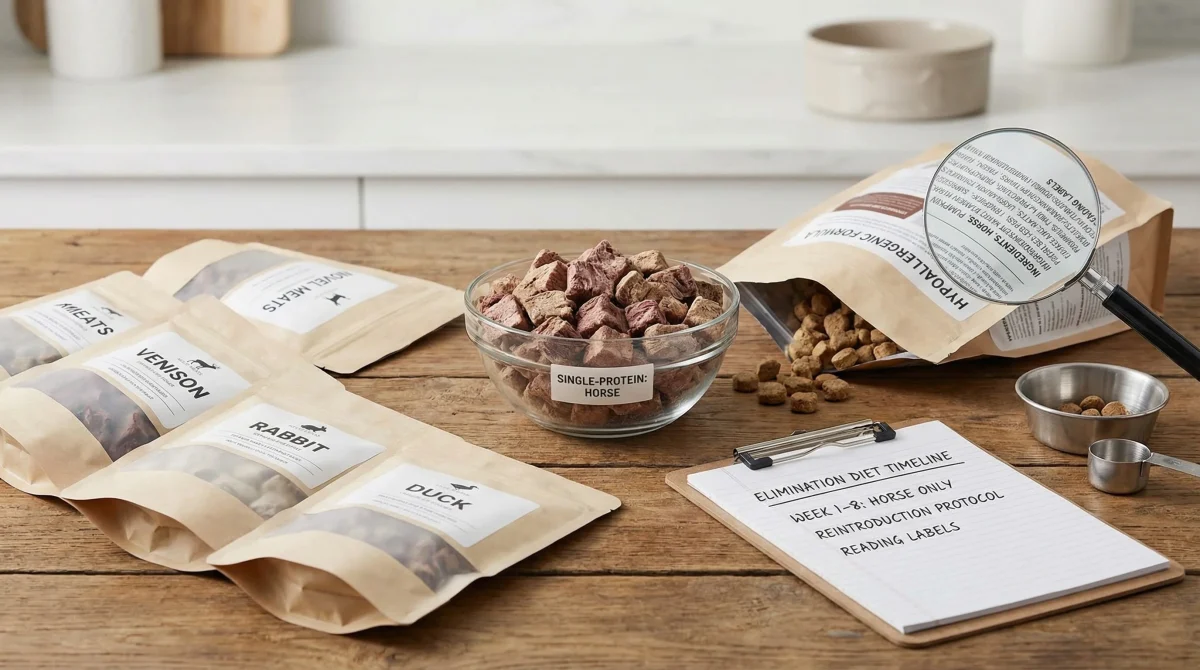
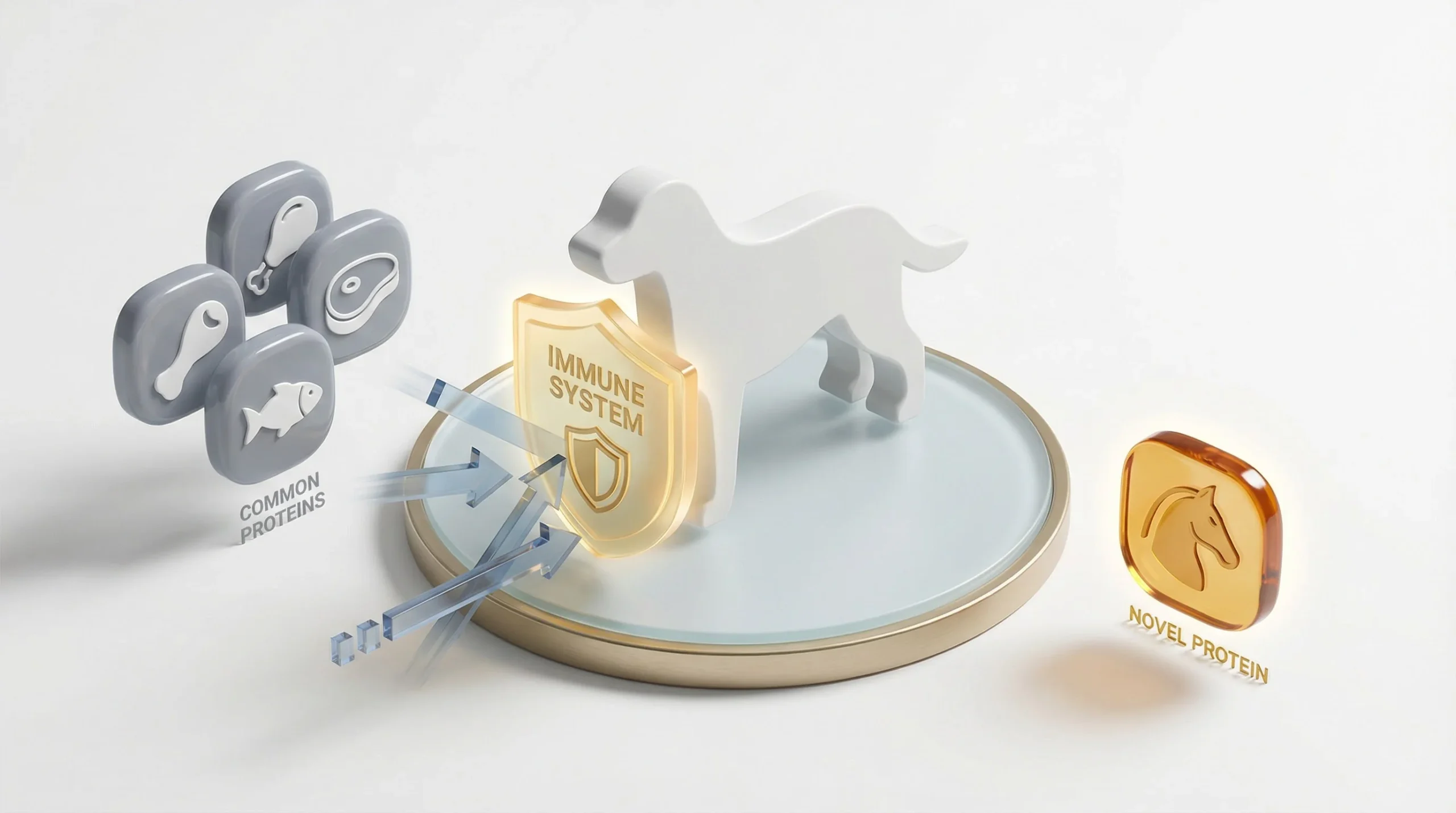
In a novel protein dog diet, you choose a meat your dog hasn’t eaten before: horse, venison, goat, rabbit, or duck. Novel proteins or hydrolyzed diets are standard first‑line tools in an elimination diet for dogs.[1]
When to choose horse as a single-protein option
Horse can be a strong first choice: it’s rarely fed in everyday diets, highly digestible, and effective as a single protein dog food for strict trials.
Evidence-based reasons horse can reduce reactions
Because few dogs have prior exposure to horse, sensitization risk is low, making horse meat dog food hypoallergenic in many cases. Hypoallergenic feeding often reduces itch and GI signs seen with common proteins, aligning with outcomes reported for elimination approaches.[4]
Who benefits most: history, breed risks, symptom patterns
Dogs with long histories of chicken, beef, or lamb exposure, recurrent ear infections, or seasonal flares overlaying food triggers may benefit. Breeds with sensitive skin or GI tracts are good candidates. Persistent itch plus soft stools signals a trial-worthy case.
Freeze-dried horse vs. cooked or extruded formats
Freeze-dried single‑protein diets preserve structure, aroma, and nutrients better than many heat‑processed options. To understand why freeze-drying often preserves animal nutrients best, compare it with air‑dried and kibble processes. For elimination trials, cleaner formats reduce confounders.
Designing an effective elimination diet
Success hinges on planning, consistency, and tracking. Keep it simple, unwavering, and measurable from day one.
Preparation checklist and baseline logging
Photograph the skin, note stool quality, record itch level (0–10), and list all current foods. Remove flavored meds and supplements. Clear the house of old treats. Share the plan with family and sitters so rules stay consistent and kind.
Protein and ingredient selection hierarchy
Pick one novel protein (e.g., horse) and a compatible carbohydrate if needed. Avoid mixed fats, broths, and multi‑protein blends. Elimination diets rely on strict single‑protein formulas or validated hydrolyzed alternatives for accuracy.[1]
Feeding amounts, water for rehydration, and consistency
Calculate daily calories and rehydrate freeze‑dried meals consistently (same ratio, every meal). Feed measured portions at set times. During the trial, only offer identical treats—many owners use Horse Meat Slices – Freeze-Dried Treat for Dogs & Cats to match the protein exactly.
- Choose a single novel protein and remove all other foods.
- Set rehydration ratios and portion sizes; feed at fixed times.
- Track symptoms daily and avoid any off‑diet items.
Elimination success is about precision: one protein, no exceptions, and diligent note‑keeping.
Reading labels to verify true single-protein formulas
Label literacy prevents accidental exposures. A few minutes of auditing can save weeks of inconclusive results.
Hidden allergens, processing aids, and cross-contamination
Scan for fish oils, poultry fat, “natural flavor,” stock, or gelatin—these can introduce other species. Ask brands about shared equipment and sanitation. Even traces may derail a sensitive dog’s response during the crucial trial window.
Interpreting EU ingredient order, additives, and claims
EU rules list ingredients by weight, but mixed fats can mask extra species. Validate “single‑protein” claims against the whole panel. For a deep dive into EU labeling and sourcing transparency, use our checklist to audit origin, additives, and safety controls.
How to confirm sourcing and manufacturing transparency
Look for batch‑level traceability, supplier audits, and allergen control programs. Ask whether fats, palatants, and binders match the single protein. Trustworthy brands are happy to share QA processes and answer practical, product‑specific questions.
- Verify species in fats, broths, and flavors.
- Confirm single‑line equipment or validated clean‑downs.
- Request sourcing and allergen policy documentation.
Timeline to results: what to expect and when
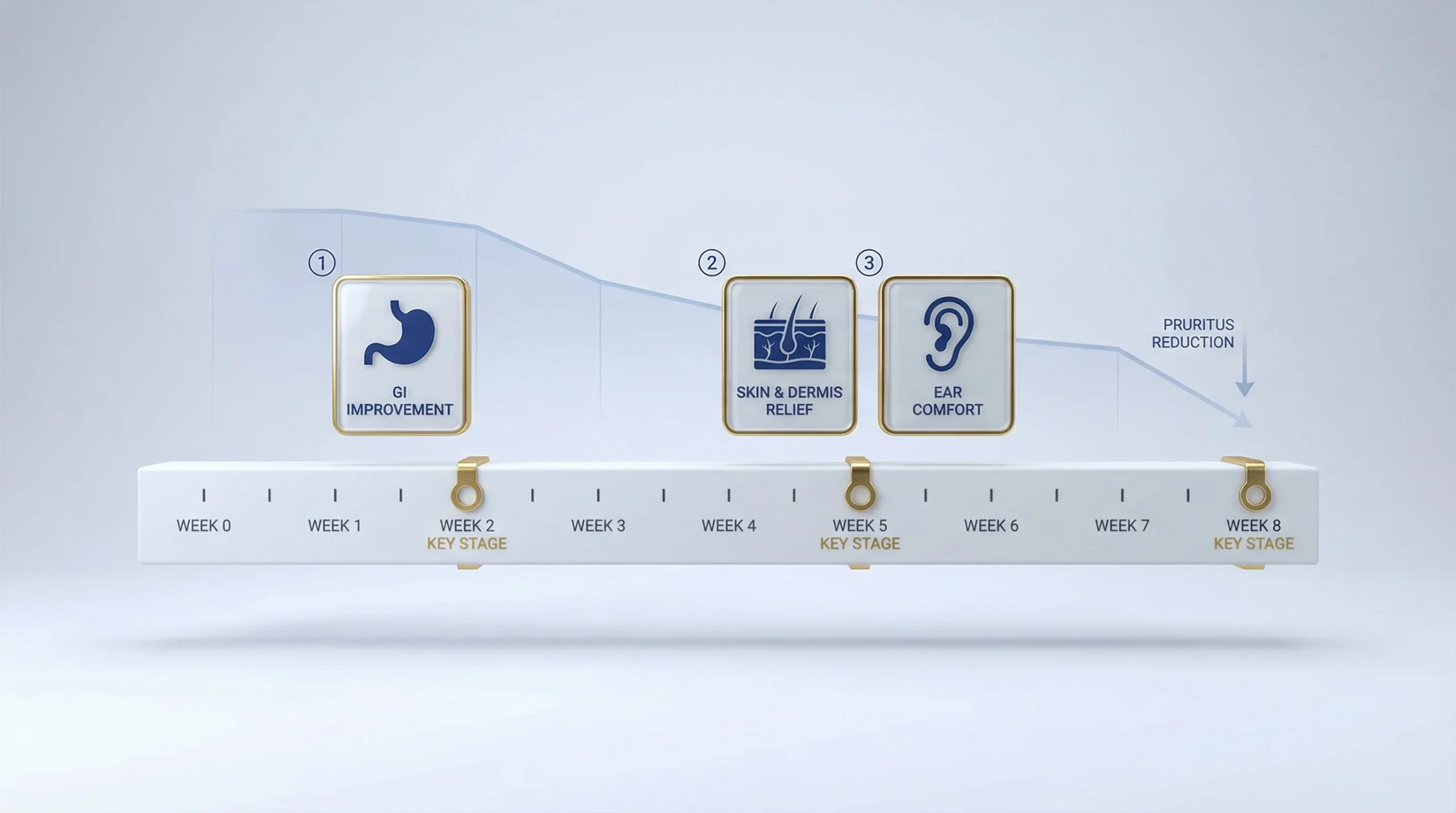
Most dogs show staged improvements; knowing the pattern helps you stay patient and spot genuine change versus noise.
Week-by-week changes for skin, GI, ears, and stool
GI signs often settle first; skin and ears follow later. Studies using hypoallergenic or hydrolyzed protocols report pruritus and microbiota changes over 6–8 weeks, aligning with clinical timelines you’ll see at home.[2]
When to adjust: stagnation, partial response, flare-ups
If stool normalizes but itch persists by week four, review treats, meds, and environment. Partial responses may need longer trials or different proteins. Sudden flares usually hint at accidental exposure; retrace steps carefully before switching.
Tracking tools: symptom scores, stool charts, itch scales
Use a 0–10 itch scale, a 1–7 stool chart, and weekly photos. Consistent scoring helps you and your vet spot trends. Simple spreadsheets or pet‑health apps make patterns clear, even when daily changes feel subtle.
| Week | Typical Changes |
|---|---|
| 1–2 | Stool firms; gas reduces; mild itch shifts begin. |
| 3–4 | Less ear debris; calmer scratching; coat sheen improves. |
| 5–8 | Skin quiets; hot spots settle; stable stools and energy. |
Hypoallergenic feeding has also been associated with improved dysbiosis indices alongside symptom relief, reinforcing gut–skin links.[4]
Reintroduction and challenge protocol
Once your dog stabilizes, structured challenges confirm or clear specific proteins. Go slow and document everything.
Single-variable protein challenges and waiting periods
Test one new protein at a time for 3–7 days, keeping the base diet constant. If no change occurs, wait a 3–5 day washout and move to the next. Short, deliberate steps prevent confusing overlap.
Order of reintroductions and documenting thresholds
Start with least likely culprits (e.g., duck) and finish with prior staples (e.g., chicken). Note the smallest amount triggering signs. Thresholds guide future label checks and serving sizes for mixed‑protein environments.
What constitutes a positive reaction and next steps
Increased itch, soft stool, ear debris, or vomiting within 48 hours suggests a reaction. Return to the safe base diet until stable, then proceed with another challenge. Keep reactive proteins out for at least three months.
Implementing the plan with freeze-dried practicality
Freeze‑dried foods simplify measuring, storage, and travel—helpful during high‑precision trials when every gram counts.
Rehydration ratios, storage, and travel scenarios
Pre‑portion meals in bags; add warm water at feeding. Store unopened packs cool and dry; rehydrated food should be consumed promptly. For trips, freeze‑dried packs and collapsible bowls are tidy, odor‑light, and easy for caregivers to manage.
Cross-contact control at home and on the go
Use dedicated scoops, bowls, and prep areas. Wash hands and surfaces before handling food. When boarding or visiting friends, provide labeled portions and written instructions to avoid accidental exposures to common kitchen proteins.
Using structured transition plans to reduce GI upset
If your dog is new to freeze‑dried, blend old and new slowly. Our structured 7‑day transition plan outlines gentle steps that protect the GI tract while you nail consistency—crucial for clear elimination outcomes.
Risk management and veterinary collaboration
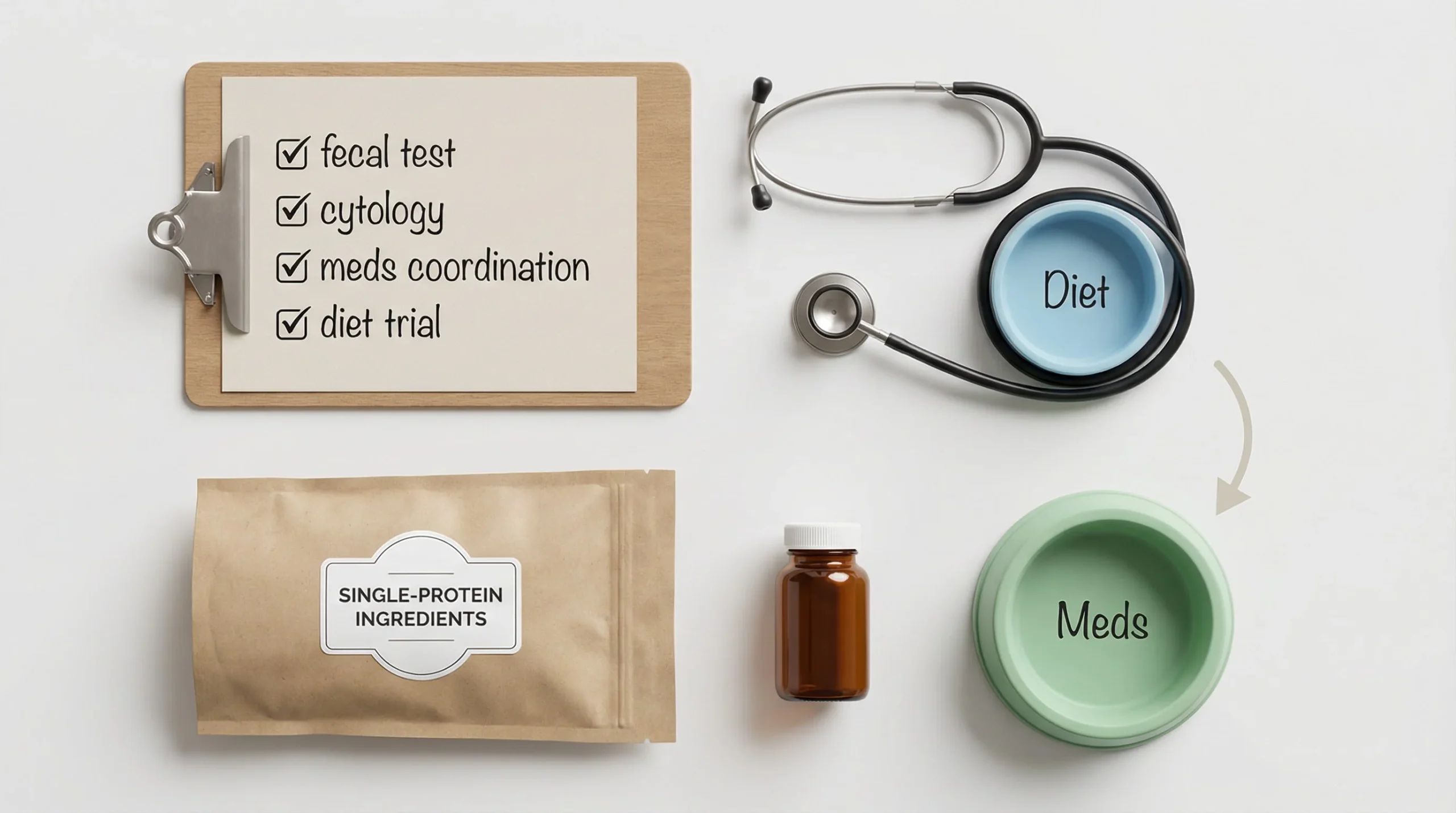
Work in tandem with your vet to balance thoroughness and comfort. Diagnostics and medications can coexist with dietary trials when thoughtfully coordinated.
When to seek diagnostics (fecal, cytology, serum/IgE limits)
Rule out parasites and infections via fecal and cytology. Serum IgE tests can support hypotheses but do not replace elimination and challenge trials as the diagnostic gold standard in adverse food reactions.[1]
Medications and supplements during elimination: pros/cons
Short courses of antipruritics or ear meds may be needed initially; ensure they’re unflavored. Pause non‑essential supplements to avoid confounders. Reintroduce supportive options later, confirming they align with your dog’s safe list.
Puppies, seniors, and special conditions
For growth, pregnancy, or medical needs, partner with your veterinarian to maintain nutrient adequacy. Choose complete diets where appropriate, and monitor weight and hydration closely. Adjust calories as activity, age, or climate changes.
Frequently Asked Questions
How long should a canine elimination diet last before judging results?
Plan 6–8 weeks of strict feeding before evaluating outcomes. Some GI signs improve in 1–2 weeks, while skin and ear issues often need 4–6 weeks.
Why is horse considered a good hypoallergenic protein for dogs?
Horse is rarely used in prior diets, lowering sensitization risk. As a single-protein with simple ingredients, it helps isolate triggers in elimination trials.
Can I use treats during an elimination diet?
Only use treats made from the exact same single protein and with no added allergens. Even small exposures to other proteins can invalidate the trial.
How do I confirm a dog food is truly single-protein?
Check the ingredient list for a single animal source and no mixed fats or flavorings. Verify manufacturer transparency on sourcing and cross-contact controls.
When should I involve my veterinarian?
Involve your vet before starting if symptoms are severe, if weight loss occurs, or if there are chronic ear/skin infections or persistent diarrhea.
Cost and access tip: For budgeting, see our breakdown comparing formats and price points in EU contexts once your trial is complete: Cost per Meal: Freeze‑Dried vs. Raw Frozen vs. Kibble (With EU Examples).
Authored by the Good4Dogs team
Conclusion
Choosing hypoallergenic proteins for dogs is about executing a precise, compassionate plan—especially during an elimination diet. By understanding common allergens, verifying true single‑protein formulas, and using a measured reintroduction, you’ll uncover what your dog can enjoy comfortably. Horse, as a novel, single protein, offers a practical path when other options fail. Pair that with freeze‑dried convenience, steady tracking, and veterinary partnership, and you’ll make confident, evidence‑guided choices. Here’s to calmer skin, healthier digestion, and a routine you can keep—at home, on walks, and wherever life takes you together.
References
- MP Szczepanik et al. (2022). Evaluation of a hydrolysed salmon and pea hypoallergenic diet application in dogs and cats with cutaneous adverse food reaction. Polish Journal of …. View article
- C Noli et al. (2023). Analysis of intestinal microbiota and metabolic pathways before and after a 2-month-long hydrolyzed fish and rice starch hypoallergenic diet trial in pruritic …. Veterinary Sciences. View article
- T Olivry et al. (2022). Identification of major and minor chicken allergens in dogs. Veterinary …. View article
- EEA Guidi et al. (2021). Effects of feeding a hypoallergenic diet with a nutraceutical on fecal dysbiosis index and clinical manifestations of canine atopic dermatitis. Animals. View article