

Uncategorized
Switching to Freeze‑Dried Raw: A 7‑Day Transition Plan for Dogs
Mar
Switching to Freeze‑Dried Raw: A 7‑Day Transition Plan for Dogs
Ready to help your dog move to freeze‑dried raw without tummy drama? You’re in the right place. This guide gives you a day‑by‑day transition schedule, a simple stool scoring chart, gentle protein/fat adjustments, and clear troubleshooting steps.
Our goal is a smooth, confident changeover. Keep this page handy, and use the printable checklist to track portions, water, and poop quality as you go.
Why Switch to Freeze‑Dried Raw?
Freeze‑dried raw dog food combines the nutritional benefits of raw with pantry‑friendly convenience. For many families, it’s the easiest entry into animal‑based nutrition.
Nutrient retention and digestibility
Freeze‑drying preserves sensitive nutrients while avoiding high‑heat damage. Research shows freeze‑dried raw diets can have indispensable amino acid digestibilities above 90%, supporting efficient protein use and lean muscle maintenance.[3]
Convenience, safety, and consistency vs. fresh raw
Compared with fresh raw, freeze‑dried is shelf‑stable, lightweight, and easier to measure consistently. Studies comparing formats also note differences in fecal characteristics versus extruded diets, which owners often experience as smaller, less odorous stools.[4]
How to Prepare: Portions, Rehydration, and Tools
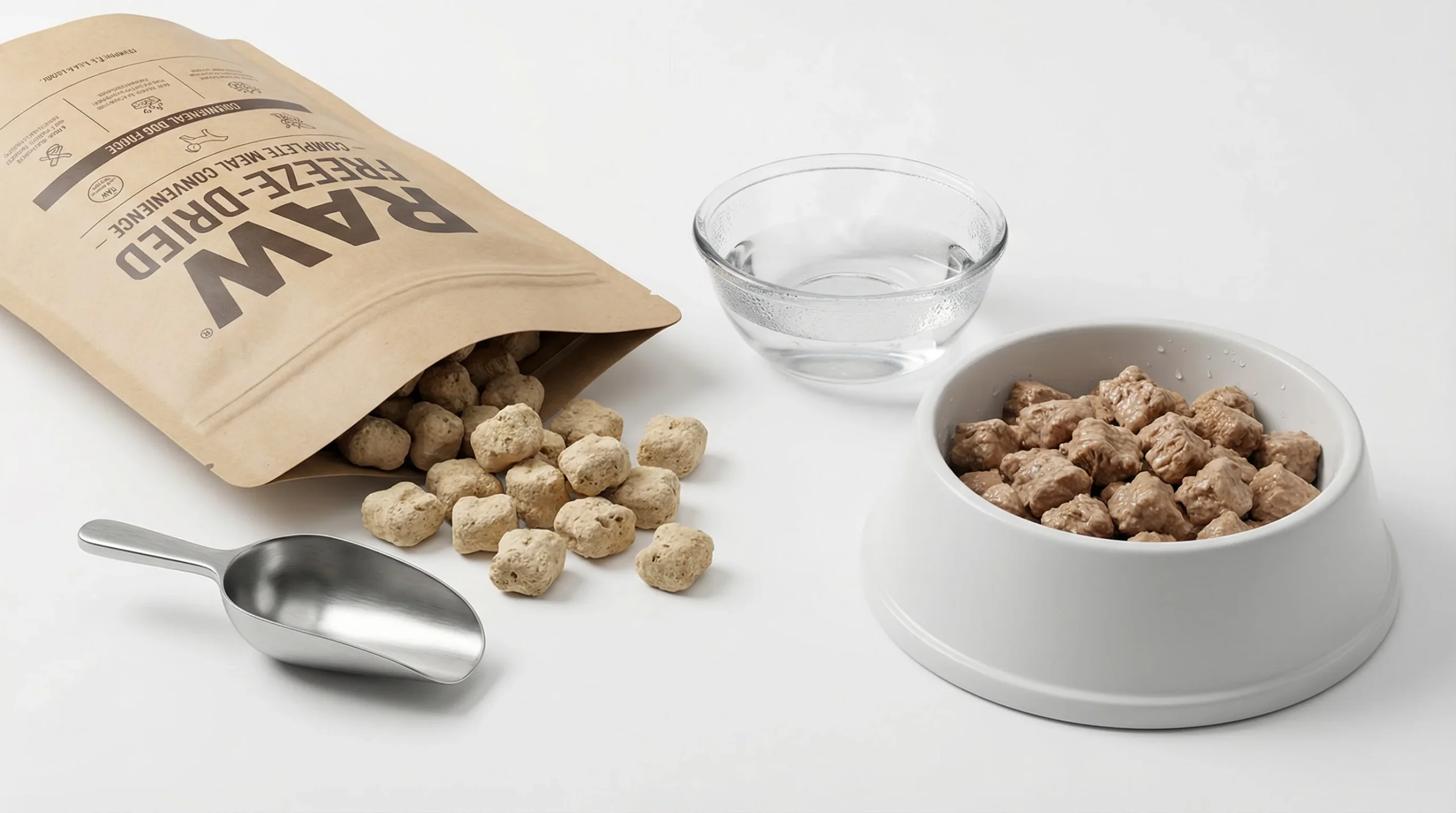
A little prep makes the freeze‑dried dog food transition calm and predictable. Set your portions, water, and workspace before Day 1.
Daily energy needs and portion math
Start with your dog’s current calorie intake or a standard maintenance estimate (e.g., 2–3% of body weight per day in fresh equivalent). Translate this to grams of freeze‑dried, accounting for rehydration adding water, not calories.
Rehydration ratios and water temperature
Typical rehydration ratios dog food makers recommend are 1:1 to 1:1.5 (food:water) with lukewarm water. Warm (not hot) water softens texture, enhances aroma, and supports safe swallowing and digestion.
Sanitation and food‑handling basics
Wash hands, bowls, and utensils after feeding. Store freeze‑dried in a cool, dry place; seal bags tightly. Rehydrate only what you’ll use at that meal, and discard leftovers after 30 minutes.
The 7‑Day Transition Schedule
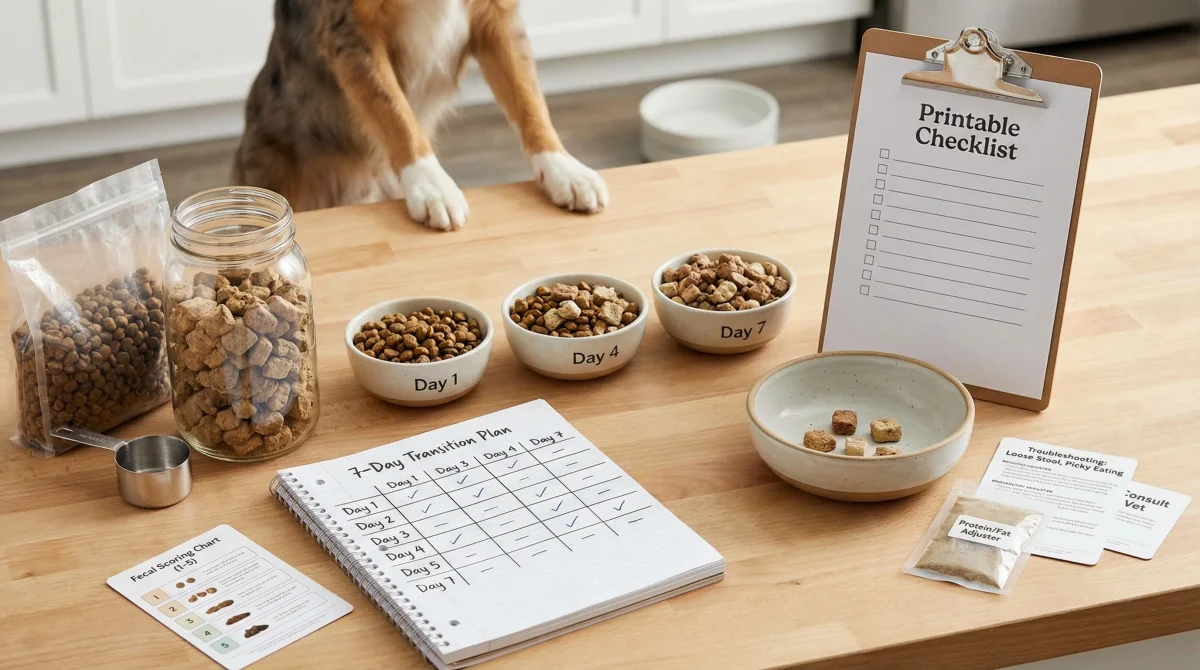
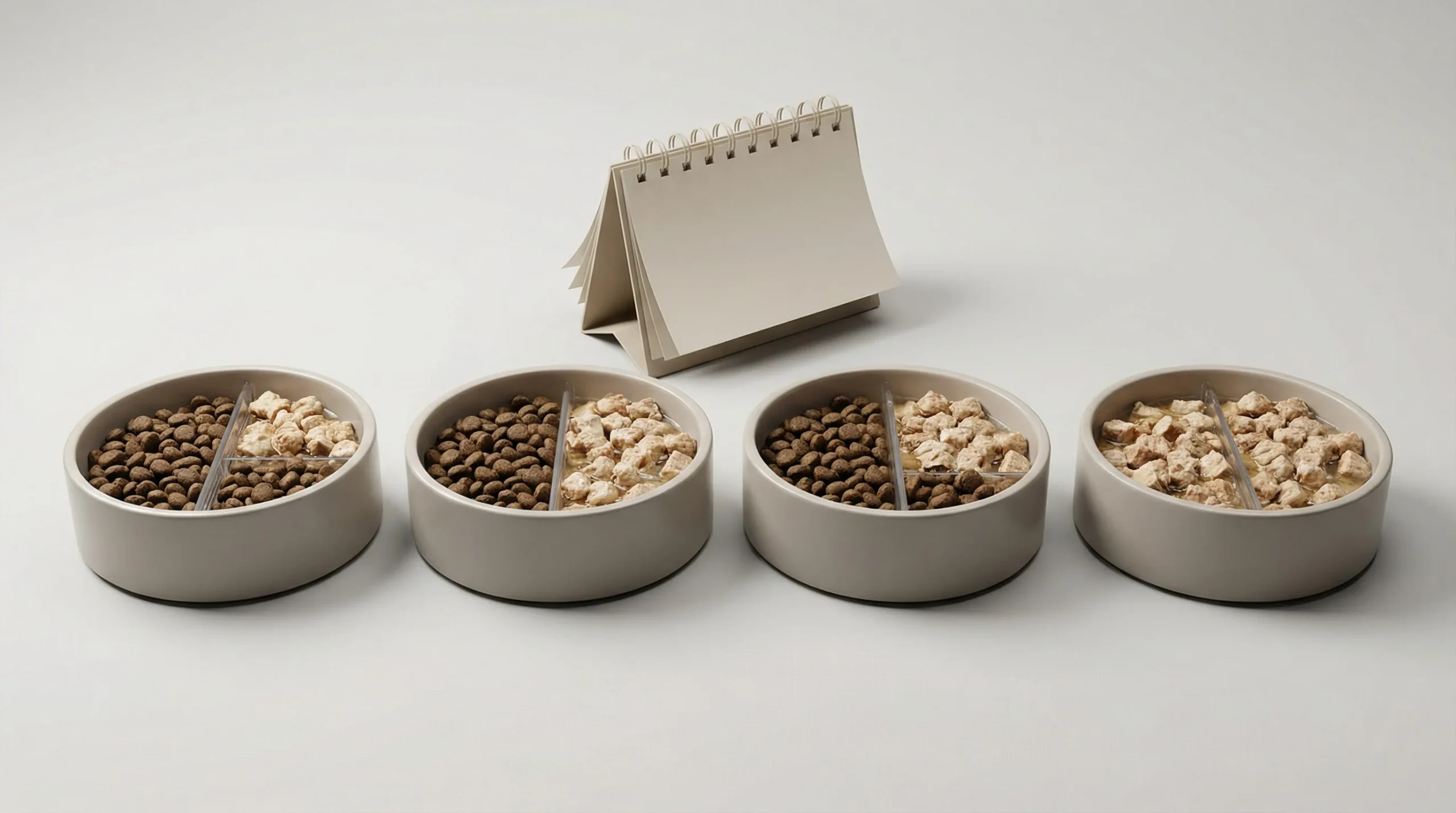
Use a simple raw feeding schedule for dogs: change 25% every two days. If your dog is very sensitive, slow the pace to 10–14 days.
Day 1–2: 25% freeze‑dried raw / 75% current food
Mix 25% of the rehydrated freeze‑dried with 75% of the current diet. Observe stool, gas, and appetite. Many pet owners find Everfresh Freez-Dried food – Beef 500g helpful for this task.
Day 3–4: 50% / 50%
Increase freeze‑dried to half the bowl. Keep water consistent. Note stool score changes; small shifts are normal, but sustained diarrhea means pause or step back a day.
Day 5–6: 75% / 25%
Raise freeze‑dried to 75%. If stools drift soft, add a teaspoon of fiber (psyllium‑flax mix) and ensure full rehydration. Gentle pacing prevents gas and reduces picky‑eating episodes.
Day 7: 100% freeze‑dried raw
Move to full freeze‑dried. Maintain your chosen ratio of water and confirm daily totals match your calorie goal. Celebrate—then focus on consistency for the next week.
Use the feeding calculator and rehydration guide
For precise grams, calories, and water, use our feeding calculator and rehydration guide. Accurate math helps avoid under‑ or overfeeding and supports a smoother transition.
Takeaway: If loose stools appear, reduce the new food to the last well‑tolerated level for 24–48 hours, rehydrate thoroughly, and re‑advance more slowly.
Stool Scoring: What Healthy Transition Poop Looks Like
Healthy poop tells you a lot. Use the dog stool scoring chart below and our printable checklist to log daily changes and catch issues early.
1–7 stool scale explained (ideal: 2–3)
Raw and freeze‑dried often yield smaller, firmer stools; many dogs trend toward an ideal score of 2–3 when portions and water are right.[4] During transitions, brief scores of 3–4 may occur without concern.
| Score | Texture | Action |
|---|---|---|
| 1 | Very hard, dry pellets | Increase rehydration, add a splash more water or 1–2 tsp fiber. |
| 2 | Firm, segmented | Ideal—continue. |
| 3 | Formed, softer surface | Ideal—monitor. |
| 4 | Soft, loses shape | Slow transition; confirm 1:1–1.5 rehydration ratio. |
| 5 | Mushy piles | Step back a day; add fiber; check total fat and portions. |
| 6 | Runny, no form | Pause transition; hydrate; call vet if persists >24 hours. |
| 7 | Watery, possible urgency | Seek veterinary input promptly. |
Color, mucus, and odor cues during diet change
Brown is typical; mild color shifts can reflect protein type. A little mucus may appear early, but persistent mucus, blood, or strong odor warrants caution. Research shows format influences metabolites and fecal odor.[2]
Hydration and fiber tweaks if stool drifts
If stool moves softer (4–5), first raise water to the high end of your ratio, then add 1 tsp psyllium‑flax per meal. For overly firm (1–2), slightly reduce fiber and confirm warm water use.
Adjusting Protein and Fat for Individual Dogs
Fine‑tune macronutrients as you watch energy, coat, and stool. Small, gradual changes help you see what works.
Lean vs. active dogs: when to raise fat
Active or underweight dogs may benefit from modestly higher dietary fat for energy density. Differences in processing and composition can influence stool and metabolite profiles, so adjust slowly and monitor output.[1]
Sensitive stomachs: choosing gentler proteins
Start with easily digested, moderate‑fat proteins. Keep meals simple and consistent. Introduce one protein at a time for at least two weeks to fairly judge tolerance, appetite, and stool stability.
How to rotate proteins without upsetting the gut
Rotate after stability: maintain one base protein, then add a new single protein for 3–5 days at 25–50%. For suspected sensitivities, see our guide on novel proteins like horse for calmer transitions.
Troubleshooting Common Issues
Most bumps are solved by pacing, water, and smart protein choices. Here’s a quick fix list you can apply immediately.
Loose stool or gas: pacing, fiber, and hydration fixes
Slow the switch (back one step), rehydrate to 1:1–1.5, and add 1 tsp psyllium‑flax per meal. Studies show format influences digestibility and fecal outputs—small adjustments matter.[4]
Picky eating: palatability boosters and texture
Use warmer water, crumble smaller, or top with a teaspoon of the rehydration liquid. Briefly hand‑mix with a familiar food during early days, then taper as curiosity and confidence grow.
Suspected allergies: using hypoallergenic single‑protein options
For itching, ear debris, or chronic loose stools, consider an elimination approach by using hypoallergenic single‑protein options. Introduce one novel meat at a time, logging stool, skin, and behavior.
When to pause, step back a day, or seek veterinary input
Pause at the last well‑tolerated ratio if stools hit 5–6. If symptoms persist or you note lethargy or blood, call your vet. Trials often run in 7‑day blocks in research, mirroring our schedule.[2]
Printable 7‑Day Checklist and Notes
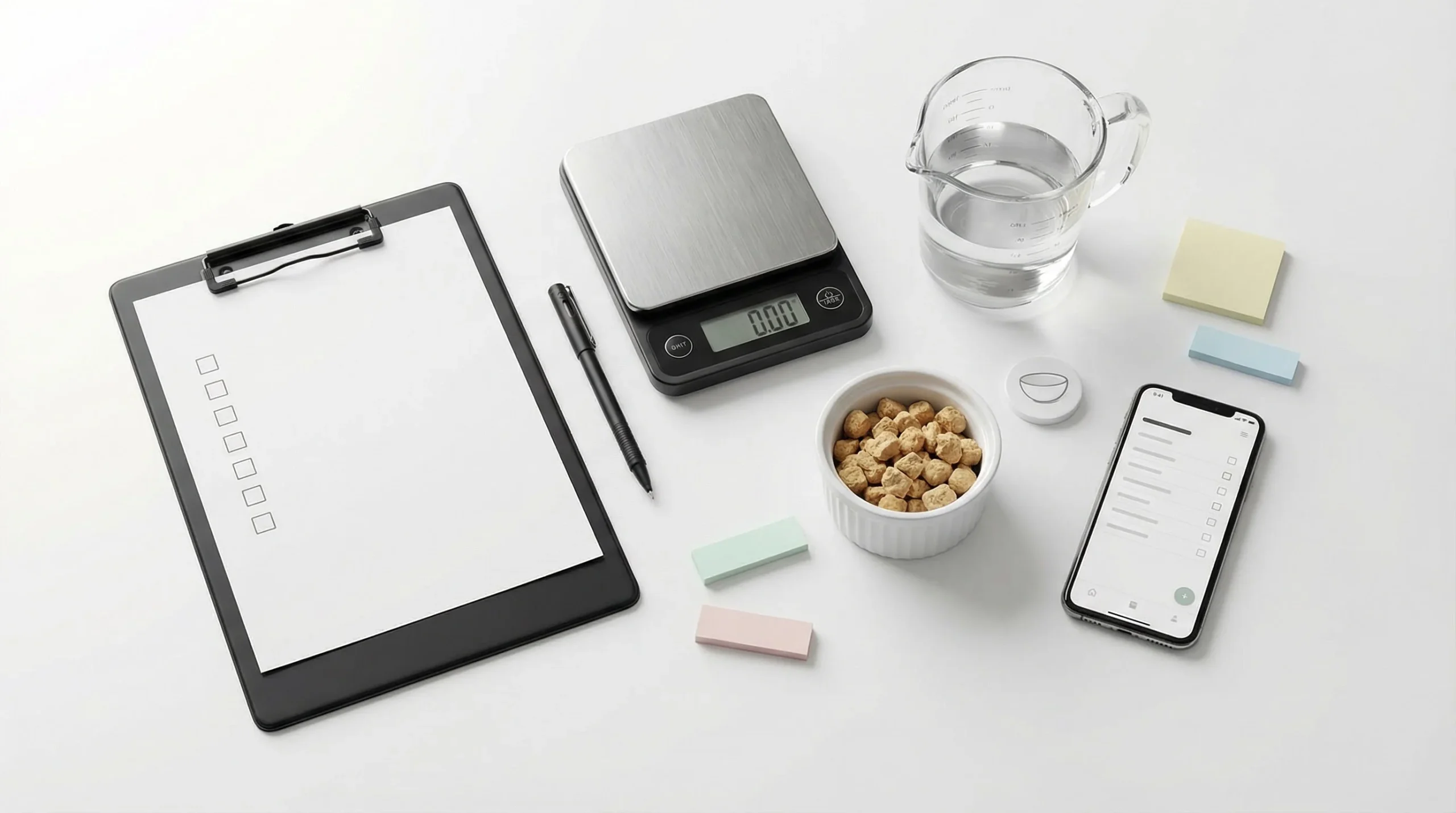
Print, place on the fridge, and track what matters. Small daily notes make patterns obvious and help your vet if you need guidance.
Daily portion, water, stool score, and behavior log
Track meal grams (dry), rehydration water, stool score (1–7), energy, and any gas or itch. Consistent logging ensures you catch trends early and adjust with confidence.
- AM/PM grams (dry) and water added
- Stool score, color, mucus/odor notes
- Energy, appetite, skin/ear notes
- Any add‑ons or changes made
Protein/fat adjustments and add‑ons section
Reserve space to record new proteins, fat level changes, and targeted add‑ons like omega‑3s or fiber. Change one variable at a time so you can clearly see cause and effect.
When to Consult a Veterinarian
Listen to your dog. A quick call can save days of discomfort and uncertainty.
Red‑flag signs that require prompt attention
Bloody stool, repeated score 6–7, vomiting, fever, lethargy, or refusal to drink demands veterinary attention. If diarrhea lasts beyond 24 hours despite pausing the transition, consult promptly.
Puppies, seniors, and dogs with medical conditions
Work with your vet if your dog is a puppy, senior, or has pancreatitis, kidney disease, IBD, or food allergies. They may recommend slower pacing, tailored fat, and specific single‑protein choices.
Further Learning and Master References
For deeper context on animal‑based feeding formats, see our complete animal‑based nutrition overview. To dial in portions and water precisely, visit the feeding calculator and rehydration guide.
Frequently Asked Questions
How long should I transition my dog to freeze‑dried raw?
Most dogs do well with a 7‑day schedule (25% increments every two days). Sensitive dogs may need 10–14 days to minimize stool changes and gas.
Do I have to rehydrate freeze‑dried dog food?
Yes, rehydrate to support digestion and safe swallowing. Typical ratios are 1 part food to 1–1.5 parts warm water; check your brand’s guidance and adjust to stool quality.
What stool changes are normal during the switch?
Slightly softer stools (score 3–4) and smaller volume are common. Persistent diarrhea, mucus, blood, or lethargy are not normal—slow the transition and consult a vet if signs continue.
Which protein is best for sensitive or allergic dogs?
Single‑protein, novel meats like horse can help when allergies are suspected. Introduce one protein at a time and monitor stool, skin, and itch over 2–3 weeks.
Can I add supplements during the transition?
Keep add‑ons minimal the first week. If needed, introduce fiber (psyllium‑flax) or targeted functional blends gradually and monitor stool and appetite.
Evidence corner: Freeze‑dried diets in controlled studies show excellent amino acid digestibility and distinct fecal characteristics compared with extruded foods, helping explain common observations during switches.[3][4][2]
Conclusion
Switching to freeze‑dried raw dog food can be smooth, predictable, and rewarding when you pace the change, rehydrate properly, and watch the poop. Use our 7‑day plan, stool scoring chart, and checklist to stay on track. For a broader perspective on formats, safety, and sourcing, explore our complete animal‑based nutrition overview. If red flags arise, pause and call your vet—we’re always here to help you and your dog thrive.
References
- EL Geary (2025). Effects of dietary processing conditions on nutrient digestibility and fecal characteristics, metabolite concentrations, and microbiota populations of healthy adult dogs. 2025 – ideals.illinois.edu. View article
- EL Geary et al. (2025). … nutrient digestibility of raw, minimally processed, and retorted dog foods and their effects on fecal characteristics, metabolites, and microbiota of healthy adult dogs.. Journal of Animal …. View article
- EL Geary et al. (2023). Standardized amino acid digestibility and nitrogen-corrected true metabolizable energy of frozen raw, freeze-dried raw, fresh, and extruded dog foods using precision …. Journal of animal …. View article
- EL Geary et al. (2024). Apparent total tract nutrient digestibility of frozen raw, freeze-dried raw, fresh, and extruded dog foods and their effects on serum metabolites and fecal characteristics …. Translational Animal …. View article