

Uncategorized
When to see the vet for suspected food allergies in dogs: red flags, testing, referrals
May
When to see the vet for suspected food allergies in dogs: red flags, testing, referrals
Itchy skin or tummy troubles can make your dog miserable. Start by reviewing an overview of food allergies in dogs to understand common signs and first steps. Knowing what’s urgent versus manageable at home saves time and stress.
This guide zeroes in on thresholds for veterinary care and testing. You will learn which dog food allergy red flags require prompt visits, what tests can and cannot confirm, and how to coordinate a canine elimination diet with medical workups.
Start here: one decision you need to make today
Reference the overview of food allergies in dogs
If your dog is itchy, gassy, or has recurring ear issues, pause and orient. Food allergy and food intolerance in dogs can look similar. Many signs also overlap with fleas, mites, and environmental allergies. A fast refresh on patterns and typical timelines steadies your next move.
Remember, food reactions commonly affect skin and ears, but the gut may flare too. Consider your dog’s age, seasonality, and recent diet changes. This framing helps you decide whether to begin diet change now or seek a veterinary exam first.
Decide: start a structured elimination diet now or see the vet first?
Make one call today. If your dog has severe signs, pain, or rapidly worsening symptoms, see your vet first. If signs are stable and moderate, you may start a structured elimination diet.
Whichever path you choose, set guardrails. Plan how you will track symptoms, control exposures, and communicate with your clinic. A clear plan prevents mixed signals and inconclusive outcomes.
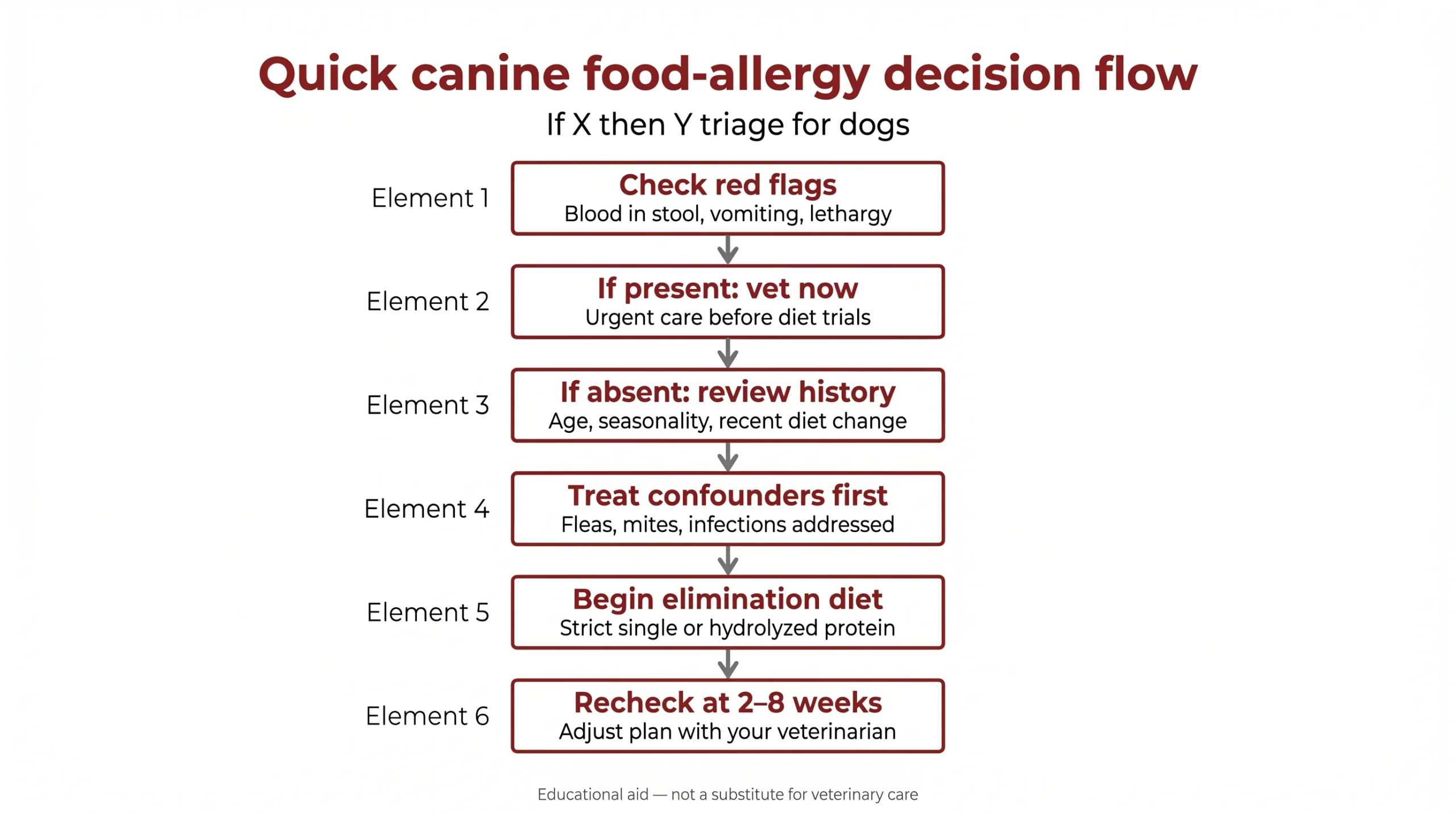
Quick decision guide: if X, then Y
Red flags that warrant an urgent vet visit
- If there is facial swelling, hives, or breathing difficulty, seek emergency care now.
- If vomiting occurs three or more times in 24 hours, or there is blood in stool, book a same-day exam.
- If your dog has ear pain with discharge, head tilt, or fever, prioritize a vet visit before any diet change.
- If weight loss, lethargy, or dehydration appears, schedule prompt diagnostics.
- If a puppy shows poor growth or persistent diarrhea, see your vet urgently to protect development.
Situations suited to a home‑managed start (with boundaries)
- If itching, paw licking, or mild GI signs are chronic but stable, consider a home start with a strict, documented plan.
- If you have consistent monthly flea and mite prevention, and no secondary infections, an initial diet trial may be reasonable.
- If you can control all food exposures and track daily signs, start now and arrange a check-in with your vet within two weeks.
- If prior diets were mixed or unclear, commit to one single-protein option and a clean slate approach for eight weeks.
What vets check and what tests can and cannot confirm
History, skin/ear exam, and parasite control
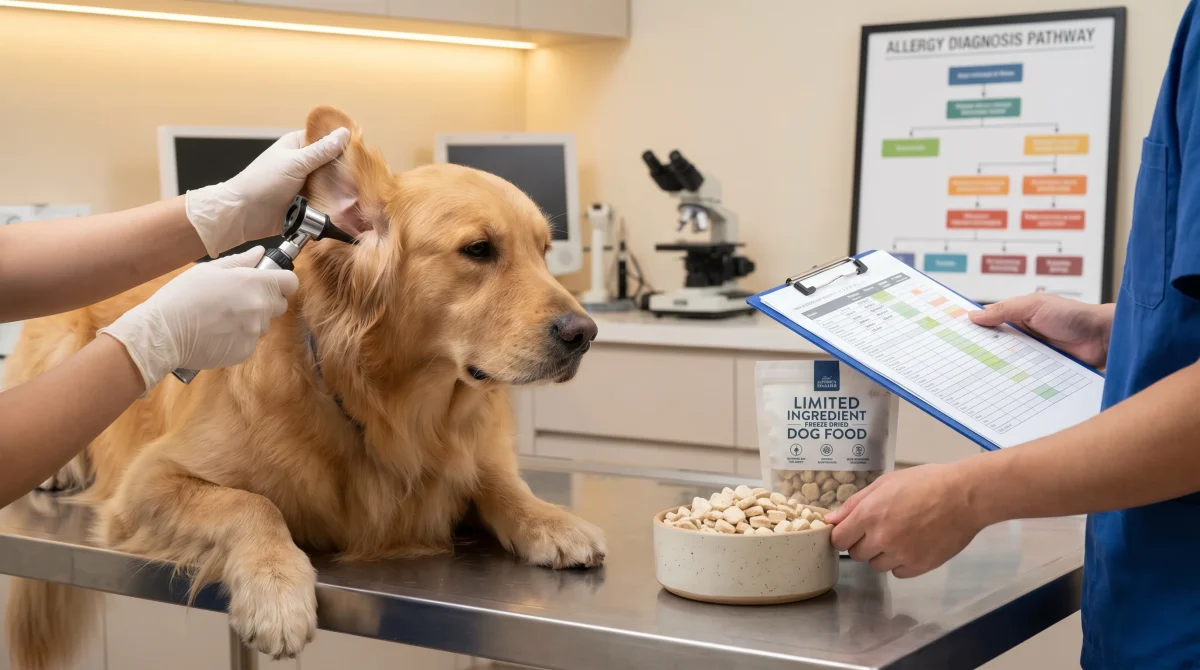
Vets begin with a thorough history and physical exam. They look for flea dirt, mites, infections, and patterns that suggest environmental triggers. They may perform ear cytology, skin scrapings, and recommend strict parasite control.
This step matters because external parasites and secondary infections can mimic or complicate food reactions. Clearing confounders leads to cleaner interpretation of diet trials and more reliable next steps.[1]
Food trials vs. blood/hair/saliva tests
Allergy testing for dogs often includes serum or saliva assays, but these cannot reliably confirm food allergies. Evidence suggests they are inconsistent and may mislead decision-making. A properly executed elimination diet remains the reference approach.[2][3]
Hair tests and unvalidated kits also lack strong clinical backing. Focus your energy on a clean, controlled diet trial and a structured challenge to assess causality.
When to add dermatology or internal medicine referrals
Consider a dermatology referral for dogs with severe, recurrent infections, year-round flares, or complex overlapping allergies. Internal medicine input helps when GI signs are prominent, persistent, or accompanied by weight loss.
Referrals may add intradermal testing for environmental allergens, biopsy, or advanced imaging to rule out other diseases. A timely dermatology referral in dogs can streamline care and reduce trial-and-error.
Coordinating an elimination diet with the medical workup
Choosing a truly novel or hydrolyzed protein
Pick a protein your dog has never eaten, or a veterinary hydrolyzed diet. Read labels carefully and verify there is no cross-protein inclusion. A single-protein option reduces confusion during the trial.
If horse is novel for your dog, a complete single-protein formula can be practical for compliance. Many owners find Everfresh Freez-Dried food – Horse 500g helpful for this task. For structured steps, see the eight-week plan in Elimination diet for suspected food allergy: a 6–8 week step-by-step plan.
Controlling all exposures (treats, chews, meds)
Control every bite. Exclude table scraps, flavored medications, dental chews, and broth. Replace treats with the trial diet itself or allowable single-ingredient options. Confirm supplement carriers and pill pockets match the trial protein.
When shopping, use precise label reading to avoid hidden proteins, binders, and cross-contact risks. See Label reading for allergic dogs: spotting hidden proteins, binders, and cross-contact risks for a practical checklist.
How long to trial and how to do a challenge
Allow six to eight weeks for skin responses and two to four weeks for GI signs, unless red flags appear. Maintain consistent dosing, portion sizes, and feeding times.
After improvement, reintroduce a single previous ingredient for three to seven days and watch closely. For a stepwise schedule and tracking templates, review Food reintroduction after elimination: challenge schedule, tracking, and what counts as a reaction.[3]
Monitoring: what to track at 7–14 days and 4–8 weeks
Symptom diary and scoring
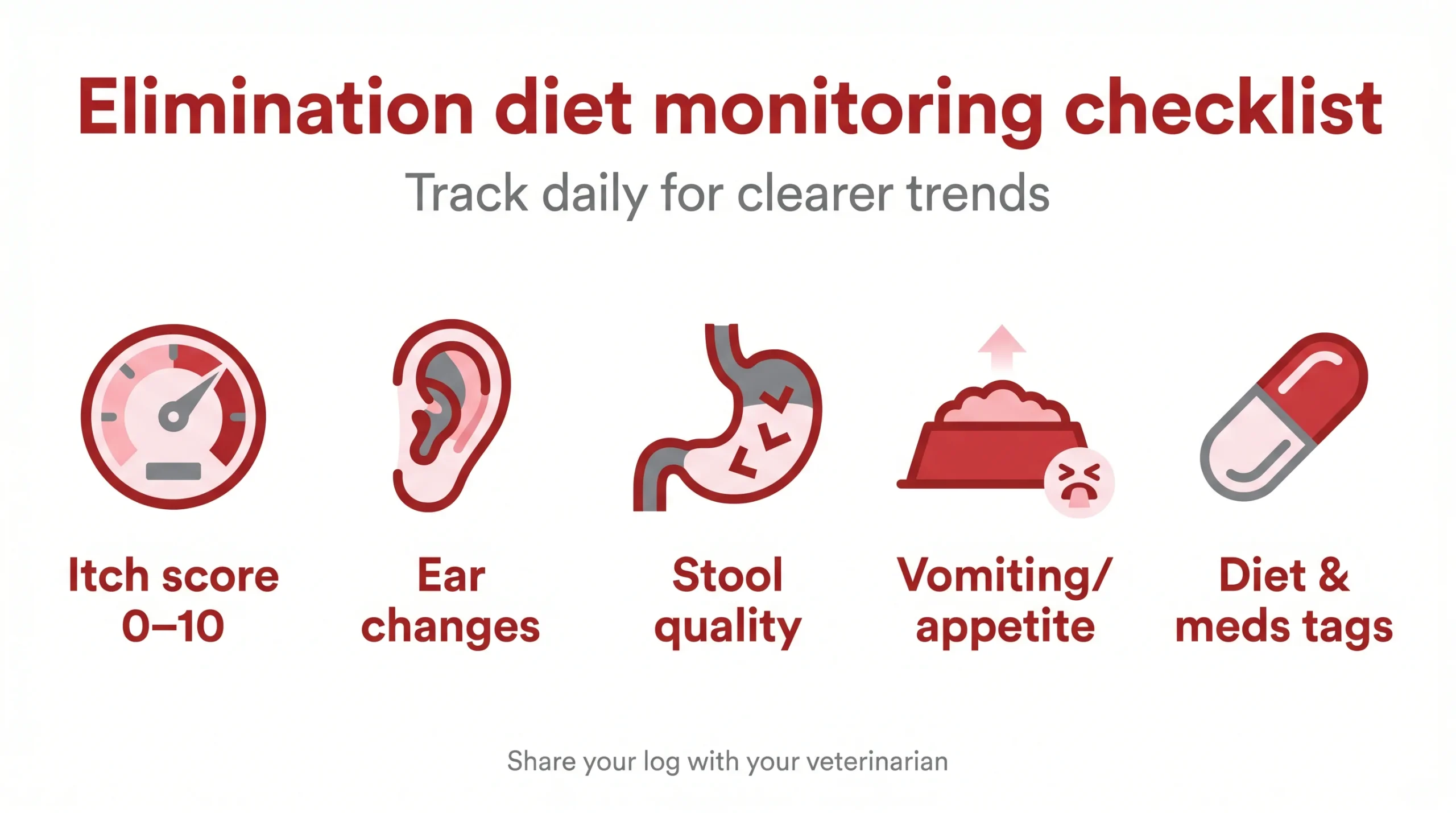
Record daily itch scores on a 0–10 scale. Note ear debris, redness, stool quality, gas, vomiting episodes, and appetite. Add photos weekly for skin and ear changes. Weigh your dog every two weeks.
Tag each entry with diet exposures and medications. Consistency in data collection reduces guesswork. Your vet can interpret trends faster when your diary is structured and complete.
Interpreting partial vs. robust responses
At 7–14 days, GI signs may start stabilizing, and itch may dip slightly. By 4–8 weeks, robust responders show clear reductions in itch and ear flares. Partial responders may need parasite checks or infection treatment.
If improvement is modest, confirm adherence, recalculate calories, and reassess exposures. Discuss whether to extend the trial or adjust medications. Evidence suggests diet trials guide next steps better than serologic tests.[3]
Practical safety boundaries you should not cross
When to stop the trial
Stop and call your vet if vomiting persists beyond 24–48 hours, stools contain blood, or lethargy and dehydration emerge. Discontinue if appetite crashes for over a day, or weight drops unexpectedly.
Terminate the trial if severe itching causes self-trauma, or ear pain indicates a likely infection. These scenarios need medical care before returning to diet assessment.
Medication and supplement interactions to flag
Tell your vet about steroids, antihistamines, antibiotics, and antifungals. These may mask or modify signs, complicating interpretation. Clarify if ongoing therapies are necessary or can be tapered safely.
Flag flavored preventives, omega-3 products with fish proteins, probiotic carriers, and dental chews. Align all items with the trial protein. When in doubt, pause nonessential products and document any changes carefully.
Evidence status: what is well‑supported and what is uncertain
Evidence suggests elimination diets are the reference standard
Veterinary guidance consistently supports strict elimination diets with controlled challenges to diagnose adverse food reactions in dogs. This approach helps separate food-driven signs from environmental or parasite-related issues and guides long-term management.[3][1]
Limitations of serologic and non‑validated tests
Current literature indicates that serum, saliva, and hair tests for food allergens lack reliability for diagnosing canine food allergies. These tools may indicate sensitization, not clinical causation, and should not replace diet trials.[2]
Where nutrition formats may support adherence
Single-protein, highly defined diets can support strict adherence during trials. Freeze‑dried formats may help owners maintain consistency, portion control, and travel readiness. While format alone does not diagnose allergy, it may improve trial fidelity and outcomes.
Emerging laboratory assays like lymphocyte proliferation show promise for delayed reactions, but they remain investigational and are not routine diagnostics today.[4]
Frequently Asked Questions
How do I know if my dog’s itching is a food allergy or environmental allergy?
Food and environmental allergies can look similar. Evidence suggests only a strict 6–8 week elimination diet with a controlled challenge helps distinguish food response. Your vet may also time treatment to pollen seasons and rule out parasites or infections.
Do blood or saliva tests confirm food allergies in dogs?
Current evidence indicates serologic and saliva tests cannot reliably confirm canine food allergies. Vets typically rely on a properly executed elimination diet and re‑challenge to assess causality.
How long should a dog food elimination diet last before I judge results?
Many dogs need 6–8 weeks for skin signs and up to 2–4 weeks for GI signs. Track weekly changes and discuss any partial response with your vet before making conclusions.
What counts as a strict elimination diet for dogs?
Use a single novel or hydrolyzed protein and exclude all other foods, treats, table scraps, flavored meds, and dental chews. Reintroduce one item at a time only after the trial and with veterinary guidance.
When should I ask for a dermatology referral?
Seek referral if there is no improvement after a correctly executed 8‑week trial, if there are recurrent ear infections, severe self‑trauma, or complex overlapping allergies that need advanced diagnostics.

Conclusion
Food reactions can be confusing, but your path can be clear. Use urgent red flags to decide when veterinary care must come first. Understand what tests can and cannot confirm.
Coordinate a disciplined elimination diet with medical guidance, track methodically, and set safety boundaries. With a structured plan and good communication, you can reach confident answers and lasting comfort for your dog.
References
- HA Jackson (2023). Food allergy in dogs and cats; current perspectives on etiology, diagnosis, and management. Journal of the American Veterinary Medical …. View article
- R Morales-Romero… (2025). Efficacy of diagnostic testing for allergen sensitization in canine atopic dermatitis: a systematic review. Frontiers in Veterinary …. View article
- J Hardy et al. (2022). Diagnosis and management of adverse food reactions in dogs and cats. In Practice. View article
- C Fernandez‐Lozano et al. (2025). Evaluation of a direct lymphocyte proliferation test for the diagnosis of canine food allergies with delayed reactions after oral food challenge. Veterinary …. View article