

Uncategorized
Puppies with suspected food allergies: safe elimination trials without slowing growth

May
Puppies with suspected food allergies: safe elimination trials without slowing growth
Puppy itching, soft stools, and belly rumbles can steal the joy from early training. Food may be part of the picture. Getting to the truth should not compromise growth.
Because puppies are still developing, elimination diets must be complete, precise, and gentle. This guide keeps the process safe and age-appropriate. You will learn how to pick a suitable single protein, rehydrate freeze-dried meals correctly, work with your vet, and track stools and growth without guesswork.
Why puppy elimination diets are different
Align actions with the core food allergy framework
Despite puppy-specific needs, the diagnostic backbone remains the same: strict elimination followed by a controlled re-challenge. For orientation, see our core food allergy guide. Evidence-based protocols emphasize removing suspected allergens, maintaining remission, and then confirming reactions through measured challenges[3].
Growth needs: energy, calcium–phosphorus, and amino acids
Growing puppies require higher energy and carefully balanced minerals. That balance supports bone formation and steady lean mass gain. A puppy elimination diet should be complete and balanced for growth, not an improvised home mix, unless a veterinary nutritionist formulates it.
When to involve your veterinarian
Coordinate with your vet before starting. Puppies may have overlapping issues like parasites, infections, or atopic dermatitis. Veterinary input helps choose a safe starting protein and ensures the plan includes re-challenge to confirm true dietary triggers[1].
Quick decision guide for starting the trial
If X, then Y scenarios (5–7 practical routes)
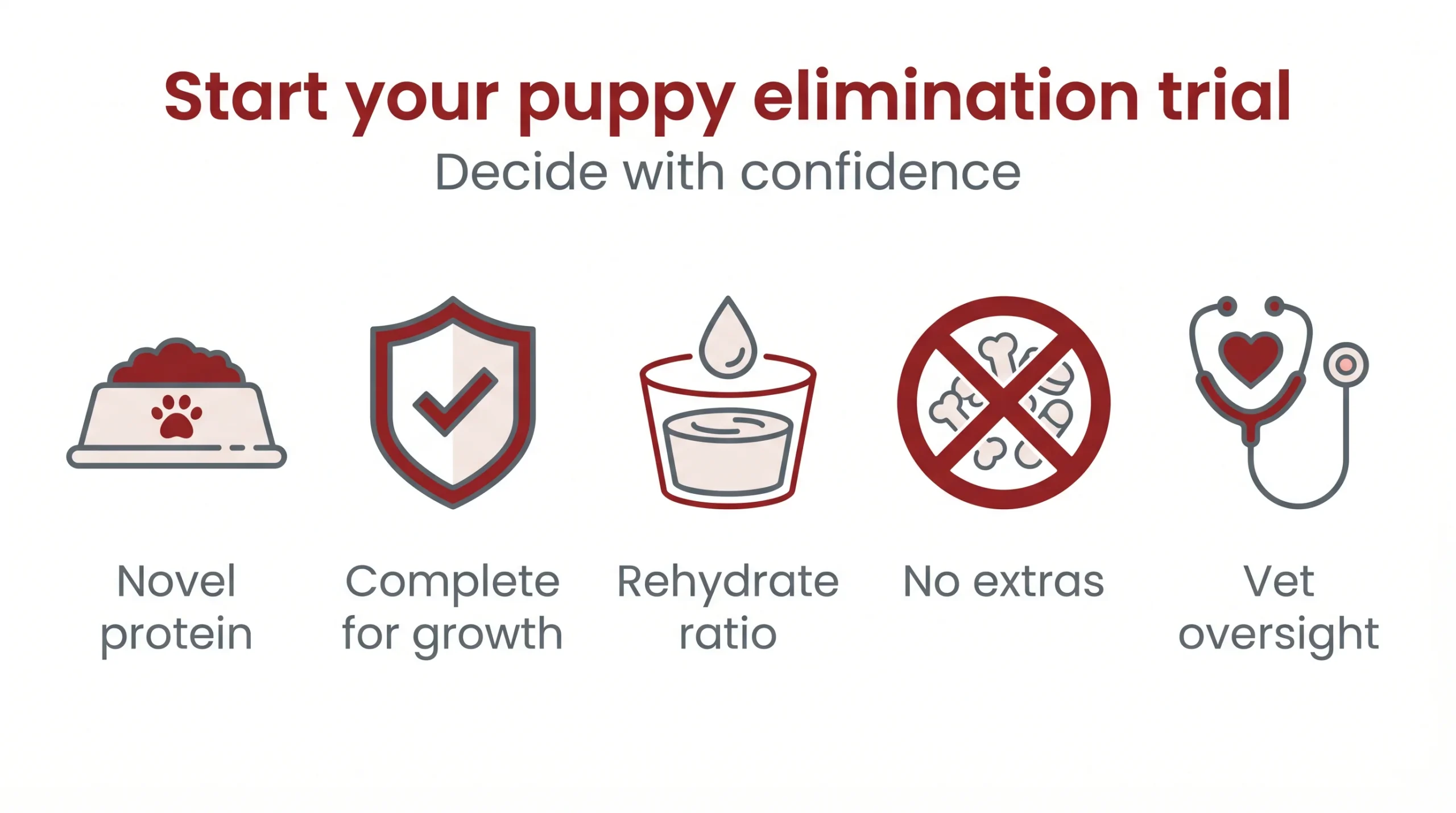
- If your puppy has eaten chicken, beef, and salmon, then trial a novel protein for puppies not previously fed, such as horse, venison, or rabbit.
- If your puppy is under 16 weeks, then prioritize a veterinary-supervised, complete, growth-validated formula over home-cooked options.
- If pruritus is severe or multifactorial, then discuss a hydrolyzed veterinary diet as a first step while planning re-challenges later.
- If stools are soft or intermittent, then begin a strict puppy elimination diet and adjust rehydration accuracy before adding supplements.
- If you cannot verify every ingredient in treats or chews, then remove all extras and use only the same single-protein rewards.
- If training demands frequent rewards, then portion daily calories to include those rewards, keeping the total diet consistent.
How to set up a nutritionally complete elimination diet
Choose a single novel protein and simple formula
Pick one clearly labeled, complete diet using a protein your puppy has never eaten. Fewer ingredients lower cross-contact risks and suit a hypoallergenic puppy diet approach. Many owners choose a complete horse-based formula; for example, Everfresh Freez-Dried food – Horse 500g may fit when a single, distinct protein is needed.
Freeze-dried rehydration and accurate portioning
Freeze-dried dog food for puppies should be rehydrated to the manufacturer’s guidance, often around 1:2–1:3 dry-to-warm-water by weight. Adjust slightly for stool quality. For more practical tips on water ratios during outings, see our guidance on safe meal planning using freeze-dried options.
Transition timeline and strict avoidance rules
Transition over 3–5 days unless your vet advises faster. After day five, feed only the trial food and same-protein rewards. Check every label, including supplements and toothpaste; our guide to label reading for allergic dogs can help you avoid hidden proteins.
Monitoring: 7–14 days vs 4–8 weeks
Short-term checkpoints: stool, itch, energy
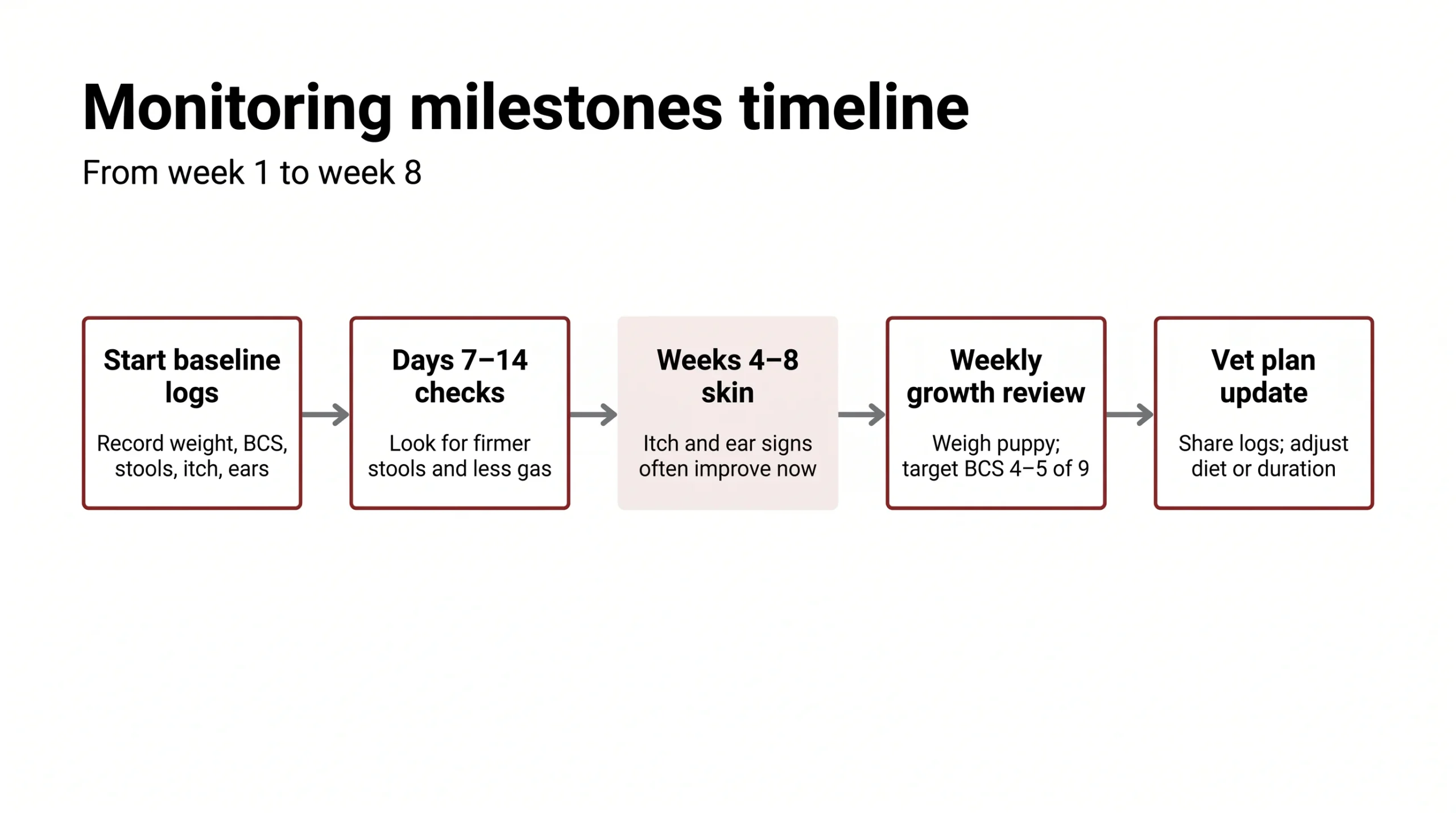
In 7–14 days, look for firmer stools, reduced gas, and steadier energy. Skin itch may begin easing but can lag behind gut changes. Early trends guide portioning and rehydration tweaks, not final conclusions[1].
Medium-term checkpoints: weight, growth curves, skin
By 4–8 weeks, you should monitor puppy growth weekly, aiming for steady gains and BCS 4–5/9. Many dogs show clearer skin and ear improvements in this window once dietary allergens are removed[1].
When to pause, escalate, or continue
Pause and call your vet if weight drops, diarrhea persists, or itch spikes. Consider hydrolyzed diets if novel proteins fail or availability is limited. Your vet can advise next steps while preserving growth momentum[4].
Practical safety boundaries for growing puppies
Minimum intake, bone-mineral balance, and safe snacks
Do not underfeed during the trial. Prioritize complete-for-growth formulas to maintain calcium–phosphorus balance. Offer no off-diet snacks; use same-protein training bites. If appetite dips, split meals into three to four feedings to support intake.
Hydration and rehydration ratios for freeze-dried meals
Most puppies do best with fully rehydrated meals. Start near 1:2–1:3 dry-to-water by weight. Firmer stools may allow slightly more water; looser stools may need a touch less. Provide fresh drinking water at all times.
Handling setbacks without derailing growth
If stools soften, verify scales, rehydration ratios, and treat consistency. Increase calories by 5–10% if weight stalls, keeping the same base protein. If vomiting or lethargy appears, contact your vet immediately for guidance.
Evidence status: what we know and where data are limited
Allergen elimination and re-challenge principles
Diagnosis hinges on eliminating suspected allergens, observing clinical improvement, and confirming with re-challenge. This approach remains the most reliable path to identifying dietary triggers, across skin and gastrointestinal presentations[1].
Novel vs hydrolyzed proteins in puppies: what studies suggest
Hydrolyzed diets are widely used when true novel proteins are unavailable and may help reduce reactions in pruritic dogs[4]. Elemental and extensively hydrolyzed options have shown promise, though comparative superiority over standard elimination diets remains uncertain[2].
Freeze-dried diets and nutrient preservation
Freeze-drying may help preserve nutrients and palatability, which can support adherence. However, puppy-specific allergy data for freeze-dried formats are limited. Choose growth-appropriate, complete formulas and partner with your vet during trials and re-challenges.
Structured re-challenge plan after improvement
Timing, single-variable reintroductions, and records
After a stable improvement window, reintroduce one new item over 3–7 days while tracking stools, itch, and ears. Keep the trial diet steady. For stepwise schedules and examples, see our guide on food reintroduction after elimination.
Interpreting reactions and setting long-term diet rules
If a reintroduced item triggers signs, remove it and return to the stable diet until symptoms resolve. Confirm patterns with your vet. Build a safe-food list, and set household rules to prevent accidental exposures.
Measurement toolkit you can use at home
Growth charting and body condition scoring (BCS 4–5/9)
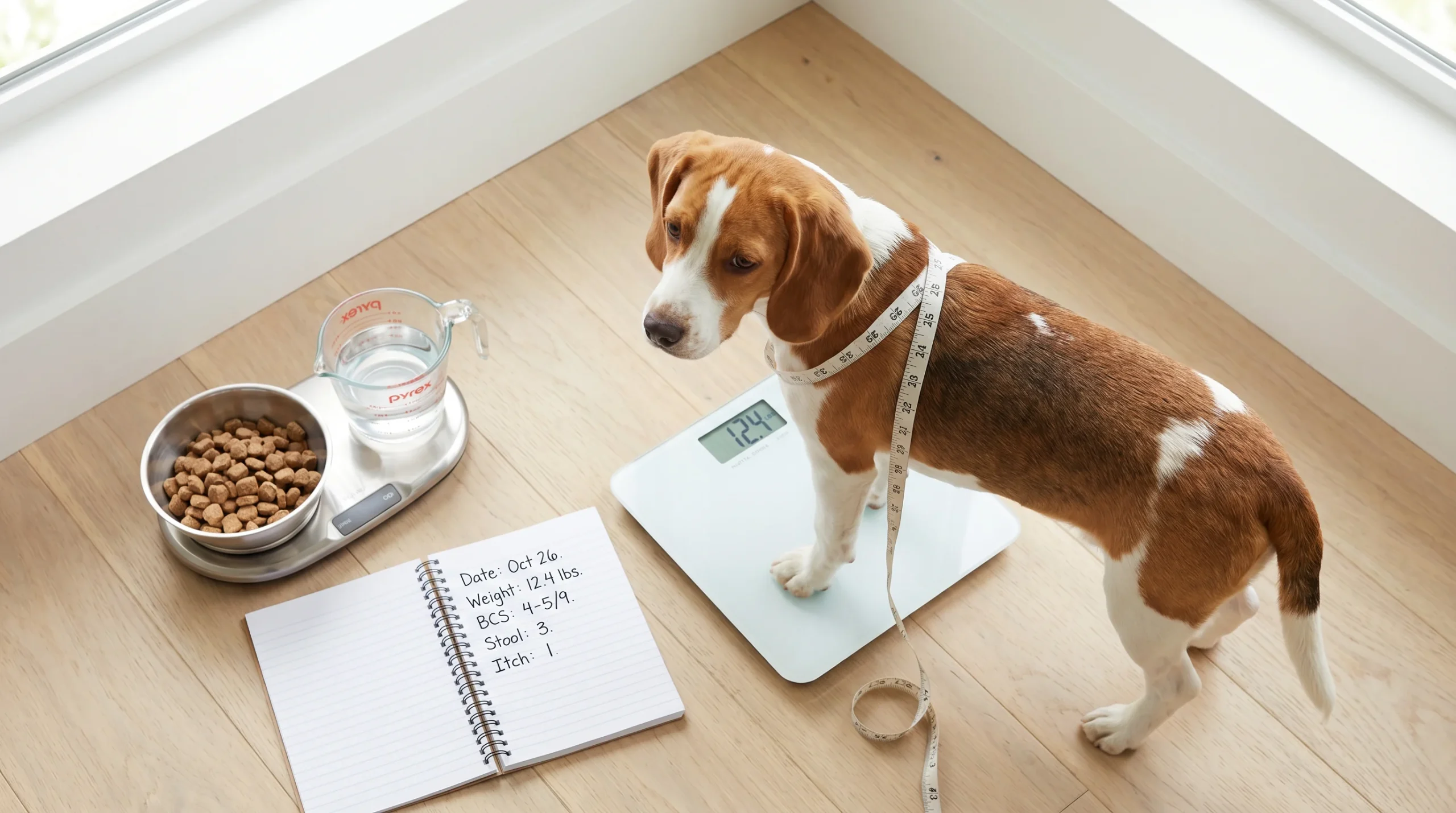
Weigh weekly at the same time of day, and note rib coverage, waist tuck, and abdominal profile. Aim for BCS 4–5/9. Record daily portions, rehydration ratios, and any training rewards to precisely monitor puppy growth.
Simple stool and itch logs to share with your vet
Use a 1–5 stool scale and a 0–10 itch scale. Log ear debris, paw licking, gas, and any accidents. Note date, food batch, and any deviations. These details streamline veterinary decisions and adjustments.
Frequently Asked Questions
How long should a puppy elimination diet last before judging results?
Many vets suggest assessing at 4–8 weeks, as skin signs may take longer than gut signs to change. Early stool and itch improvements may appear within 7–14 days, but growth should be checked weekly.
Is a freeze-dried novel protein diet suitable for puppy elimination trials?
It may be suitable if the formula is complete and balanced for growth and rehydrated correctly. Confirm nutrient adequacy with the manufacturer and your vet, and avoid any additional treats or flavorings.
What if my puppy loses weight during the trial?
Increase calories gradually (e.g., 5–10%) while keeping the same single-protein base. Verify rehydration accuracy and consult your vet to rule out non-dietary causes or infections.
Can I use hydrolyzed diets instead of novel proteins for puppies?
Yes, hydrolyzed veterinary diets are commonly used when true novel proteins are hard to find. Your vet can advise which option best fits age, growth needs, and medical history.
When should I reintroduce other foods after symptoms improve?
After a stable improvement window—often 4–8 weeks—reintroduce one item at a time over 3–7 days while logging signs. Stop the new item if symptoms recur and discuss findings with your vet.
Conclusion
With a carefully chosen single-protein diet, precise freeze-dried rehydration, and weekly growth checks, you can run a safe, informative puppy elimination trial. Keep records simple and consistent. Coordinate with your veterinarian to interpret changes and prevent growth setbacks. When improvement holds, re-challenge methodically to confirm triggers and keep your puppy thriving. A calm, structured approach today may spare months of uncertainty tomorrow. You are building a foundation for lifelong comfort, strong bones, and confident eating habits—one measured bowl at a time.
References
- HA Jackson (2023). Food allergy in dogs and cats; current perspectives on etiology, diagnosis, and management. Journal of the American Veterinary Medical …. View article
- J Tinsley et al. (2024). An open‐label clinical trial to evaluate the efficacy of an elemental diet for the diagnosis of adverse food reactions in dogs. Veterinary …. View article
- S Tiffany et al. (2019). Assessment of dog owners’ knowledge relating to the diagnosis and treatment of canine food allergies. The Canadian …. View article
- TP Lewis et al. (2025). Evaluation of hydrolyzed salmon and hydrolyzed poultry feather diets in restrictive diet trials for diagnosis of food allergies in pruritic dogs. Frontiers in Veterinary …. View article