

Uncategorized
Label reading for allergic dogs: spotting hidden proteins, binders, and cross‑contact risks
May
Label reading for allergic dogs: spotting hidden proteins, binders, and cross‑contact risks
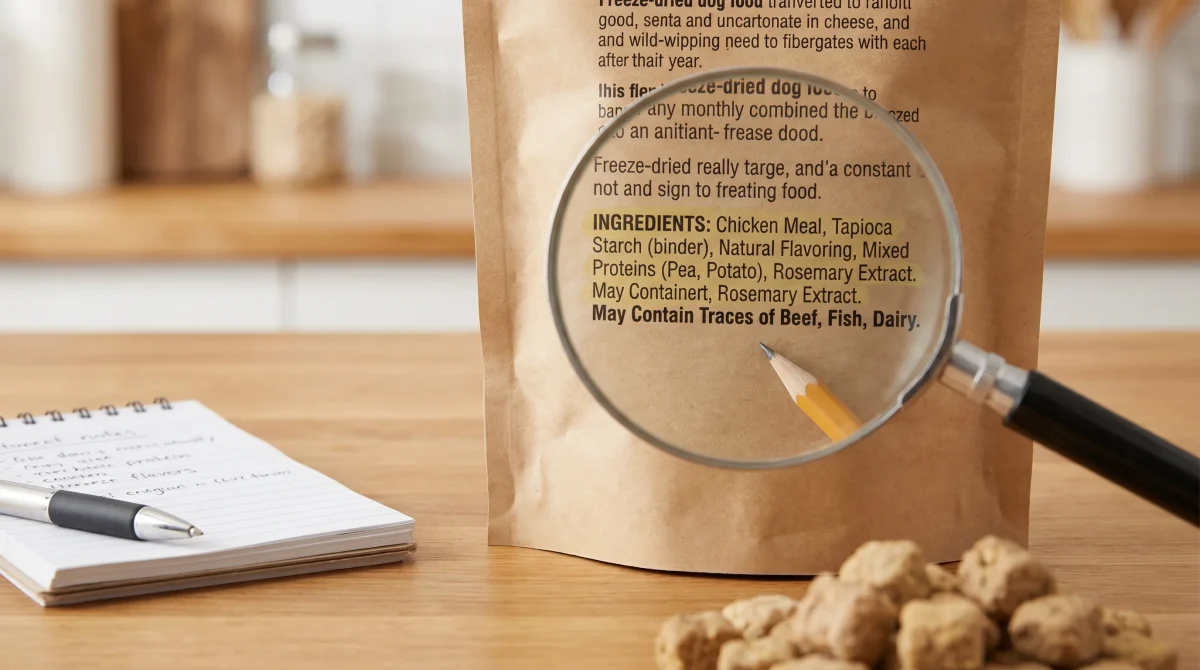
When one protein sets your dog off, labels start to feel like puzzles. Small words can hide big reactions.
This guide keeps you calm, fast, and precise at the shelf. You will learn a 60‑second scan, find common hotspots, and set safety boundaries. You will also know what to monitor and when to seek help.
What this guide solves: choosing safe foods when one protein sets your dog off
The single scenario we focus on
This tutorial targets dogs suspected to react to one animal protein. You are seeking food and treats that avoid that trigger entirely. The aim is practical label-decoding, not a full elimination-diet manual.
How this changes your label-reading approach
You must treat flavors, broths, and processing aids like potential proteins. “Natural” and “hypoallergenic dog food labels” are not guarantees. Manufacturing practices matter. Shared lines can defeat a clean ingredient list.
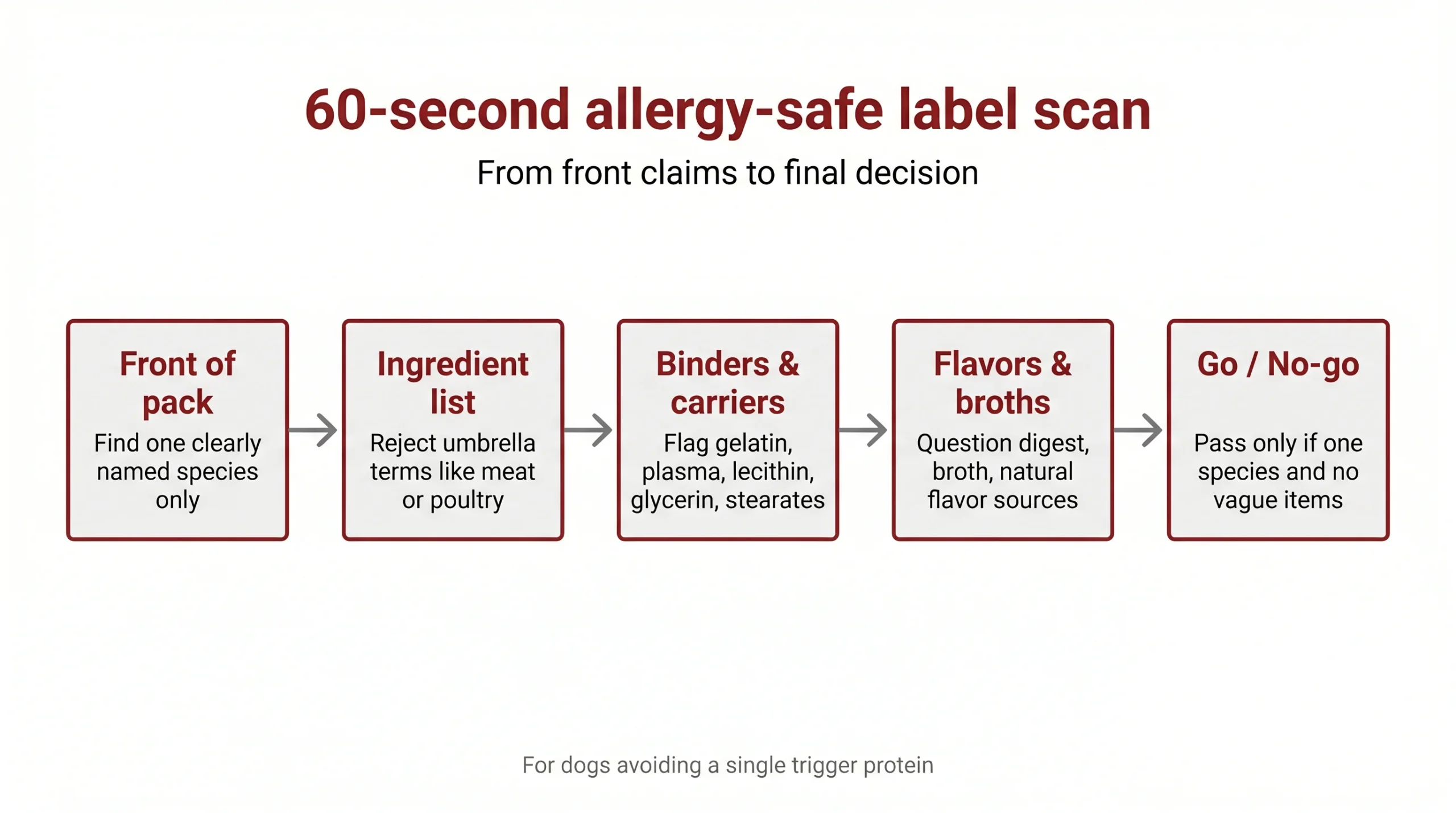
How to scan a label in 60 seconds: a practical sequence
Step 1: Confirm protein scope and name disclosures
Scan the front and ingredient list for a single named species, not umbrella terms like “meat,” “animal,” or “poultry.” Be skeptical of broad claims. DNA testing has repeatedly found undeclared species in some pet foods, which may undermine sensitive diets.[2]
Step 2: Sweep for binders, carriers, and emulsifiers
Identify binders and carriers that can hide animal sources. Watch for gelatin, plasma, lecithin, glycerin, stearates, and “digest.” Starches and fibers are usually plant-based, but dog food binders allergens may still trigger intolerances in some dogs.
Step 3: Decode flavors, broths, and “natural” additives
“Natural flavor,” “gravy,” and “broth” need species names. If chicken is your trigger, “poultry broth” is too vague. Palatants and marinades may be animal-derived. When in doubt, consider them high-risk.
Step 4: Check cross-contact statements and manufacturing clues
Look for “made on shared equipment with…” or “processed in a facility that also handles…” statements. Cross-contact risk may persist without clear labeling. Studies of limited-antigen foods have documented notable cross-contamination rates.[3]
Step 5: Validate with batch info and brand transparency signals
Prefer brands that disclose batch codes, production location, and species-specific lines. Check if support can confirm single-species sourcing and cleaning protocols. For single-protein freeze-dried dog food with clear naming, many owners find Everfresh Freez-Dried food – Horse 500g a practical example.
Hidden protein hotspots to watch
Ingredient aliases that may mask animal origin
Flag vague terms: “animal fat,” “meat and bone meal,” “poultry by-product meal,” “tallow,” “digest,” and “broth.” These can represent mixed or unspecified species. Hidden proteins in dog food often enter through these umbrella categories.
Non-meat ingredients that can carry animal derivatives
Some vitamins (like D3) may originate from lanolin, and magnesium stearate or glycerin can be animal-derived. Fish oil may slip into “oil blend.” Also note that “grain-free” and “gluten-free” claims have sometimes failed testing for gluten contamination.[4]
Processing aids and palatants that rarely get spotlighted
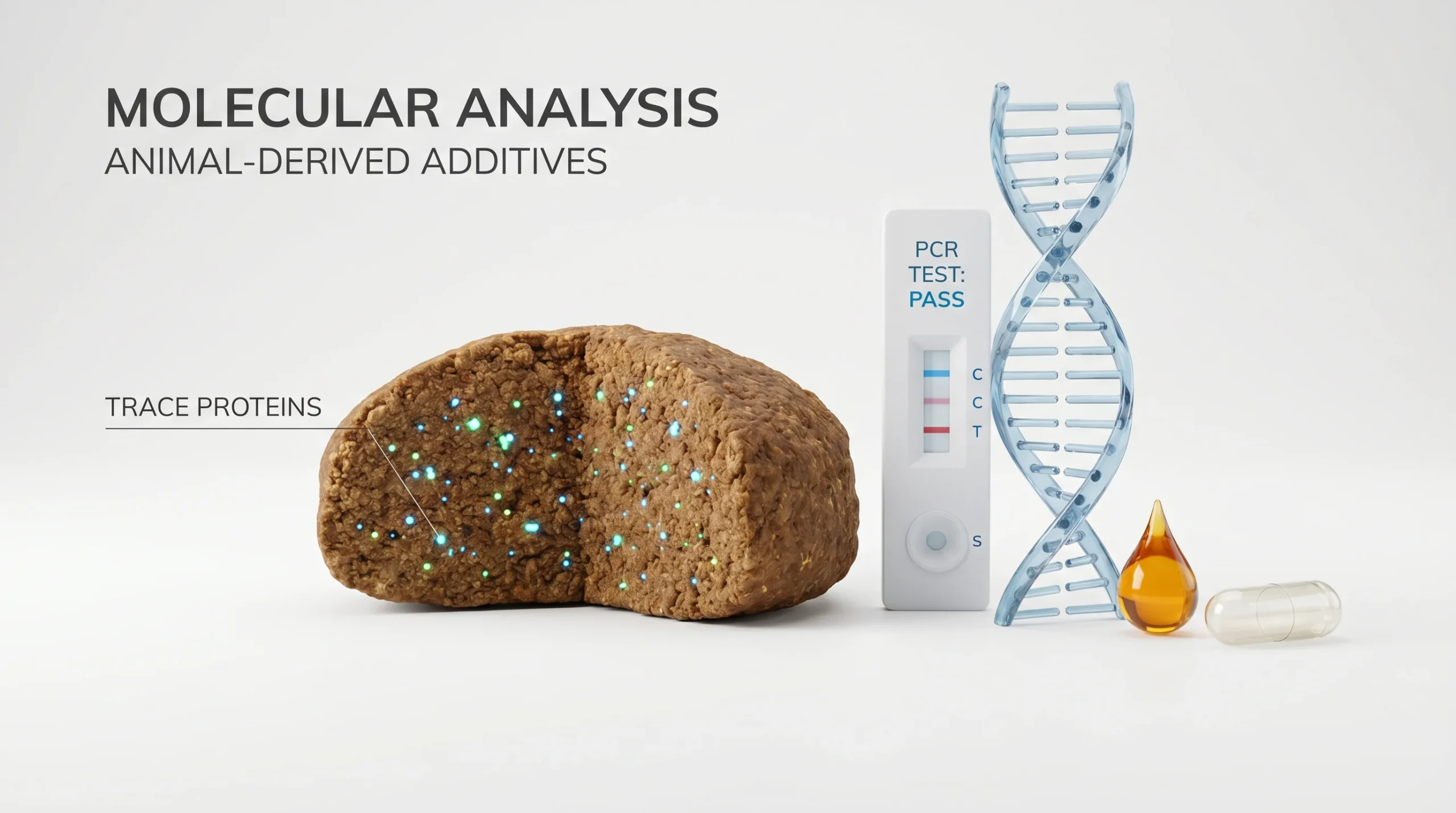
Spray-dried liver “digest,” enzyme-treated palatants, and flavor coatings may contain undeclared species. Independent analyses have detected chicken DNA in products not listing chicken, underscoring the need for manufacturer transparency.[1]
Quick decision guide: if X, then Y
Five-to-seven rapid rules for real-world shopping
- If the species is not explicitly named in both title and ingredients, then move on.
- If you see “natural flavor,” “broth,” or “digest” without a species, then treat as high risk and avoid.
- If it claims “single-protein” but lists mixed fats or oils without species, then contact the brand or skip.
- If the label lacks a cross-contact statement and your dog is highly sensitive, then assume shared-line risk.
- If treats have long additive lists or glaze coatings, then choose single-ingredient alternatives.
- If customer support cannot confirm cleaning protocols between species, then pick another product.
Monitoring after a label switch: 7–14 days and 4–8 weeks
Short window (7–14 days): what to track
Track itch intensity, paw licking frequency, ear debris, stool consistency, gas, and energy. Keep notes on every bite, including training treats. Small gains may appear, but flare-ups can still occur from cross-contact.
Longer window (4–8 weeks): what should stabilize
Look for steadier stools, reduced scratching, calmer skin, and improved coat. Appetite and sleep may normalize. If progress plateaus or reverses, reconsider hidden ingredients, binders, or manufacturing exposure.
When to pause, revert, or seek veterinary input
Stop and call your vet for vomiting, hives, swelling, or persistent diarrhea. Severe reactions require urgent care. For difficult cases, review when to see the vet for suspected food allergies and discuss a supervised plan.
Practical safety boundaries for allergic dogs
Sourcing and storage hygiene
Store different proteins in separate, sealed containers. Label everything clearly. Keep scoops and measuring cups dedicated to one protein. Avoid pet-food bins previously used for trigger proteins unless thoroughly disinfected.
Serving and rehydration practices for freeze-dried foods
Use a dedicated bowl, scoop, and mat for the safe protein. Rehydrate in a clean container, away from other foods. Rinse utensils immediately. Prevent crumbs from other treats from mixing into your safe ration.
Treats, supplements, and medication cross-checks
Audit chews, pill pockets, flavor-coated tablets, and gels. Gelatin capsules may be animal-derived; request cellulose capsules if needed. Minimize cross-contact risk dog treats at classes by bringing your own sealed supply.
Evidence status: where research is strong vs. emerging
Established: elimination diets and strict single-protein use
Veterinary guidance generally supports strict single-species elimination diets for 6–8 weeks. However, contamination can derail trials. Studies report cross-contamination in limited-antigen products, emphasizing rigorous sourcing and controls.[3]
Developing: labeling precision and cross-contact disclosures
Adulteration and undeclared species have been identified by molecular testing, suggesting gaps in labeling precision. Transparent cross-contact disclosures may reduce risk, but practices vary by manufacturer and product type.[2]
Context: freeze-dried single-source formulas and allergen control
Freeze-drying preserves ingredients without high heat, which may support simpler formulas and traceability. Allergen control still depends on species-specific sourcing and dedicated lines. Documentation from brands remains essential for confidence.
Checklist: how Good4Dogs-style labeling can reduce ambiguity
Single-protein naming, plain-language ingredients
Prefer labels that name one clear species in both product title and ingredients. Choose plain-language components without umbrella terms. Short, readable lists help you spot hidden proteins and avoid mixed sources.
Batch traceability and allergen-handling notes
Look for batch codes, production site info, and cleaning or segregation statements. Brands that share contact methods for ingredient verification simplify your due diligence and reduce avoidable uncertainty at purchase time.
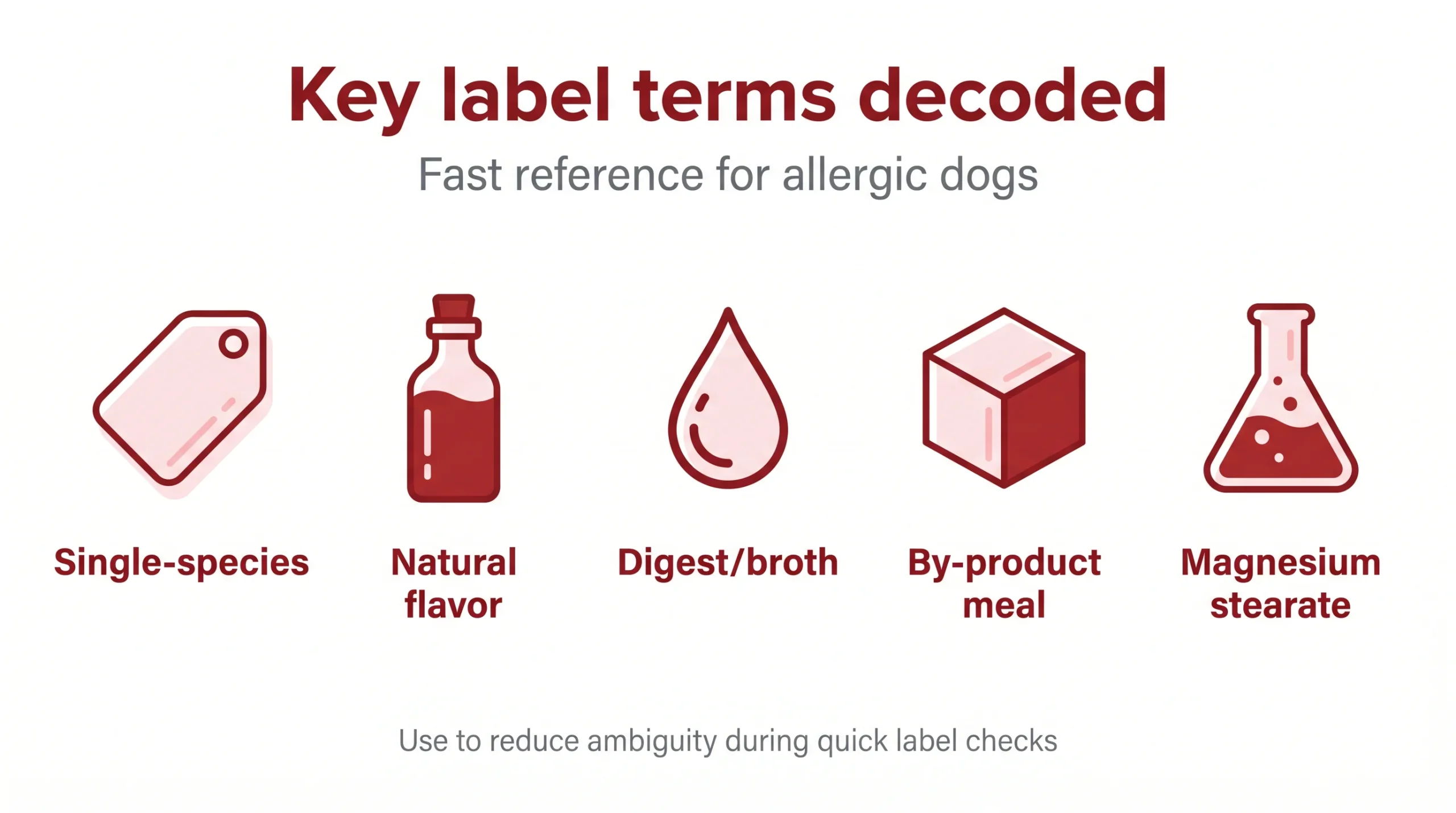
Key terms decoded (fast reference)
Common label phrases translated into allergen risk
- Natural flavor: ambiguous; may be animal- or plant-derived. Request species disclosure.
- Broth/stock: risk unless species is named and matches your safe list.
- Digest/palatant: often animal-based; high-risk without species detail.
- Animal fat/tallow: mixed-species risk; look for named species fat.
- Hypoallergenic: marketing term; verify actual single-species sourcing.
- Limited ingredient: fewer ingredients, but confirm single protein and flavor sources.
Where this fits in your allergy plan
Reconnect to food allergy basics and decision framework
Use this label-decoding method alongside your veterinarian’s plan. For an overview of choices and trade-offs, revisit the food allergy basics and decision framework. If you need a structured reset, follow our 6–8 week elimination diet plan, then consult which single protein to try first before transitioning.
Frequently Asked Questions
Does “natural flavor” mean there are animal proteins inside?
Natural flavor can come from animal or plant sources. If the source is not specified, contact the brand; cautious owners of allergic dogs may avoid unspecified flavors.
Are broths and stocks safe for dogs allergic to chicken or beef?
Not always. Broths may be derived from the same species and can contain trace proteins. If the species is not named, consider it a potential risk.
Is single-protein the same as single-ingredient?
No. Single-protein means one animal species; products may still include binders, oils, or flavors. Single-ingredient treats list only one ingredient from one species.
How important is a cross-contact statement on pet food?
It helps assess risk when products share lines with other proteins. Absence of a statement does not mean zero risk; ask brands about their allergen controls.
How long should I trial a new food for allergies?
Many veterinarians suggest 6–8 weeks for elimination trials. Minor improvements may appear in 1–2 weeks, but sustained assessment typically needs more time.
Final thought: With a calm scan, careful ingredient logic, and basic safety boundaries, you can meaningfully reduce exposure to triggers. Keep notes, ask brands direct questions, and collaborate with your vet to maintain momentum and confidence.
References
- W Biel et al. (2022). Detection of chicken DNA in commercial dog foods. BMC veterinary …. View article
- J Kępińska-Pacelik et al. (2023). Assessment of adulteration in the composition of dog food based on DNA identification by real-time PCR. Animal Feed Science …. View article
- E Pagani et al. (2018). Cross-contamination in canine and feline dietetic limited-antigen wet diets. BMC veterinary …. View article
- G Meineri et al. (2020). Gluten contamination of canned and dry grain-free commercial pet foods determined by HPLC-HRMS. Italian Journal of …. View article