

Uncategorized
Soft stools, gas, and intermittent diarrhea in dogs: allergy, intolerance, or transition issue?
May
Soft stools, gas, and intermittent diarrhea in dogs: allergy, intolerance, or transition issue?
Soft stools, gas, and occasional diarrhea can be stressful to watch. They can also be confusing. Is it an allergy, an intolerance, or a simple transition hiccup?
This matters because the right response depends on the cause. You do not want to over-treat or miss a real problem. Today, you will learn a GI-focused method to sort allergy from intolerance and microbiome disruption. You will also get practical steps, monitoring tips, and safety boundaries to navigate changes with confidence.
What these signs usually mean
Allergy basics vs. food intolerance in dogs
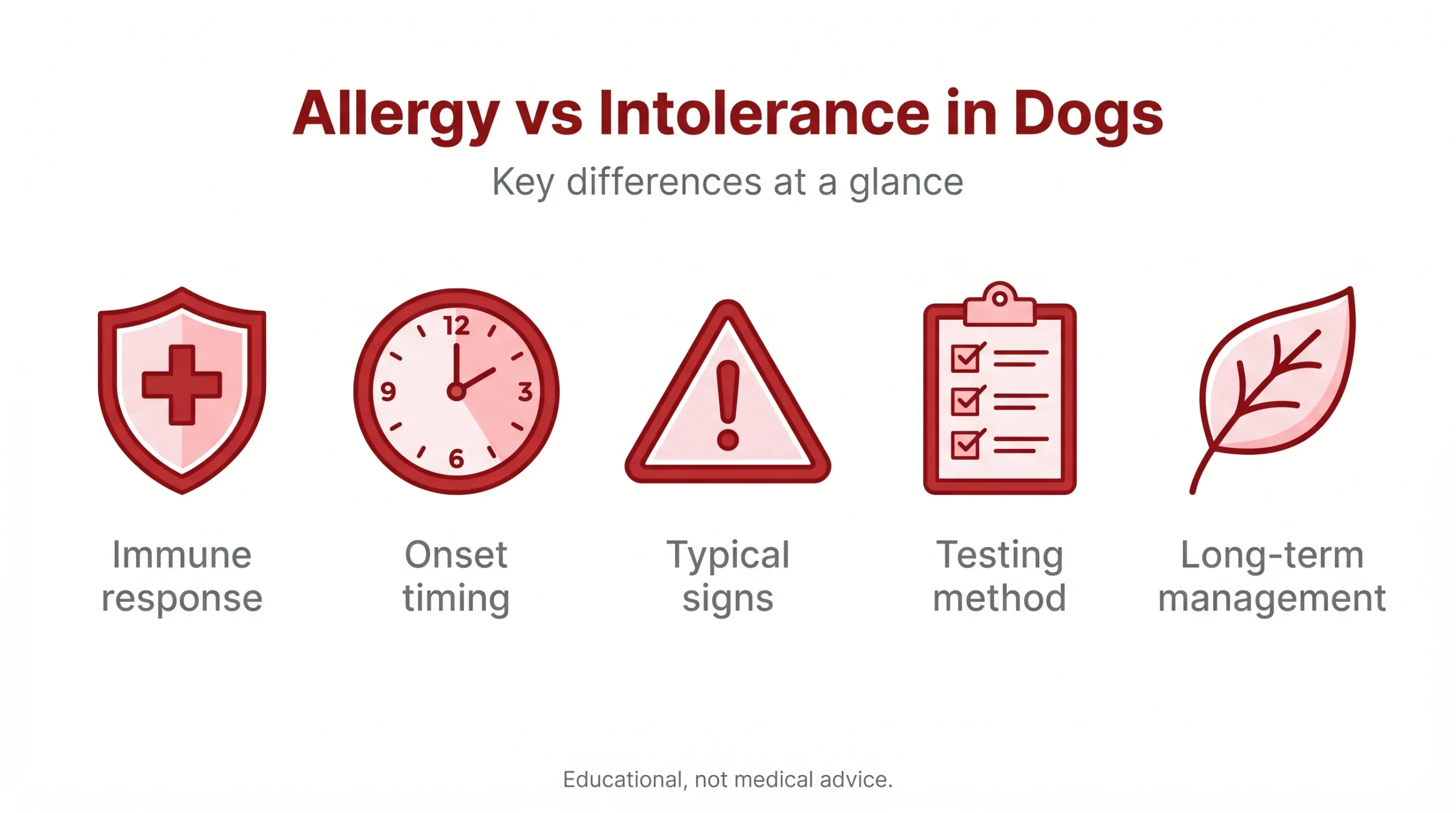
In everyday language, “dog food allergy vs intolerance” often blends together. In practice, they behave differently. A true food allergy involves the immune system and frequently brings skin signs like itchy ears, recurrent infections, or paw chewing alongside gut issues. Intolerance is non-immune and more dose-dependent. It shows as dog gastrointestinal upset without skin flares, often triggered by fat level, fiber type, or a specific ingredient amount.
If you suspect an allergy, a controlled elimination is the classic route. For orientation on scope, see our orienting guide to canine food allergies for how elimination diets and diagnostics fit your overall plan.
Microbiome upset and rapid transition effects
The gut microbiome adapts to what dogs eat. Change foods too fast and the ecosystem may wobble. This can cause soft stools, flatulence, and intermittent loose days. Research suggests diet processing influences digestibility, fecal characteristics, and metabolites, which can shift during adaptation periods of just days to weeks[2]. Freeze-dried, fresh, raw, and extruded foods differ in how they digest and in stool output patterns[1].
Quick decision guide: if X, then Y
5–7 common scenarios and the next action
- If loose stools appeared within 72 hours of a rapid diet switch, slow the transition to 7–10 days and keep rehydration consistent.
- If GI signs occur without skin issues and vary with portion size or fat content, suspect intolerance. Reduce fat, portion slightly, and add gentle fiber.
- If gas and diarrhea cycle after new treats or toppers, pause extras for 14 days. Return to a simpler base to test stability.
- If soft stools persist beyond 48–72 hours or blood appears, pause changes and contact your veterinarian immediately.
- If there is itch, ear debris, or paw licking with GI signs, consider allergy. Begin a strict single-protein elimination for 6–8 weeks.
- If stools are fine at home but loose during travel or stress, adjust feeding rhythm, hydration, and fiber two days before and during the trip.
- If a specific ingredient repeatedly precedes diarrhea, remove it entirely for four weeks. Re-challenge once stable to confirm intolerance.
Stepwise approach to rule-in or rule-out causes
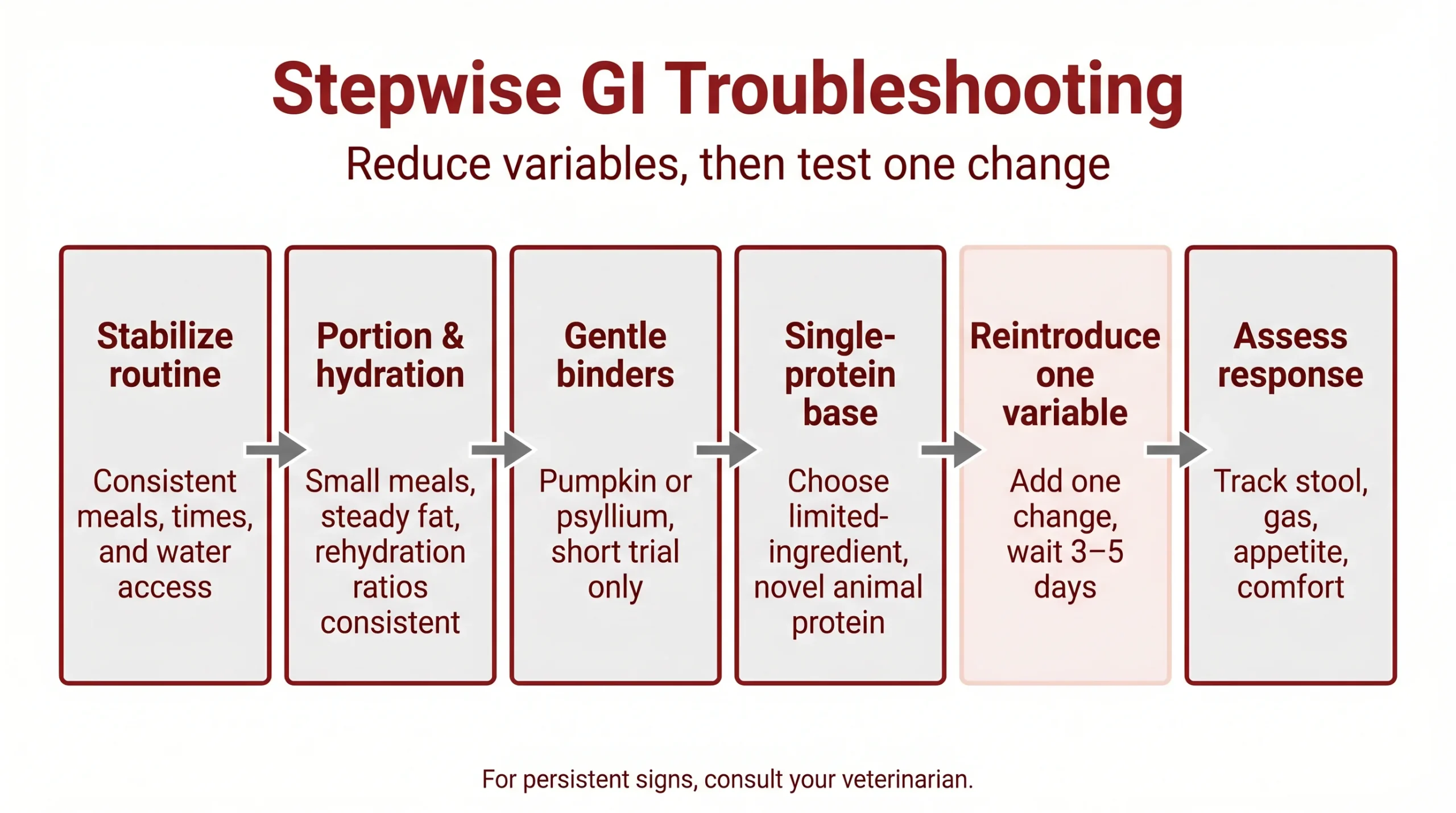
Stabilize: hydration, feeding rhythm, simple add‑ons
First, reduce variables. Offer small, regular meals at the same times daily. Maintain reliable access to fresh water. For dogs with “diet transition diarrhea dog” patterns, predictable feeding helps the gut prepare enzymes and motility.
Consider short-term gentle add-ons. Plain pumpkin or cooked squash at 1 teaspoon per 5 kg body weight once or twice daily may help consistency. Psyllium could be used cautiously at 0.25–0.5 teaspoon per 10 kg per meal with extra water. Probiotics designed for dogs may support stool quality during change; responses vary, so monitor closely for 7–14 days.
Standardize: single‑protein base and rehydration ratios
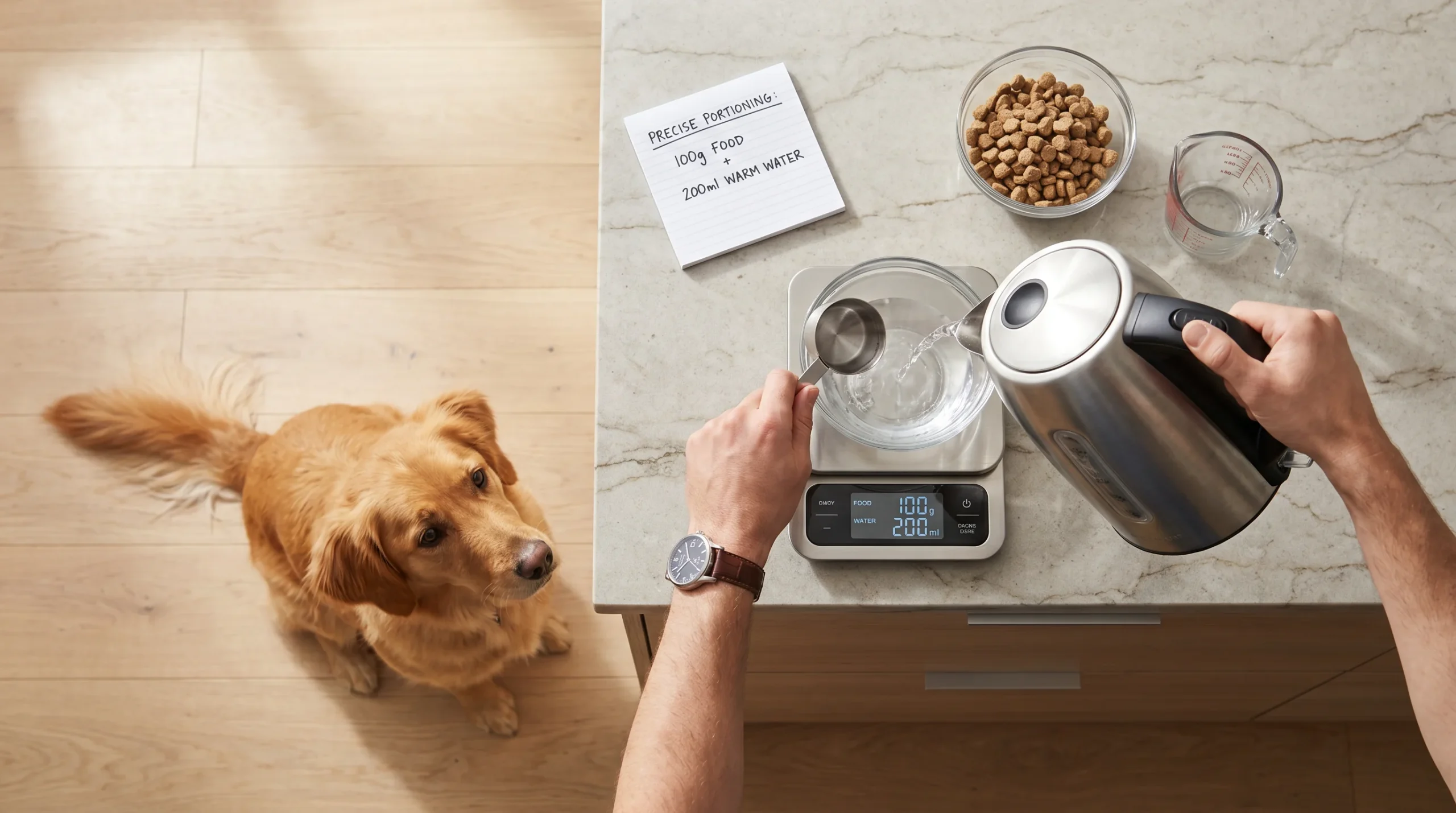
Next, simplify the main diet. Choose a limited-ingredient, single‑protein freeze‑dried dog food to reduce triggers and keep preparation precise. Standardize the rehydration ratio each meal because water content alters stool moisture. Many owners find starting at about 1–1.5 parts warm water per 1 part dry food by weight gives good control, then adjust slightly for your dog’s output.
If you are selecting a novel protein for suspected allergy or intolerance, see Which single protein to try first? Horse vs beef vs fish for allergic dogs for pros and cons of common options.
Challenge: one change at a time
Once stools are stable for 7–14 days, introduce a single change. Examples include raising calories 10%, altering fat a small step, or adding one fiber source. Hold that change for at least 3–7 days before the next step.
If you suspect allergy, run a strict 6–8 week elimination with a novel or hydrolyzed protein and no unplanned treats. For a practical walkthrough, read Elimination diet for suspected food allergy: a 6–8 week step-by-step plan. Keep notes on stool quality, gas, itching, and ear status.
Monitoring: what to observe at 7–14 days and 4–8 weeks
Short‑term stool and behavior checklist
Across 7–14 days, track the following daily: stool form (1–7 scale), visible mucus, urgency, straining, gas frequency, appetite, energy, and belly comfort. Watch for night-time restlessness, grass-eating, or licking of lips, which may signal nausea. Consistency day-to-day is more informative than one-off events.
Also note meal size, fat changes, any toppers, and rehydration ratios. Keep exercise, training treats, and medications as constant as possible. Brief blips often resolve with rhythm and hydration alone.
Medium‑term trends and re‑challenge protocol
Across 4–8 weeks, look for trend lines. Are stools gradually firming? Is gas decreasing? Are itchy episodes or ear debris reducing if allergy is suspected? When stable for two weeks, perform a careful re-challenge to confirm intolerance or allergy.
Reintroduce a single ingredient for 3–5 days at small doses, then build to normal levels. Stop and log any reaction. For a structured schedule and what counts as a “reaction,” see Food reintroduction after elimination: challenge schedule, tracking, and what counts as a reaction.
Practical safety boundaries
When to pause changes and contact a veterinarian
Seek veterinary input if diarrhea persists beyond 48–72 hours despite supportive care, or if you see black, tarry stool, frank blood, fever, marked lethargy, repeated vomiting, or clear dehydration. Puppies, seniors, and dogs with chronic conditions warrant earlier contact.
Pause experiments if weight drops more than 5% in two weeks, if pain is evident, or if there is repeated night-time diarrhea. Medical assessment ensures you are not troubleshooting a problem that needs targeted treatment.
Safe limits for water, fiber, and transition speed
Rehydration: many dogs do well around 1–1.5 parts water per 1 part freeze-dried by weight. Going far beyond 3:1 may loosen stools. Add water gradually and monitor output.
Fiber: keep total added functional fiber modest. For pumpkin, 1 teaspoon per 5 kg body weight per meal is a typical ceiling initially. For psyllium, start very low (0.25 teaspoon per 10 kg per meal) and increase only if tolerated.
Transition speed: 7–10 days is common. Very sensitive dogs may need 14 days or more. Shift 10–20% of the diet every 1–2 days rather than all at once.
Evidence status: what is well‑supported and what is emerging
Allergy diagnosis and elimination diets
Allergy requires a structured approach and patience. A strict elimination diet followed by deliberate re-challenges remains the practical standard. The aim is to remove immune triggers and reveal patterns. Plan duration, ingredient control, and record-keeping are crucial to success.
Microbiome adaptation and gradual transitions
Transitions can affect stool quality and metabolites as the microbiome shifts. Differences in processing—extruded vs raw vs freeze-dried—are associated with distinct fecal characteristics and digestibility profiles in controlled settings[1][2]. This supports gradual change and consistency during troubleshooting.
Functional add‑ons (fiber, probiotics, mushrooms)
Evidence suggests targeted fibers and canine-focused probiotics may support stool normalization in some dogs, especially during diet change. Results are strain- and dose-specific. Freeze‑dried raw diets have shown high amino acid digestibility, which may help predictably fuel the gut[4]. Still, individual responses vary, so personalize and monitor outcomes.
How freeze‑dried, single‑protein diets fit into troubleshooting
Consistency, rehydration control, and fewer variables
Freeze-dried meals offer repeatability. You control water content, portion size, and ingredients with fewer variables, which helps isolate intolerance or transition effects. Studies comparing processing methods report distinct digestibility and fecal outcomes, with freeze-dried raw diets performing well on several measures in adult dogs[3][4].
For elimination diet dogs, a limited-ingredient, novel animal protein can reduce cross-contact risk and simplify tracking. Some owners find a horse-based option useful when common proteins fail. Many pet owners find Everfresh Freez-Dried food – Horse 500g helpful for this task during monitored trials, thanks to its single-main-protein format and consistent rehydration.
Frequently Asked Questions
How can I tell a true food allergy from an intolerance in my dog?
Allergies often involve skin signs (itching, ear infections) plus GI signs and require an 6–8 week elimination diet to assess. Intolerance is usually GI‑only, dose‑dependent, and improves by adjusting ingredients, portion size, or transition speed.
Can switching food too fast cause soft stools and gas?
Yes. Rapid changes can disrupt the microbiome and osmolality, leading to loose stools and flatulence. A gradual 7–10 day transition and consistent rehydration may reduce this.
Do probiotics help dogs with intermittent diarrhea?
Evidence suggests certain canine‑targeted probiotics may support stool quality during diet change. Benefits vary by strain and dose; monitor response over 7–14 days.
Is a single‑protein freeze‑dried diet suitable for elimination trials?
A single‑protein, limited‑ingredient formula may help reduce variables. For strict elimination, choose a protein your dog has not eaten before and keep treats and add‑ons consistent.
When should I see a vet for soft stools or diarrhea?
Seek veterinary advice if there is blood, black tarry stool, fever, lethargy, dehydration, marked weight loss, or diarrhea persisting beyond 48–72 hours despite supportive care.
References
- EL Geary et al. (2024). Apparent total tract nutrient digestibility of frozen raw, freeze-dried raw, fresh, and extruded dog foods and their effects on serum metabolites and fecal characteristics …. Translational Animal …. View article
- EL Geary (2025). Effects of dietary processing conditions on nutrient digestibility and fecal characteristics, metabolite concentrations, and microbiota populations of healthy adult dogs. 2025 – ideals.illinois.edu. View article
- EL Geary et al. (2023). … Tract Nutrient Digestibility of Frozen Raw, Freeze-Dried Raw, Fresh, and Extruded Dog Foods and Their Effects on Fecal Characteristics and Metabolites of Adult Dogs. Journal of Animal …. View article
- EL Geary et al. (2023). Standardized amino acid digestibility and nitrogen-corrected true metabolizable energy of frozen raw, freeze-dried raw, fresh, and extruded dog foods using precision …. Journal of animal …. View article