

Uncategorized
Raw‑on‑the‑Go: Travel, Hiking, and Boarding with Freeze‑Dried Dog Meals
Mar
Raw‑on‑the‑Go: Travel, Hiking, and Boarding with Freeze‑Dried Dog Meals
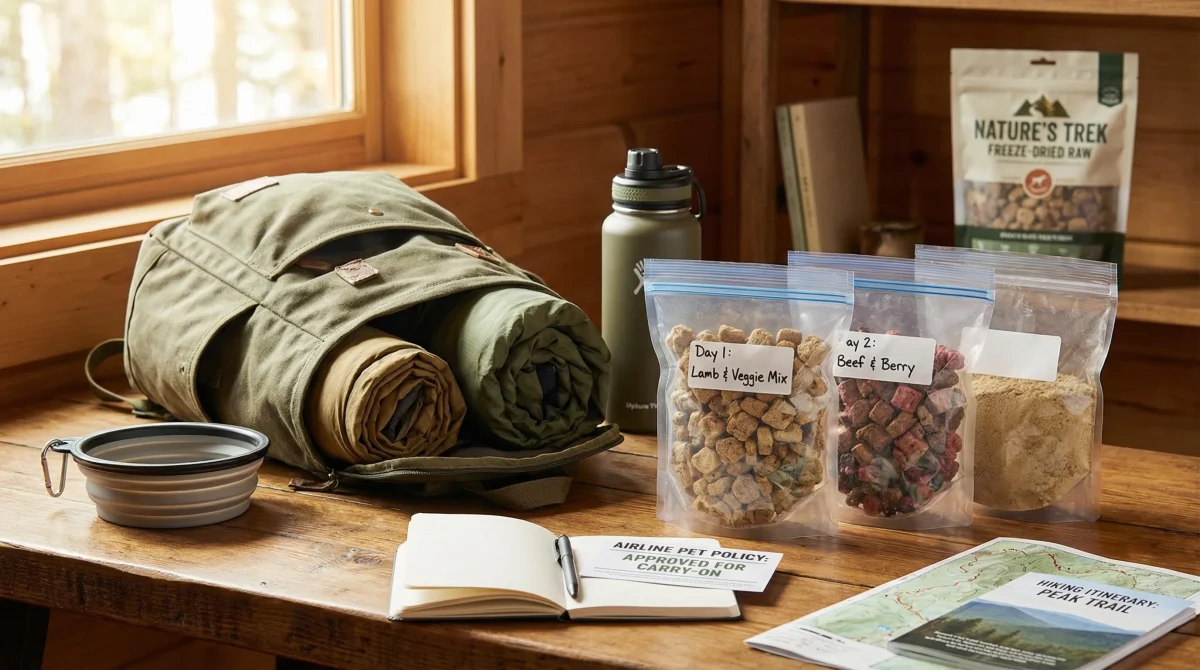
Travel with dogs is joyful—and a little logistical. If you love the benefits of raw feeding, freeze‑dried makes it surprisingly simple to stay consistent on the road, trail, or in transit. This focused guide tackles the nitty‑gritty: packing lists, water math, pre‑portioned bags, airline and boarding policies, and practical itineraries that compare to frozen raw.
Whether you’re planning a weekend trek or two weeks abroad, these tips keep meals organized, safe, and easy. Let’s make mobile feeding feel second nature so you can enjoy the journey together.
Why Freeze‑Dried Wins for Travel vs. Frozen Raw
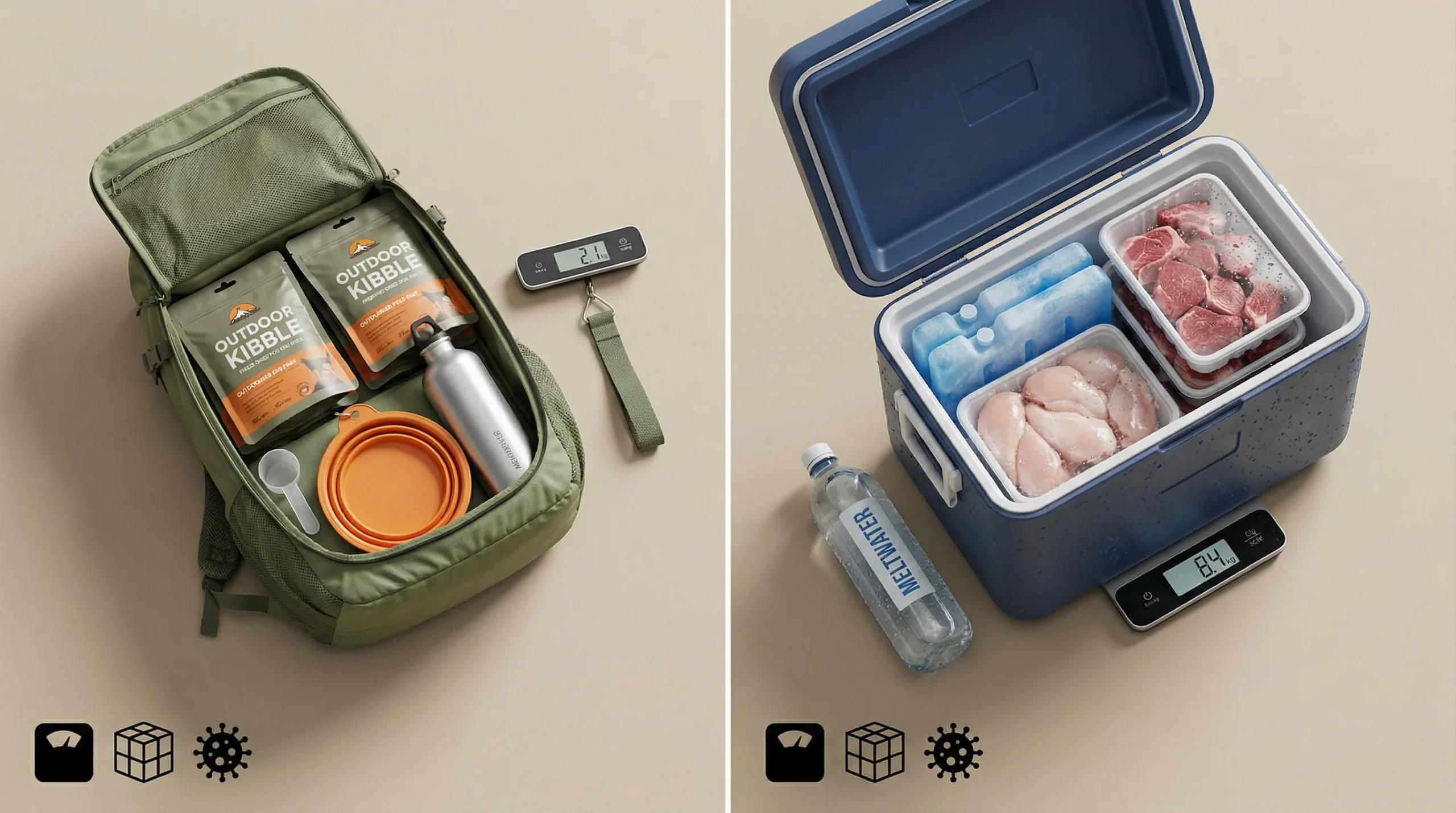
When you need raw dog food on the go, freeze‑dried solves three pain points at once: weight, space, and spoilage. It packs light, stores at room temperature, and rehydrates quickly even in rugged conditions. For broader context on nutrition and formats, see the on‑the‑go section of the main guide.
Weight, volume, and spoilage risk at a glance
Freeze‑dried meals are dramatically lighter than frozen raw, yet deliver excellent amino acid digestibility and energy availability, helping you carry less without compromising nutrition.[1] Frozen and freeze‑dried raw also show strong metabolizable energy values compared with hybrid formats, supporting efficient packing for long days.[3] Less weight means happier hikes and simpler transfers.
When frozen raw still makes sense (and when it doesn’t)
Frozen raw can shine on short road trips with reliable refrigeration or when bulk value and strict routine matter. But it’s risky for flights, remote trails, or hot climates where thawing and spoilage loom. For multi‑day, variable conditions, freeze‑dried remains the more forgiving, practical choice.
Packing List: What to Bring for Trips, Hikes, and Boarding
Keep your core kit tidy, your water plan precise, and your extras purposeful to reduce stress and mess.
Core kit: pre‑portioned bags, scoop, and storage
Pre‑portion each meal into moisture‑barrier bags with gram weights noted. Add a compact scoop, long‑handled spoon, and a rigid container or dry sack for organization. Include a roll‑top liner to isolate food odor in your pack or luggage.
Water gear: bottle, collapsible bowl, and measuring lines
Carry a dedicated water bottle for your dog, a collapsible bowl, and a marked cup showing 50, 100, and 200 ml lines. This keeps rehydration consistent and fast, especially when measuring rehydration ratios dog food needs precisely.
Extras: functional add‑ons, treats, and first‑aid basics
- Functional add‑ons (e.g., joint support, electrolytes appropriate for dogs)
- High‑value freeze‑dried treats for recalls on trail
- Basic first aid: antiseptic wipes, paw balm, tick remover, gauze, and a spare lead
Water Planning and Rehydration in the Wild
Dial in how much water meals require, then add margin for drinking and conditions like heat or altitude.
Quick math: daily water needs for meals and activity
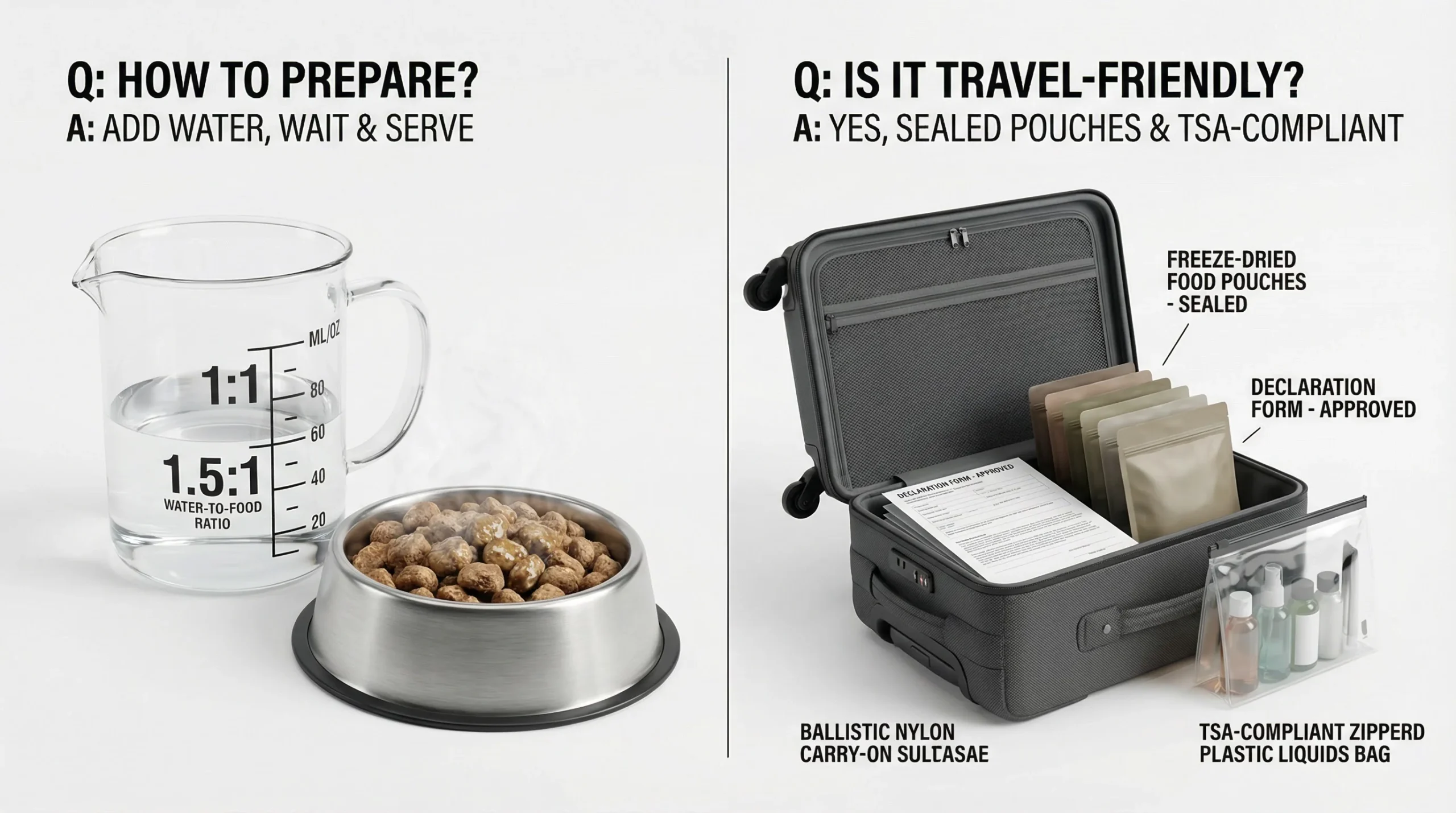
Most freeze‑dried meals rehydrate at roughly 1:1 to 1.5:1 water to food by weight. For a 300 g daily ration (dry), budget 300–450 ml for meals plus 50–100 ml/kg body weight for drinking, adjusting to activity. Efficient energy use of raw formats helps support endurance.[3]
Safe sources and filtration on trails and abroad
On trails, use filters rated for protozoa and bacteria. Abroad, prefer sealed bottled water or boiled/filtered sources to avoid GI upsets. Always carry a backup purification method in case you misjudge flow or distance.
Adjustments for heat, altitude, and sensitive stomachs (link to rehydration ratios and portioning tips)
Increase meal water 20–30% in heat or at altitude, and rehydrate fully for sensitive dogs. Review practical rehydration ratios and portioning tips to keep consistency across changing environments and exertion levels.
Pre‑Portioning Like a Pro
Smart pre‑portioning saves time, reduces errors, and keeps boarding or pet sitters on the same page.
Seven‑day template by dog size and activity level
- Set daily calories from your baseline at home.
- Split AM/PM meals; add 10–20% for heavy hiking days.
- Bag each meal with gram weight and water amount; add two buffer meals for the week.
Labeling for AM/PM, protein rotation, and supplements
Write AM/PM, date, grams, and water. Color‑code proteins (e.g., red = beef, blue = fish). For sensitive dogs, stick to a single protein across travel days. Many travelers like Everfresh Freez-Dried food – Horse 500g when a novel, single‑protein option is preferred.
Storage: odor control, moisture barriers, and pests
Use double‑sealed bags or vacuum pouches inside a dry sack. In warm climates, add a silica gel pack outside the food bag (not touching food) to reduce ambient humidity. In camps, store rations in a hard‑sided container to deter pests.
Pro tip: Pack three “universal” spare meals at your dog’s maintenance grams. They serve as rest‑day meals or can be split to top up calorie‑heavy days without repacking.
Airline, Border, and Boarding Policies
Rules shift by airline and country. Plan early, document clearly, and keep food sealed and well‑labeled.
EU/Schengen nuances and international flights
Within Schengen, carrying sealed pet food for personal use is generally simpler than crossing into regions with strict animal‑product rules. Always verify carrier guidance and consult local regulations; our EU buyer’s checklist helps you think through safety and sourcing terminology.
What gate agents and customs look for
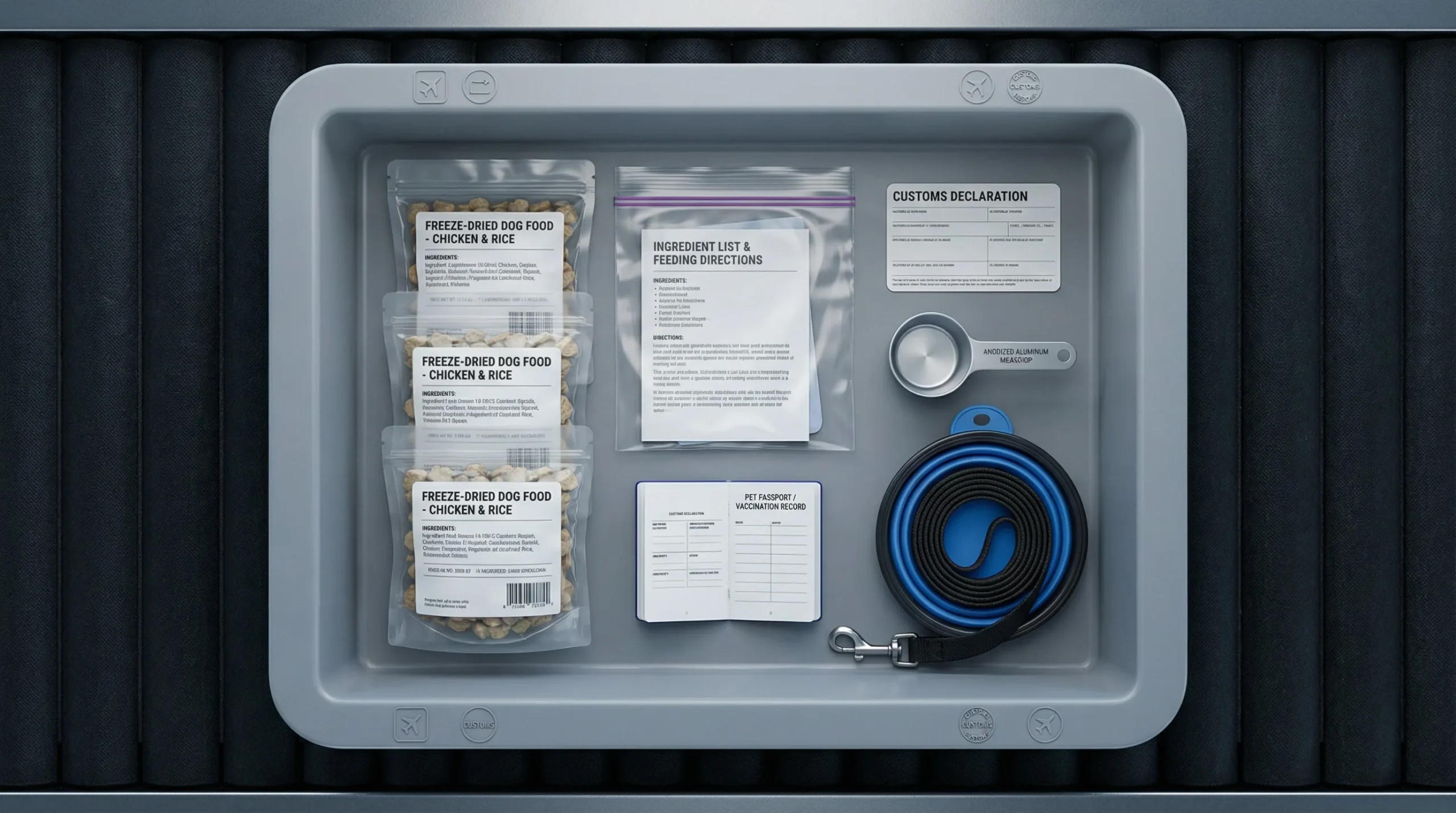
Expect scrutiny on animal‑origin ingredients and amounts. Keep packaging original when possible, with clear ingredient lists. Know airline rules dog food policies on powders and food quantities, and declare if required to avoid delays.
Boarding kennels: documentation, feeding notes, and hygiene
When boarding with raw dog food in freeze‑dried form, provide a one‑page sheet: feeding schedule, grams per meal, water per meal, storage notes, and contact details. Bring sealed daily portions; confirm the kennel’s water source and prep hygiene.
Example Itineraries: From Weekend Hikes to Multi‑Week Trips
Use these planning snapshots to size your kit based on time, weight, and water availability.
72‑hour hike kit: grams, liters, and bag count
| Item | Per Day | 3 Days |
|---|---|---|
| Freeze‑dried food (dry) | 300 g | 900 g (6×150 g bags) |
| Rehydration water | 300–450 ml | 0.9–1.35 L |
| Drinking water (dog) | 0.5–1.0 L | 1.5–3.0 L |
This setup aligns with freeze dried dog meals hiking norms: compact, predictable, and easy to track in variable terrain.
One‑week road trip: hotel storage and daily routine
Pack seven days of pre‑portioned meals plus 10% buffer. Use a small tote for food and a separate water kit. At hotels, rehydrate in the bathroom area for easy cleanup; keep bowls on a mat for hygiene.
Two‑week abroad: mailing supplies and local water considerations
Ship portions to your accommodation ahead where possible. Verify local water safety; if uncertain, buy sealed water for meals. Keep customs‑friendly documentation of ingredients and intended use to smooth entry checks.
Budgeting and Weight Calculators
Balance grams, liters, and euros before you go; a few quick estimates prevent mid‑trip surprises.
Cost per day vs. frozen raw and kibble (link to cost comparison for travel scenarios)
Freeze‑dried can cost more per kilogram, yet save on spoilage and logistics—especially when cold storage isn’t guaranteed. For quick math, explore our cost comparison for travel scenarios including EU examples that factor transport and waste.
Pack weight per 10 kg dog bodyweight
| Metric | Rule of Thumb |
|---|---|
| Daily dry food (active) | 25–35 g per kg BW |
| Per 10 kg dog | 250–350 g/day (dry) |
| Rehydration water | 1:1 to 1.5:1 (water:dry) |
Freeze‑dried and frozen raw deliver strong metabolizable energy, aiding lighter packs for equivalent calories.[3]
How to estimate buffer days without waste
Add 10–15% extra meals for delays or higher activity. If you return home with unopened portions, they store well thanks to low moisture and stable nutrient profiles affirmed in controlled studies of raw formats.[1]
Hygiene, Safety, and Transition Tips on the Move
Keep your routine clean and consistent to protect tummies, rooms, and gear.
Clean handling in campsites and hotel rooms
Use a washable mat, wipe bowls after each meal, and dry them before packing. In hotels, prepare meals over tile, not carpet. Seal leftovers and dispose of pouches in lined bins.
Preventing GI upsets during schedule and water changes
Transition proteins slowly, rehydrate fully, and use stable water sources; dogs may show different fecal characteristics when diets shift abruptly.[2] Keep feeding windows similar to home and limit sudden treat changes during travel.
Using single‑protein options for sensitive dogs
Single‑protein, novel meats can simplify travel by reducing variable exposures. If you’re comparing processing methods, evidence suggests raw and freeze‑dried maintain highly digestible amino acids compared to certain cooked/retorted options.[4]
Frequently Asked Questions
How much water should I pack to rehydrate freeze‑dried dog meals on a hike?
Plan roughly 1–1.5 parts water per 1 part freeze‑dried by weight for meals, plus extra for drinking. Increase 20–30% in heat, at altitude, or during strenuous activity.
Can I take freeze‑dried dog food on an airplane?
Dry, shelf‑stable pet food is typically allowed in carry‑on and checked bags, but amounts may be inspected. Declare animal products as required and check airline and destination rules in advance.
Is freeze‑dried raw accepted by boarding kennels?
Many kennels accept sealed, labeled daily portions with feeding instructions. Confirm storage, preparation water, and sanitation policies before drop‑off.
How do I avoid stomach upset when traveling with my dog?
Keep proteins consistent, rehydrate fully, and transition any new formula over 3–5 days. Use safe water, maintain feeding times, and carry a small supply of familiar treats.
What’s the best way to pre‑portion meals for a multi‑day trip?
Use moisture‑barrier bags, label AM/PM with grams and water amounts, and group by day. Pack a 10–15% buffer for delays or increased activity.
Conclusion
With thoughtful packing, precise water planning, and clear labeling, freeze‑dried makes raw feeding truly mobile. Compared to frozen raw, you’ll carry less, worry less about spoilage, and stay flexible across hikes, hotels, and borders. As a Slovenian family business, Good4Dogs loves seeing dogs thrive wherever they roam—so treat this logistics guide as your friendly checklist for smoother adventures. Revisit the main guide for deeper nutrition context, and lean on the feeding calculator whenever grams and milliliters get fuzzy. Happy travels and wagging tails!
References
- EL Geary et al. (2023). Standardized amino acid digestibility and nitrogen-corrected true metabolizable energy of frozen raw, freeze-dried raw, fresh, and extruded dog foods using precision …. Journal of animal …. View article
- EL Geary et al. (2024). Apparent total tract nutrient digestibility of frozen raw, freeze-dried raw, fresh, and extruded dog foods and their effects on serum metabolites and fecal characteristics …. Translational Animal …. View article
- PM Oba et al. (2023). Standardized amino acid digestibility and nitrogen-corrected true metabolizable energy of frozen and freeze-dried raw dog foods using precision-fed cecectomized …. Journal of animal …. View article
- EL Geary et al. (2025). … amino acid digestibility and nitrogen-corrected true metabolizable energy of frozen raw, freeze-dried raw, mildly cooked, and retorted dog foods using the precision …. Journal of animal …. View article