

Uncategorized
Itchy skin, paw licking, and hotspots: could it be a food trigger?
May
Itchy skin, paw licking, and hotspots: could it be a food trigger?
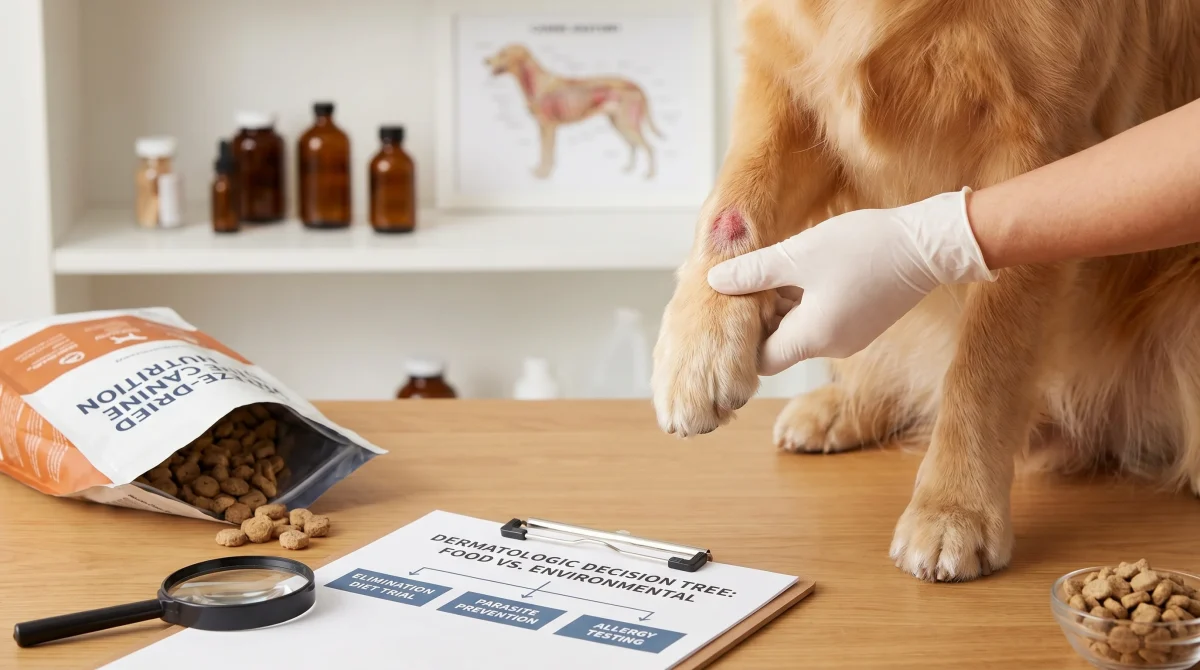
Is your dog scratching, licking paws, or battling recurring hotspots? These signs can be frustrating and confusing. Food can play a role, but it is not the only culprit.
This guide helps you separate likely food triggers from environmental or parasite causes. You will learn a simple decision path, an elimination diet plan, and clear monitoring steps.
What this guide focuses on
A single scenario: is your dog’s itch food-triggered?
This article targets dermatologic signs where food may contribute to itch. Think constant paw chewing, belly rash, ear debris, and recurrent hotspots. These can overlap with a dog paw licking allergy pattern and dog hotspots food allergy presentations.
Expect practical steps rather than a full textbook. We focus on a strict elimination approach, because it can clarify whether diet matters. If you want a broader map of decisions, see our food allergy overview and priorities for context and sequencing.
When to suspect non-food causes first
Start outside the bowl if itch spikes with seasons, improves indoors, or follows hikes. Environmental triggers like dust mites or pollens commonly drive flares, and they often require multimodal care alongside diet trials.[3]
Rule out parasites with vet-recommended flea and mite control. Treat any skin or ear infections before interpreting food responses. Uncontrolled infections and parasites can mask or mimic dietary reactions.

Quick decision guide: if X, then Y
5–7 fast rules to choose your next step
- If itching worsens seasonally or after outdoor exposure, prioritize parasite protection and discuss environmental control with your vet before changing food.
- If paw chewing, perianal itch, or recurrent ear debris persists year-round, consider a strict elimination diet for dogs using a single, novel protein.
- If you see fleas, scabs, or dandruff along the back, treat parasites first and pause diet changes until itching stabilizes.
- If your dog is on antibiotics or ear meds for infection, complete treatment and wait 7–10 days before judging diet effects.
- If treats, table scraps, or flavored chews are used, stop them now. Mixed proteins will undermine any diagnosis.
- If your dog has weight loss, lethargy, or open sores, see your veterinarian before starting any elimination plan.
How to run a safe, practical elimination diet
Choosing a truly novel, single-protein option
Select a protein your dog has never eaten. Horse, goat, rabbit, or certain fish can be helpful when chicken, beef, or dairy are common exposures. For convenience, a complete, hypoallergenic dog food freeze-dried formula can keep ingredients consistent and portable.
Many pet owners find Everfresh Freez-Dried food – Horse 500g helpful for this task. A novel, single-protein product reduces guesswork when ruling out typical triggers.
Need help picking a starting protein? Compare options in Which single protein to try first? Horse vs beef vs fish for allergic dogs.
Portioning, rehydration, and treat rules
Feed only the chosen single-protein food. Rehydrate freeze-dried meals the same way at every feeding to avoid variability. Use only single-ingredient treats from the same protein, or skip treats entirely.
Read every label closely and watch for hidden binders, broths, or mixed oils that can sabotage the trial. If label decoding is stressful, see Label reading for allergic dogs: spotting hidden proteins, binders, and cross-contact risks.
Timeline and when to escalate
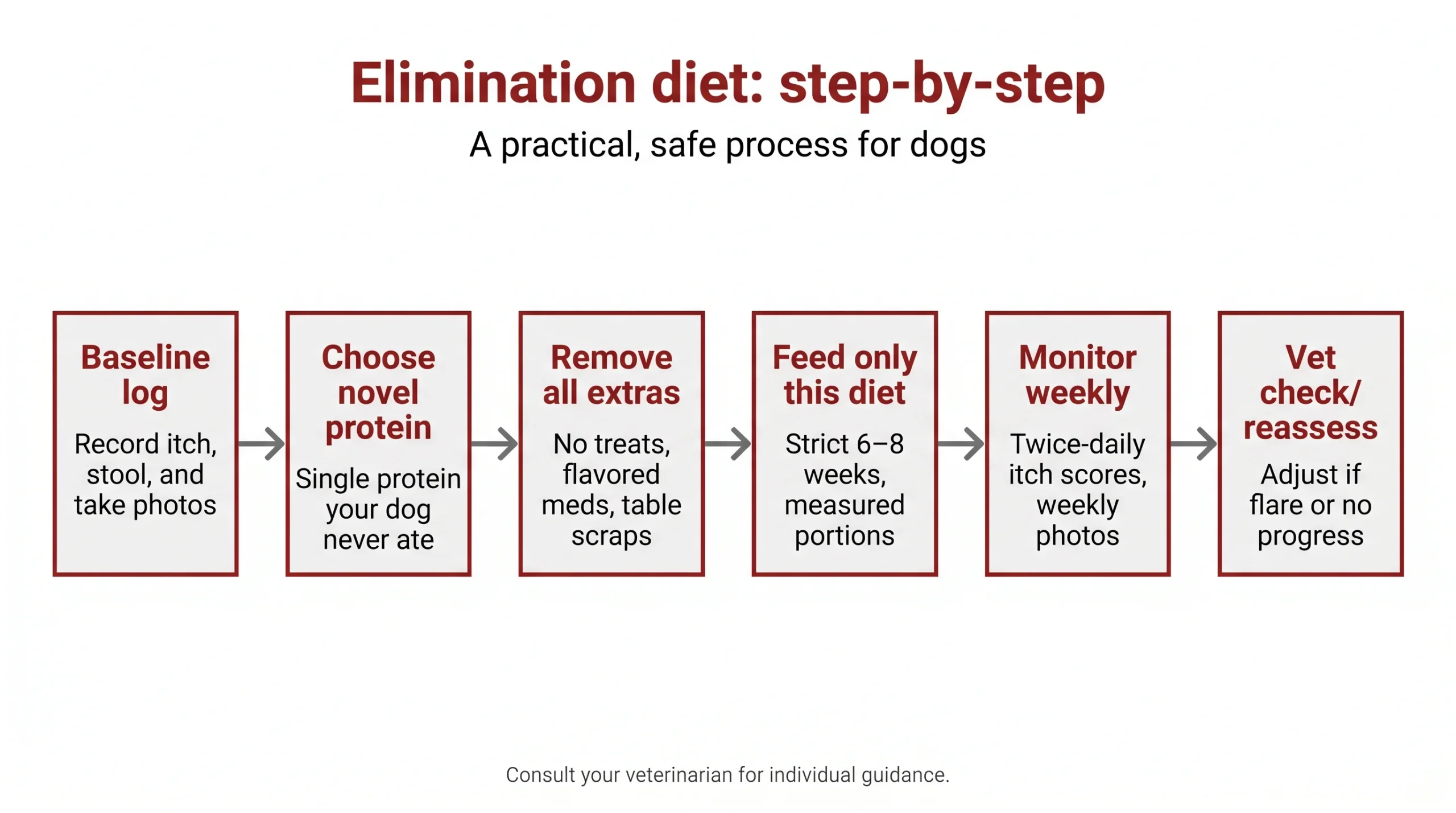
Plan 6–8 weeks of strict feeding for diagnostic clarity. Some dogs improve by weeks 3–4, but slow skin turnover and prior inflammation can delay visible change.[4]
If pruritus is unchanged by week 4–6, verify parasite control, treat infections, and reassess your food list. For concerning or worsening signs, review red flags in When to see the vet for suspected food allergies: red flags, testing, and referrals. For step-by-step structure, visit Elimination diet for suspected food allergy: a 6–8 week step-by-step plan.
Monitoring: what to track at 7–14 days and 4–8 weeks
Skin and behavior scorecard
Score itch twice daily on a 0–10 scale. Note paw chewing minutes, nighttime restlessness, and new hotspots. Photograph key sites weekly under the same lighting. Small week-to-week declines still indicate movement in the right direction.
Dogs may act calmer before skin fully clears, as inflammation subsides. Watch for less foot focus and fewer head shakes, which can signal progress even if redness lingers.
Stool, ears, and secondary signs
Track stool form, frequency, and gas. Softer stools can reflect intolerance or transition, not necessarily allergy. If GI signs dominate, this resource may help: Soft stools, gas, and intermittent diarrhea: allergy, intolerance, or transition issue?
Check ears every few days for odor, debris, or head tilt. Reduced discharge alongside less scratching often supports a positive dietary response.
Criteria for a positive response
Consider the trial encouraging if itch scores drop by 30–50% by weeks 4–6, paw chewing time decreases, and hotspots stop recurring. These improvements should persist without new flare triggers such as fleas or seasonal pollen spikes.
If change is under 20% after 6 weeks, re-check for hidden proteins, incomplete rehydration routines, missed parasite control, or persistent infections confounding the picture.
Practical safety boundaries
When to pause and seek veterinary input
Stop the trial and consult your veterinarian if you see weight loss, spreading sores, ear discharge with pain, or intense distress. Dogs with severe atopic dermatitis often need multimodal therapy, and diet is only one piece.[3]
Unexpected vomiting, black stools, or lethargy also warrant prompt evaluation before continuing any elimination protocol.
Nutritional adequacy and supplement use
Use a complete and balanced diet during the trial to avoid nutrient gaps. Supplements can conceal animal proteins or flavors, which may skew results. When in doubt, pause them or choose plain, single-ingredient options.
If your dog needs joint, skin, or probiotic support, discuss neutral, unflavored products with your veterinarian to protect the integrity of your trial.
Evidence status: what we know and what is emerging
Food allergy vs. intolerance
Food reactions are complex. Some dogs react immunologically to proteins, while others show non-immune intolerances. Either can worsen itching or GI upset. Differentiation often relies on strict exclusion followed by controlled re-challenge.
Environmental exposures and early diet patterns can influence atopic risk, highlighting that “itchy dog” causes are frequently multifactorial, not purely dietary.[2]
Role of single-protein and freeze-dried diets
Evidence suggests tailored diets can reduce pruritus and medication reliance in atopic dogs, especially as part of multimodal care.[1] Dietetic foods have demonstrated improvements in dermatologic scores and itch when used consistently over weeks to months.[4]
Single-protein formulas, including freeze-dried options, may support clearer identification of triggers by minimizing cross-contact and ingredient drift, when labeling and sourcing are transparent.[3]
Limitations and confounders
Parasites, secondary infections, seasonal shifts, and hidden ingredients can blur outcomes. Some dogs need 8–12 weeks for full skin normalization, especially after chronic inflammation. Owners’ adherence and home environments also affect reliability.
Interpret results cautiously, retesting variables one at a time. Keep notes so your veterinarian can separate true dietary impact from background noise.
Rechallenge and reintroduction
Confirming a trigger with a controlled test
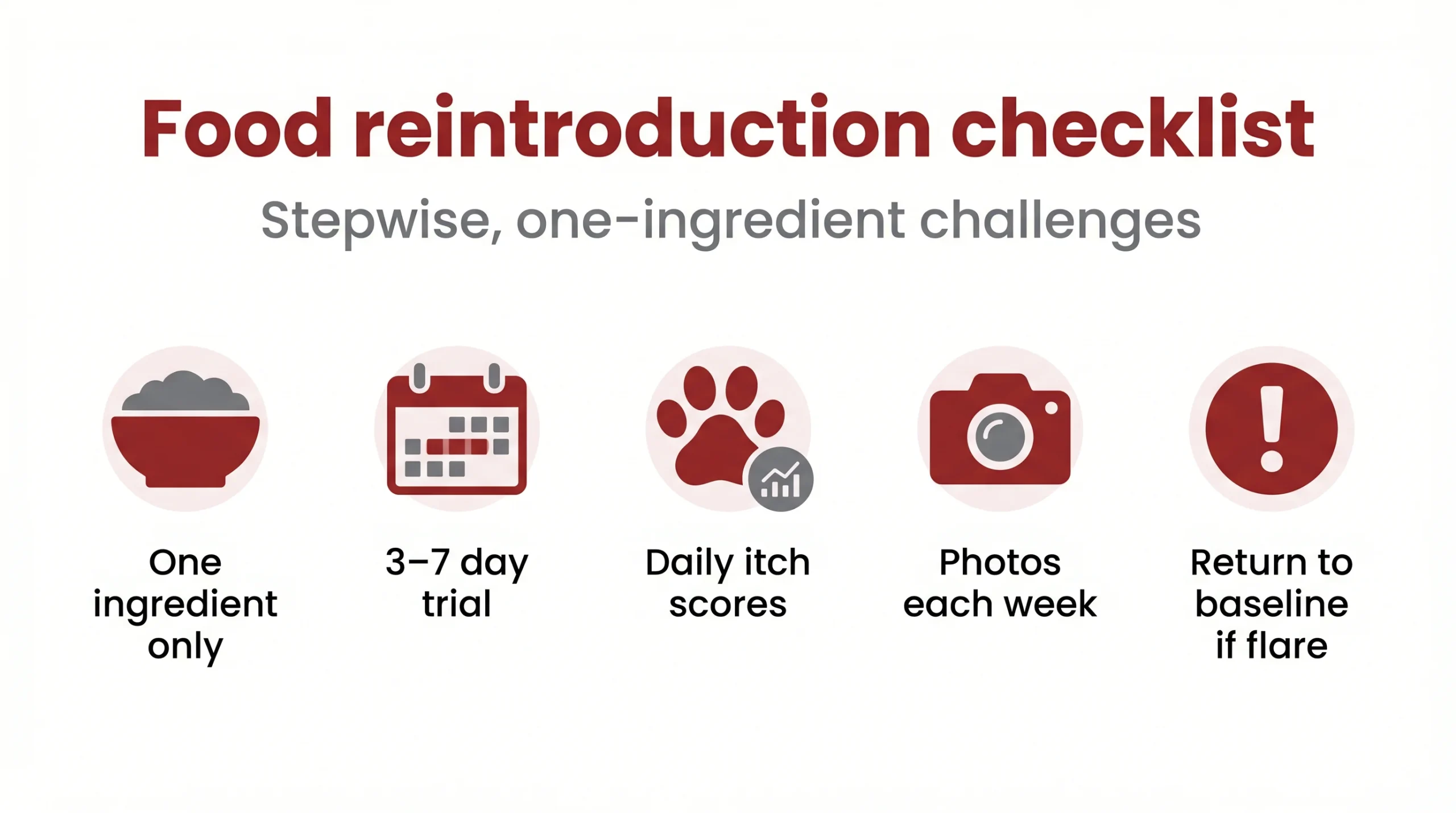
After improvement on the elimination diet, reintroduce a single previous ingredient for 3–7 days while observing itch scores and stool. A flare within days often indicates a culprit. Wait until baseline stabilizes before testing the next item.
For a stepwise plan and tracking templates, use Food reintroduction after elimination: challenge schedule, tracking, and what counts as a reaction.
Building a longer-term rotation
Once you identify tolerated proteins, create a rotation of two to three compatible options. This may reduce boredom and help manage supply constraints. Keep treats aligned with your safe list to avoid setbacks.
Retain your logs. They guide future choices if new symptoms arise or if seasonal changes complicate the picture of environmental vs food allergies dogs.
References you can discuss with your veterinarian
Consensus concepts and practical checklists
Discuss a staged approach: treat parasites, manage infections, then run a single-protein elimination for 6–8 weeks. Use objective itch scoring and photos. Consider that canine atopic dermatitis often needs combined strategies, including dietary support alongside medical care.[3]
Bring your feeding logs, labels, and a list of any supplements. If progress stalls, ask about extending the trial, switching to another novel protein, or refining environmental controls. These steps align with evidence that diet can meaningfully support pruritus management in selected patients.[4][1]
Frequently Asked Questions
How do I tell food-triggered itch from environmental allergies?
Food reactions may persist year-round and often include ear issues or perianal itch, while environmental triggers may fluctuate with seasons. A strict 6–8 week elimination diet helps differentiate when parasite control and skin infections are addressed first.
How long should an elimination diet last for a dog?
Most veterinary sources suggest 6–8 weeks of a single, novel protein and carbohydrate with no other foods. Some dogs show partial improvement by week 3–4, but a full duration increases diagnostic clarity.
Can I use freeze-dried food for an elimination diet?
Yes, if it is a complete, single-protein formula with clear labeling. Rehydrate consistently and avoid cross-contact with other foods. Evidence suggests single-protein formulas may support identification of triggers.
Do treats and supplements break the elimination diet?
Yes, most do. Only use treats made from the same single protein and free of added flavors or mixed proteins. Check supplements for hidden proteins or flavorings.
When should I see a vet during this process?
Seek veterinary input before starting if there are skin infections, ear discharge, weight loss, or severe itch. If there’s no improvement by week 4–6, or symptoms worsen, a veterinary exam is advised.
Conclusion
Itchy skin can have many drivers, but a careful, single-protein elimination diet may clarify whether food contributes. Rule out parasites and infections first, track methodically, and adjust one variable at a time. With patience and thoughtful monitoring, you can reach a confident next step and help your dog feel comfortable again.
References
- A Watson et al. (2022). A novel therapeutic diet can significantly reduce the medication score and pruritus of dogs with atopic dermatitis during a nine‐month controlled study. Veterinary …. View article
- M Hemida et al. (2020). Identification of modifiable pre-and postnatal dietary and environmental exposures associated with owner-reported canine atopic dermatitis in Finland using a web …. PLoS …. View article
- Y Drechsler et al. (2024). Canine atopic dermatitis: prevalence, impact, and management strategies. … Medicine: Research and …. View article
- MS de Santiago et al. (2021). Randomized, double-blind, placebo-controlled clinical trial measuring the effect of a dietetic food on dermatologic scoring and pruritus in dogs with atopic dermatitis. BMC veterinary …. View article