

Uncategorized
Food reintroduction after elimination: challenge schedule, tracking, and what counts as a reaction
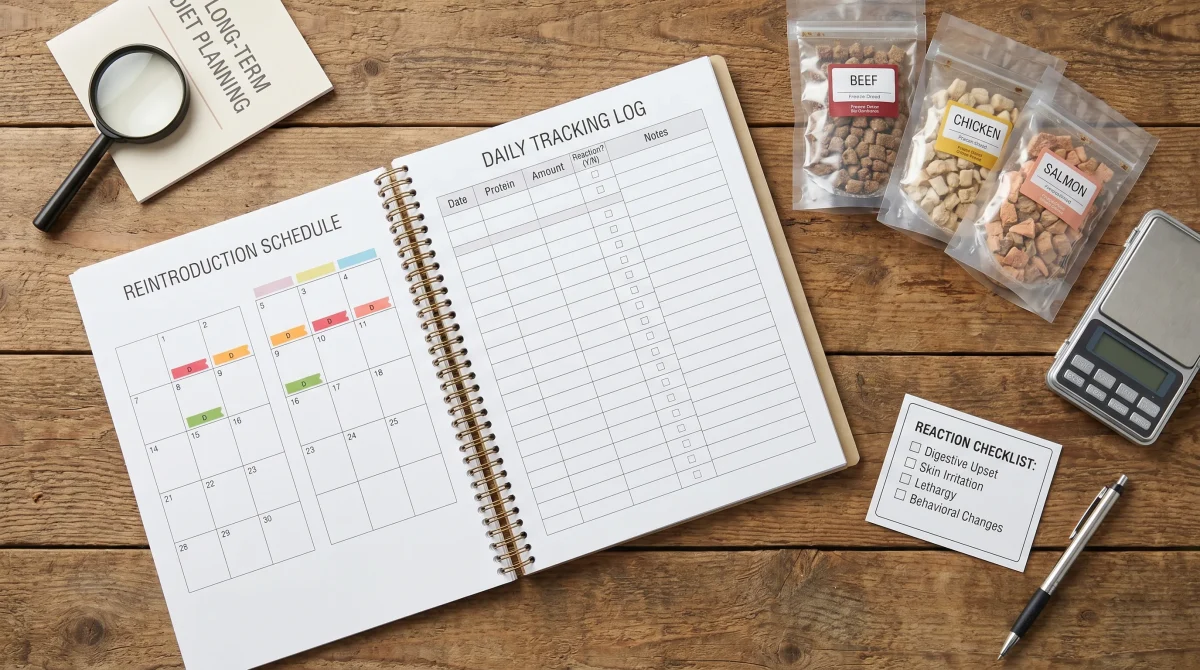
May
Food reintroduction after elimination: challenge schedule, tracking, and what counts as a reaction
Reintroducing foods after an elimination diet can feel daunting. You want clarity without causing a setback or confusion.
This guide walks you through a careful reintroduction protocol. You will learn how to define a reaction, set a dog allergy challenge schedule, and document outcomes for future planning.
What this post covers (and how to use it)
Start with the main allergy framework
If you are new to elimination diets, it helps to start with the main allergy framework before you begin challenges. This post focuses on the reintroduction phase only. Keep your notes handy and work stepwise.
Who this guidance fits best
This protocol suits dog owners who completed an elimination diet for dogs and reached a stable baseline. It also helps teams working with veterinarians. You will find structured steps and practical timing ranges here.

Quick decision guide: if X, then Y
Common scenarios during challenges
Use these quick cues during food trial reintroduction:
- If mild itch increases within 24–72 hours, pause the test and log severity.
- If stool softens once, reduce portion and observe for 48 hours.
- If diarrhea or vomiting occurs twice, stop and return to the safe diet.
- If ears redden or paws flare, stop, wash out, and mark the protein “suspect.”
- If no changes by day seven, mark “provisionally safe” and consider the next protein.
- If signs appear after stacking treats, remove extras and reassess.
When to stop, pause, or switch protein
Stop immediately for urgent signs or repeated vomiting. Pause for mild, transient changes and reassess in 48 hours. Switch proteins only after a full washout and stable baseline returns.
Define a reaction: symptoms, timing, and thresholds
Skin, gut, and behavior markers that matter
Track itching, paw licking, ear redness, hotspots, gas, stool form, urgency, vomiting, and restlessness. For gut-focused questions, see our guide on soft stools, gas, and intermittent diarrhea. Combine markers with intensity and duration for clarity.
Severity tiers: mild, moderate, urgent
Mild: small itch increase, slight redness, or one soft stool. Moderate: repeated soft stools, focal rash, or clear discomfort. Urgent: diarrhea, repeated vomiting, facial swelling, or lethargy. Evidence suggests flares may occur within hours to days, often under 14 days[1].
Cross-checking non-food confounders
Before blaming food, check for fleas, new shampoos, seasonal pollen, stressful events, or recent medications. Hidden treats, cross-contact in bowls, and sudden portion increases may also skew results and mimic an adverse food reaction in dogs.
Challenge schedule: step-by-step reintroduction
Pre-check: stable baseline for 7–14 days
Confirm a calm baseline on your safe diet for at least 7–14 days, with consistent mild or zero symptom scores. Many dogs stabilize after a 6–8 week elimination period before this phase begins[2].
Day-by-day micro-challenge (days 1–3)
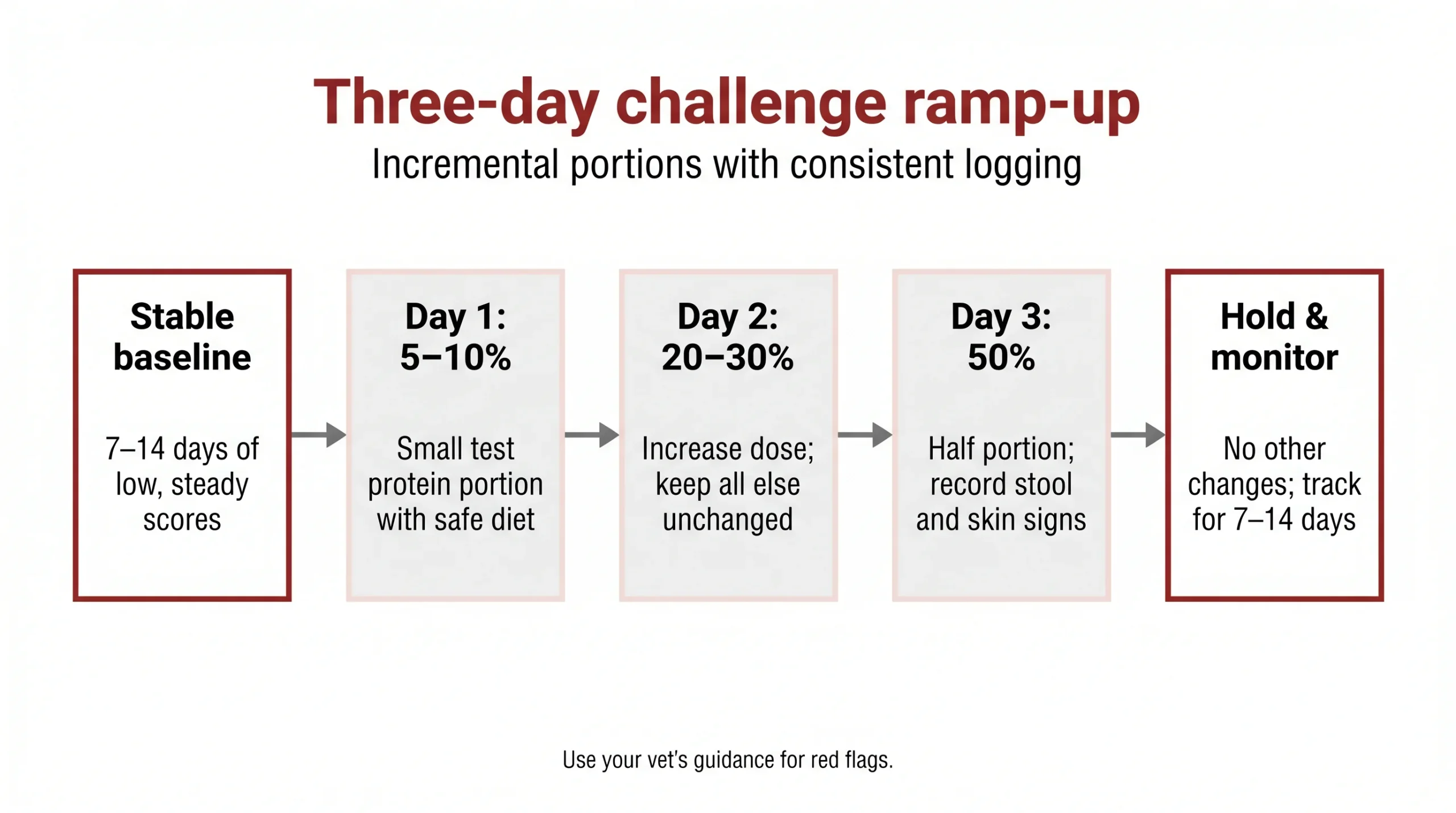
Day 1: feed 5–10% of the target portion of the test protein. Day 2: increase to 20–30%. Day 3: reach 50%. Keep the rest of the diet unchanged. Record all signs.
Full portion exposure (days 4–7)
Days 4–7: feed 100% of the planned portion of the test protein daily. Avoid new treats, seasonings, and supplements. If no reaction appears, mark the protein as provisionally tolerated for now.
Washout rules and re-try timing
At the first moderate or urgent sign, revert to the safe diet. Wash out for 3–7 days for mild flares, and up to 14 days for stronger reactions[1]. Re-challenge later with smaller steps or a different protein. For novel-protein clarity, many owners find Everfresh Freez-Dried food – Horse 500g helpful during clean challenges.
Tracking system: what to log and how
Daily log template (scores 0–3)
Use a 0–3 scale for itch, ears, paws, skin lesions, stool form, gas, vomiting, and behavior. 0 means normal. 1 is mild. 2 is moderate. 3 is severe. Add notes on timing and triggers.
Photos, stool scale, and itch minutes
Take daily photos of problem areas with the date visible. Use a dog-friendly stool chart and record “itch minutes” per day. Numbers reduce bias and support canine food intolerance tracking.
How to mark safe vs. suspect proteins
Color-code your sheet: green for “tolerated,” yellow for “watch,” and red for “avoid.” Mark dates, portions, and context. Reassess red items only after a long stability period and veterinary input.
Monitoring windows: 7–14 days and 4–8 weeks
Short window: immediate and delayed reactions
Watch for immediate reactions within minutes to hours. Delayed cutaneous signs may surface within days, and many flares occur within 14 days after a challenge[1]. Keep portions steady during this short window to avoid confounding.
Long window: tolerance, relapse, and stacking effects
Over 4–8 weeks, observe for gradual relapse with repeated exposures or treat “stacking.” Symptoms that decrease on elimination diets and recur on reintroduction may reflect true food triggers[4].
Practical safety boundaries
When to seek veterinary input
Contact your vet for repeated vomiting, bloody stool, severe lethargy, facial swelling, or rapid skin worsening. For guidance on red flags and referrals, see when to see the vet for suspected food allergies.
Hydration, gradual portions, and single changes only
Keep fresh water available, especially during GI signs. Introduce portions gradually and avoid simultaneous changes. One new protein at a time protects clarity and reduces the risk of compounding variables.
Medication interactions and flare management
Corticosteroids and antihistamines may mask reactions. If medications are essential, note doses and timing in your log. Plan challenges during stable, low-medication periods when your veterinarian agrees.
Evidence status: what research suggests
Elimination diets and novel proteins
Studies suggest that elimination diets remain a practical standard for diagnosing food-induced atopic signs. Shortened protocols show varying sensitivity and specificity, so careful reintroduction improves accuracy[2]. Reappearance of signs on re-challenge supports a dietary cause[4].
Limitations: confounders and owner-reported outcomes
Clinical trials highlight limitations such as concurrent therapies, environmental triggers, and owner-reported outcomes. Elemental diets may aid diagnostics but study designs vary, so comparisons are difficult[3]. Interpreting signs alongside structured logs increases reliability.
From trials to a long‑term plan
Building a safe protein list
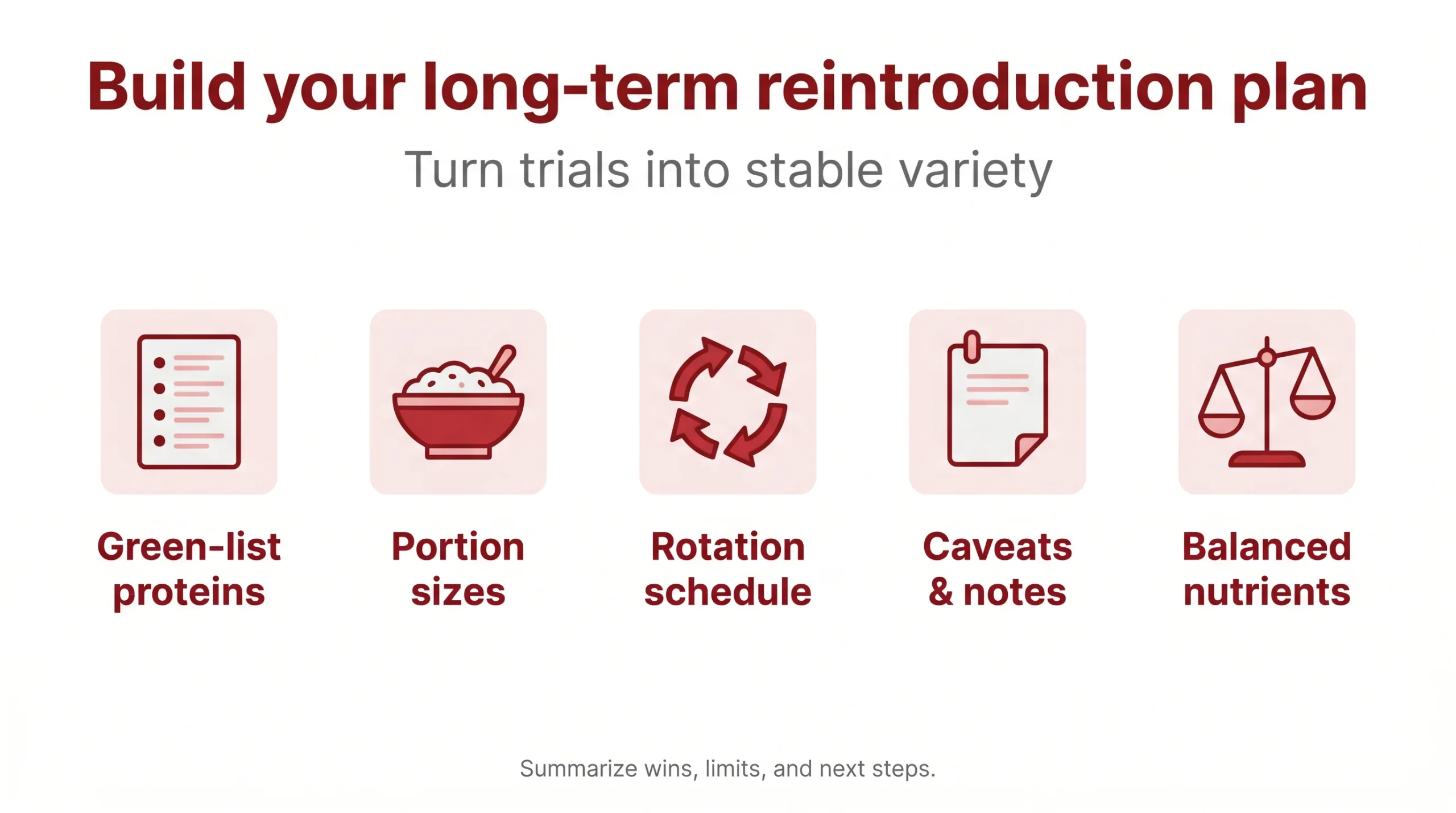
Compile your green-list proteins from successful challenges. Add portion sizes and any mild caveats. If you need ideas on starting points, see which single protein to try first for practical comparisons.
Rotation intervals and nutrient coverage
Rotate tolerated proteins every 2–8 weeks to reduce sensitization risk, while keeping nutrients balanced. If your dog needs growth support or special care, consult your veterinarian for tailored adjustments and ongoing monitoring.
Using single-protein, freeze-dried formats
Single-protein, minimally processed foods may support cleaner data by limiting hidden ingredients and cross-contact. If traveling, plan ahead with shelf-stable options and portioned packs to keep your protocol consistent and easy to follow.
Frequently Asked Questions
How long should a dog elimination diet last before reintroducing foods?
Many veterinarians suggest 6–8 weeks until symptoms stabilize. Evidence suggests reintroduction is clearer once skin and gut scores are consistently mild for 7–14 days.
What counts as a reaction during food reintroduction?
A reaction may include increased itching, red ears, soft stool/diarrhea, vomiting, or behavior changes within minutes to 72 hours after exposure. Track severity and duration to confirm.
How many days should I test each new protein?
A common approach is a 3‑day micro‑challenge followed by 4–7 days at full portion if no issues appear. Pause and wash out for 3–7 days if signs emerge.
Can I test two new foods at the same time?
It’s best to avoid. Single changes help isolate triggers. Testing two items together makes it hard to identify the cause if symptoms return.
Is freeze-dried single‑protein food suitable for challenges?
Single‑protein, minimally processed options may support clean challenges by reducing hidden variables. Verify the ingredient list and avoid mixed proteins during trials.
Conclusion
Reintroducing foods after elimination works best with slow steps, precise definitions, and consistent logs. Use a micro‑challenge, confirm with full portions, and respect washout timing. Document signs, avoid stacked changes, and involve your veterinarian when needed. This approach may turn a confusing process into a clear long‑term plan, helping you build a safe, nourishing menu that your dog can enjoy with confidence.
References
- T Olivry et al. (2020). Critically appraised topic on adverse food reactions of companion animals (9): time to flare of cutaneous signs after a dietary challenge in dogs and cats with food …. BMC veterinary research. View article
- N Fischer et al. (2021). Sensitivity and specificity of a shortened elimination diet protocol for the diagnosis of food‐induced atopic dermatitis (FIAD). Veterinary …. View article
- J Tinsley et al. (2024). An open‐label clinical trial to evaluate the efficacy of an elemental diet for the diagnosis of adverse food reactions in dogs. Veterinary …. View article
- LU Vovk et al. (2025). Adverse Food Reactions in Dogs and Cats. Veterinary Clinics: Small Animal …. View article