

Uncategorized
Traveling with a food‑allergic dog: safe meal planning using freeze‑dried options
May
Traveling with a food‑allergic dog: safe meal planning using freeze‑dried options
Travel with a food‑allergic dog can feel stressful. Unknown kitchens, new water, and friendly snacks raise the risk of flares. You need a plan that reduces surprises and keeps meals steady.
This guide focuses on practical logistics. You will learn how to plan portions, pack tools, rehydrate consistently, and prevent contamination on the go. We will also share monitoring markers and sensible safety boundaries. You will leave with a clear routine to keep your dog comfortable.
Why freeze‑dried, single‑protein is a smart travel strategy
Risk control on the road: minimizing exposure variables
Freeze‑dried, single‑protein dog food travel plans simplify life. One protein reduces guesswork and minimizes exposure variables in restaurants, hotels, and guest kitchens. Hypoallergenic dog travel meals also stay shelf‑stable, so you avoid unpredictable local sourcing and last‑minute substitutions.
Nutritional continuity: matching home ratios while traveling
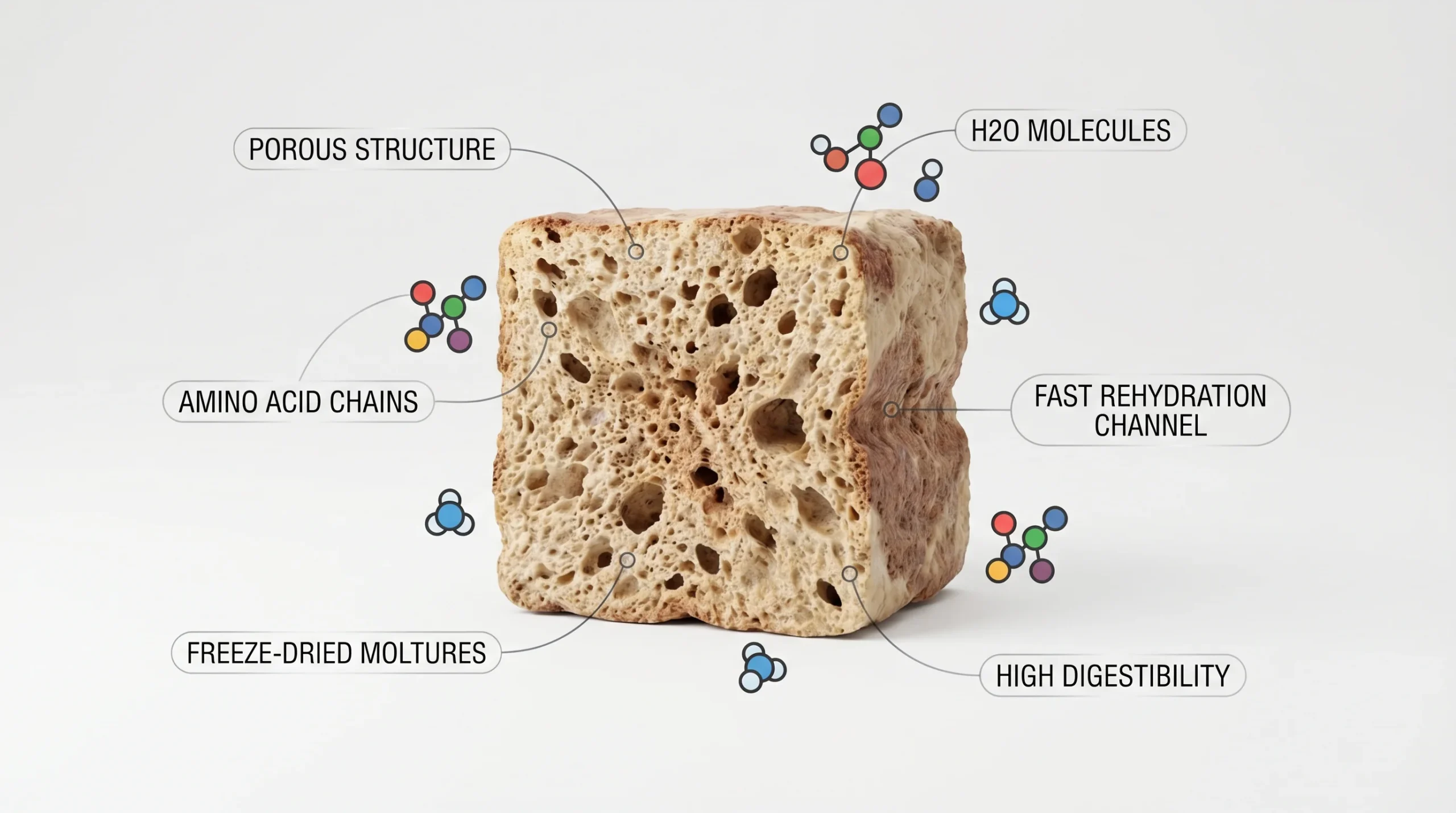
Freeze‑dried dog food for allergies may support steady digestion due to predictable recipes and measured rehydration. Studies on raw and freeze‑dried formats report high amino acid digestibility and strong energy availability, supporting consistent feeding on trips[1][3]. Matching home meals during travel can reduce stress‑related GI changes.
Plan the trip: dosing, water, and packing for consistency
Calculate portions and water for rehydration (7–14 days scenarios)
Base amounts on your dog’s proven home portion. Multiply the daily dry freeze‑dried amount by trip days, then add a 15–25% buffer. For water, start with 1:1 by weight (or 1:2 by volume), scaling to your dog’s preferred texture. For 7–14 days, pre‑calculate total liters for rehydration and carry at least 25% extra for delays.
Pre‑portioning and labeling: prevent mix‑ups in transit
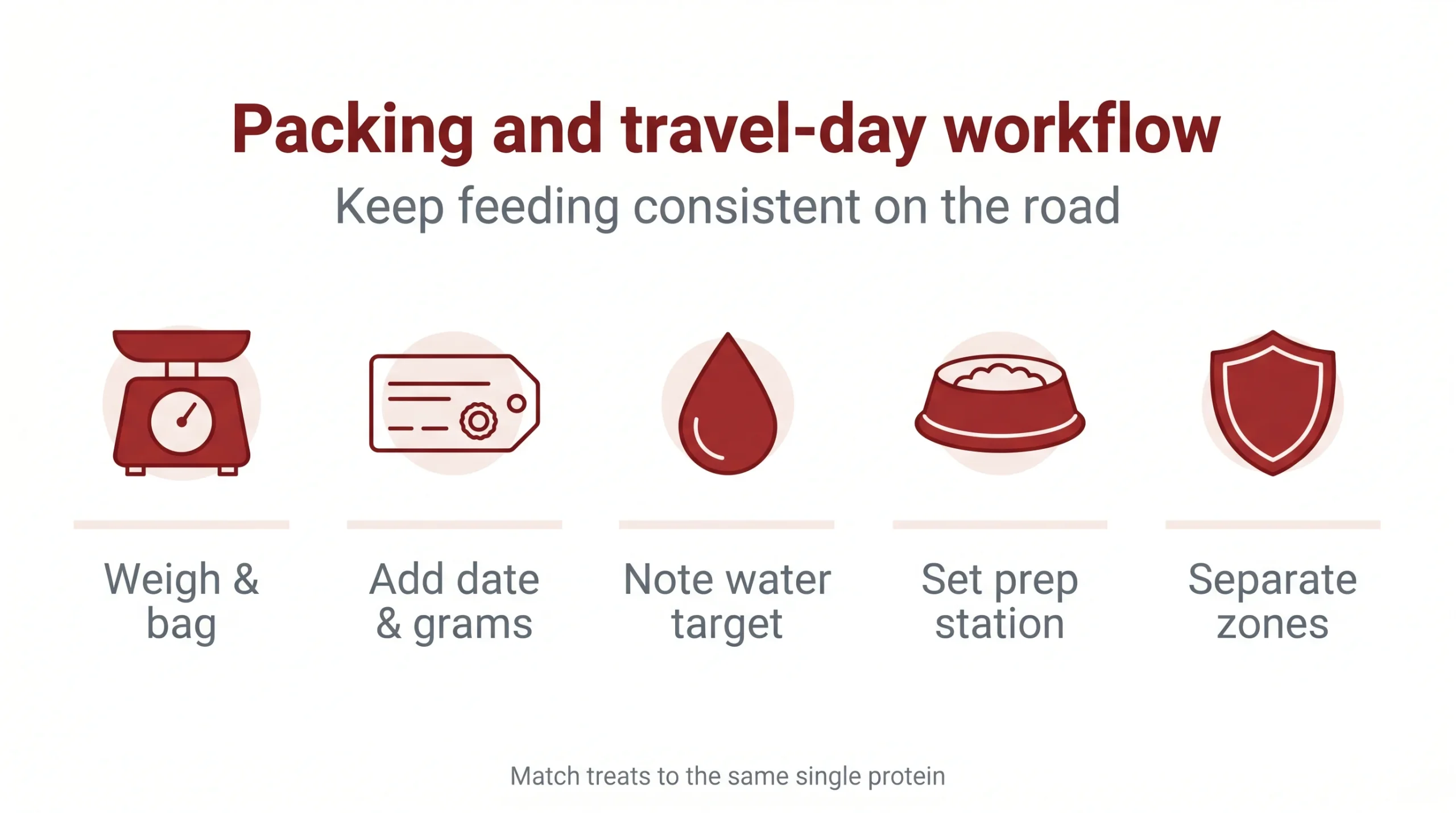
Pre‑portion each meal into airtight bags. Label with date, protein, grams, and water target. Color‑code breakfast and dinner. Pack a small reserve of identical portions to replace any that spill. This keeps dosing precise even when schedules shift.
Water quality and measuring tools to keep meals consistent
Use bottled or filtered water for rehydration to avoid sudden mineral changes. Carry a digital gram scale, a foldable measuring cup, and a squeeze bottle. Consistent measuring beats eyeballing, especially for sensitive stomachs.
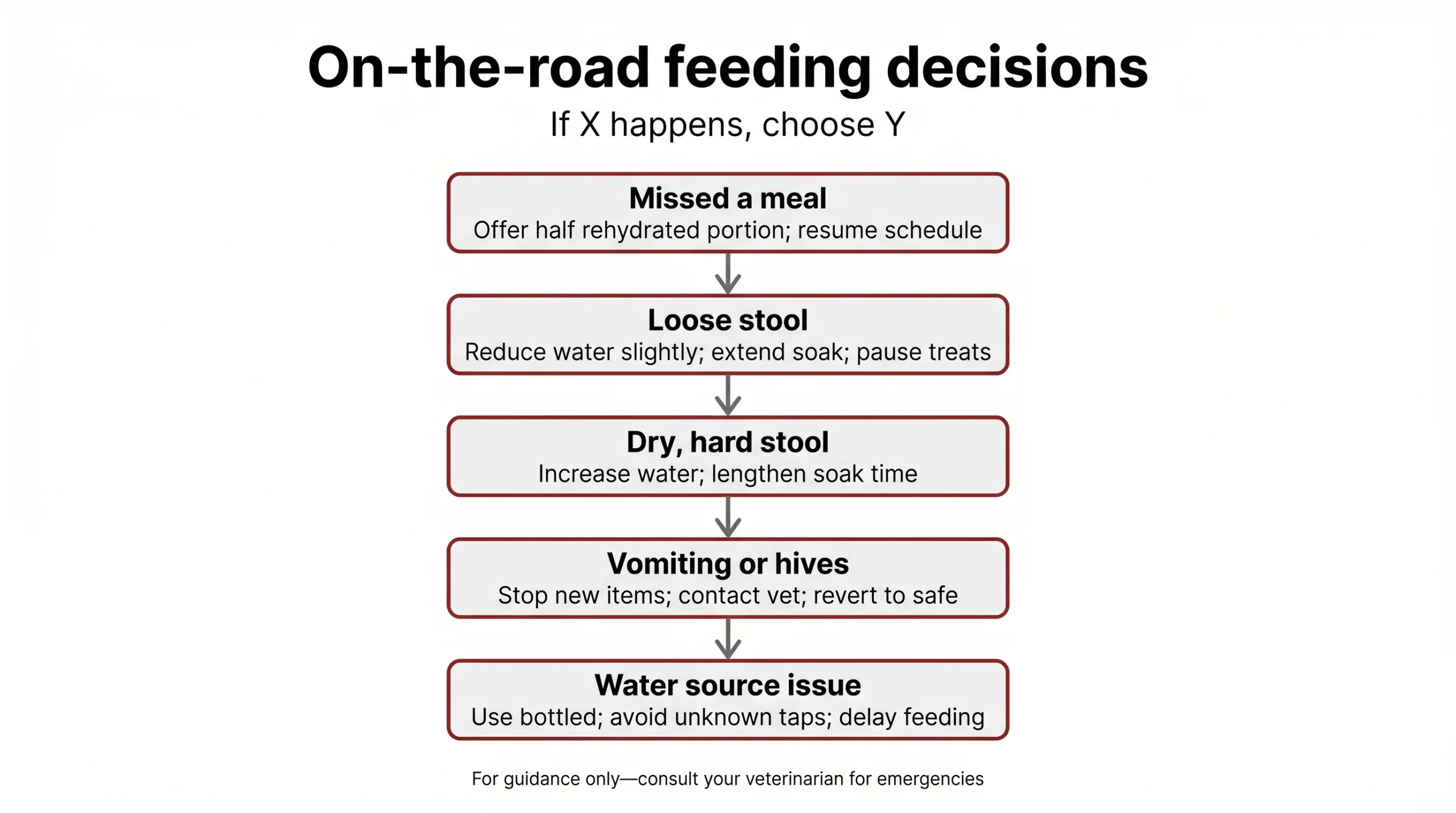
Quick decision guide: if X happens, choose Y
5–7 common travel scenarios and immediate actions
- If you run low on food, reduce treats to zero and divide remaining portions evenly. Add water to maintain satiety. Do not switch proteins mid‑trip.
- If the water tastes or smells different, switch to bottled water for food and drinking. Reintroduce local water slowly after returning home.
- If your dog refuses food once, wait 30 minutes and re‑offer at a slightly warmer temperature. Maintain the same texture.
- If diarrhea appears, skip new treats and reduce portion by 10–15% for one meal. Increase water a little and monitor stool for 24–48 hours.
- If someone fed table scraps, return to strict single‑protein meals for 48–72 hours. Increase note‑taking on ears, skin, and stool.
- If a bag tears, discard any food exposed to contaminants. Use a labeled backup portion.
- If you forget bowls, use a clean silicone mat or disposable plate as a temporary solution. Avoid porous or scented surfaces.
Rehydration in practice: how to prepare meals on the go
Step‑by‑step rehydration workflow in cars, hotels, and trails
Car: Park, sanitize hands, place a prep mat, weigh food, add measured water, seal, and let it soak while you stretch. Hotel: Use a kitchenette or bathroom counter. Trail: Pre‑hydrate in a leak‑proof container 15–30 minutes before feeding. Keep a consistent rehydration guide freeze‑dried routine everywhere.
Temperature, soak time, and texture checks for sensitive dogs
Use room‑temperature or lukewarm water. Aim for a uniform mash without dry pockets. Typical soak time is 10–15 minutes, longer for chunkier pieces. Adjust water until texture matches your home baseline your dog tolerates well.
Prevent cross‑contact: tools, routines, and safe zones
Dedicated prep kit: bowls, scoops, mats, and storage
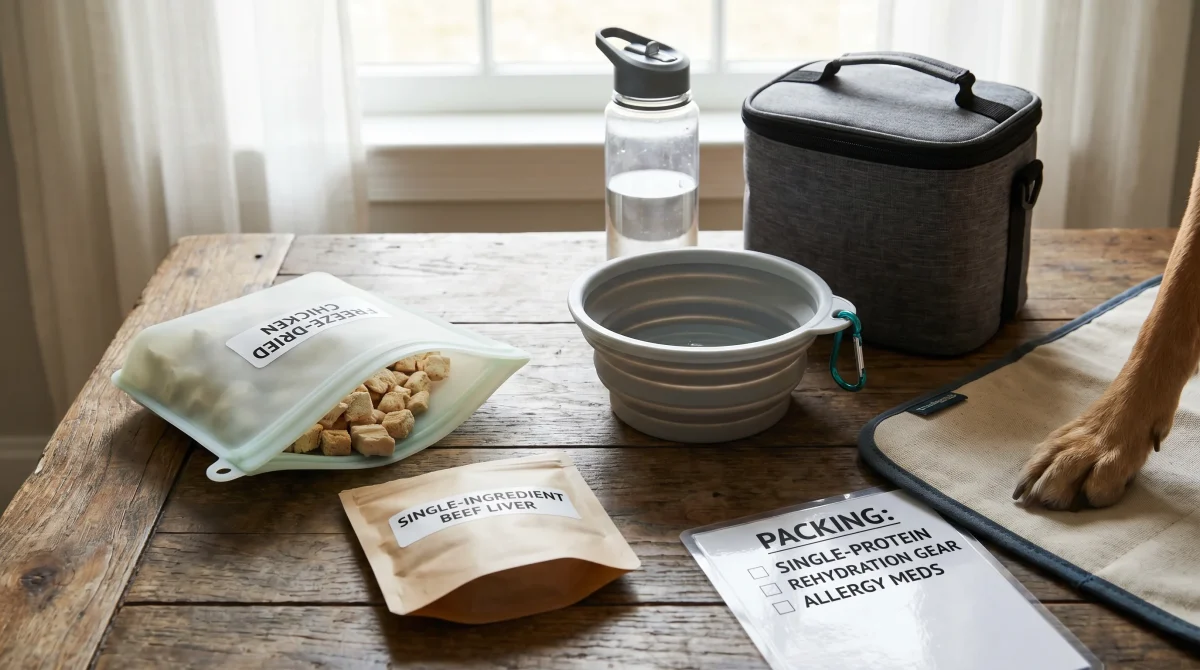
Build a dog food cross‑contamination travel kit: two non‑porous bowls, a silicone prep mat, a dedicated scoop, gloves or sanitizer, sealable containers, and waste bags. Store everything in a lidded bin away from human food.
Hotel, campsite, and friend’s home: setting up low‑risk stations
At hotels, claim a corner counter as your prep zone. At campsites, elevate gear on a picnic table with a washable mat. In friends’ homes, request a cleared, clean surface and keep your kit self‑contained.
Monitoring: what to track after 7–14 days and 4–8 weeks
Short‑term markers: stool, skin, ears, and itching diary
For 7–14 days, log stool consistency, gas, frequency, ear odor, head shaking, paw licking, and flaky patches. Compare to home baseline. Any drift suggests variable exposure, water changes, or treat contamination.
Medium‑term markers: weight, coat quality, energy, stool consistency
Over 4–8 weeks, track weight trends, coat sheen, typical energy windows, and stool stability. If you later reintroduce foods after travel, use a structured plan for clarity (Food reintroduction after elimination: challenge schedule, tracking, and what counts as a reaction).
Practical safety boundaries for allergic dogs on trips
Ingredient strictness, treat policies, and emergency backups
Adopt a “nothing new on the road” rule. Keep treats identical to the main protein and recipe. Pack vet contact details, antihistamines if prescribed, and a written diet card to share with hosts or staff.
Storage, hygiene, and discard timelines after rehydration
Store dry food airtight and shaded. After rehydration, use promptly. Refrigerate leftovers within 30 minutes where possible and use within 24 hours. When in doubt, discard rather than risk a reaction.
Evidence status: what research suggests and current limits
Allergen avoidance and single‑protein diets: what’s supported
For allergic dogs, limiting dietary variables can help distinguish triggers. Freeze‑dried raw diets show high indispensable amino acid digestibility in controlled studies, supporting predictable nutrient delivery on trips[1][3]. Still, individual tolerance varies, so careful monitoring remains essential.
Freeze‑drying and nutrient retention: where evidence is evolving
Evidence suggests processing affects digestibility, fecal characteristics, and metabolites in dogs[2][4]. Freeze‑dried formats often perform favorably, but results vary by formulation. Choose products with transparent sourcing, clear protein identity, and consistent testing for best control.
Product selection examples using single‑protein freeze‑dried meals
Choosing consistent proteins (e.g., horse, beef) and reading labels
Select a single protein your dog already tolerates. Verify there are no mixed meats, binders, or flavorings that could cross‑contaminate. For label sleuthing, see Label reading for allergic dogs: spotting hidden proteins, binders, and cross‑contact risks. Many pet owners find Everfresh Freez-Dried food – Horse 500g helpful for this task.
Complementary low‑risk treats and functional add‑ons
Match treats to the same protein and preparation method. Avoid mixed cookies at cafés. If you supplement, reintroduce only proven add‑ons. Unsure which protein to trial next? Review Which single protein to try first? Horse vs beef vs fish for allergic dogs.
Packing checklist and travel day workflow
Day‑by‑day kit list for 3, 7, and 14‑day trips
- Food: pre‑portioned meals plus 15–25% buffer.
- Water: bottled or filtered for rehydration and drinking.
- Tools: bowls, mat, scoop, scale, measuring cup, sanitiser, gloves, wet wipes.
- Storage: airtight containers, spare bags, labels, marker.
- Extras: identical treats, meds, vet contacts, copies of diet instructions.
- 3 days: one small bin; 7–14 days: two bins and a cooler insert for leftovers.
Pre‑departure and arrival routines to maintain control
Before leaving, weigh meals, label water targets, and pack the kit in one bin. On arrival, set a prep station first. Keep human and dog food zones separate. Maintain feeding times to preserve routine.
Frequently Asked Questions
How much water should I add to freeze‑dried food when traveling?
Start with the brand’s ratio (often 1:1 by weight or 1:2 by volume) and adjust until the texture matches what your dog tolerates at home. Consistency matters more than exact numbers.
Can I switch proteins while on a trip if my dog has allergies?
Avoid switching proteins during travel. Evidence suggests keeping a single, tolerated protein reduces risk of flares. If you must switch, trial it at home for 7–14 days first.
How do I prevent cross‑contact in hotels or campsites?
Use a dedicated prep mat, separate bowls and scoops, and pre‑portioned bags. Wash hands and tools before handling food and store meals in sealed containers away from communal areas.
How long can rehydrated freeze‑dried food sit out?
As a cautious rule, discard leftovers after 30–60 minutes at room temperature. Refrigerate promptly if possible and use within 24 hours.
What signs suggest the food plan is working during travel?
Stable stool, minimal itching, settled ears and skin, normal energy, and steady appetite. Track daily and compare to your dog’s baseline.
Where to learn more
Link back to food allergy fundamentals for broader context
For background on diagnosis, elimination diets, and long‑term allergen management, explore our hub on food allergy fundamentals. If you plan reintroductions after your trip, map your schedule and tracking in advance to maintain clarity and control.
Travel with a food‑allergic dog can be calm and predictable with a single‑protein, freeze‑dried framework. Plan portions, pre‑portion meals, and keep water and tools consistent. Rehydrate the same way every time, and protect your prep zone from cross‑contact. Track short‑ and medium‑term markers so you spot drift early. With cautious boundaries and a tidy routine, you give your dog comfort and yourself real peace of mind. From all of us at the Good4Dogs team, safe travels and happy tails.
References
- EL Geary et al. (2023). Standardized amino acid digestibility and nitrogen-corrected true metabolizable energy of frozen raw, freeze-dried raw, fresh, and extruded dog foods using precision …. Journal of animal …. View article
- EL Geary et al. (2024). Apparent total tract nutrient digestibility of frozen raw, freeze-dried raw, fresh, and extruded dog foods and their effects on serum metabolites and fecal characteristics …. Translational Animal …. View article
- PM Oba et al. (2023). Standardized amino acid digestibility and nitrogen-corrected true metabolizable energy of frozen and freeze-dried raw dog foods using precision-fed cecectomized …. Journal of animal …. View article
- EL Geary (2025). Effects of dietary processing conditions on nutrient digestibility and fecal characteristics, metabolite concentrations, and microbiota populations of healthy adult dogs. 2025 – ideals.illinois.edu. View article