

Uncategorized
Retail Playbook: How to Position Freeze‑Dried Animal‑Based Nutrition In‑Store
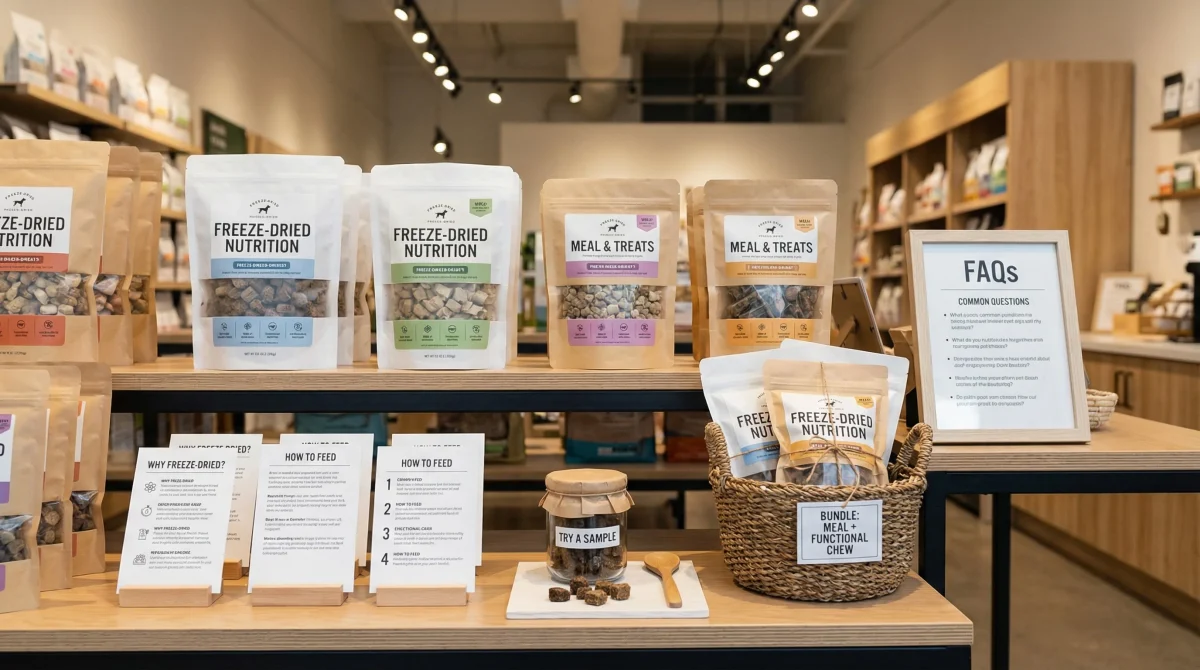
Mar
Retail Playbook: How to Position Freeze‑Dried Animal‑Based Nutrition In‑Store
Looking to make freeze‑dried dog food your next premium aisle winner? With the right planogram, education, and trial strategy, EU retailers can turn curiosity into confident, repeat purchases.
This focused playbook walks you through shelf placement, in‑aisle education, demos, bundle design, pricing discipline, and first‑order assortments—everything needed to merchandise animal‑based pet nutrition like a pro.
Why Freeze‑Dried Animal‑Based Nutrition Wins on the Shelf
Freeze‑dried is where raw‑level nutrition meets pantry‑friendly convenience, and smart in‑store merchandising makes that story visible. For a deeper foundation on formats and benefits, see Animal‑Based Pet Nutrition for Dogs: The Complete Guide to Freeze‑Dried, Raw, and Functional Feeding.
Key shopper drivers: convenience, raw‑level nutrition, safety
Shoppers want whole‑prey proteins without freezer hassles. Freeze‑dried delivers raw‑leaning benefits, stores at room temperature, and rehydrates in minutes. Clear safety cues—like EU sourcing standards, airtight packaging, and feeding guidance—reduce friction. Position it as “easy raw,” and you’ll capture premium seekers and time‑pressed owners alike.
How freeze‑dried outperforms kibble and jerky in premium aisles
Freeze‑dried raw diets consistently show high indispensable amino acid digestibility—often above 90%—and favorable metabolizable energy profiles compared with extruded diets, reinforcing their premium value story in‑aisle[1][3]. This data helps staff justify trade‑up from kibble and even from jerky‑style treats, which typically under‑deliver on full‑meal nutrition.
Planograms: Shelf Placement That Converts in EU Stores
In EU pet retail, premium shoppers expect clear signals: where to start, how to compare, and why to spend more. Build that logic straight into your shelf.
| Zone | In‑Store Merchandising Tactics |
|---|---|
| Eye‑Level “Discover” | Core meals with simple rehydration card; vertical brand blocks; color by protein. |
| Shoulder “Trade‑Up” | Freeze‑dried treats and functional pet supplements; bundle callouts. |
| Lower “Stock‑Up” | Larger meal bags; price‑per‑meal shelf tags; QR to calculator. |
Merchandising mantra: If shoppers can see it, they can choose it; if they can compare it, they can trade up.
Good‑Better‑Best blocks: meals, treats, functional add‑ons
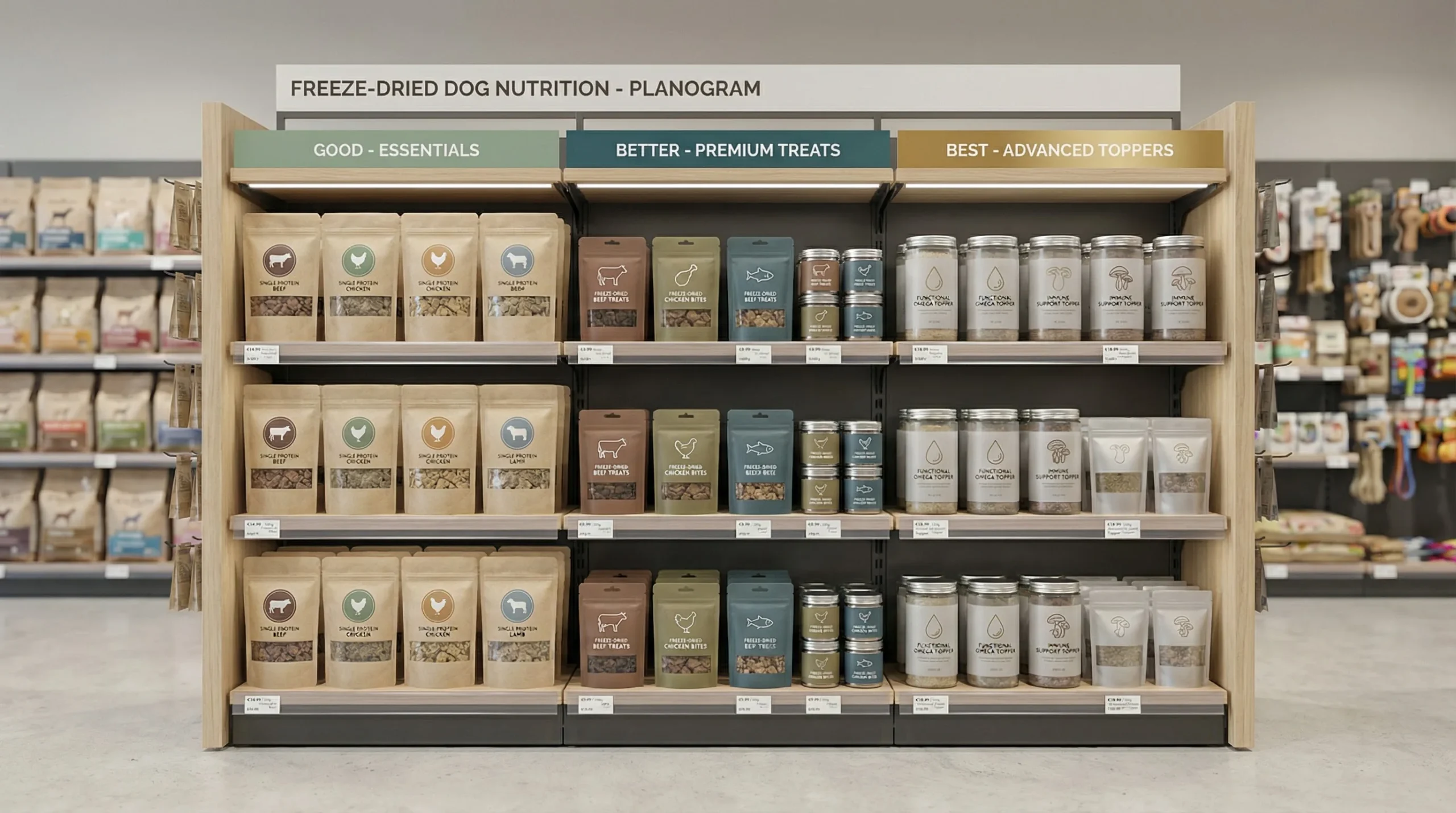
Build three blocks: Good (single‑protein meals), Better (freeze‑dried treats, single‑ingredient), Best (functional add‑ons like omega or mushroom toppers). Within each, ladder price and benefits so shoppers understand why each step up matters.
Eye‑level zones, vertical brand blocking, and color coding
Keep meals at eye level, blocked vertically for brand recognition. Color‑code by protein (e.g., red for beef, green for lamb) and repeat icons across meals, freeze‑dried treats, and functionals to make cross‑shopping intuitive.
Education at the Point of Sale: Cards, Talk‑Tracks, and Dosing
Simple, friendly education removes uncertainty and speeds decisions. Use small, durable shelf cards and equip staff with a confident 30‑second script.
Education card templates: rehydration, serving sizes, protein rotation
Show a 1:1 to 1:2 food‑to‑water quick guide, plus a weight‑based portion chart. Emphasize that freeze‑dried meals are nutrient‑dense—so portions may be smaller than kibble alternatives[2]. Add a protein rotation tip (“alternate beef and turkey weekly”) to support digestibility variety and palatability.
Staff cheat‑sheet: 30‑second pitch and objection handling
30‑second pitch:
- “Freeze‑dried gives raw‑level nutrition with pantry convenience.”
- “Just add water; here’s the portion card for your dog’s weight.”
- “Start with a single‑protein meal and pair a single‑ingredient treat.”
Common objections: Price—highlight cost‑per‑meal; Safety—explain EU standards and rehydration hygiene; Transition—recommend a gradual 7‑day mix‑in.
Sampling and Demo Strategy: Drive First‑Time Trials
Demos convert curiosity into commitment. Focus on hygiene, clarity, and measurable goals that your team can maintain weekly.
Safe, hygienic sampling for freeze‑dried formats
Offer dry bites or freshly rehydrated samples in compostable cups. Prepare on sanitized surfaces, label proteins clearly, and refresh small batches regularly. Keep handouts explaining rehydration and storage to reinforce at‑home confidence.
Weekend demo cadence, conversion goals, and tracking
Run two‑hour demos on high‑traffic weekends. Aim for 80 tastings per session with a 25–35% immediate purchase rate. Track SKU sampled vs. purchased, ticket size, and bundle attach to refine your calendar and core assortment.
- KPIs: trials, conversion, average basket, new‑to‑category buyers
- Tools: QR to calculator, quick‑scan loyalty capture, sample log
Bundle Architecture: Meals + Treats + Functional Adds
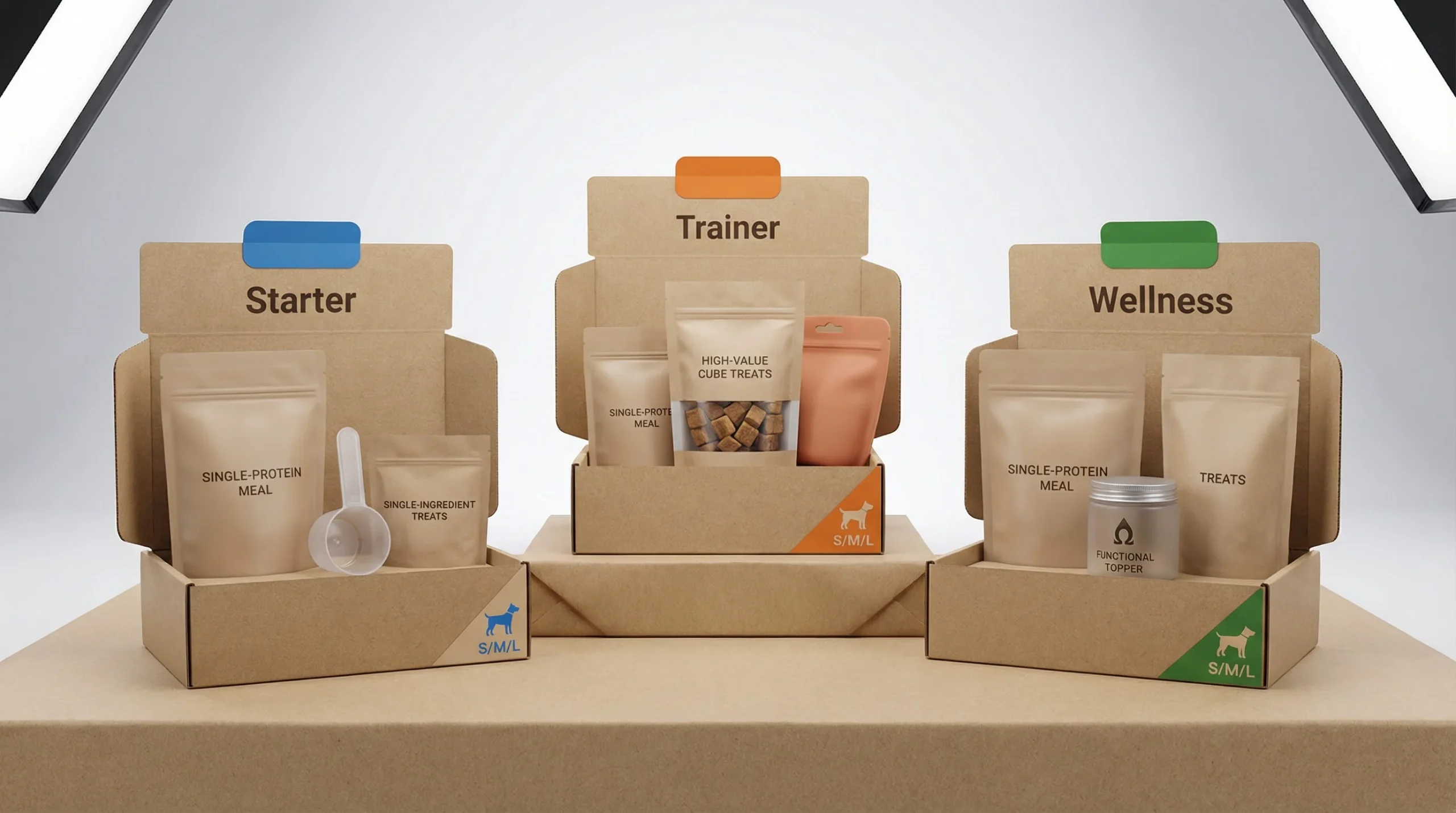
Bundles lift trial and margin. Present clear “starter,” “trainer,” and “wellness” bundles that mix meals, freeze‑dried treats, and functional pet supplements in one view.
Starter bundles by dog size and need state
Create small, medium, and large bundles: a single‑protein meal, a measuring scoop, and a high‑value single‑ingredient treat. For first‑timers, a beef baseline such as Everfresh Freez-Dried food – Beef 500g is approachable and easy to transition.
Cross‑sell prompts and price‑anchoring on shelf labels
Use shelf talkers to suggest “Add immunity support with functional mushroom add‑ons.” Price‑anchor bundle totals against individual items to show savings. Include a “Best Value” burst for the highest‑margin set.
First‑Order Assortments: Depth, Width, and MOQ Planning
Start tight, then scale. Your initial set should prove demand across meals, treats, and functionals without overextending facings.
Core SKUs to launch (protein mix, hypoallergenic options)
Begin with two to three meal proteins including one hypoallergenic (e.g., horse or novel fish), four to six single‑ingredient treats, and two to three functional toppers. Ensure at least one low‑fat and one high‑calorie option.
Facing counts, reorder triggers, and 30/60/90‑day review
Allocate two to three facings per top meal SKU, one to two for treats and functionals. Set 21–28‑day reorder triggers, review velocity at 30/60/90 days, and add depth where conversion and bundle attach are strongest.
Pricing and Margin Discipline for Premium Freeze‑Dried
Premium nutrition thrives when price is framed as value. Equip your team with rehydration math and margin-friendly cost per meal insights so shoppers compare by portion, not bag price.
Cost‑per‑meal comparisons and rehydration math
Post a simple chart that converts grams of dry food to rehydrated portions by dog weight. Link portion efficiency to nutrient density—freeze‑dried and raw formats often deliver higher digestibility than retorted alternatives, supporting value[4].
MAP, promo windows, and shrink mitigation
Hold MAP to protect perceived value; use planned, short promo windows (10–14 days) to spike trial. Mitigate shrink by rotating demos through short‑dated SKUs and using sealed display jars for visual cues, not open stock.
FAQ Wall: Answer Top Shopper Questions In‑Aisle
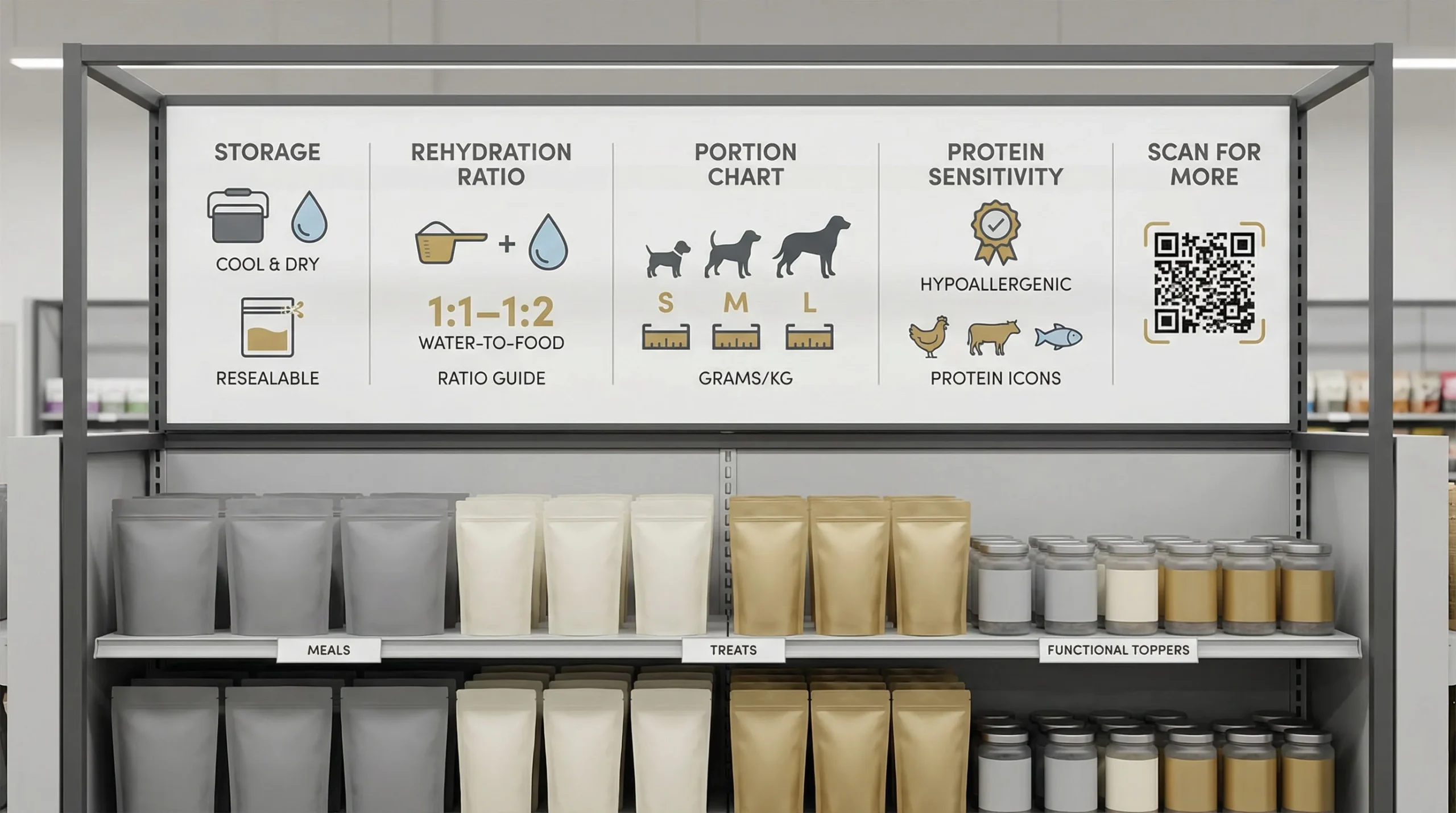
An FAQ wall converts questions into clarity. Keep it friendly, specific, and visual with icons, dosing charts, and protein callouts for sensitivities.
Safety, storage, and rehydration best practices
Highlight cool, dry storage and sealed packs after opening. Advise using freshly rehydrated meals within 30 minutes and cleaning bowls afterward. Emphasize handling meat like at home—wash hands, utensils, and surfaces after prep.
Allergies, transitions, and mixing with existing diets
Promote single‑protein meals for sensitivities. Recommend a seven‑day transition: start with 25% freeze‑dried, then increase gradually. Mixing with existing diets is fine—just portion by calories and stick to one protein initially.
Frequently Asked Questions
Where should freeze‑dried dog food sit in the store?
Place it in the premium nutrition bay at eye level, blocked by brand and format (meals, treats, functional). Keep hypoallergenic proteins adjacent to sensitivity signage for quick discovery.
How do we explain rehydration and serving sizes quickly?
Use a shelf education card with a simple 1:1 to 1:2 food‑to‑water ratio guide and a weight‑based chart. Add icons for small/medium/large dogs and a QR to a dosing calculator like Freeze‑Dried Feeding Calculator: Rehydration, Portions, and Calories per Day, plus visual instructions in Freeze‑Dried vs. Air‑Dried vs. Kibble: What Preserves Animal Nutrients Best?
What bundles work best for first‑time buyers?
Offer a meal starter (single‑protein + measuring scoop), a high‑value single‑ingredient treat, and one functional add‑on (e.g., mushrooms for immunity). Price‑anchor against individual items.
How should we sample freeze‑dried products safely?
Sample as dry bites or freshly rehydrated portions in small cups, prepared on clean surfaces. Label protein sources clearly, and record trial‑to‑purchase rates to refine demos.
What initial assortment should an EU specialty retailer carry?
Start with 2–3 meal proteins (include a hypoallergenic option like horse), 4–6 single‑ingredient treats, and 2–3 functional toppers. Stock 2–3 facings per SKU and set 21–28‑day reorder triggers.
Conclusion
Freeze‑dried dog food earns its space when the shelf tells a simple story: raw‑level nutrition, pantry convenience, and clear dosing. With tight planograms, confident education, hygienic sampling, smart bundles, and disciplined pricing, EU stores can drive premium trade‑up and repeat purchases. Treat this as a living playbook—review results at 30/60/90 days, double down on winners, and keep your in‑store team excited about animal‑based nutrition that genuinely helps dogs thrive.
References
- EL Geary et al. (2023). Standardized amino acid digestibility and nitrogen-corrected true metabolizable energy of frozen raw, freeze-dried raw, fresh, and extruded dog foods using precision …. Journal of animal …. View article
- EL Geary et al. (2024). Apparent total tract nutrient digestibility of frozen raw, freeze-dried raw, fresh, and extruded dog foods and their effects on serum metabolites and fecal characteristics …. Translational Animal …. View article
- PM Oba et al. (2023). Standardized amino acid digestibility and nitrogen-corrected true metabolizable energy of frozen and freeze-dried raw dog foods using precision-fed cecectomized …. Journal of animal …. View article
- EL Geary et al. (2025). … amino acid digestibility and nitrogen-corrected true metabolizable energy of frozen raw, freeze-dried raw, mildly cooked, and retorted dog foods using the precision …. Journal of animal …. View article