

Uncategorized
Functional Mushrooms for Dogs: Lion’s Mane and Cordyceps Explained
Mar
Functional Mushrooms for Dogs: Lion’s Mane and Cordyceps Explained
Curious whether mushrooms can help your dog focus, move with more stamina, or stay resilient during seasonal stress? You’re in the right place. Today we dig into two standout functional fungi—Lion’s Mane and Cordyceps—and how they may complement an animal-based, freeze-dried routine.
This is a practical, evidence‑informed guide for caregivers who already know the basics of functional mushrooms for dogs and want specifics on mechanisms, use cases, safety, dosing, and smart pairing with proteins. Let’s make this both friendly and precise.
Why functional mushrooms for dogs?
Functional mushrooms are prized for targeted bioactives that support systems like cognition, energy metabolism, and immune balance—distinct from everyday culinary mushrooms used mainly for flavor and texture.
Defining functional mushrooms vs culinary mushrooms
Functional mushrooms are standardized for compounds such as beta‑glucans and terpenoids, linked to adaptogenic and immunomodulatory effects. Culinary mushrooms can be nutritious, but they’re not necessarily standardized or extracted for consistent dosing. Think “targeted supplement” versus “tasty ingredient.”
Where mushrooms fit in functional nutrition within animal‑based diets
As dog mushroom supplements, Lion’s Mane and Cordyceps can layer onto meat-first meals to nudge focus, stamina, and immune tone. For placement within your routine, see how they fit into functional nutrition within animal‑based diets across training, sport, and recovery days.
Lion’s Mane for dogs: focus, nerve health, and gut–brain support
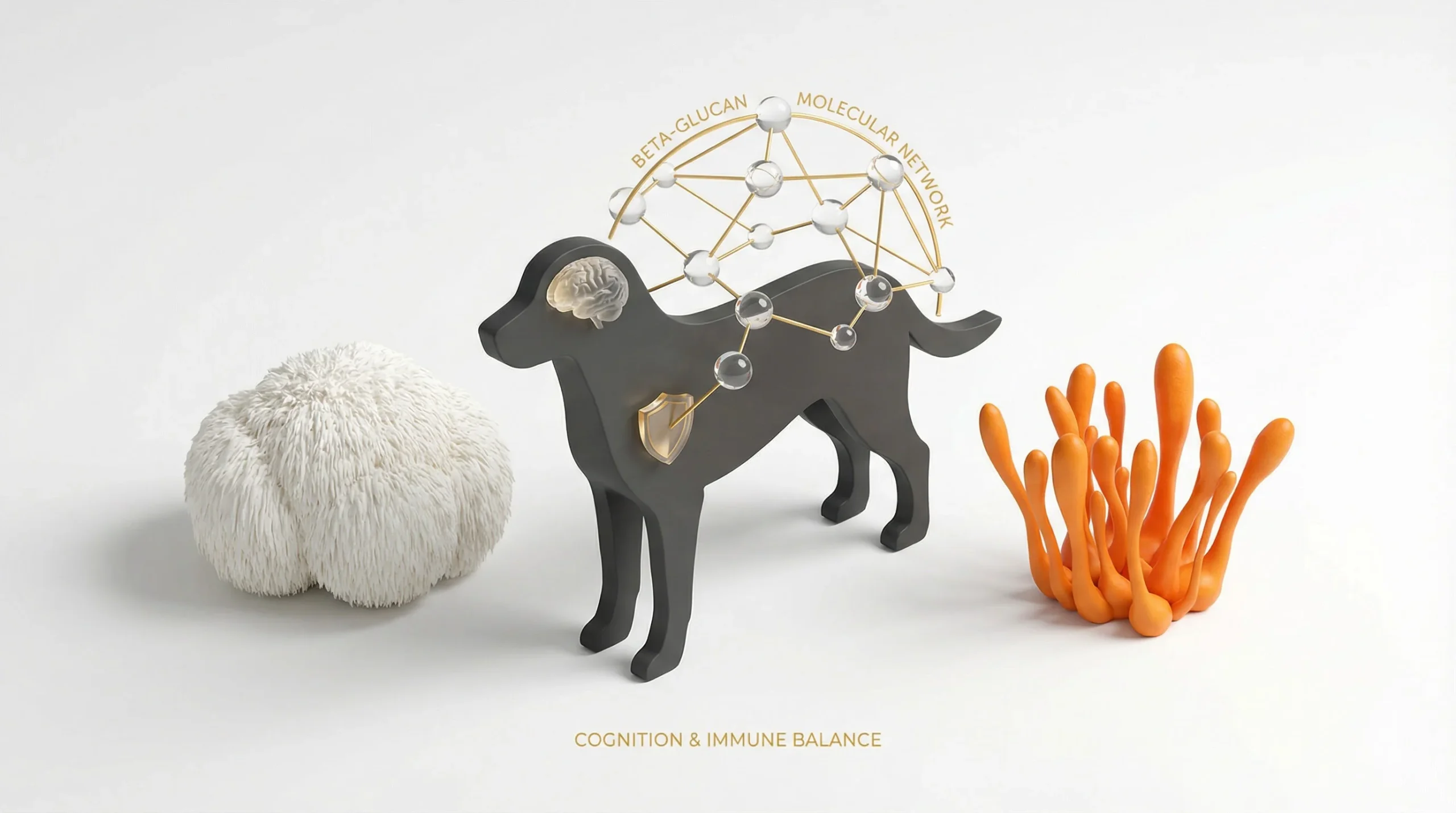
From learning blocks to senior brain care, Lion’s Mane for dogs sits at the crossroads of cognition and the microbiome-gut-brain axis.
Active compounds and mechanisms (hericenones, erinacines, beta‑glucans)
Lion’s Mane contains hericenones and erinacines that may promote nerve growth factor pathways, alongside beta‑glucans that modulate innate immunity. Together, these compounds are explored for neuroplasticity, stress resilience, and balanced inflammatory tone along the gut–brain axis.
Use cases: learning, senior cognition, sensitivity to stress
Practical scenarios include sharpening focus during training, supporting senior cognition, and easing stress sensitivity. Many consider it among adaptogens for dogs, helping nudge attention without overstimulation. It’s also explored for dogs experiencing age-linked pacing, nighttime restlessness, or distractibility.
What the evidence suggests (canine‑relevant takeaways)
In dogs, a mushroom‑derived nutraceutical showed potential to support cognitive function in aging canines, suggesting a role for standardized mushroom actives in senior brain care[1]. Additional studies using other mushrooms in dogs report antioxidant and gut‑related benefits, indicating cross‑mushroom mechanisms like immune modulation and oxidative balance may be relevant[3].
Cordyceps for dogs: stamina, oxygen use, and immune tone
For active days, Cordyceps for dogs is often chosen to support energy metabolism, recovery, and appetite under stress—without turning a calm dog into a jittery one.
Active compounds and mechanisms (cordycepin, adenosine, beta‑glucans)
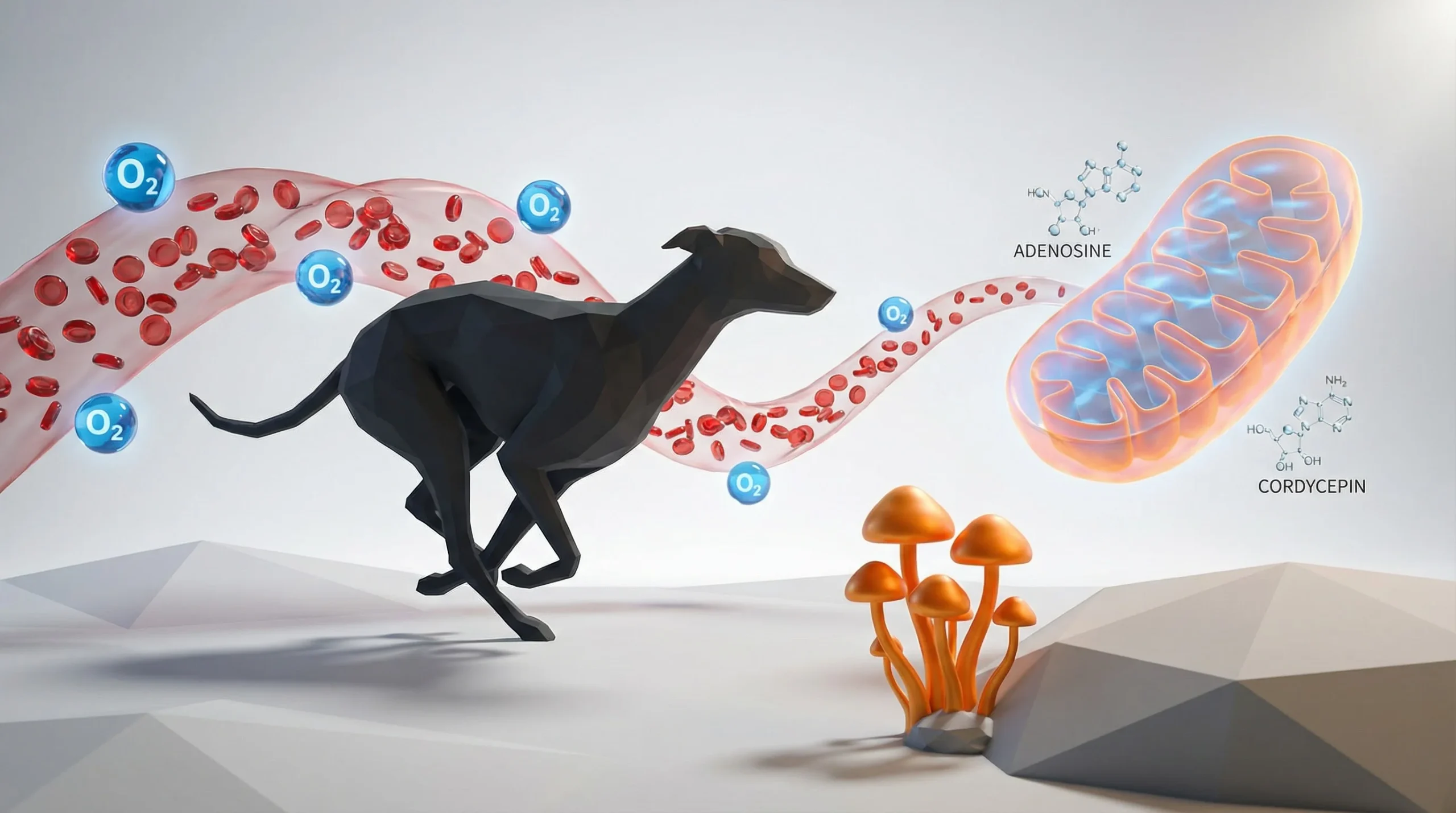
Cordyceps supplies bioactives including cordycepin and adenosine, which may influence ATP dynamics, oxygen utilization, and perceived exertion. Beta‑glucans contribute to immune modulation, helping maintain balanced responses in active or stressed environments.
Use cases: activity, recovery, appetite during stress
Common goals include steady stamina for hikes or sport, faster bounce‑back after exertion, and maintaining appetite during kennel stays or travel. Caregivers appreciate its gentle adaptogenic profile for dogs that need sustainable, not spiky, energy.
What the evidence suggests (canine‑relevant takeaways)
While dog‑specific Cordyceps trials remain limited, canine studies with other beta‑glucan‑rich mushrooms show immune‑modulating effects, including balanced responses to vaccination challenges[2]. These mechanisms plausibly extend to Cordyceps, supporting the case for “immune tone” during activity and recovery.
Safety, contraindications, and quality markers
Functional mushrooms are generally well‑tolerated when introduced slowly. Still, thoughtful screening, product quality, and gradual titration matter.
Who should avoid or pause use (medications, conditions, age)
Be cautious with immunosuppressants, anticoagulants, pre‑existing mushroom allergies, or upcoming surgery. Discuss with your veterinarian for pregnant or very young dogs. For sensitive dogs, pair changes with gentle transition planning and track responses closely.
Extract type, fruiting body vs mycelium, beta‑glucan standardization
Prioritize fruiting‑body or dual extracts that disclose verified beta‑glucan percentages. Look for third‑party testing and avoid products emphasizing only polysaccharides (which may include inactive starch). Clear extraction ratios enable more predictable, scalable dosing.
Allergy watchouts and how to introduce slowly
Introduce at 25–50% of the target dose for 3–5 days, watching skin, stool, and energy. Increase gradually if tolerated. If adverse signs appear, pause, reassess dose or format, and consult your veterinarian.
Evidence‑informed dosing for dogs
Dose depends on extract strength, dog size, and goals. The ranges below reflect common practice plus early canine data from mushroom interventions supporting antioxidant or cognitive outcomes[4][1].
General ranges by body weight and extract strength
Typical starting ranges (per day) for standardized extracts are below. Always start low and adjust based on response and goals.
| Body Weight | 1:1 Extract (mg) | 10:1 Extract (mg) |
|---|---|---|
| 5–10 kg | 50–100 | 10–30 |
| 10–25 kg | 100–250 | 30–80 |
| 25–40 kg | 250–400 | 80–140 |
How to titrate and monitor response over 2–4 weeks
Introduce gradually, adjusting every 5–7 days. Track behavior, stool quality, appetite, and activity recovery times.
- Week 1: 25–50% dose; observe.
- Week 2: Increase to 75–100% if tolerated.
- Weeks 3–4: Fine‑tune by response; consider split dosing.
Refer to dosing with the feeding calculator
For precise per‑kilogram math and to align with meal calories, see dosing with the feeding calculator. Consistent measurement supports repeatable outcomes, especially when pairing with training or sport schedules.
How to pair mushrooms with animal proteins and daily meals
Lion’s Mane and Cordyceps integrate smoothly with freeze‑dried single‑protein meals. Smart timing and carriers can elevate absorption and compliance.
Synergy with single‑protein freeze‑dried diets
Protein‑rich, minimally processed meals help buffer stomach sensitivity and steady energy. For elimination diets or sensitive skin, explore novel single‑protein choices and then layer mushrooms to target focus or stamina without complicating protein rotation.
Timing: pre‑activity vs evening routines
Cordyceps pairs well 60–90 minutes pre‑activity. Lion’s Mane suits morning focus or evening calm. Split doses can smooth effects.
Tip: Dose consistently at similar times to map outcomes to routines, not random fluctuations.
Mixing guidance with rehydrated meals and treats
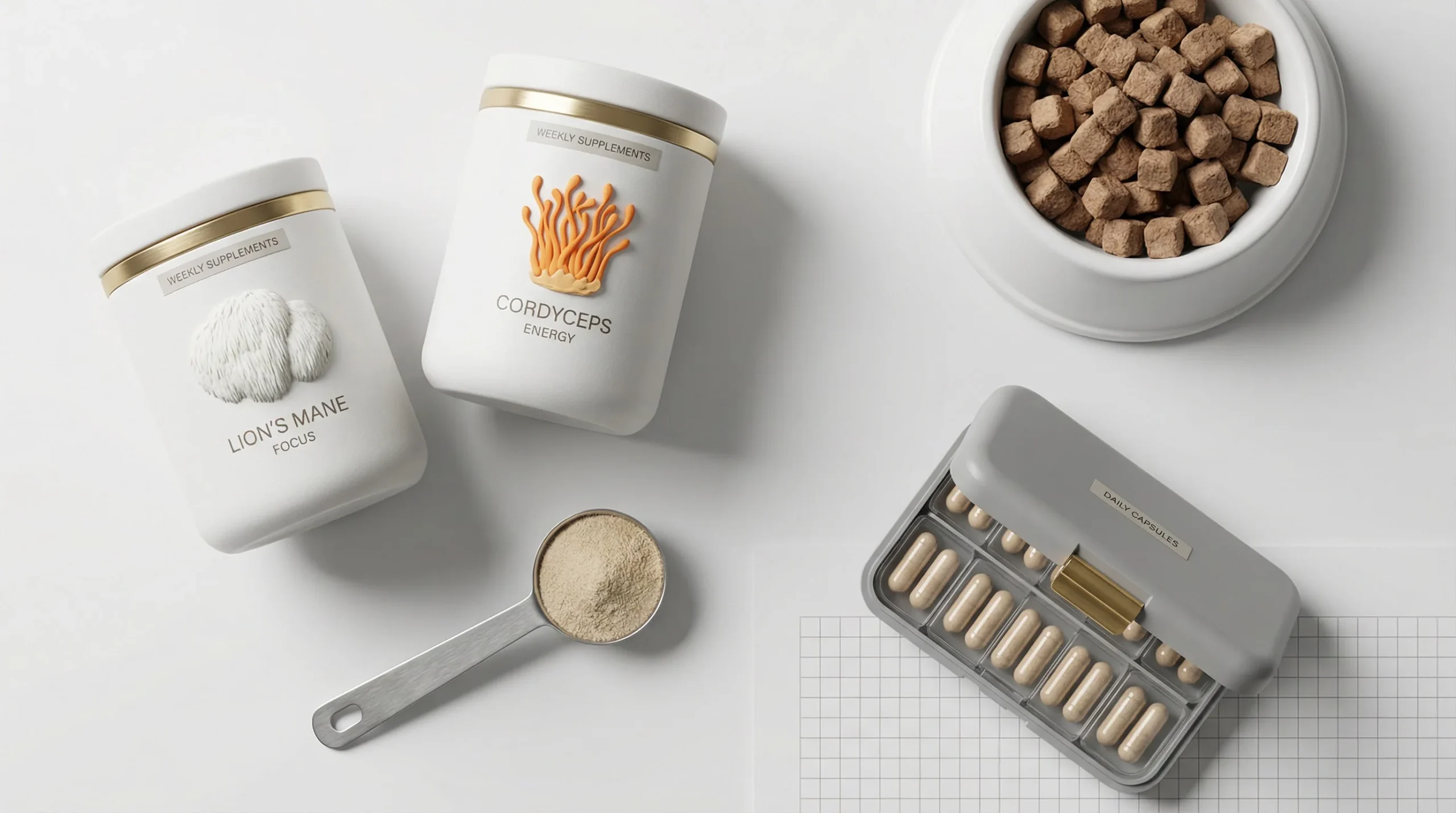
Stir powder into rehydrated freeze‑dried meals or use a treat “sandwich” for capsules. Many caregivers tuck a capsule inside Lamb Stomach – Freeze-Dried Treat for Dogs & Cats for a crunchy, high‑value delivery that keeps dosing quick during training blocks.
Sourcing and format: freeze‑dried powders vs capsules
Choose formats that protect actives and make consistent dosing easy for your household. The right format improves adherence and results.
Why freeze‑drying preserves actives
Freeze‑drying gently removes water at low temperatures, helping preserve delicate compounds and structure. For working dogs and frequent travelers, powders are lightweight, stable, and simple to portion alongside meals and electrolyte water.
Reading labels: standardized beta‑glucans and third‑party tests
Look for declared beta‑glucan percentages, extraction ratios, fruiting‑body content, heavy‑metal screens, and microbial testing. For beta‑glucans dogs benefit from, transparency beats hype. Avoid proprietary blends that obscure per‑dose amounts of Lion’s Mane or Cordyceps.
Storage and shelf‑life in real kitchens
Keep sealed, dry, and out of heat. Refrigeration isn’t usually necessary. For retailers building education around functional add‑ons, see how retailers can merchandise functional add‑ons with simple planograms and staff prompts.
Real‑world scenarios and protocols
Below are simple, adaptable protocols. Use them as templates, then tweak by observation and your veterinarian’s guidance.
Focus protocol (Lion’s Mane‑forward) for training blocks
Emphasize Lion’s Mane on skill‑heavy days, and keep Cordyceps light.
- Morning: Lion’s Mane 60–70% of daily dose with breakfast.
- Pre‑training: Optional 20–30% Lion’s Mane top‑up.
- Evening: Small remainder if needed for calm focus.
Stamina protocol (Cordyceps‑forward) for active days
Center dosing around the session while protecting the gut.
- Pre‑activity (60–90 min): 60–80% Cordyceps with a protein snack.
- Post‑activity: Remaining 20–40% with a rehydrated meal.
- Hydration: Offer water; consider electrolytes if appropriate.
Balanced protocol for immune support during seasonal stress
Split Lion’s Mane and Cordyceps across the day. Aim for gentle, steady input for two to four weeks. Track stool, appetite, and energy. If stacking other supplements, introduce one change at a time.
Frequently Asked Questions
Are Lion’s Mane and Cordyceps safe for dogs?
Generally, standardized mushroom extracts are well tolerated when introduced slowly. Avoid in dogs with mushroom allergies, bleeding disorders, or on immunosuppressants without veterinary guidance. Start low, monitor closely, and adjust based on your dog’s response.
What do beta‑glucans do for dogs?
Beta‑glucans modulate the innate immune system, helping balance over‑ and under‑responses. They may support resilience during stress and recovery without overstimulating immunity. Transparent labels disclosing beta‑glucan percentages aid consistent, evidence‑informed dosing strategies.
How much Lion’s Mane should I give my dog?
A common evidence‑informed range is 5–10 mg/kg/day of a 1:1 fruiting‑body extract, or 2–5 mg/kg/day for more concentrated extracts. Start low, split dosing, and adjust based on response, activity level, and goals.
When is Cordyceps most useful for dogs?
Cordyceps is popular for stamina, appetite during stress, and recovery after activity. Many caregivers give it earlier in the day around training or exercise sessions. Adjust timing and dose to your dog’s schedule and sensitivity.
Should I choose fruiting body or mycelium products?
Prioritize products that disclose beta‑glucan percentages and use fruiting bodies or dual extracts with third‑party testing. Transparent labeling is more important than format alone. Consistent extraction ratios also support reliable, personalized dosing.
Conclusion
Lion’s Mane and Cordyceps aren’t cure‑alls, yet they’re promising tools to fine‑tune focus, stamina, and immune tone in an animal‑based regimen. By choosing well‑labeled extracts, starting low, and pairing doses with appropriate proteins and timing, you can personalize outcomes. Keep a simple log, collaborate with your veterinarian, and refine over 2–4 weeks. With evidence‑informed dosing, careful observation, and consistency, functional mushrooms for dogs can fit neatly beside freeze‑dried meals—supporting sharp training days, smooth recoveries, and steadier seasons.
References
- J Ehrenzweig et al. (2025). Evaluation of a Mushroom-Derived Nutraceutical for Canine Cognitive Decline. 2025 – athenaeumpub.com. View article
- E Kayser et al. (2024). Functional properties of Ganoderma lucidum supplementation in canine nutrition. Journal of animal …. View article
- D Atuahene et al. (2023). A Supplement with Bromelain, Lentinula edodes, and Quercetin: Antioxidant Capacity and Effects on Morphofunctional and Fecal Parameters (Calprotectin …. Veterinary …. View article
- A Kusaba et al. (2024). Shiitake mushroom powder supplementation increase antioxidative activity in dogs. Frontiers in Veterinary Science. View article