

Uncategorized
Feeding Active and Working Dogs with Calorie‑Dense Freeze‑Dried Raw
May
Feeding Active and Working Dogs with Calorie‑Dense Freeze‑Dried Raw
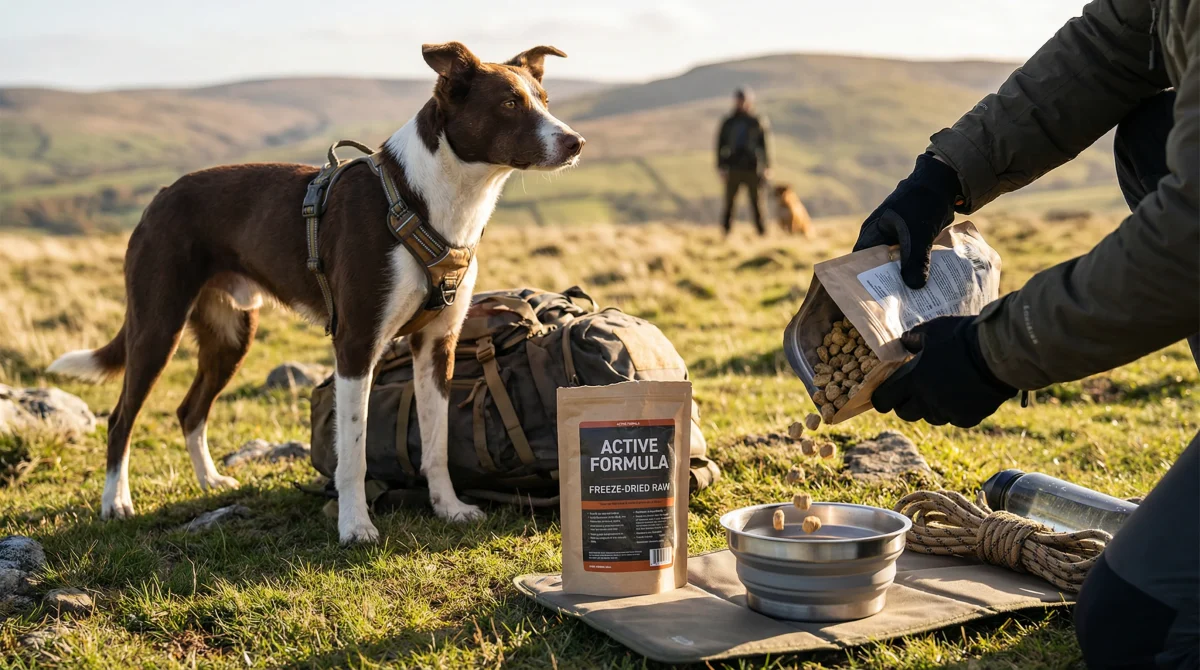
Big days in the field demand smart, simple fuel. Active and working dogs burn energy fast. You need food that delivers power without weighing you down.
Freeze‑dried raw may streamline your kit and support steady output. It offers portable calories, quick prep, and consistent nutrition. In this guide, you will learn practical feeding targets, rehydration timing, and safe boundaries for performance days.
Why freeze‑dried raw suits high‑output dogs
Energy density and packability on long days
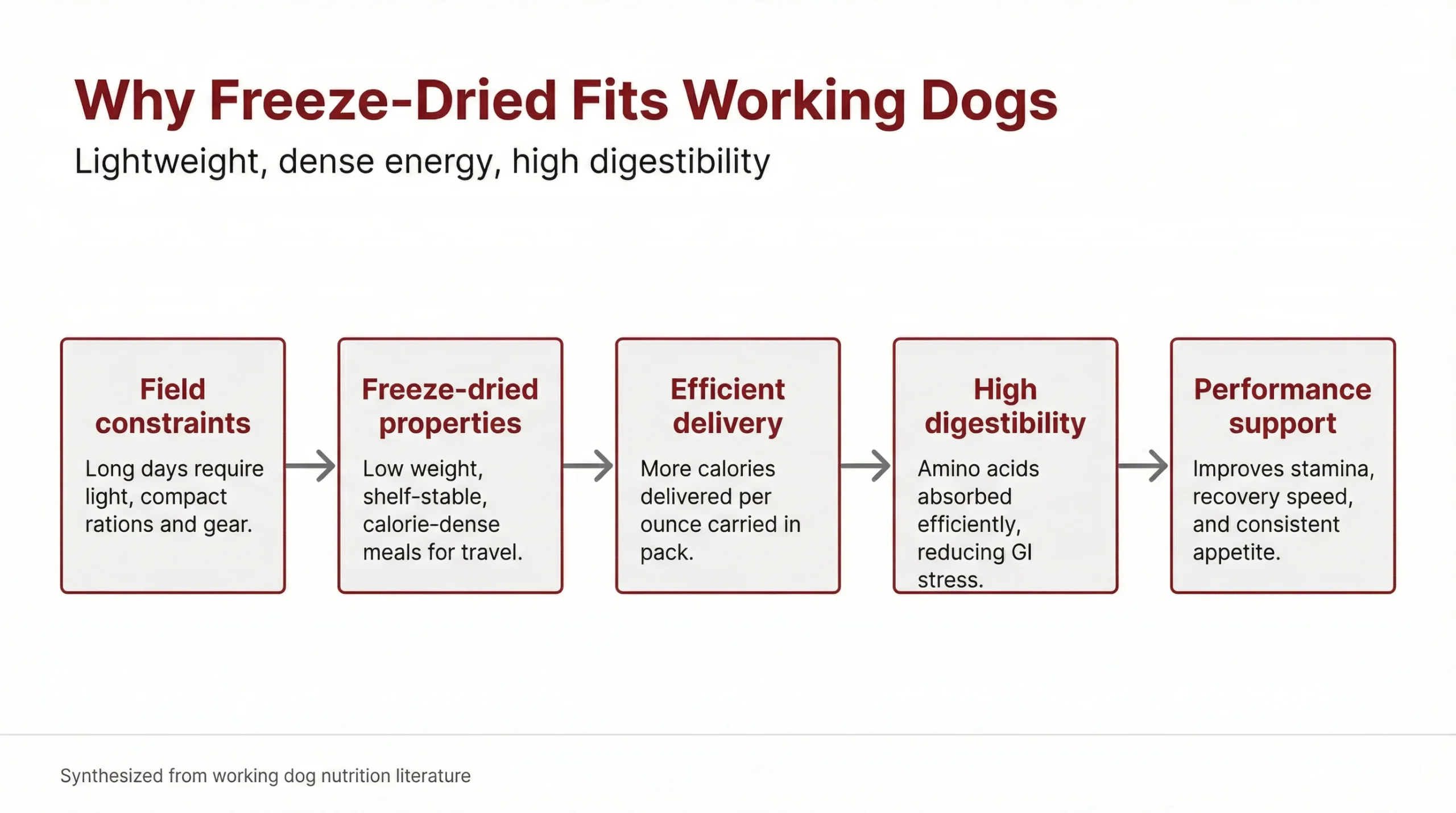
On long training runs or deployments, space and weight matter. Freeze‑dried meals are lightweight, shelf‑stable, and typically calorie‑dense, so you can carry less volume for the same energy. That makes field feeding simpler and more predictable, especially when conditions change quickly.
Digestibility also matters for working dog nutrition. Research suggests freeze‑dried raw diets may provide high amino acid digestibility, often above 90%, which can help support lean mass during heavy workloads[1]. For broader context on raw formats and when to use them, see our orientation hub.
Macronutrient profile for sustained work
Many freeze‑dried recipes are rich in animal protein and moderate to high in fat. Evidence indicates that well‑adapted dogs often utilize fat efficiently during endurance work, while consistent protein supports muscle repair and immune function[2]. Studies comparing raw formats also report favorable metabolizable energy values for freeze‑dried diets versus some processed options, which may help when every gram carried counts[3].
Quick decision guide: field feeding choices
If X situation, then Y action (5–7 common scenarios)
- If morning workload is high-intensity for 60–90 minutes, then offer the main meal 2–3 hours prior, with water added to support digestion.
- If you expect intermittent, moderate work all day, then split meals into 2–3 smaller feedings with 1–1.5 parts water by weight.
- If heat and humidity are high, then maintain rehydration at the upper end of typical rehydration ratios dog food guidelines, and carry extra water.
- If your dog shows soft stool mid‑day, then reduce fat for the next feeding and add slightly more water; resume normal fat once stools normalize.
- If your dog flags late afternoon, then provide a small, easily digestible snack during a low‑intensity break rather than a full meal.
- If overnight recovery is slow, then increase the evening portion by 5–10% and focus on a rehydrated meal to support replenishment.
- If travel limits fresh water access, then carry pre‑measured dry rations and hydrate at the point of feeding when safe and practical.
How much to feed: practical energy targets
Estimating kcal needs (MER × activity factor)
First, estimate maintenance energy requirement (MER) using 70 × body weight^0.75 (kcal/day). Then multiply by an activity factor. For light work, 1.6–2.0 may suffice. For sustained, moderate‑intensity work, many teams start at 2–3× MER. For extreme conditions, some dogs may need 3–5× MER. Adjust by 5–10% every few days based on body condition, performance, stool quality, and appetite.
Because each dog’s metabolism differs, use ranges as starting points. Environmental temperature, terrain, and stress can shift needs quickly. Evidence on raw diet for performance dogs supports higher energy density and digestibility, which can help meet elevated targets without overfeeding bulk[1].
Converting kcal to grams of freeze‑dried and water
Check your label for kcal per 100 g. Divide your dog’s target kcal by that number to get grams of dry food. For example, 1,800 kcal/day at 500 kcal/100 g equals 360 g dry per day. Split across meals as your schedule allows.
Then choose a rehydration ratio by weight, often 1:1 to 1:1.5 (food:water). For convenience when planning, many handlers portion by grams in the evening. For reference, many pet owners find Everfresh Freez-Dried food – Beef 500g helpful for this task.
Rehydration, timing, and digestion in the field
Rehydration ratios and when to add water
Rehydration generally supports comfortable digestion and hydration status. Common ratios range 1:1 to 1:1.5 by weight. Dogs with sensitive stomachs may prefer the higher water end. Start conservative, then adjust to stool quality and performance.
When water access is limited, carry dry portions separately and hydrate at feeding. For more hands‑on rehydration tips, see our guide to rehydration basics for transitioning. Note that freeze‑dried dog food EU products are designed for convenient storage and rapid reconstitution, supporting field practicality.
Pre‑work, mid‑work, and recovery feeding windows
Pre‑work: offer the main meal 2–3 hours before heavy activity. This timing may reduce GI upset and improve comfort. Mid‑work: use small snacks only during low‑intensity breaks. Post‑work: feed within 30–90 minutes to support recovery, including water to restore hydration.
Evidence suggests well‑digested protein and fat can assist endurance once a dog is adapted to the diet[2]. When switching foods, build up over at least a week to observe tolerance.
Monitoring guide: what to track over 7–14 days and 4–8 weeks
Short‑term indicators of adequate fueling
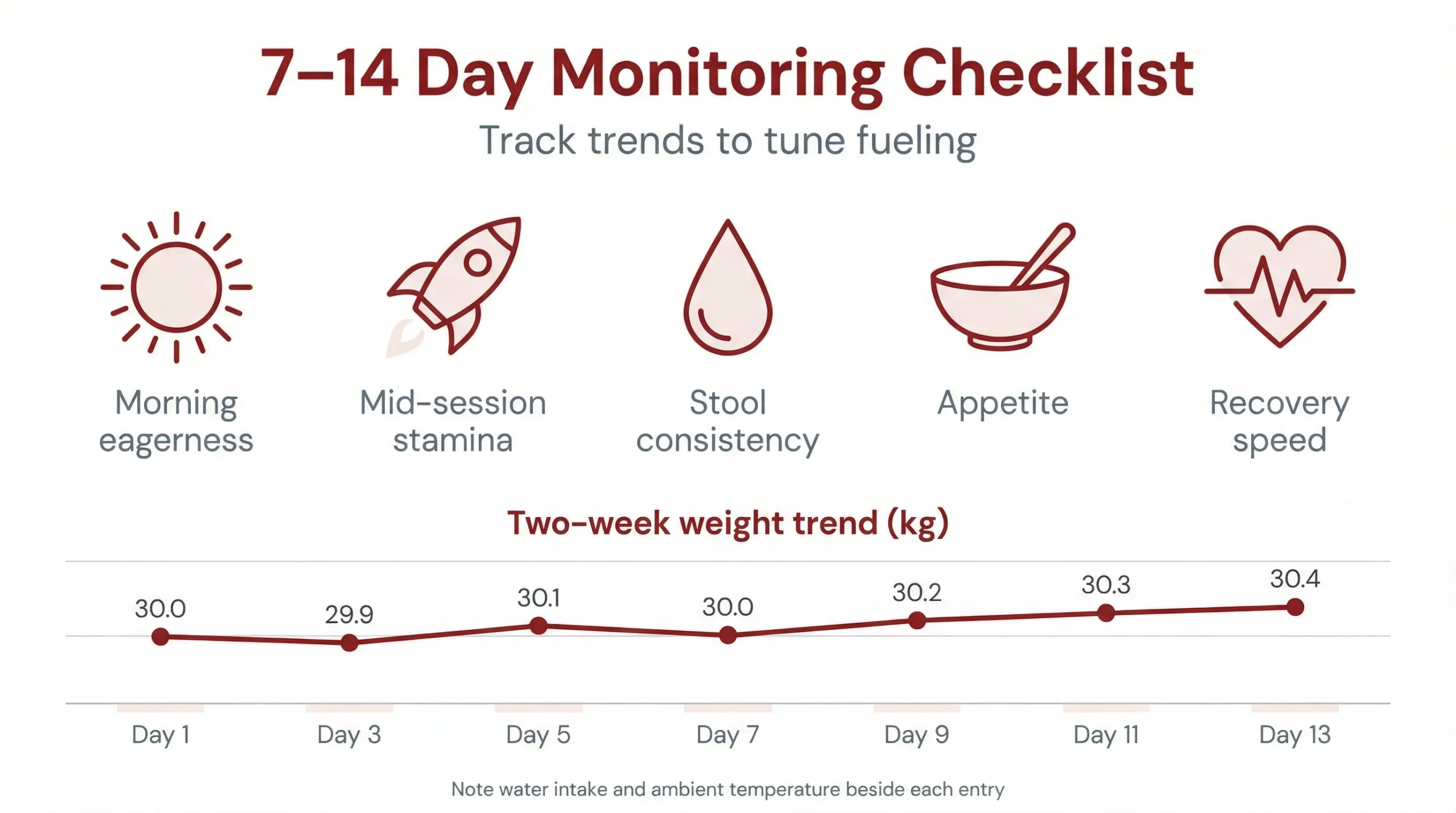
Over 7–14 days, track morning eagerness, mid‑session stamina, stool consistency, appetite, and post‑work recovery speed. Soft stools suggest too much fat or too little water. Flagging energy points to underfeeding or electrolyte shortfalls. Small 5–10% adjustments may correct course.
Use quick notes after each session. Keep water intake and ambient temperature beside each entry. If stools vary, check meal timing relative to intensity and adjust hydration or portion size.
Medium‑term trends: body condition and stamina
Across 4–8 weeks, evaluate body condition score, resting heart rate trends if available, and coat quality. Stable or improving stamina with consistent stool quality is a good sign. Unintended weight loss indicates insufficient kcal or poor timing.
For stool‑tracking pointers, explore our gentle introduction plan for sensitive dogs, which includes practical logging ideas: stool tracking during a gentle raw introduction. Pair performance notes with weigh‑ins every 1–2 weeks.
Safety boundaries for performance feeding
Portion increases, fat tolerance, and hydration floors
Increase portions gradually when workloads rise. A 5–10% increment every 3–4 days helps avoid GI upsets. If switching to higher‑fat calorie-dense dog food, adapt over 10–14 days. Watch for reduced appetite, soft stool, or lethargy.
Maintain hydration floors. As a broad starting point, target at least 50–60 mL water/kg/day, then add more for heat or altitude. Rehydrate meals during hotter periods for easier intake. Reduce add‑on fats if stools soften persistently.
Food handling and storage on the move
Keep freeze‑dried portions sealed, dry, and away from heat. Use clean scoops and airtight pouches. Rehydrate only what you will serve promptly. On longer trips, rotate stock to maintain freshness and avoid cross‑contamination.
For a clear checklist covering home and travel hygiene with raw and freeze‑dried formats, visit our safe handling and hygiene guide. Good habits protect dogs and handlers, especially when water sources are variable.
Evidence status: what research suggests and where it’s limited
Energy, protein, and fat for working dogs
Studies comparing raw and processed formats report high amino acid digestibility and favorable metabolizable energy for raw and freeze‑dried diets, which may support performance when paired with appropriate feeding schedules[3][1]. Evidence also suggests dogs adapt well to fat as an endurance fuel when introduced progressively[2].
However, robust, long‑term trials in operational working dogs remain limited. Individual responses vary. Handlers should monitor performance metrics and adjust with caution.
What is known about freeze‑dried formats
Freeze‑drying preserves nutrient structure by removing water at low temperatures, which may help maintain amino acid digestibility compared with some high‑heat processes[4]. Multiple studies report strong digestibility for freeze‑dried diets in controlled settings, supporting their use as compact, reliable field nutrition[1].
Ingredient notes for sensitive or elite dogs
Single‑protein options and rotating proteins
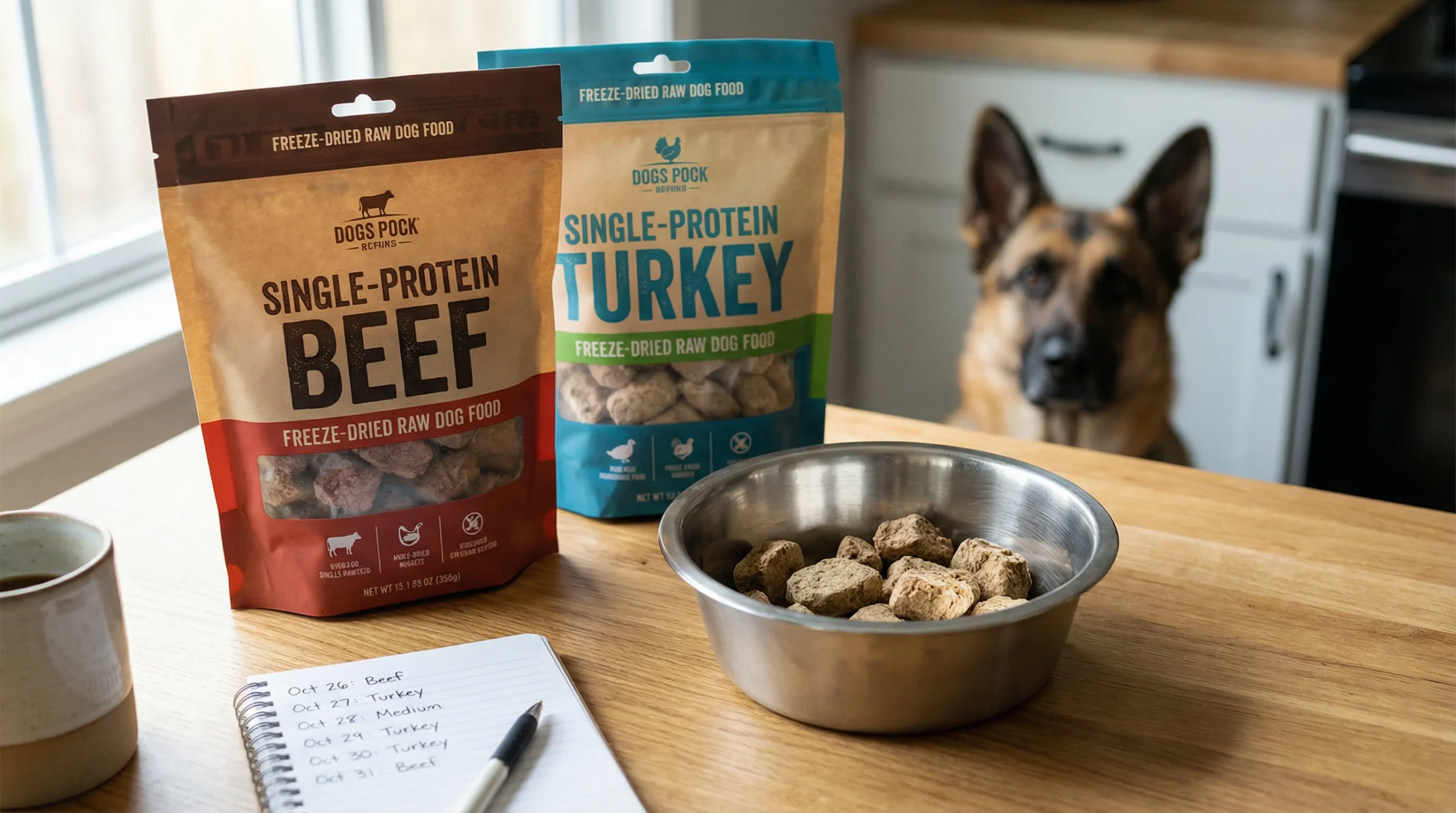
For dogs needing ingredient simplicity, choose single‑protein formulas and change only one variable at a time. If sensitivities arise, a structured elimination approach can help pinpoint triggers. For itchy or reactive dogs, see our primer on single‑protein horse strategies: elimination diets with horse meat.
For elite performance, rotate compatible proteins every few weeks to diversify nutrients. Keep a detailed log so you can return to the best‑performing recipe during competitions.
Functional add‑ons: when they may help
Some handlers use functional mushrooms to complement a raw diet for performance dogs. While research is evolving, adaptogens like Lion’s Mane and Cordyceps are popular for focus and endurance support. Learn practical timing and amounts in our explainer: Lion’s Mane and Cordyceps for dogs.
As always, introduce any supplement gradually and monitor stool quality, appetite, and energy. Keep adjustments simple so you can isolate effects.
Frequently Asked Questions
How many calories does a working dog need on training or deployment days?
Energy needs may rise to 2–5× maintenance depending on intensity, climate, and body size. Start with MER × 2–3 for sustained work, then adjust by 5–10% based on weight and performance over 1–2 weeks.
Should I rehydrate freeze‑dried meals for active dogs?
Rehydration generally supports digestion and hydration, especially in heat. A common ratio is 1 part freeze‑dried to 1–1.5 parts water by weight; adjust to stool quality and activity.
Is high‑fat freeze‑dried raw better for endurance?
Evidence suggests higher fat may support endurance in dogs accustomed to it. Introduce fat gradually and watch for stool changes or reduced appetite before increasing further.
Can I feed during work or only before/after?
Small snacks during lower‑intensity breaks may help, while main meals are often better 2–3 hours before or after heavy activity. Observe your dog’s GI tolerance and adjust timing.
How do I store freeze‑dried food in the field?
Keep it sealed, dry, and away from heat. Use airtight pouches, avoid cross‑contamination, and rehydrate only what will be eaten promptly.
Conclusion
Feeding high‑activity dogs is easier when your plan is light, dense, and adaptable. Freeze‑dried raw brings packability, strong digestibility, and flexible timing to the field. Estimate calories, rehydrate thoughtfully, and monitor small signals closely.
With cautious increases and smart hydration, you can match energy output day by day. Keep notes, adjust in 5–10% steps, and trust the data your dog provides. Thoughtful fueling turns hard work into steady, confident performance.
References
- EL Geary et al. (2023). Standardized amino acid digestibility and nitrogen-corrected true metabolizable energy of frozen raw, freeze-dried raw, fresh, and extruded dog foods using precision …. Journal of animal …. View article
- EL Geary et al. (2024). Apparent total tract nutrient digestibility of frozen raw, freeze-dried raw, fresh, and extruded dog foods and their effects on serum metabolites and fecal characteristics …. Translational Animal …. View article
- PM Oba et al. (2023). Standardized amino acid digestibility and nitrogen-corrected true metabolizable energy of frozen and freeze-dried raw dog foods using precision-fed cecectomized …. Journal of animal …. View article
- EL Geary et al. (2025). … amino acid digestibility and nitrogen-corrected true metabolizable energy of frozen raw, freeze-dried raw, mildly cooked, and retorted dog foods using the precision …. Journal of animal …. View article