

Uncategorized
Transitioning to Raw in 7 Days: Step-by-Step Plan with Rehydration Basics
May
Transitioning to Raw in 7 Days: Step-by-Step Plan with Rehydration Basics
Ready to move from kibble to raw without guesswork? This guide gives you a clear, gentle path. Your dog gets familiar flavours and textures while their digestion adapts step by step.
A structured 7-day plan matters because abrupt changes can unsettle stomachs. A steady schedule reduces missteps and helps you watch real signals. You will learn simple bowl ratios, freeze-dried dog food rehydration basics, and what healthy progress looks like all week.
Who this 7‑day transition is for (and when to choose a slower plan)
Suitable dogs and typical starting conditions
This plan suits healthy adult dogs with normal stools and steady appetites. It also fits owners seeking a tidy kibble to raw transition using freeze-dried meals. Freeze-dried raw is convenient, shelf-stable, and easy to portion. Start when your dog is well, stress is low, and routines are stable. Keep daily walks and water access consistent. Aim for two meals per day during the switch.
When to extend to 10–14 days or consult a vet
Consider a longer BARF transition schedule for seniors, recent antibiotics, history of loose stools, or food sensitivities. Puppies and pregnant or lactating dogs need tailored plans. If diarrhea, vomiting, or appetite loss persists over 24 hours, consult your veterinarian. For sensitive stomachs, see our gentle pathway in Sensitive Stomach Starter Plan: Gentle Raw Introduction and Stool Tracking.
Exact 7‑day mixing plan: kibble → raw/freeze‑dried raw
Day‑by‑day bowl ratios
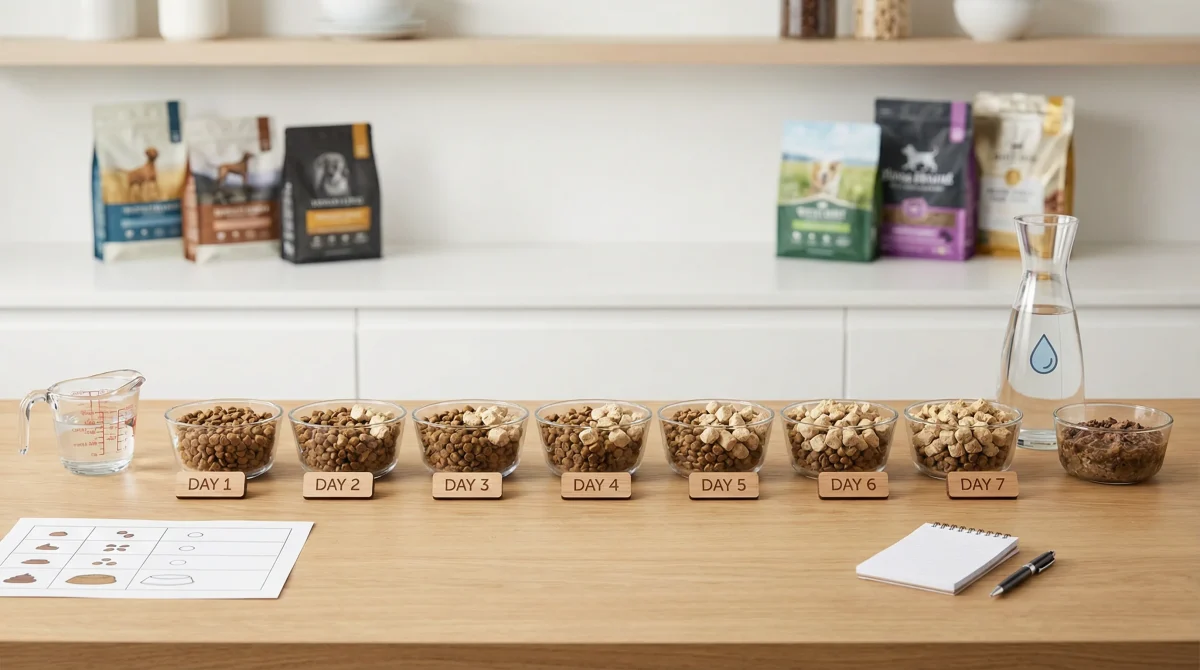
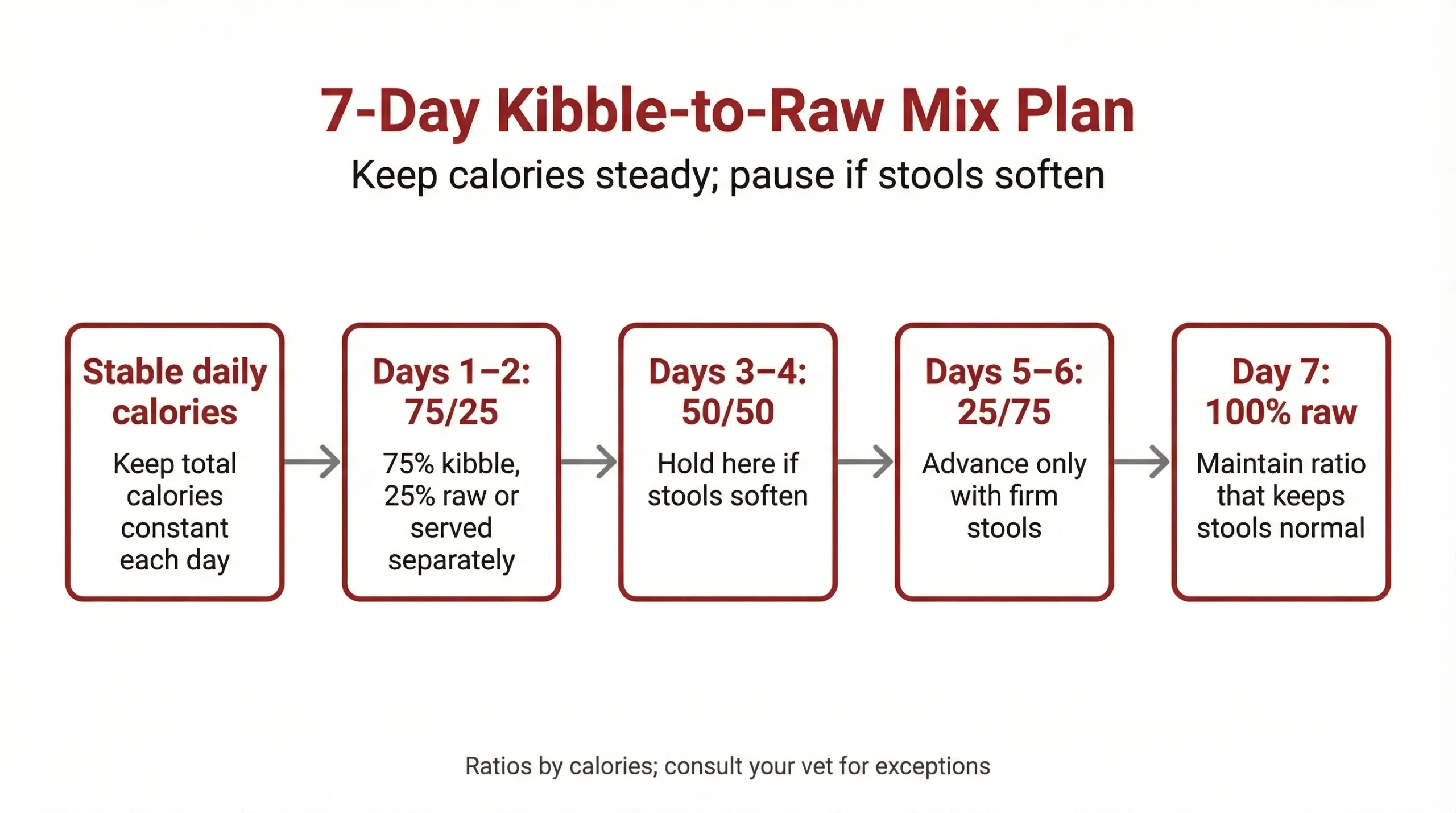
Use this straightforward bowl progression. Keep daily calories steady while shifting proportions.
- Day 1: 75% kibble, 25% raw
- Day 2: 70% kibble, 30% raw
- Day 3: 60% kibble, 40% raw
- Day 4: 50% kibble, 50% raw
- Day 5: 40% kibble, 60% raw
- Day 6: 25% kibble, 75% raw
- Day 7: 100% raw
If stools soften for more than a day, hold at the current ratio until firm. Some dogs prefer raw and kibble served as separate meals. That can help digestion if gassy or sensitive during the change.
Portion math: converting dry vs rehydrated amounts
Freeze-dried food is concentrated. You feed less by weight before adding water. A practical approach is to replace kibble calories rather than grams. Check feeding guides, then weigh freeze-dried portions dry, and rehydrate separately.
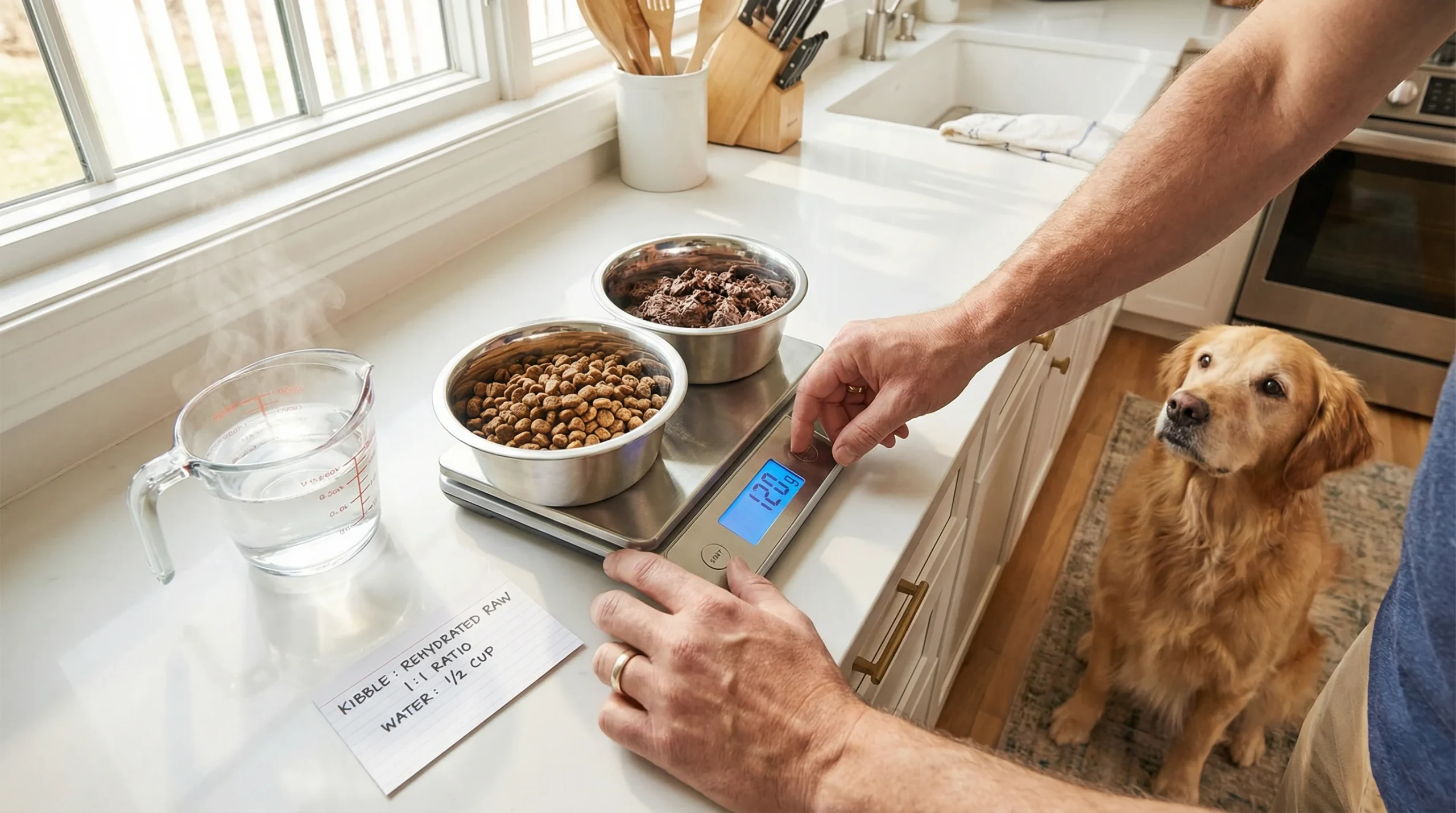
Example: If your dog eats 200 g kibble daily, and a freeze-dried guide suggests 120 g dry to match calories, split by the ratios above. For Day 4 at 50/50, serve 100 g kibble and 60 g freeze-dried (dry weight), then add water. Many pet owners find Everfresh Freez-Dried food – Beef 500g helpful for this task.
Rehydration basics for freeze‑dried raw
Water‑to‑food starting ratios
For hydration for freeze-dried raw, begin with 1:1 to 1.5:1 water to food by weight. Add warm, not hot, water. Soak for 3–5 minutes, then stir to a soft, spoonable mash. Learn more about what is freeze‑dried food if you are new to the format.
For hot weather or extra hydration needs, edge closer to 1.5:1. For dogs that prefer firmer texture, start at 1:1 and adjust. Freeze-dried dog food rehydration should feel moist, not soupy.
Texture checkpoints and common mistakes
After soaking, press with a spoon. It should hold shape but blend easily. Too dry and crumbly? Add a splash more water and wait one minute. Too wet and soupy? Stir in a small pinch of dry food.
Common mistakes include adding boiling water, which may degrade nutrients, and under-soaking, which can decrease palatability. Always rehydrate just before feeding. Discard leftovers after two hours at room temperature.
Quick decision guide: if X, then Y
- If stools soften for over 24 hours, then hold the current ratio for 48 hours before increasing.
- If your dog refuses mixed bowls, then separate kibble and raw into different meals for three days.
- If gassiness appears, then step back one day’s ratio and reintroduce more raw more slowly.
- If appetite dips, then reduce the total portion by 5–10% for one day and recheck energy.
- If constipation signs appear, then increase rehydration water or add 1–2 teaspoons warm water per 5 kg body weight.
- If your dog is highly sensitive, then follow a 10–14 day schedule or use our Sensitive Stomach Starter Plan framework.
Monitoring guidance: 7–14 days and 4–8 weeks
Short‑term signals (stool, appetite, energy)
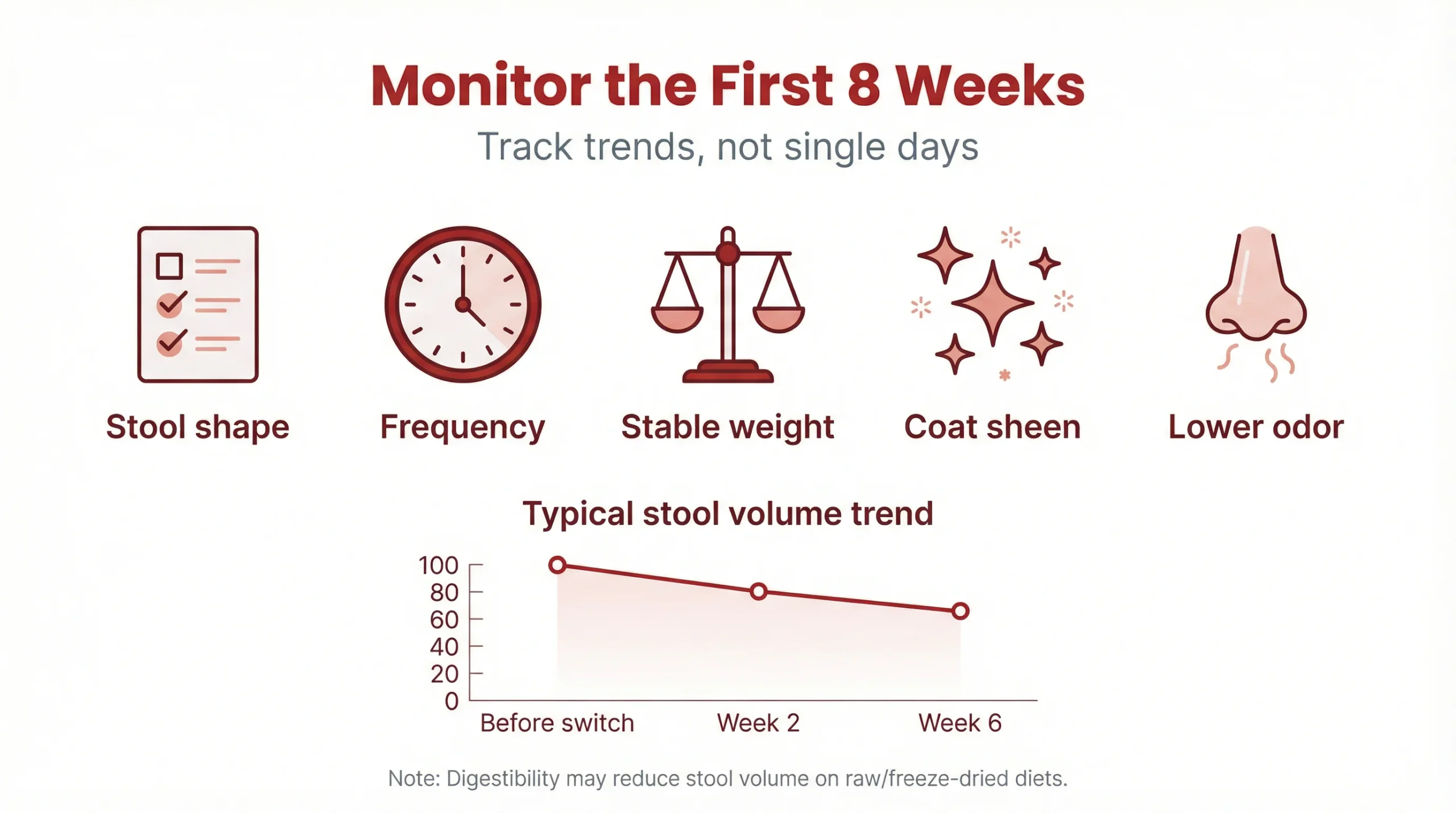
In the first 7–14 days, track stool shape, size, and frequency. On raw, stools may become smaller and firmer. Evidence suggests minimally processed diets can yield denser stools and excellent digestibility[3]. Note appetite eagerness and post-meal comfort. Record any burps, gurgles, or flatulence. Keep a daily log to spot trends.
Medium‑term trends (skin/coat, weight, stool consistency)
Across 4–8 weeks, watch for coat sheen, stable weight, and consistent stools. Digestibility improvements may lower stool volume and odor on freeze-dried raw diets[4]. If weight drifts, adjust calories by 5–10% and recheck after one week. We plan to publish a stool consistency chart to simplify tracking.
Practical safety boundaries you should not cross
Food hygiene, storage, and cross‑contamination
Wash hands, bowls, and utensils with hot, soapy water after each meal. Store unopened freeze-dried in a cool, dry place. Seal opened bags tightly. Keep raw prep away from human food areas. For a full checklist, see Safe Handling for Raw and Freeze‑Dried Dog Food: A Home Hygiene Checklist.
Portion, water, and add‑on limits
Avoid large portion jumps. Change ratios only once per day. Do not flood bowls; begin with 1:1 to 1.5:1 water by weight, then adjust. Hold treats to under 10% of daily calories during transition. Introduce new add-ons one at a time, and only after stools are stable for three days.
Evidence snapshot: what research supports and what is emerging
Digestibility and stool changes
Peer-reviewed studies comparing extruded, fresh, frozen raw, hybrid freeze-dried, and raw freeze-dried diets report that raw and freeze-dried formats generally show high apparent nutrient digestibility and smaller, denser stools in healthy dogs[3]. Research using precision methods has shown indispensable amino acid digestibility above 90% for freeze-dried raw diets in controlled settings[4]. Processing differences may influence fecal metabolites and characteristics, which helps explain stool changes during a switch[2].
Hydration and palatability with freeze‑dried diets
When properly rehydrated, freeze-dried meals may support water intake and mouthfeel, which can aid acceptance for selective eaters. Although palatability data are still emerging, high digestibility results for freeze-dried formats are encouraging[4]. Continue to observe your dog’s enjoyment and adjust texture to their preference.
Troubleshooting table: common issues and gentle fixes
Soft stools, refusal to eat, gassiness, itch flares
| Issue | Likely cause | Gentle fix | When to seek vet |
|---|---|---|---|
| Soft stools | Ratio increased too fast; too little water or too much fat at once | Hold or step back one day; ensure 1:1–1.5:1 water; keep treats minimal. For sensitive dogs, consider the slower pathway in Sensitive Stomach Starter Plan. | Persistent diarrhea, mucus, or blood beyond 24 hours |
| Refusal to eat | Texture off; bowl mixed with kibble causing preference | Test firmer or softer rehydration; serve raw and kibble as separate meals; warm to room temperature. | Ongoing refusal for more than one day with lethargy |
| Gassiness | Too rapid change or mixing formats poorly tolerated | Feed raw and kibble in separate meals for one week; step back one ratio; extend to 10–14 days. | Severe bloating, distress, or repeated vomiting |
| Itch flare | Possible protein sensitivity emerging | Trial a single-protein rotation; consider a structured elimination approach via Itchy Dog? Run an Elimination Diet with Single‑Protein Horse Meat. | Open sores, ear infections, or escalating discomfort |
| Constipation | Under-hydration or very firm texture | Add 1–2 tsp warm water per 5 kg body weight; edge toward 1.5:1 water-to-food; add a small veggie purée portion. | Straining with pain, vomiting, or no stool for 48 hours |
| Greasy stools | Sudden fat increase | Choose leaner recipes temporarily; reduce total calories by 5–10% for three days; reassess. | Oily diarrhea or pancreatitis signs (pain, hunched posture) |
How this fits with your broader raw journey
Linking back to the raw diets orientation hub
This 7-day schedule is your hands-on starting point. For context, sourcing logic, and long-term planning, visit our raw diets orientation hub. It complements this plan with broader guidance for families and retail partners.
When to consider single‑protein options and functional add‑ons
Once stools and appetite are steady for one to two weeks, consider single-protein options if sensitivities are suspected. Add functional extras—like omega oils or gentle botanicals—one at a time. For itchy or reactive dogs, start with the elimination framework here: Itchy Dog? Run an Elimination Diet with Single‑Protein Horse Meat. Keep add-ons slow and measured.
Frequently Asked Questions
How much water should I add to freeze‑dried dog food?
A common starting point is 1:1 to 1.5:1 water to freeze-dried by weight. Adjust to a moist, spoonable texture after a 3–5 minute soak. Puppies or hot weather may benefit from slightly more water.
Is a 7‑day transition too fast for sensitive dogs?
Some sensitive dogs may do better with a 10–14 day plan. If stools soften beyond 24–48 hours, pause increases or step back one ratio until stools normalize. Slow, steady changes protect digestion and confidence.
Can I mix kibble and raw in the same meal?
Many dogs tolerate mixed bowls. If your dog shows gas or soft stools, try feeding raw and kibble as separate meals for a week and reassess. Separating formats can simplify digestion during adaptation.
What should healthy stools look like during transition?
They may become smaller and firmer on raw. Brief softness can occur during changes. Persistent diarrhea, mucus, or blood warrants contacting a veterinarian. Monitor shape, color, coating, and effort for a complete picture.
Do I need supplements during the first weeks?
If using a complete and balanced freeze-dried raw, extras are usually unnecessary at first. Introduce functional add-ons slowly after stools and appetite are stable. Track any changes carefully for at least one week.
Final thoughts: Transitioning to raw in 7 days works best with clear ratios, good rehydration, and calm monitoring. Keep meals simple. Adjust with empathy and patience. When in doubt, slow down for two days and retest. Your dog’s stool, appetite, and energy will guide you kindly.
References
- EL Geary et al. (2025). … nutrient digestibility of raw, minimally processed, and retorted dog foods and their effects on fecal characteristics, metabolites, and microbiota of healthy adult dogs.. Journal of Animal …. View article
- EL Geary (2025). Effects of dietary processing conditions on nutrient digestibility and fecal characteristics, metabolite concentrations, and microbiota populations of healthy adult dogs. 2025 – ideals.illinois.edu. View article
- EL Geary et al. (2024). Apparent total tract nutrient digestibility of frozen raw, freeze-dried raw, fresh, and extruded dog foods and their effects on serum metabolites and fecal characteristics …. Translational Animal …. View article
- EL Geary et al. (2023). Standardized amino acid digestibility and nitrogen-corrected true metabolizable energy of frozen raw, freeze-dried raw, fresh, and extruded dog foods using precision …. Journal of animal …. View article