

Uncategorized
Raw Diets for Dogs: Practical Orientation Hub for Pet Parents and Retail Partners
May
Raw Diets for Dogs: Practical Orientation Hub for Pet Parents and Retail Partners
Raw diets for dogs spark big questions and even bigger enthusiasm. You want clarity without overwhelm. You deserve it.
Getting raw right can improve appetite, digestion, and ingredient control. It can also fit busy lives when chosen wisely. Here you’ll learn formats, priorities, safety rules, and decision checkpoints to feel confident.
What raw diets are and where freeze-dried fits
Core idea: biologically appropriate, minimally processed nutrition
Raw feeding aims to provide fresh, minimally processed ingredients that dogs can recognize. Many owners follow a BARF diet for dogs, focusing on meat, bone, organs, and small amounts of plant matter.
The goal is simple: nutrient-dense meals with fewer additives. When done thoughtfully, it can be diverse, palatable, and compatible with individual needs.
Raw, frozen, and freeze-dried: key differences without the weeds
Frozen raw is the closest to fresh but needs freezer space and careful thawing. Freeze-dried dog food removes moisture at low temperatures, making it shelf-stable and easy to store.
Rehydration returns texture and aroma with minimal fuss. Research indicates freeze-dried raw diets can deliver high amino acid digestibility, often above 90% for indispensable amino acids[2].
Studies also report strong energy availability in frozen and freeze-dried formats compared with some hybrids, which helps active or picky dogs maintain intake[3]. Differences in fecal output and metabolites between formats have been documented as well, underlining that format choice can influence digestion[1].
When Everfresh simplifies the choice (at home and on the go)
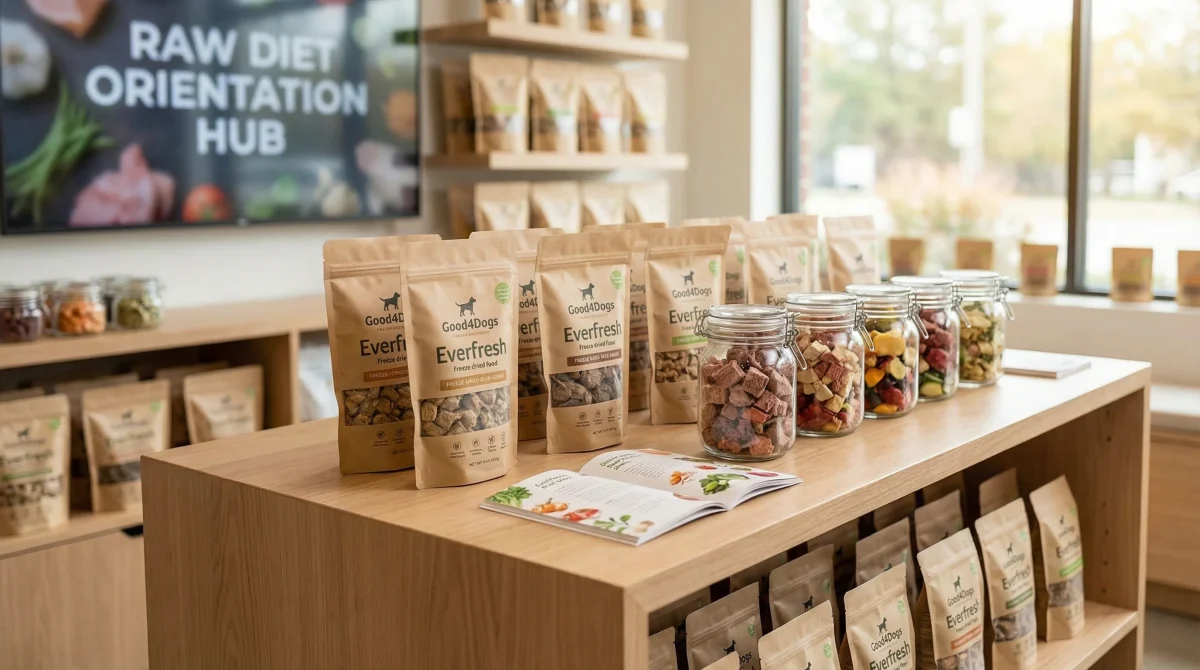
Freeze-dried can bridge convenience and quality for everyday feeding, travel, and boarding. Many owners find Everfresh Freez-Dried food – Beef 500g a practical way to ease into raw, thanks to balanced composition and simple storage.
What to prioritize first: core diet, routine, and safety
Foundation before extras: quality proteins and consistent routine
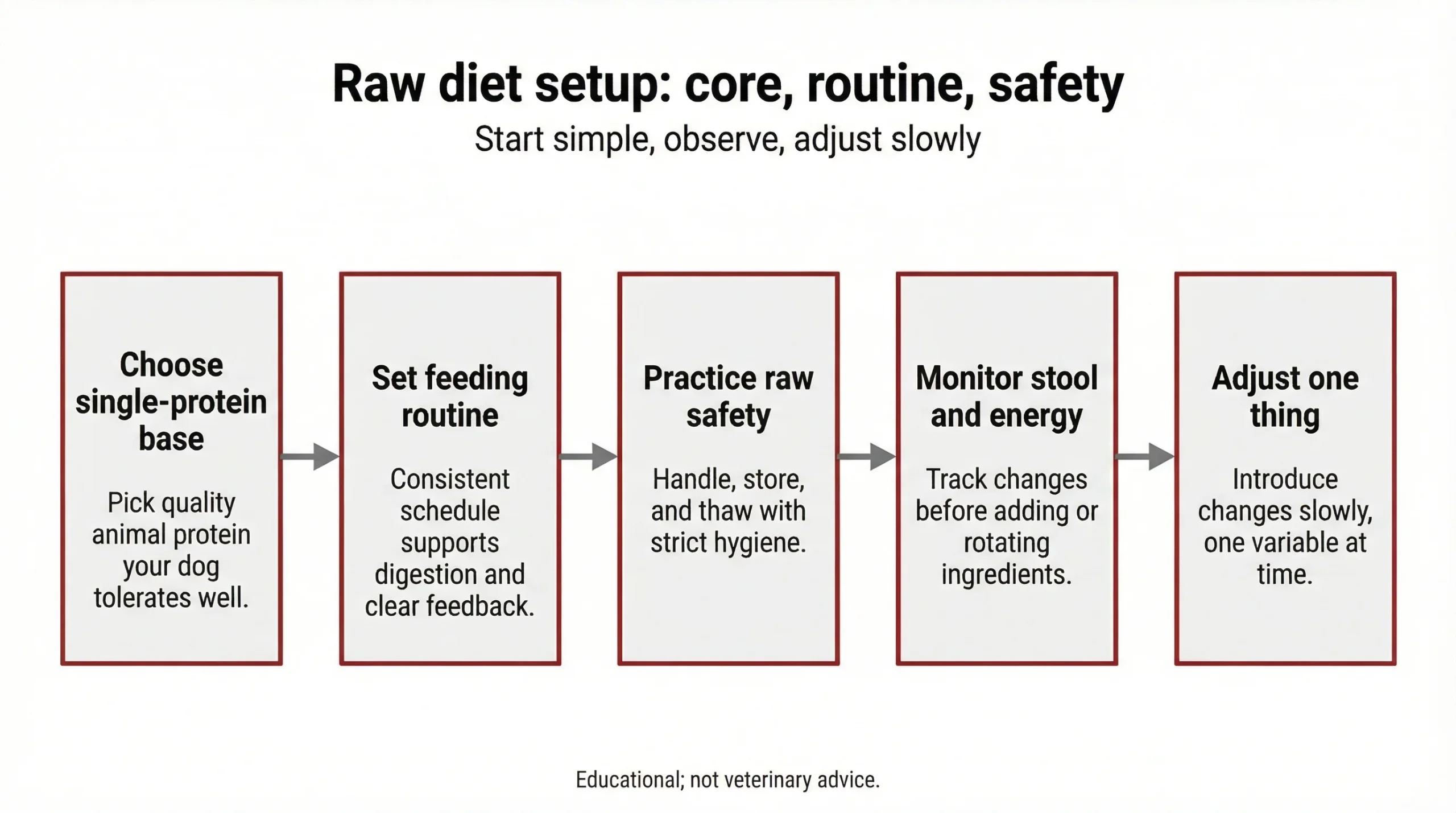
Start with a stable base before adding complexity. Choose quality animal protein your dog tolerates well. A consistent feeding routine supports digestion and makes observation easier.
If sensitivities are suspected, a single-protein dog food helps reduce variables. This keeps you focused on clarity rather than chasing quick fixes.
Simplicity wins: gradual change, observing stool and energy
Change the diet methodically. Track stool quality, appetite, and energy. These everyday signals tell you more than theory or labels.
When introducing new elements, adjust one variable at a time. Stay patient. Stability beats speed in raw transitions.
Hygiene and handling: common-sense rules in the kitchen
Raw feeding safety is about simple habits. Wash hands and utensils. Separate dog items from human prep surfaces. Store food as directed and respect temperatures.
Use containers that seal well. Clean bowls regularly. These basics protect everyone at home. For a concise checklist, see Safe Handling for Raw and Freeze‑Dried Dog Food: A Home Hygiene Checklist.
Top 3 actions to start with confidence
- Pick a quality base food and keep the routine consistent.
- Change one thing at a time and watch stool and energy.
- Follow kitchen hygiene basics to manage safety well.
Getting started note: Prefer a structured path? Explore Transitioning to Raw in 7 Days: Step‑by‑Step Plan with Rehydration Basics for a phased approach.
When raw feeding makes sense (and when it doesn’t)
Value-add scenarios: palatability, digestion, ingredients under control
Raw diets can help with picky eating, ingredient transparency, and tailoring fat or carbohydrate levels. Some dogs show improved stool quality and consistency when the format suits their system[1].
Freeze-dried options add convenience without heavy processing. That balance is ideal when you need both quality and a busy-life fit.
Sensitivities and the single-protein approach
If your dog is itchy or gassy, keep variables low. A single-protein dog food can support an elimination-style review. Many families treat it like a hypoallergenic dog food strategy.
For a structured plan, read Itchy Dog? Run an Elimination Diet with Single‑Protein Horse Meat and follow a measured, observation-first approach.
When to wait or stick with current food
Pause big changes during acute illness, intense travel, or major life stress. Stability matters. If your dog is thriving on current food, you can note ideas and revisit later.
Good decisions happen when you have bandwidth to observe calmly and adjust thoughtfully.
Lifestyle fit: home, travel, and active dogs
Home routine: easy prep without stress
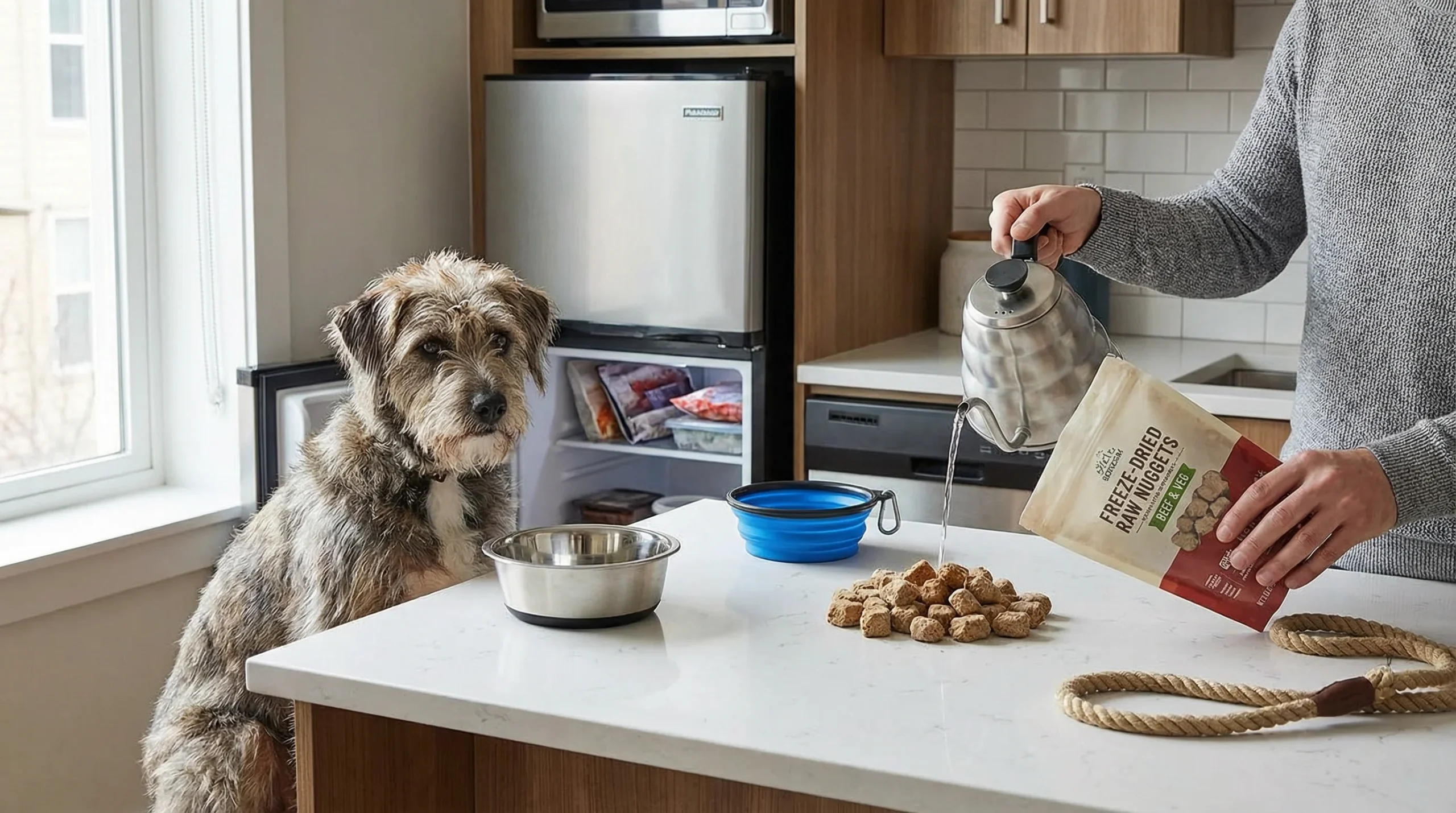
At home, choose a format that matches your kitchen. Frozen raw works for planner types with freezer space. Freeze-dried shines for small fridges, fast prep, and shared households.
Either way, build a simple, repeatable routine that you can maintain on busy days.
On the go: lightweight pack, fast rehydration
Traveling or hiking? Freeze-dried dog food keeps weight low and rehydrates quickly at mealtimes. It’s practical for boarding and pet sitters too.
For packing logic and water math, see Raw on the Go: Travel, Hiking, and Boarding with Freeze‑Dried Meals to plan confidently.
For working and sport dogs: energy density and practicality
Active dogs benefit from calorie-dense formats that are easy to portion and carry. Freeze-dried offers high energy per gram and quick prep, ideal for training days and events.
Dive deeper into fueling choices in Feeding Active and Working Dogs: Calorie‑Dense Raw Fuel with Freeze‑Dried.
Life stages: puppies, adults, seniors
What truly changes across life stages
Puppies need support for rapid growth and learning. Adults thrive on steady routines with appropriate protein and fat. Seniors often appreciate digestible proteins and easy-to-chew textures.
Across life stages, format and ingredient selection should match energy, mobility, and dental comfort.
What to monitor without numbers and charts
Watch body condition, stool, coat, and enthusiasm at mealtimes. Adjust format or protein source if signs drift from normal. Observation brings you back to balance.
For puppy-specific logic, see Puppies on Raw: Growth‑Stage Feeding Logic and Monitoring.
Common mistakes and misconceptions in raw feeding
Mixing many proteins and supplements too quickly
Rapidly rotating proteins and stacking supplements blurs feedback. Keep your base simple first. Then add, pause, and watch. This prevents confusion and reduces the chance of tummy upsets.
If your dog has a delicate stomach, follow the guidance in Sensitive Stomach Starter Plan: Gentle Raw Introduction and Stool Tracking.
Relying on theory alone without observing the dog
Labels and macros are useful, but your dog’s signals matter more. Prioritize stool, appetite, and energy. Adjust based on what you see today, not only what you read yesterday.
Underestimating hygiene and storage
Good food handled poorly loses its advantage. Follow storage instructions, clean tools, and separate spaces. This simple discipline is central to raw feeding safety for the whole household.
Functional nutrition: when to think about add-ons
Supplements as an upgrade to a stable base
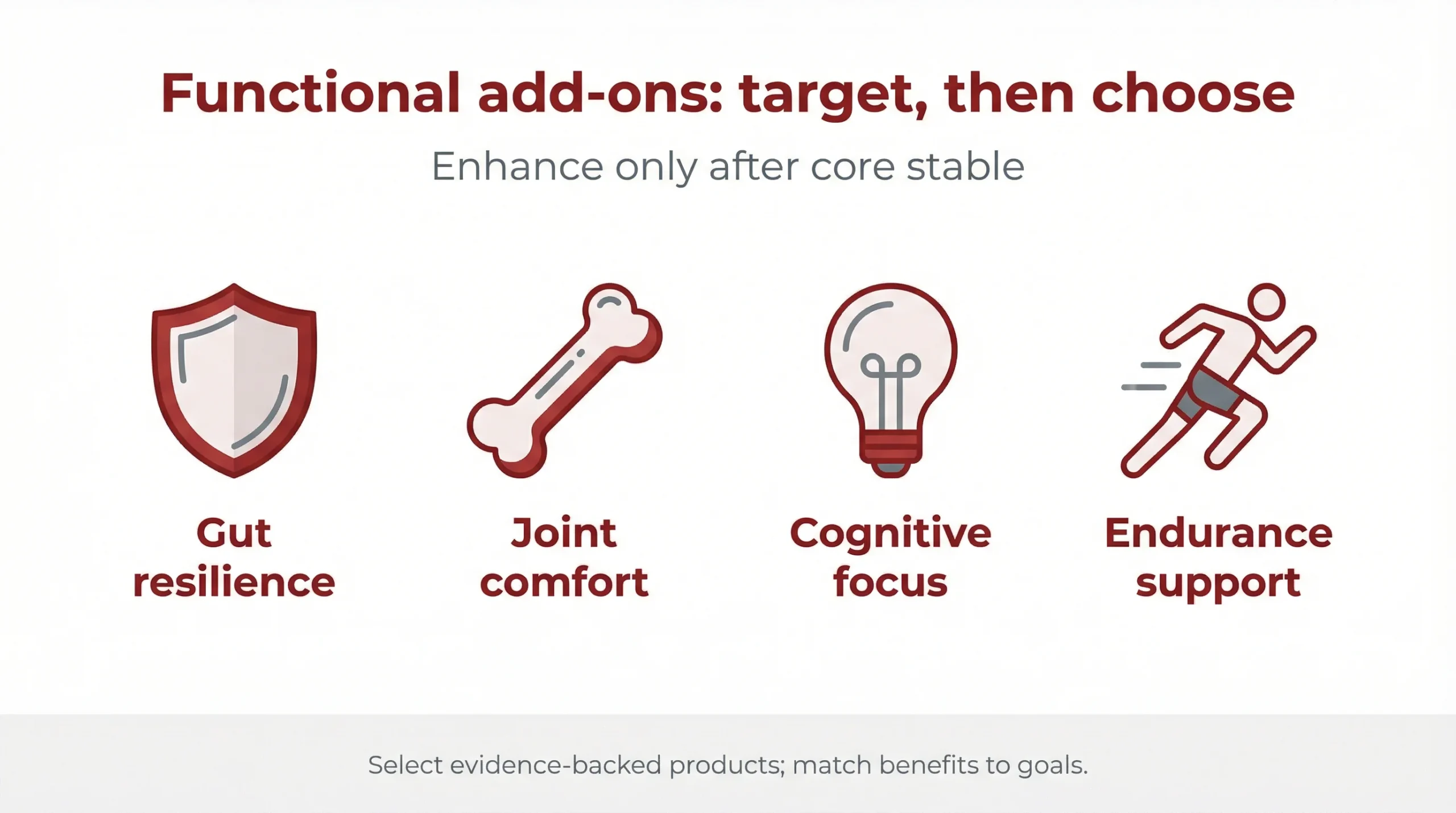
Add functional extras only after your dog is steady on a core diet. Think in targets: gut resilience, joint comfort, or focus. Choose products with clear sourcing and minimal fillers.
Example: medicinal mushrooms in practice (high-level view)
Lion’s Mane and Cordyceps are popular for cognitive and endurance support. Use them as part of a broader plan, not a shortcut. Match benefits to your dog’s real needs and responses.
For decision criteria and timing, read When to Add Functional Mushrooms: Lion’s Mane and Cordyceps for Dogs.
Frequently Asked Questions
Is freeze-dried raw the same as frozen raw?
Both start as raw. Freeze-dried removes water at low temperatures for shelf stability and convenience, while frozen stays cold. Nutritionally, both aim to preserve raw integrity.
Can I mix raw with kibble?
Some owners do. Focus on simplicity and monitoring your dog’s stool and energy. If you plan a structured transition, follow a clear phased approach from a dedicated guide.
Are single-protein recipes useful for sensitivities?
Yes, they help control variables when observing tolerance. Use them within a structured elimination framework rather than switching proteins quickly.
Do I need supplements on day one?
No. Prioritize a stable base diet and routine first. Consider targeted functional add-ons only after your dog is stable on the core food.
Is raw feeding safe?
It can be managed safely with basic hygiene and proper storage. Follow simple kitchen handling practices and avoid cross-contamination.
For Partners & Retail: If you help pet parents choose formats, see Retailer Playbook: Positioning Freeze‑Dried Raw and Starter Bundles for merchandising logic and starter pathways.
References
- EL Geary et al. (2024). Apparent total tract nutrient digestibility of frozen raw, freeze-dried raw, fresh, and extruded dog foods and their effects on serum metabolites and fecal characteristics …. Translational Animal …. View article
- EL Geary et al. (2023). Standardized amino acid digestibility and nitrogen-corrected true metabolizable energy of frozen raw, freeze-dried raw, fresh, and extruded dog foods using precision …. Journal of animal …. View article
- PM Oba et al. (2023). Standardized amino acid digestibility and nitrogen-corrected true metabolizable energy of frozen and freeze-dried raw dog foods using precision-fed cecectomized …. Journal of animal …. View article
- EL Geary et al. (2023). … Tract Nutrient Digestibility of Frozen Raw, Freeze-Dried Raw, Fresh, and Extruded Dog Foods and Their Effects on Fecal Characteristics and Metabolites of Adult Dogs. Journal of Animal …. View article